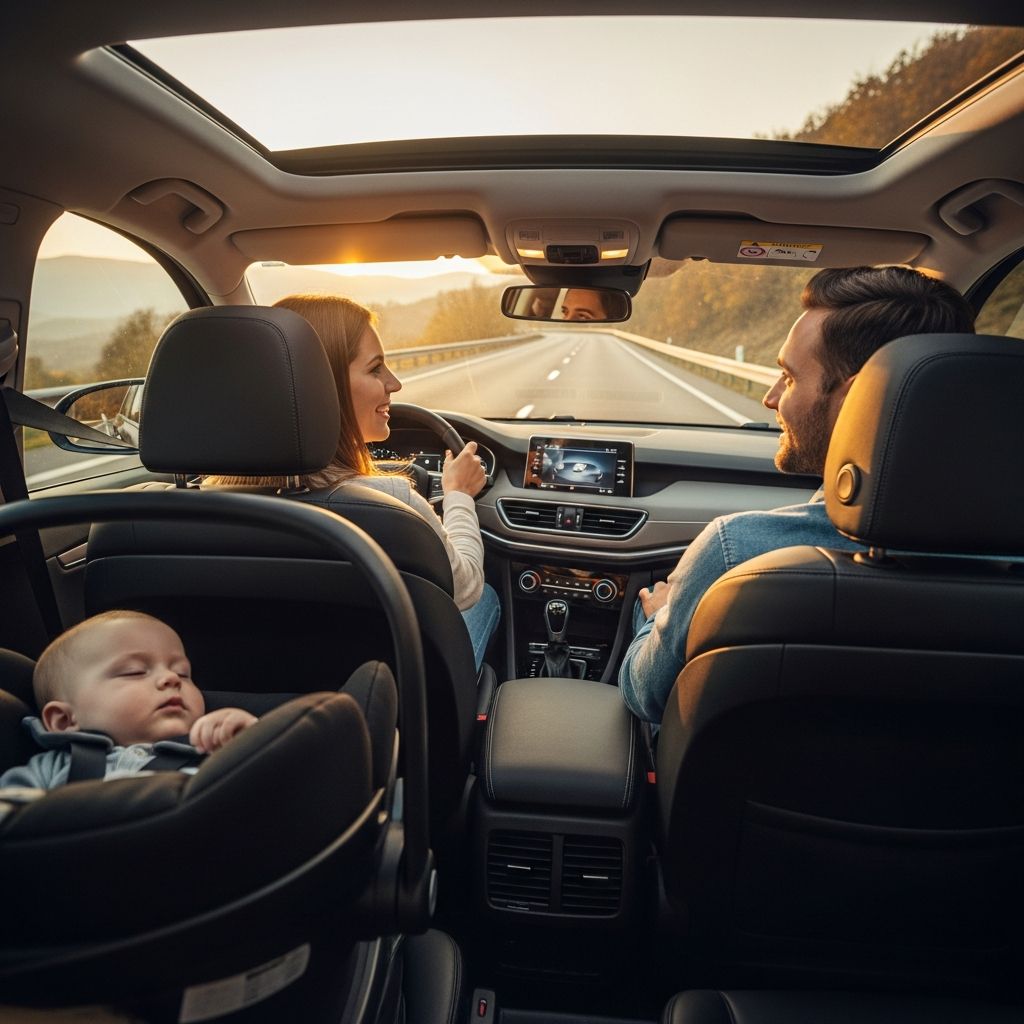
Driving long distances with a baby during the holidays can feel intimidating, but with thoughtful planning, realistic expectations and a few clever strategies, your trip can be safe, smoother and even enjoyable.
Before You Go: Big-Picture Planning
Successful holiday car travel with a baby starts days before you actually leave your driveway. Think of your road trip as a series of short segments built around your baby’s needs rather than one long push to your destination.
Instead of aiming for the fastest possible arrival, plan for the calmest possible journey. A slightly longer route with easier stops, better weather, or less traffic can make the entire day less stressful for everyone.
Choose the Right Travel Window
Your baby’s usual rhythm should guide your departure time. Look at when your baby tends to have their longest nap and when they are consistently the most fussy or alert.
- For newborns and young infants who nap frequently, early morning departures often work well because both baby and adults are more rested.
- If your baby has a predictable long nap in the afternoon, consider leaving about 30–45 minutes before that nap typically starts to let them fall asleep in the car.
- Avoid starting a trip during the time of day your baby is usually fussiest, even if traffic is lighter.
Map Breaks Into Your Route
Babies should not sit in car seats for extended, uninterrupted stretches. For longer drives, think in chunks of roughly 1.5–2 hours, then build in stops to feed, change and let your baby lie flat or be held.
- Use rest areas, quiet parking lots or family-friendly cafes as planned break spots where you can comfortably feed and change your baby.
- Add at least 30–45 minutes for every 2–3 hours of drive time so you’re not pressured to skip breaks if the baby needs extra soothing.
- Share your estimated arrival time with family as a range, not an exact hour, to reduce the temptation to rush.
Car Seat Safety and Comfort Essentials
Car seat safety is the foundation of any trip with a baby. Comfort matters too, but it should never come at the cost of proper installation or correct harness use.
Installation and Positioning Basics
Before holiday travel season, take time to double-check that your baby’s car seat is the right type and properly installed according to the manufacturer’s instructions.
- Use a rear-facing seat appropriate for your baby’s weight and height, and keep them rear-facing as long as the seat allows.
- Check that the seat does not move more than about an inch side-to-side or front-to-back at the belt path when pulled firmly.
- Ensure harness straps are at or just below your baby’s shoulders in a rear-facing seat, and that the chest clip sits at armpit level.
Clothing and Temperature
Bulky coats and thick snowsuits can create unsafe slack in the harness. Instead of bundling your baby in heavy clothing inside the car seat, use layers and blankets that you place over the harness.
- Dress your baby in snug, thin layers like a cotton bodysuit, leggings and a light fleece or sweater.
- After buckling your baby in securely, drape a blanket over them or use a car seat cover designed to go over (not under) the harness.
- Regularly check your baby’s neck or tummy for signs of overheating (sweaty, flushed) or being too cold (cool to the touch, mottled skin).
Quick Safety Comparison: Safe vs. Risky Habits
| Topic | Safer Choice | Risky Choice |
|---|---|---|
| Car seat direction | Rear-facing as long as seat limits allow | Turning baby forward-facing early for convenience |
| Winter clothing | Thin layers plus blanket over harness | Puffy coat or snowsuit under harness |
| Seat placement | Back seat, away from active airbags | Front seat with active passenger airbag |
| Monitoring baby | Shatter-resistant backseat mirror or adult in back | Frequently twisting around while driving |
Packing Smarter, Not Heavier
A well-organized car is easier to manage than a car packed to the ceiling. Group items by how often you’ll need them and keep the most critical supplies within arm’s reach of whoever sits near the baby.
Baby Travel Essentials Checklist
Gather items into three basic categories: immediate-access items, mid-trip items and destination-only items. This approach keeps your car tidy and minimizes frantic searching at the worst moments.
- Immediate-access bag (keep near the front): diapers, wipes, changing mat, a spare outfit, burp cloths, pacifiers, a small blanket, bottle or water for formula, and a few toys.
- Mid-trip bin (reachable from backseat): extra diapers and wipes, backup bottles or sippy cups, additional changes of clothes, lightweight swaddles or sleep sacks.
- Destination-only luggage (in the trunk): larger packs of diapers, crib sheets, extra sleepwear, non-essential gear you won’t need while driving.
Organizing the Back Seat
Clutter in the car can quickly turn into a safety hazard if loose items become projectiles during a sudden stop. Keep heavy, hard objects strapped down or stored in the trunk.
- Use soft-sided organizers or fabric bins secured with seat belts to store toys, wipes, and snacks for older passengers.
- Avoid giving the baby hard toys, heavy books or rigid sippy cups while the car is moving; choose soft, lightweight items instead.
- Keep a small trash bag handy for used wipes, tissues and snack wrappers to prevent mess from spreading.
Feeding and Diapering on the Road
Feeding and diaper changes will likely dictate your break schedule, especially with younger babies. Planning ahead reduces last-minute scrambles and makes each stop more efficient.
Feeding Safely
Always feed your baby when the car is parked and the baby is out of the car seat or positioned safely. Even bottle-feeding in a moving car can create choking and distraction risks.
- If breastfeeding, look for secluded rest areas, family rooms or a quiet corner of a restaurant where you can nurse comfortably.
- If bottle-feeding, pre-measure formula or store pumped milk in a cooler and bring a small thermos of warm water if needed for mixing or warming.
- Plan your route to include spots with clean restrooms or family facilities to make feeding breaks more pleasant.
On-the-Go Diaper Changes
Diaper changes will happen in all kinds of places—restroom changing tables, the back seat, even the stroller in a pinch. Build a compact, portable changing kit that lets you adapt to whatever you find.
- Pack a foldable changing pad, disposable bags, plenty of wipes, diaper cream, and at least two spare outfits within easy reach.
- Keep a small stash of diapers accessible for quick changes without unpacking the trunk.
- Have a designated “dirty clothes” bag so soiled outfits don’t mix with clean clothes and blankets.
Keeping Baby Calm and Entertained
Babies don’t need constant entertainment, but they do need comfort, familiar cues and some variety. A calm, predictable environment helps reduce fussiness more than constant novelty.
Soothing Strategies That Travel Well
Most babies travel best when the car feels like an extension of their normal routine. Use familiar sounds, smells and objects rather than a completely new setup.
- Bring a favorite blanket, lovey (if age-appropriate), or familiar pacifier to signal comfort and sleep.
- Play gentle music, white noise, or soothing audiobooks at a low volume if those sounds are part of your baby’s usual routine.
- If possible, have another adult sit next to the baby for part of the drive to offer a hand to hold, a soft voice or a gentle back rub during wakeful stretches.
Age-Appropriate “Entertainment” Ideas
For young infants, less is often more. The goal is to prevent overstimulation while still giving your baby something interesting to look at or hear.
- Use a simple, high-contrast soft toy or a single hanging toy attached to the car seat handle (following safety guidelines for attachment and positioning).
- Rotate one or two lightweight toys every hour during awake times rather than piling lots of options into the seat.
- Talk or sing to your baby when you are parked or when another adult is sitting in the back—your voice is often more comforting than any toy.
Managing Your Own Stress
Holiday travel is stressful even without a baby in the back seat. A calmer driver makes for a safer trip, so build a plan that protects your own energy and attention as well.
Share the Load
If you are traveling with another adult, treat the day as a team project instead of assuming one person will handle all the driving and all the baby care.
- Swap drivers every few hours if both adults are licensed and rested so the primary caregiver can rest and recharge.
- Assign rough roles ahead of time—for example, one person focuses on driving, the other takes the lead on baby care during stops.
- Agree before leaving that you will pull over if anyone feels too tired or overwhelmed to continue safely.
Adjusting Expectations
Babies are unpredictable. Even the best-laid plans will sometimes fall apart, and that doesn’t mean you’ve done anything wrong. Expect the unexpected and give yourself permission to reset along the way.
- See delays, extra stops and detours as part of the trip rather than evidence that the day is “ruined.”
- Communicate with relatives ahead of time that your baby’s needs come first and that your arrival time might change.
- Pack easy, car-friendly snacks and water for adults so hunger and dehydration don’t magnify stress.
Winter and Holiday-Specific Considerations
Holiday road trips often mean cold weather, busy highways and unpredictable conditions. A little extra preparation goes a long way toward keeping your baby comfortable and your family safe.
Weather, Traffic and Backup Plans
Check the forecast, traffic reports and potential construction along your route before you leave. If conditions look risky, consider changing your departure day or time.
- Keep an emergency kit in the trunk with blankets, extra formula or shelf-stable milk, water for adults, a flashlight, basic first-aid supplies and a phone charger.
- Fill the gas tank before leaving and top up windshield washer fluid, especially if snow or road salt is expected.
- Have a backup route in case of closed roads or major accidents, and allow more time than your GPS suggests.
Arriving and Settling In
Once you arrive at your holiday destination, your baby may be overstimulated by new faces, noises and lights. Try to recreate a few familiar parts of your home routine as soon as possible.
- Set up a safe sleep space first—a portable crib or travel bassinet away from loud music, bright lights and constant foot traffic.
- Use familiar sleep cues like the same bedtime song, sleep sack or white noise machine you use at home.
- Let relatives know your baby might need some quiet time or shorter visits while adjusting to the new environment.
FAQs: Holiday Car Travel With Babies
How long can my baby safely stay in a car seat during a road trip?
For longer journeys, many experts suggest giving babies regular breaks out of the car seat instead of long, uninterrupted stretches. A common approach is to stop every 1.5–2 hours so your baby can stretch, be fed, changed and held in a different position before returning to the seat.
Is it better to drive during the day or at night with a baby?
Both options have trade-offs. Daytime driving offers better visibility and easier access to open rest areas and services, while nighttime driving may align with your baby’s longest sleep stretch but can be harder on driver alertness. Choose the timing that best matches your baby’s routine and your ability to stay well-rested and focused.
What if my baby cries the entire time in the car?
Persistent crying is stressful but not unusual, especially if your baby dislikes the car seat or is overwhelmed by the change in routine. Pull over safely when you can, offer a cuddle, check for hunger or discomfort, and adjust the environment—such as changing the temperature, removing a layer of clothing, or offering a pacifier or soothing music. If you feel too upset to drive safely, take a longer break.
Can I sit in the back seat with my baby?
Yes, many families find it helpful for one adult to sit in the back during at least part of the trip, especially with younger or more anxious babies. Having someone nearby to offer comfort, toys, or reassurance can shorten fussy periods and may prevent the driver from becoming distracted by turning around frequently.
How do I know if my baby is too hot or too cold in the car?
Check your baby’s chest, neck or tummy rather than hands and feet, which are often cooler. If your baby feels sweaty, flushed or damp, remove a layer and slightly lower the car’s temperature; if they feel cool and look pale or mottled, add a layer or a blanket over the harness. Adjust gradually and recheck every so often, especially after long naps.
Holiday car travel with a baby will never be completely predictable, but with realistic planning, careful attention to safety and a flexible mindset, you can turn a potentially overwhelming experience into a manageable—and even meaningful—part of your family’s traditions.