High-definition eyeglass lenses promise sharper vision, more comfort, and better performance for modern, screen-heavy lifestyles. Before paying extra, it helps to understand what makes these lenses different and whether they match your needs.
What “High-Definition” Lenses Actually Mean
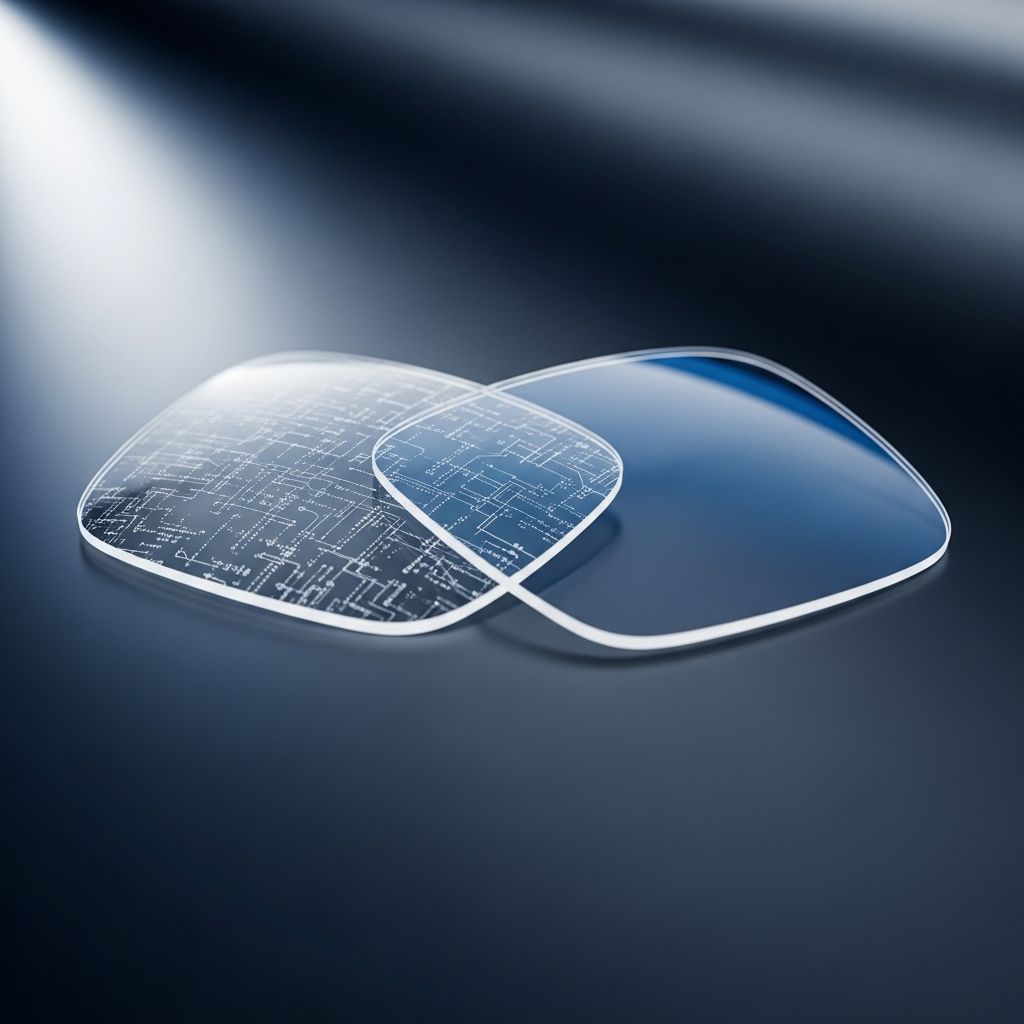
In eyeglasses, “high-definition” (often called digital or free-form lenses) refers to how precisely the prescription is carved into the lens surface. Instead of using older, mass-produced molds, the lens is custom-cut by a computer-controlled machine that takes into account your exact prescription, frame shape, and how the frame sits on your face.
Think of it like upgrading from standard TV to HD or 4K: the content is the same, but the clarity and detail are noticeably better. With HD lenses, the prescription is optimized point-by-point across the entire lens, so vision can stay clear not only in the center, but also as your eyes move toward the edges.
- Standard lenses rely on general designs that assume an “average” wearer.
- HD lenses are tailored more closely to your unique prescription and wearing position.
- The result can be crisper details, fewer distortions, and smoother transitions between viewing distances.
Why Everyday Life Feels Different with HD Lenses
Most people notice the benefits of high-definition lenses not in dramatic, cinematic moments but in small daily tasks. Words on a screen may look more defined, street signs may feel easier to read while driving, and your eyes may feel less strained by the end of the day.
Rather than making you see “better than 20/20,” these lenses aim to help you reach the best version of your own prescription in real-world conditions, accounting for things like frame tilt, wrap, and how high or low your glasses sit on your nose.
- Fine print can appear slightly sharper and easier to focus on.
- Peripheral blur zones may feel smaller or less intrusive.
- Shifting focus from phone to laptop to distance can feel more natural.
Key Types of High-Definition Lenses
High-definition lens technology is not limited to one kind of prescription. It can be applied across single-vision, progressive, and task-specific designs, allowing both children and adults to benefit.
HD single-vision lenses
Single-vision lenses correct either distance, near, or intermediate vision but only one range at a time. When made with digital, high-definition processes, these lenses can offer especially sharp clarity and more consistent focus across the entire lens surface.
- Excellent for high prescriptions, where traditional lenses can feel more distorted at the edges.
- Helpful for students or professionals who need clear, comfortable viewing for extended reading or computer work.
- Useful in wraparound or sport frames where curved lenses can otherwise introduce distortions.
HD progressive lenses
Progressive lenses combine distance, intermediate (like computer distance), and near (reading) powers in one lens without visible lines. High-definition progressive designs use computer-guided calculations to smooth the transition between these zones and to reduce peripheral blur.
- More natural, gradual shift from distance to near vision.
- Careful control of “swim” or distortion areas at the sides.
- Custom optimization based on your frame shape and fitting measurements.
Task-oriented HD lenses
Some lenses are designed specifically for certain activities rather than all-day wear. These task-oriented HD lenses prioritize comfort and clarity where you spend most of your time looking.
- Office / computer lenses: Emphasize intermediate and near zones for desk work and multiple screens.
- Wrap / sport lenses: Account for highly curved frames used in sports or outdoor activities.
- Mobile-friendly designs: Optimized for closer reading distances typical of smartphones and tablets.
Benefits You Can Expect from HD Lenses
While every wearer is different, there are some commonly reported advantages that make HD lenses appealing, especially when upgrading from older glasses or basic lens packages.
Sharper, more consistent clarity
Because they are tailored more precisely, high-definition lenses can minimize subtle optical errors that may be present in standard lenses. Many wearers describe the experience as making edges appear more defined and textures more detailed, especially in distance vision.
- Clearer road signs and dashboard displays for drivers.
- Improved ability to see small text, like on medicine bottles or device settings.
- More uniform clarity when glancing from center to side vision.
Reduced eye strain and fatigue
Modern life involves frequent shifts between digital screens, paper, and outdoor views. HD lenses that optimize intermediate and near zones can help your eyes work less hard when refocusing, which may ease end-of-day fatigue and headaches for some wearers.
- Smoother transitions when moving your eyes between screens at different distances.
- Less need to tilt your head or search for the “sweet spot” in the lens.
- Potentially more comfortable long sessions of reading, coding, or design work.
Better peripheral vision
Traditional lenses often focus on the central viewing area, leaving the periphery more distorted. High-definition designs aim to optimize vision across a wider region, so glancing sideways can feel more natural and less blurry.
- Easier lane checks and mirror glances while driving.
- More comfortable movement in crowded spaces or during sports.
- Less disorientation when walking down stairs or navigating uneven ground.
Don’t Forget the Coatings: They Matter More Than You Think
Lens material and design are only part of the story. Surface treatments, often called coatings or enhancements, significantly influence how clear, comfortable, and durable your glasses feel day to day. Skipping coatings to save money can undermine the benefits of HD optics.
Key helpful coatings
- Anti-reflective (AR) coating: Reduces reflections from overhead lights, screens, and headlights. This can improve contrast and make your eyes more visible in photos and conversations.
- Scratch-resistant layer: Helps protect the lens surface from everyday wear, especially important for kids, active adults, and anyone tough on glasses.
- Smudge-resistant / hydrophobic protection: Makes lenses easier to clean and less prone to fingerprints, water spots, and makeup marks.
- UV-blocking treatment: Protects your eyes and the delicate skin around them from ultraviolet radiation, even in clear lenses.
- Optional blue-light-selective coating: May help reduce perceived glare and visual discomfort from prolonged screen exposure.
Simple coating comparison table
| Coating Type | Main Benefit | Best For |
|---|---|---|
| Anti-reflective | Less glare, better contrast, clearer eye contact | Night drivers, office workers, students |
| Scratch-resistant | Improved durability and lens lifespan | Children, active lifestyles, everyday wear |
| Smudge / hydrophobic | Easier cleaning, fewer fingerprints and smears | Anyone frequently removing or adjusting glasses |
| UV-blocking | Eye and skin protection from UV radiation | All wearers, especially outdoorsy families |
| Blue-light-selective | Reduced perceived glare from digital screens | Heavy computer and smartphone users |
Who Stands to Benefit the Most?
While nearly anyone who wears glasses can consider high-definition lenses, certain groups often notice the biggest difference. Your lifestyle, prescription, and sensitivity to visual discomfort play a large role in whether the upgrade feels worthwhile.
People with moderate to high prescriptions
Those with stronger nearsightedness, farsightedness, or astigmatism tend to experience more distortion with older lens designs. HD lenses can refine the correction in a way that softens distortions and improves edge clarity.
- Reduced “funhouse mirror” effect at the lens edges.
- More natural-looking surroundings when turning your head.
- Greater comfort in larger or more fashionable frames.
Progressive wearers and new bifocal users
Adjusting to multifocal lenses can be challenging. High-definition progressive designs are often engineered to make adaptation easier by smoothing the transition between zones and widening the usable areas for reading and computer work.
- Less hunting for the correct portion of the lens to see clearly.
- Improved comfort during activities that mix distances, such as cooking while checking recipes or supervising kids.
- Potentially faster adaptation, especially for first-time progressive wearers.
Screen-heavy professionals and students
Anyone who spends hours each day shifting between monitors, documents, and phones can benefit from lenses designed around intermediate and near viewing. When paired with appropriate coatings, HD lenses can help maintain visual comfort through long workdays.
- Office workers juggling multiple monitors.
- Students bouncing between textbooks, laptops, and tablets.
- Remote workers and gamers who log many hours of screen time.
What to Ask Your Eye-Care Provider
Walking into an optical shop can feel overwhelming, with many brands and technical terms competing for attention. A few targeted questions can help you sort through marketing language and identify whether high-definition lenses are a good match.
- Which lens designs are best suited to my prescription and lifestyle?
- How will these HD lenses differ from the standard lenses I might choose instead?
- What measurements will you take to customize the lenses to my frame and face?
- Which coatings do you recommend, and why?
- What is the total cost, including options, and is there a satisfaction or adaptation guarantee?
Taking notes on the answers or asking for a printout of recommendations can make comparison shopping easier, especially if multiple family members are getting glasses at the same time.
Cost vs. Value: When Is the Upgrade Worth It?
High-definition lenses usually cost more than standard lenses, particularly when combined with premium coatings. However, considering how often you wear glasses—often all day, every day—the extra expense may translate to a relatively small daily cost for added comfort and clarity.
Situations where HD lenses are often worth it
- You have a moderate to high prescription and notice edge blur or warping.
- You rely on progressive lenses and have struggled with older designs.
- You experience frequent eye strain, headaches, or discomfort after screen use.
- You drive long distances, especially at night, and need crisp, stable vision.
- You plan to keep this pair of glasses for several years and want them to age well.
When basic lenses may be enough
- You have a very mild prescription worn only occasionally.
- These glasses are a spare backup pair or used rarely.
- Your budget is tight and you must prioritize essentials like UV protection.
In many cases, a good compromise is to choose a high-definition lens design but limit add-ons to the most critical coatings: anti-reflective, scratch resistance, and UV protection.
Practical Tips for Families Choosing HD Lenses
When multiple family members need glasses, lens choices multiply quickly. A little planning can help you decide who benefits most from high-definition designs and where you can save without sacrificing essential features.
- Prioritize HD lenses for the person who wears glasses the most hours per day.
- Consider HD progressives or office lenses for adults who work extensively at computers.
- Ask whether your vision plan has preferred designs that offer similar technology at a lower out-of-pocket cost.
- Reserve more basic lenses for backup pairs, occasional-use glasses, or very mild prescriptions.
- Always include impact-resistant materials and good coatings for kids, even if the lens design is simpler.
Frequently Asked Questions About High-Definition Lenses
Are high-definition lenses the same as “HD TV for your eyes”?
The comparison is mostly a marketing shorthand. Both ideas involve increasing clarity and detail, but HD lenses do not magically improve your biological vision. Instead, they use more precise manufacturing methods to help you get closer to the full potential of your prescription across more of the lens.
Will high-definition lenses fix all my vision problems?
No eyeglass lens can correct every issue, especially those related to eye health, focusing muscles, or neurological conditions. HD lenses can refine optical performance, reduce distortions, and increase comfort, but they do not replace regular eye exams, medical treatment, or specialized low-vision aids when needed.
Do HD progressive lenses really reduce adaptation time?
Many wearers find that modern digital progressive designs are easier to get used to than older versions because the power changes and distortion zones are more carefully managed. However, individual experiences vary, and some adjustment period is still normal as your brain learns to interpret the new visual pattern.
Are these lenses only for adults?
High-definition lenses are suitable for both adults and children, especially for kids with stronger prescriptions or significant astigmatism. Pediatric frames can also benefit from precise customization, though durability, fit, and safe impact-resistant materials remain top priorities for younger wearers.
Can I use HD lenses in fashion-forward or wraparound frames?
Yes, one of the advantages of digital lens technology is the ability to compensate for tilt, curvature, and the way the frame wraps around your face. This allows more people to enjoy sport or fashion frames without compromising as much on clarity at the edges of the lens.
Do I need special cleaning routines for these lenses?
The basics stay the same: rinse dust and grit away with clean water, use a recommended lens cleaner and a soft microfiber cloth, and avoid harsh chemicals or rough fabrics. Smudge-resistant coatings may make cleaning faster, but careful daily habits still protect both the lens surface and the coatings.
Making a Confident Decision
Choosing high-definition eyeglass lenses ultimately comes down to balancing cost with the value of clearer, more comfortable vision in daily life. For many people—especially progressive wearers, those with stronger prescriptions, and heavy screen users—the upgrade pays off in less strain and better clarity from morning to night.
By understanding the basics of HD designs, knowing which coatings actually matter, and asking informed questions at your next eye appointment, you can invest in lenses that support not just how you see, but how you work, play, and connect with the world.