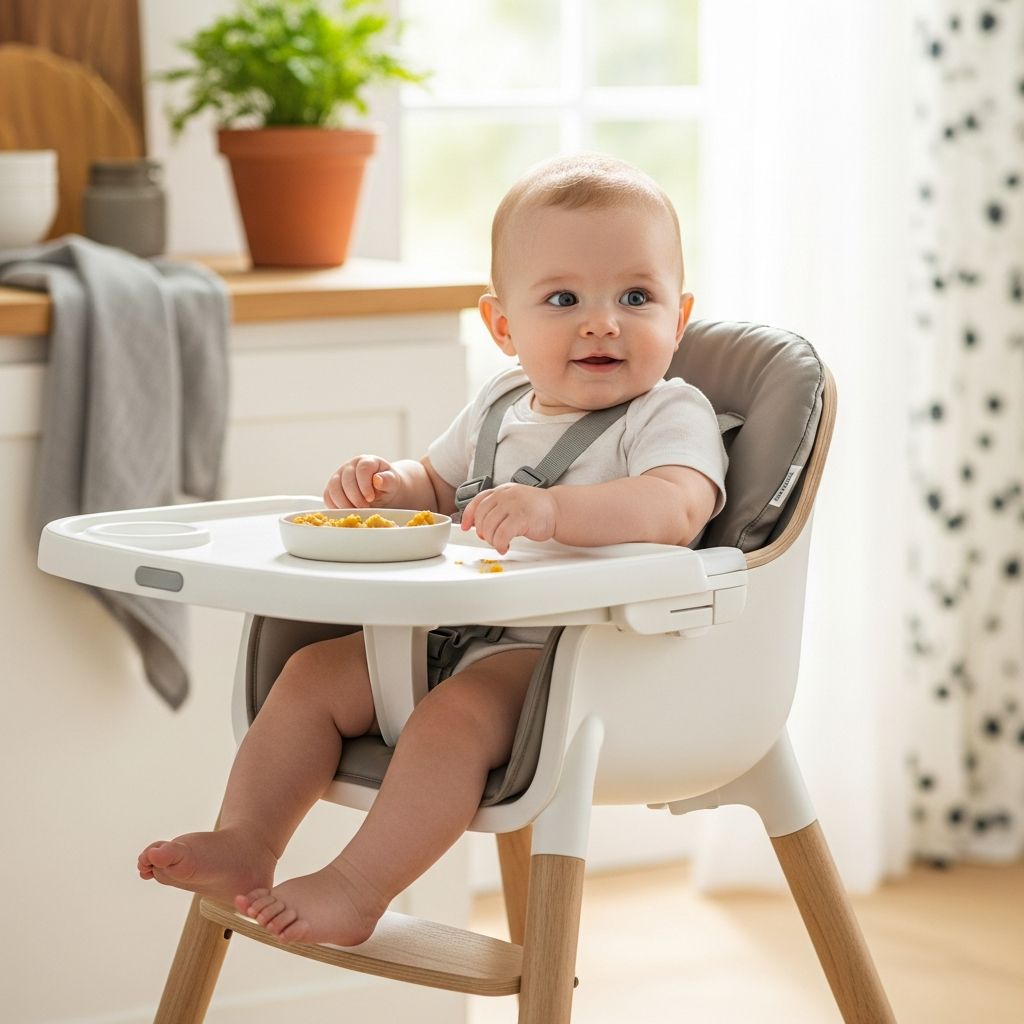
Introducing a high chair marks an exciting step in your baby’s journey toward independent mealtimes. Typically, babies show readiness around 6 months when they gain sufficient head and trunk control, but individual development varies. This guide explores developmental cues, selection criteria, usage protocols, and proven safety strategies to ensure secure family dining experiences.
Recognizing Developmental Readiness for High Chair Use
Before transitioning to a high chair, observe your baby’s physical milestones. Strong head and neck stability forms the foundation, preventing slouching that could obstruct airways or lead to discomfort. Babies who consistently hold their head steady without wobbling during tummy time or supported sitting demonstrate preparedness.
Trunk control follows, where infants maintain an upright posture for several minutes without support. This skill emerges as babies practice sitting with minimal assistance, such as on a caregiver’s lap or in supportive devices like infant seats. Experts emphasize waiting until babies can sit unassisted for short periods to minimize risks like forward slumping.
- Key Indicators: Steady head tracking of objects, balanced sitting with hands free for play, and interest in family meals.
- Average Timeline: 5-7 months, aligning with solid food introduction per pediatric guidelines.
- Red Flags: Persistent head lag, inability to recover from leans, or disinterest in upright positions.
Premature infants or those with developmental delays may require professional evaluation from pediatricians to confirm readiness, ensuring no undue pressure on immature muscles.
Selecting a High Chair with Top Safety Features
Choosing the right high chair prioritizes stability, restraint systems, and ergonomic design. Government safety agencies recommend models with wide bases to resist tipping, especially during active feeding sessions.
A robust 5-point harness—securing shoulders, waist, and legs—outperforms simpler straps by preventing slips under the crotch bar, a common injury cause. Verify adjustable straps fit snugly without gaps larger than specified dimensions, such as side openings not exceeding 140mm x 108mm x 25mm.
| Feature | Why It Matters | Checkpoints |
|---|---|---|
| Wide Base & Stability | Prevents tipping from pushing or wiggling | Test by pushing/pulling sides; ensure no movement |
| 5-Point Harness | Full-body security against falls | Adjustable, snug fit; includes crotch strap |
| Locking Mechanisms | Avoids accidental folding or rolling | Brakes on wheels; secure latches |
| No Pinch Points | Protects fingers/toes from traps | Inspect trays, hinges for gaps/sharp edges |
| Adjustable Height/Tray | Matches 90-90-90 posture rule | Hips, knees, ankles at 90° angles |
Opt for chairs made from non-toxic, durable materials easy to wipe down, reducing bacterial risks. Portable or foldable options suit travel but must lock firmly. Always register products for recall alerts.
Mastering Proper Positioning in the High Chair
Optimal seating follows the 90-90-90 rule: hips, knees, and ankles bent at right angles for stability and safe swallowing. Position the backrest upright with the child’s bottom flush against it, promoting spinal alignment. The tray should reach chest height, preventing excessive leaning.
For younger users, harnesses provide postural support alongside safety. Gradually loosen as coordination improves, but never skip buckling. Feet resting on a support bar enhances comfort and reduces fidgeting. Avoid reclined positions unless specified for infants under 6 months, as upright is safest for feeding.
Daily Usage Protocols to Prevent Accidents
Supervision remains paramount—never leave a baby unattended, even briefly. Secure the chair away from walls, tables, or counters to block push-off tipping. Clear surrounding areas of hot foods, utensils, or cloths within reach.
Pre-use inspections cover damage, clean straps, and locked components. No standing, climbing, or toys in the chair; mealtimes only. For multi-user households, train all caregivers on harness use and emergency unbuckling for choking scenarios.
- Position chair on level, non-slip floors.
- Use crotch restraint mandatorily with waist belts.
- Verify tray locks securely; never rely on it for restraint.
- Foldable models: Confirm latches before and after use.
Common High Chair Risks and Prevention Strategies
Falls account for most injuries, often from unbuckled straps or standing. Tipping occurs near push points or on uneven surfaces. Choking risks rise without proper posture, underscoring the 90-90-90 alignment.
Pinch hazards lurk in sloppy designs; rigorous checks mitigate them. Recalls address defects—search databases before buying used chairs. Long-term, transition to booster seats around age 3 when mobility increases.
Age-Appropriate Transitions and Longevity
High chairs serve from 6 months to 3-4 years, weight limits varying (typically 50 lbs). Infants start harnessed; toddlers use trays independently. Signs to upgrade: outgrowing height/weight, consistent unbuckling, or preference for table seating.
Multi-function models with removable trays extend usability, fostering family integration. Pediatric resources stress matching gear to growth spurts for ongoing safety.
Frequently Asked Questions About High Chair Use
At what exact age can my baby start using a high chair?
Most babies are ready around 6 months with head control and interest in solids, but confirm sitting stability first.
Is a 3-point or 5-point harness better?
5-point harnesses offer superior security for active babies, preventing slides and falls.
Can I use a high chair for newborns?
No—newborns lack neck strength; wait for upright milestones around 5-6 months.
How do I clean a high chair safely?
Wipe with mild soap; avoid harsh chemicals. Dishwasher-safe trays simplify hygiene.
What if my high chair tips easily?
Discard or repair; choose wide-base models and test stability per guidelines.
Expert Insights on Integrating High Chairs into Family Routines
Beyond safety, high chairs encourage self-feeding skills, hand-eye coordination, and social bonding. Place at table height for interaction, modeling healthy eating. Adjustable models adapt through stages, from purees to finger foods.
Address aversions early: secure footing calms fussiness; easy-clean surfaces handle messes. Research links proper seating to reduced choking and improved digestion. For twins or multiples, stable, space-efficient designs prove invaluable.
In multicultural homes, high chairs support diverse feeding practices, from spoon-feeding to baby-led weaning, always prioritizing upright posture. Seasonal tips: secure during holidays amid distractions; travel models for visits.
Parental testimonials highlight confidence from safety routines—harness checks become habits. Pediatricians advocate early education on gear use in well-child visits. Investing time in selection yields years of worry-free meals.
Customization elevates experience: add cushions for comfort (non-slip only), toy-free zones enforce focus. Monitor growth quarterly; adjust as needed. Communities share hacks like strap covers for sensitive skin, but verify compatibility.
Ultimately, high chairs symbolize independence milestones. With vigilance, they transform chaotic feeds into joyful rituals, nurturing tiny diners safely.
References
- Safety Tips on Highchairs — Consumer Product Safety Office, Singapore. 2023. https://www.consumerproductsafety.gov.sg/safety-tips-on-highchairs/
- Your Guide to High Chair Safety: Top 3 Recommendations for Parents — Tiny Hearts Education. 2024. https://tinyhearts.com/en-us/blogs/toddler/your-guide-to-high-chair-safety-top-3-recommendations-for-parents
- When Can Your Baby Sit in a High Chair? — Chicco USA. 2023. https://www.chiccousa.com/baby-talk/when-can-your-baby-sit-in-a-high-chair/
- High Chair Ultimate Guide: Shopping & Safety Tips — Nuby US. 2024. https://us.nuby.com/blogs/real-talk/high-chair-guide-safety-tips
- Can Your High Chair Be Dangerous? — Safe Kids Worldwide. 2023. https://www.safekids.org/blog/can-your-high-chair-be-dangerous
- 6 Quick High Chair Safety Tips — American Academy of Pediatrics (HealthyChildren.org). 2024-01-16. https://www.healthychildren.org/English/safety-prevention/at-home/Pages/High-Chair-Safety-Tips.aspx
- The Ultimate Guide to High Chairs for Babies — Solid Starts. 2024. https://solidstarts.com/the-ultimate-guide-to-high-chairs-for-babies/