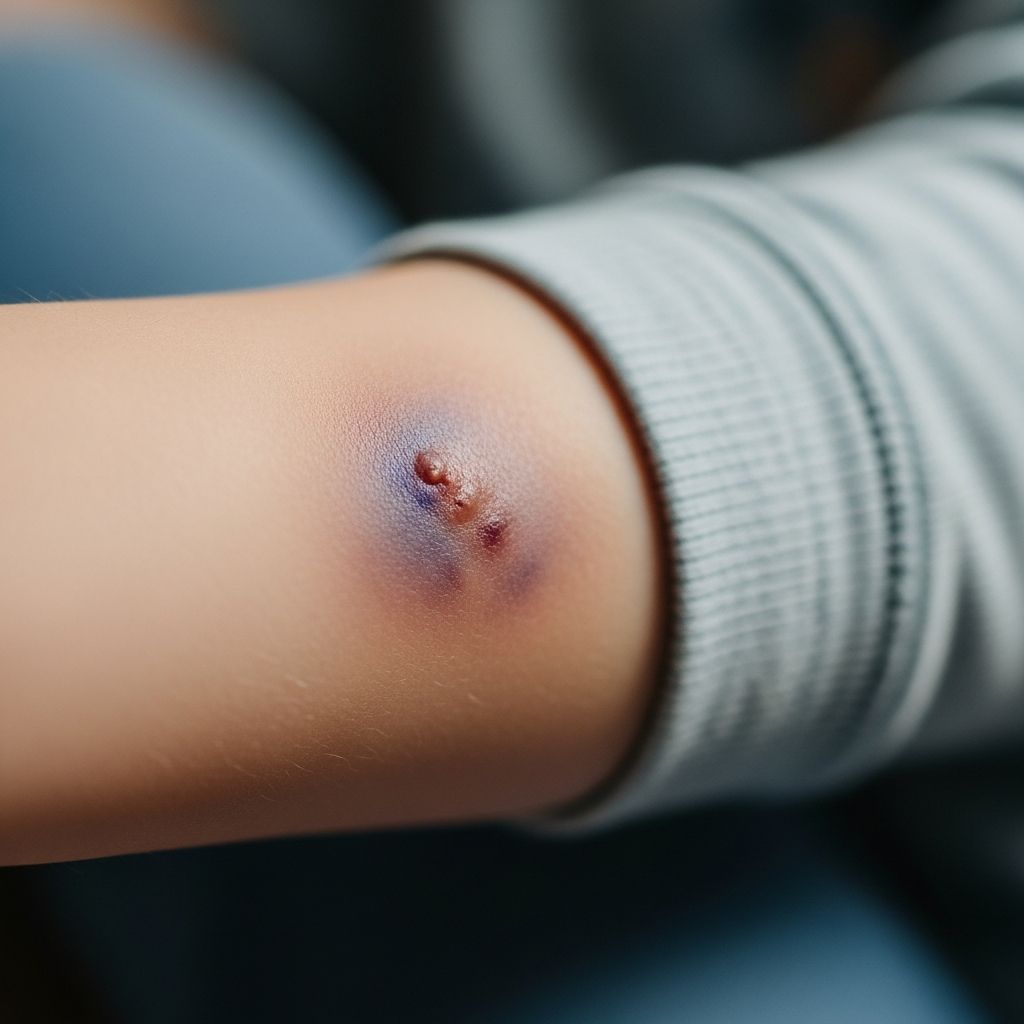
Children fall, bump, and tumble their way through growing up, so seeing a bruise or swelling is almost a daily event in some families. A hematoma is one kind of injury that can look alarming but is often manageable when parents understand what it is and when to seek help. This guide explains hematomas in simple language, focusing on how they affect kids, what signs to watch for, and how doctors may treat them.
What Is a Hematoma?
A hematoma is a collection of blood that has leaked out of a damaged blood vessel and pooled in nearby tissues or spaces inside the body. Instead of flowing normally through veins and arteries, the blood sits in one spot, which can cause a raised lump, swelling, and discoloration of the skin. Hematomas can form almost anywhere: under the skin, in muscles, under the nails, inside organs, or even inside the skull around the brain.
On the outside, a hematoma may look like a firm, sometimes tender bump with a deep purple, blue, or reddish color that gradually fades as the body reabsorbs the blood. On the inside, especially in the head, a hematoma may not be visible at all but can still cause symptoms because of pressure on the brain or other tissues.
Hematoma vs. A Simple Bruise
The words “bruise” and “hematoma” are often used as if they mean the same thing, but there are subtle differences that are useful for parents to know. A bruise is usually a flatter area of discoloration where small blood vessels near the surface have broken and leaked a small amount of blood under the skin. A hematoma generally involves more bleeding and may create a noticeable lump.
In everyday conversation, doctors might still call a small, raised bruise a hematoma, especially if there is a clear pocket of blood. For parents, the key is not the exact label but how the injury behaves: how big it is, how painful it feels, and whether the child has other worrisome symptoms.
Common Causes of Hematomas in Kids
Most hematomas in children come from everyday accidents, but some can be linked to underlying medical issues or medicines that affect how the blood clots. Understanding the most common triggers can help parents connect the dots between an injury and the bump that follows.
- Falls and playground mishaps: Tripping, falling off a bike, or colliding with playground equipment are classic ways kids develop hematomas on the shins, knees, forehead, or scalp.
- Sports injuries: Contact sports such as soccer, basketball, hockey, and martial arts can lead to direct blows to muscles and joints, causing deeper hematomas.
- Household bumps: Running into furniture, doors, or countertops can create localized hematomas, especially on the head and legs.
- Birth-related hematomas in newborns: New babies can develop scalp hematomas during a difficult delivery, especially if tools such as vacuum extractors or forceps are used.
- Medical procedures: Blood draws, injections, or surgery can occasionally lead to hematomas at the site of a needle or incision.
- Blood-clotting problems: Children with conditions that affect clotting, or who take certain medications, may develop hematomas more easily and from more minor bumps.
Types of Hematomas Parents May Hear About
Doctors sometimes classify hematomas based on where they form. Knowing these terms can help parents follow along in medical conversations without feeling overwhelmed by jargon.
| Type | Location | Typical Cause | Key Concern |
|---|---|---|---|
| Subcutaneous hematoma | Under the skin | Everyday bumps and falls | Local pain and swelling; usually mild |
| Muscle (intramuscular) hematoma | Within a muscle group, such as the thigh | Sports impact, major collision | Deep pain, stiffness, limited movement |
| Subungual hematoma | Under the fingernail or toenail | Finger or toe slammed in a door, heavy object dropped | Throbbing pain under the nail |
| Scalp hematoma | Between the scalp layers and the skull | Head bump on furniture, playground equipment, or floor | Visible “goose egg”; watch for signs of head injury |
| Intracranial hematoma | Inside the skull, around or within the brain | Serious head trauma, high-speed accidents | Medical emergency due to pressure on the brain |
What a Hematoma Looks and Feels Like
Most parents first notice a hematoma because of a sudden lump or swelling where a child has bumped an arm, leg, or head. The area may be tender when touched, and the child may cry or pull away when pressure is applied. Over time, the color of the skin can shift through shades of purple, blue, green, and yellow as the body breaks down and reabsorbs the pooled blood.
Some hematomas feel firm at first and then gradually soften as the blood is reabsorbed. Others, especially under a nail or in tight spaces like fingers and toes, can cause sharp or throbbing pain even if the visible discoloration is small. Deep hematomas in muscles may not show much color change at the surface but can cause aching pain and stiffness, especially when the child tries to use the injured body part.
Warning Signs That Need Urgent Care
While many hematomas are mild and heal on their own, certain symptoms are red flags that require prompt medical attention. These signs may mean there is more than a simple surface bruise or that the hematoma is large or located in a dangerous area, such as inside the skull.
- Loss of consciousness or a child who does not respond normally after a head injury.
- Persistent or worsening headache, especially after a blow to the head.
- Repeated vomiting, confusion, slurred speech, or unusual behavior.
- Unequal pupils, weakness, or difficulty walking.
- A rapidly enlarging lump, or swelling that becomes tense and extremely painful.
- Hematomas near the eye causing vision changes or inability to move the eye normally.
- Signs of infection at the site, such as warmth, redness spreading outward, fever, or pus.
- Hematomas in children with known bleeding disorders or those taking blood-thinning medication.
How Doctors Diagnose a Hematoma
Diagnosis usually starts with a careful history and physical exam. The clinician will ask how the injury happened, how long ago it occurred, whether the child lost consciousness, and what symptoms have appeared since the event. They will then examine the injured area and the child’s overall condition, looking for signs that point to a simple soft-tissue hematoma versus a more serious internal bleed.
In many cases, no tests are needed beyond the examination, especially when the child is alert, active, and the hematoma is small and clearly linked to a minor incident. If there is concern about deeper bleeding, bone injury, or bleeding around the brain, imaging tests such as X-rays, ultrasound, CT scans, or MRI scans may be recommended. Blood tests may be ordered if a clotting problem is suspected or if the child appears very pale or unusually tired.
At-Home Care for Mild Hematomas
Parents can usually manage small, uncomplicated hematomas at home using simple comfort measures. These steps can help reduce pain and swelling and support the body’s natural healing process.
- Rest: Encourage your child to rest the injured area and avoid high-impact activities that might cause more trauma.
- Cold compresses: Apply a cold pack wrapped in a thin cloth for 10–20 minutes at a time during the first day to reduce swelling and discomfort. Avoid putting ice directly on the skin.
- Elevation: If the hematoma is on an arm or leg, gently elevate the limb on pillows to help limit swelling.
- Pain relief: Use child-appropriate pain relievers as advised by a healthcare professional. Follow dosing instructions carefully and ask before giving any medicine if your child has a bleeding tendency.
- Observation: Keep an eye on the size of the lump, the color of the skin, and your child’s behavior over the next day or two. Most small hematomas get less painful and gradually start to look better.
Medical Treatments for More Serious Hematomas
When a hematoma is large, extremely painful, or located in a critical area, medical treatment goes beyond simple rest and cold packs. The goal is to relieve pressure, prevent complications, and address any underlying bleeding or clotting issues.
Treatment options can include draining pooled blood with a needle or a small incision, especially for subungual hematomas under the nail or tense collections under the skin. In more serious cases, particularly when the hematoma is inside the skull or deep in a muscle compartment, surgery may be necessary to remove the blood and repair damaged blood vessels. Children with clotting disorders might receive medications or blood products to help the blood clot properly and stop continued bleeding.
Healing Timeline and What to Expect
The body is surprisingly efficient at cleaning up hematomas over time. Once bleeding stops, the blood clot is gradually broken down and reabsorbed. The outer color changes you see on the skin reflect this process, with deep purple often shifting to bluish, then green, and finally yellow before the normal skin tone returns.
Small hematomas may improve significantly within a few days and resolve fully within one to two weeks. Larger or deeper hematomas can take several weeks, and some may leave a small, firm area that slowly softens. During this time, mild itching or tenderness can occur as part of the healing process. Parents should contact a healthcare professional if pain suddenly increases, the lump begins to grow again, or new symptoms appear after an initial period of improvement.
Potential Complications to Watch For
Although most hematomas in children heal without lasting effects, there are possible complications that parents should know about. These are more common with large hematomas, deep muscle involvement, or injuries in areas with limited space, such as the skull or within tight muscle compartments.
- Infection: Blood pooled under the skin or near a wound can sometimes become infected, leading to increased pain, redness, warmth, and fever.
- Pressure on nerves: A large hematoma can press on nearby nerves, causing numbness, tingling, or weakness in the affected limb.
- Calcification: In some cases, the body may deposit calcium in a long-standing hematoma, creating a firmer mass that takes longer to resolve.
- Compartment syndrome: Rarely, intense swelling in a muscle compartment can cut off blood flow and damage tissues, requiring urgent surgical treatment.
- Brain injury from intracranial hematomas: Bleeding inside the skull can raise pressure on the brain and is a medical emergency that may lead to serious complications without prompt care.
Supporting Your Child Emotionally After an Injury
Beyond the physical bump, a hematoma can be scary for a child, especially if it appears suddenly as a large lump or if a hospital visit is needed. Calm, reassuring words, gentle touch, and honest explanations at a child’s level can ease anxiety. Let your child know that the body is healing and that the strange colors and swelling are part of that process.
Distraction also helps. Quiet activities like reading, drawing, watching a favorite show, or playing card games can keep kids occupied while they rest. For children who are especially fearful after an accident, involving them in simple tasks—such as holding the ice pack wrapped in a cloth or choosing a bandage—can give them a sense of control and reduce worry.
Practical Prevention Tips for Parents
No family can prevent every bruise or bump, but there are realistic steps that reduce the risk of serious hematomas and injuries. The goal is not to wrap children in bubble wrap but to combine safe environments with age-appropriate freedom.
- Use properly fitted helmets for biking, skating, scooters, and contact sports.
- Install safety gates, window guards, and secure furniture to walls to limit dangerous falls in young children.
- Encourage children to use handrails on stairs and to walk—rather than run—on slippery or uneven surfaces.
- Teach and model safe play, such as no pushing on playground equipment and using slides and climbing structures as intended.
- Review sports rules and reinforce the importance of protective gear, warm-up exercises, and listening to coaches.
When to Call the Doctor
Parents often wonder when a hematoma can be managed at home and when professional advice is needed. In general, it is wise to contact a healthcare provider in any of the following situations:
- The hematoma is very large, extremely painful, or over a joint that your child suddenly cannot move.
- Your child is under six months old and develops any significant swelling or bruise.
- There was a head injury and your child seems unusually sleepy, irritable, confused, or not acting like themselves.
- Bruises or hematomas appear frequently with little or no clear injury, raising concern about a possible bleeding or clotting problem.
- The skin over the hematoma breaks down, becomes very red, or begins to drain fluid.
Frequently Asked Questions About Hematomas in Kids
Is a “goose egg” on the head always dangerous?
A soft lump on the scalp after a bump—often called a “goose egg”—is usually a scalp hematoma and not a sign of damage to the brain itself. The scalp has many small blood vessels, so bleeding in this area can look dramatic while still being relatively superficial. However, parents should always watch for other signs of head injury, such as vomiting, confusion, or unusual sleepiness, and seek medical care if these appear.
Can I massage a hematoma to make it go away faster?
Massaging a fresh hematoma is not recommended because it can disrupt fragile blood clots and worsen bleeding. In the first couple of days, gentle rest and cold compresses are safer approaches. Later in the healing process, a healthcare professional may advise on gentle movement or stretching if a deeper hematoma is affecting a muscle or joint, but this should always follow medical guidance.
Will a nail with a subungual hematoma fall off?
When blood collects under a nail after a crush injury, the pressure can cause intense pain and dark discoloration. In some cases, the damaged nail may eventually loosen and fall off as a new nail grows in. If the pain is significant or the area looks badly injured, a clinician may relieve the pressure by making a tiny opening in the nail surface under sterile conditions.
Do hematomas mean my child has a bleeding disorder?
Most hematomas follow a clear bump or injury and do not mean that there is a problem with the blood. However, if your child bruises easily, has very large hematomas from minimal trauma, or develops many unexplained bruises, your healthcare provider may recommend blood tests to check clotting and platelet function. Early detection of a bleeding disorder allows for better planning and safer care during illnesses, injuries, or surgeries.
How can I talk to my child about avoiding injuries without scaring them?
Safety messages are most effective when they are calm, specific, and age-appropriate. Instead of focusing on scary outcomes, emphasize simple rules, such as “We always wear helmets on bikes,” or “We slide feet first.” Praise your child when they follow safety rules and involve them in choosing protective gear, like picking out a helmet design they like. This approach encourages cooperation and builds lifelong habits without creating anxiety.
Key Takeaways for Parents
Hematomas are a normal part of childhood for many active kids, but understanding them can make these injuries far less frightening. Most hematomas are minor and respond well to rest, cold compresses, and time, while a smaller number signal a need for urgent care. By staying observant, using preventive strategies, and partnering with healthcare professionals when needed, parents can protect their children’s health while still allowing them the freedom to play, explore, and grow.