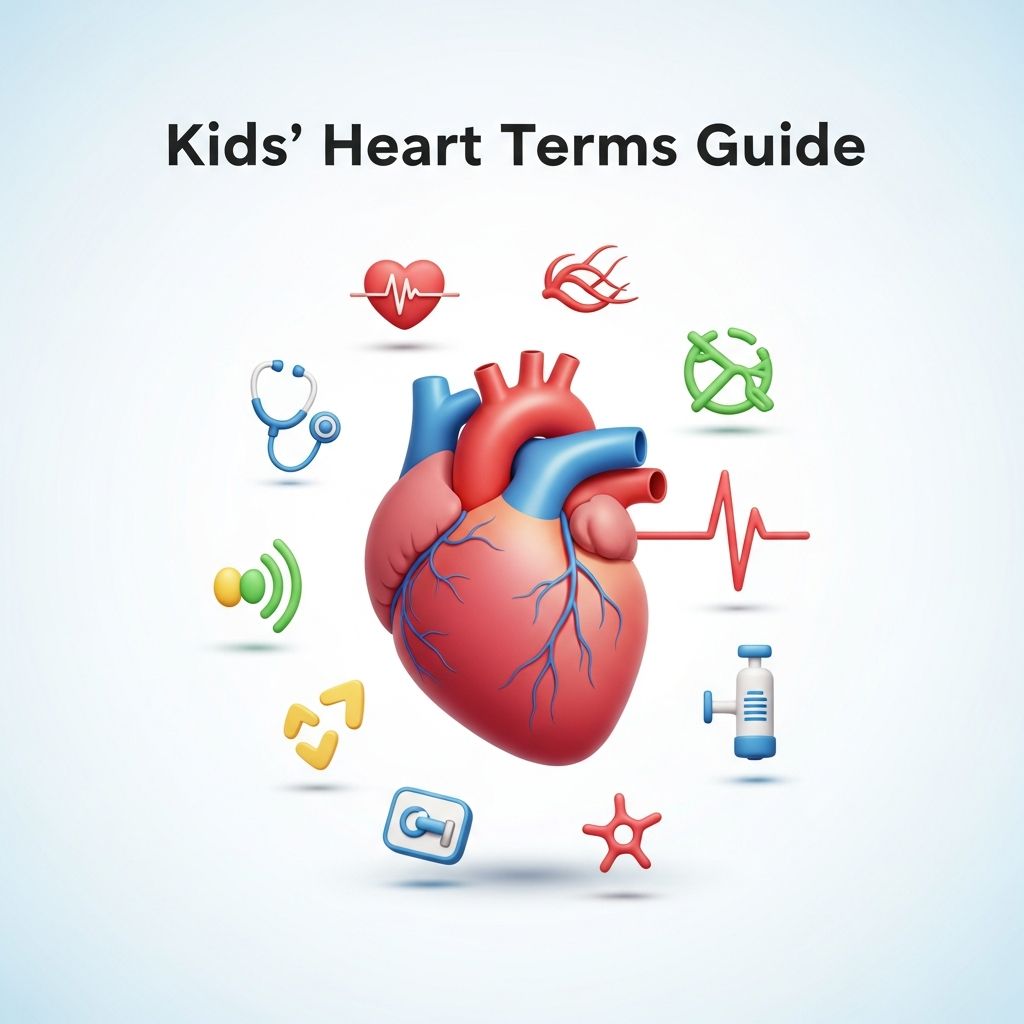
Your heart is like a super-powered pump that works non-stop, sending oxygen-rich blood everywhere in your body. It beats about 100,000 times a day! But sometimes, doctors use big words when talking about it. This guide breaks them down into simple language so kids can learn about their heart health.
Basic Heart Facts for Kids
The heart is a fist-sized muscle in your chest. It has four rooms: two on top called atria and two on bottom called ventricles. Blood flows in a special loop—from body to right side, to lungs for oxygen, back to left side, then out to body again. Kids’ hearts beat faster than grown-ups: up to 150 times a minute when resting as a baby, slowing to 60-100 by teen years.
- Right atrium and ventricle: Handle oxygen-poor blood from the body.
- Left atrium and ventricle: Pump oxygen-rich blood out.
- Valves: One-way doors that keep blood moving the right way, like tricuspid, mitral, pulmonary, and aortic.
Healthy hearts make a ‘lub-dub’ sound from valves closing. Problems can change that sound or how blood flows.
Common Heart Conditions Kids Might Hear About
Some kids are born with heart differences, called congenital heart defects (CHD). These happen early in pregnancy when the heart forms. About 1 in 100 babies has some kind, from tiny holes needing no fix to serious ones needing surgery.
| Term | What It Means | Why It Matters |
|---|---|---|
| Congenital Heart Defect | A heart structure problem present at birth, like holes or narrow vessels. | Can mix oxygen-poor and rich blood, causing tiredness or blue skin. |
| Heart Murmur | Extra whooshing sound from blood flow turbulence. | Often harmless in kids, but sometimes signals a defect or valve issue. |
| Arrhythmia (Dysrhythmia) | Irregular heartbeat—too fast (tachycardia), too slow (bradycardia), or quivery (fibrillation). | Affects pumping; may need meds or pacemaker. |
| Atrial Septal Defect (ASD) / Ventricular Septal Defect (VSD) | Holes between atria or ventricles. | Lets blood mix; may close on own or need repair. |
Other issues include cyanosis (bluish skin from low oxygen) and congestive heart failure (CHF), where the heart can’t pump well, causing swelling or poor weight gain.
Heart Muscle and Infection Terms
The heart muscle (myocardium) can get inflamed or weak. Myocarditis is swelling from viruses, making the heart tired. Pericarditis affects the sac around the heart. Endocarditis is an inner lining infection, often bacterial, needing antibiotics.
- Cardiomyopathy: Weak or thick heart muscle, sometimes from infections.
- Heart Attack (Myocardial Infarction): Rare in kids; blocked blood starves muscle.
Conditions like Down syndrome often link to specific defects, such as atrioventricular canal defects.
Doctors and Specialists
A pediatric cardiologist is the heart expert for kids. They diagnose issues beyond a regular doctor.
- Cardiologist: Studies heart function and diseases.
- Electrophysiologist: Focuses on heart rhythms and electrical issues.
Teams at children’s hospitals handle everything from checkups to surgeries.
Tests to Check Your Heart
Doctors use cool tools to peek inside without big cuts. Here’s a rundown:
| Test | How It Works | What It Shows |
|---|---|---|
| Echocardiogram (Echo) | Ultrasound waves make heart pictures and videos. | Structure, valves, blood flow. |
| Electrocardiogram (ECG/EKG) | Stickers on chest track electrical signals. | Rhythm, rate, heart strain. |
| Cardiac Catheterization | Thin tube through blood vessel to heart. | Pressures, oxygen levels, fixes defects. |
| Chest X-ray | Quick picture of heart size and lungs. | Enlargement, fluid. |
| MRI or CT Scan | Magnets or X-rays for detailed images. | Complex structures, vessels. |
| Oxygen Saturation Test | Finger clip measures blood oxygen. | Screens for cyanosis/CHD at birth. |
Transesophageal Echo (TEE) goes down the throat for closer views. Blood tests check for infections or muscle damage.
Procedures and Treatments
Many fixes are possible. Pacemaker: Battery device keeps steady beat, placed under skin.
- Angioplasty: Balloon widens narrow vessels during cath.
- Surgery: Patches holes, fixes valves, or swaps vessels (like in transposition).
Meds control rhythms, thin blood, or ease pumping. Lifestyle tips: aerobic exercise (running, biking) strengthens the heart.
Heart Terms from A to Z
Quick list of more words:
- Aerobic Activity: Exercise using oxygen, pumps heart healthily.
- Atresia: No opening where needed, like valve atresia.
- Coarctation: Narrow aorta section.
- Ductus Arteriosus: Fetal shortcut vessel; should close after birth.
- Dyspnea: Hard breathing from heart strain.
- Tetralogy of Fallot: Four defects causing cyanosis.
Understanding these helps kids feel less scared at doctor visits.
Daily Tips for a Strong Kid Heart
Eat fruits, veggies, and whole grains. Play outside 60 minutes daily. No smoking around you—it hurts blood vessels. Tell grown-ups if you feel dizzy or short of breath.
Frequently Asked Questions (FAQs)
What is a normal heart rate for kids?
Newborns: 120-150 bpm. School-age: 70-100 bpm. Check with your doctor for your age.
Can heart murmurs go away?
Yes, many innocent ones fade as kids grow. Others need watching.
Is congenital heart disease my fault?
No! Most causes unknown; not from mom’s actions during pregnancy.
What does blue skin mean?
Cyanosis—low oxygen. Needs quick doctor check.
How do I prepare for a heart test?
Follow fasting rules if needed; stay calm—it’s like a superhero scan!
This guide empowers kids with heart knowledge. Share with family and ask your cardiologist questions!
References
- Heart Definitions from the Heart Institute at Children’s — Children’s Hospital of Pittsburgh. 2023. https://www.chp.edu/our-services/heart/for-patients-families/family-guide-pediatric-cardiology/about/heart-definitions
- Chapter 3: Learning – Children’s Heart Network — Children’s Heart Network. 2024. https://www.childrensheartnetwork.org/heart-soul/chapter-3-learning/
- Words to Know (Heart Glossary) (for Kids) — Nemours KidsHealth. 2025-01-10. https://kidshealth.org/en/kids/heart-glossary.html
- How Does Your Child’s Heart Work? — Children’s Healthcare of Atlanta. 2024. https://www.choa.org/parent-resources/heart/how-the-heart-works
- About the Heart and Blood Vessels — Stanford Children’s Health. 2024. https://www.stanfordchildrens.org/en/topic/default?id=about-the-heart-and-blood-vessels-90-P01761
- Glossary of Heart-Related Terms — Cincinnati Children’s Hospital. 2025. https://www.cincinnatichildrens.org/health/h/heart-glossary
- Glossary – Cardiology — The Royal Children’s Hospital. 2024. https://www.rch.org.au/cardiology/parent_info/Glossary/