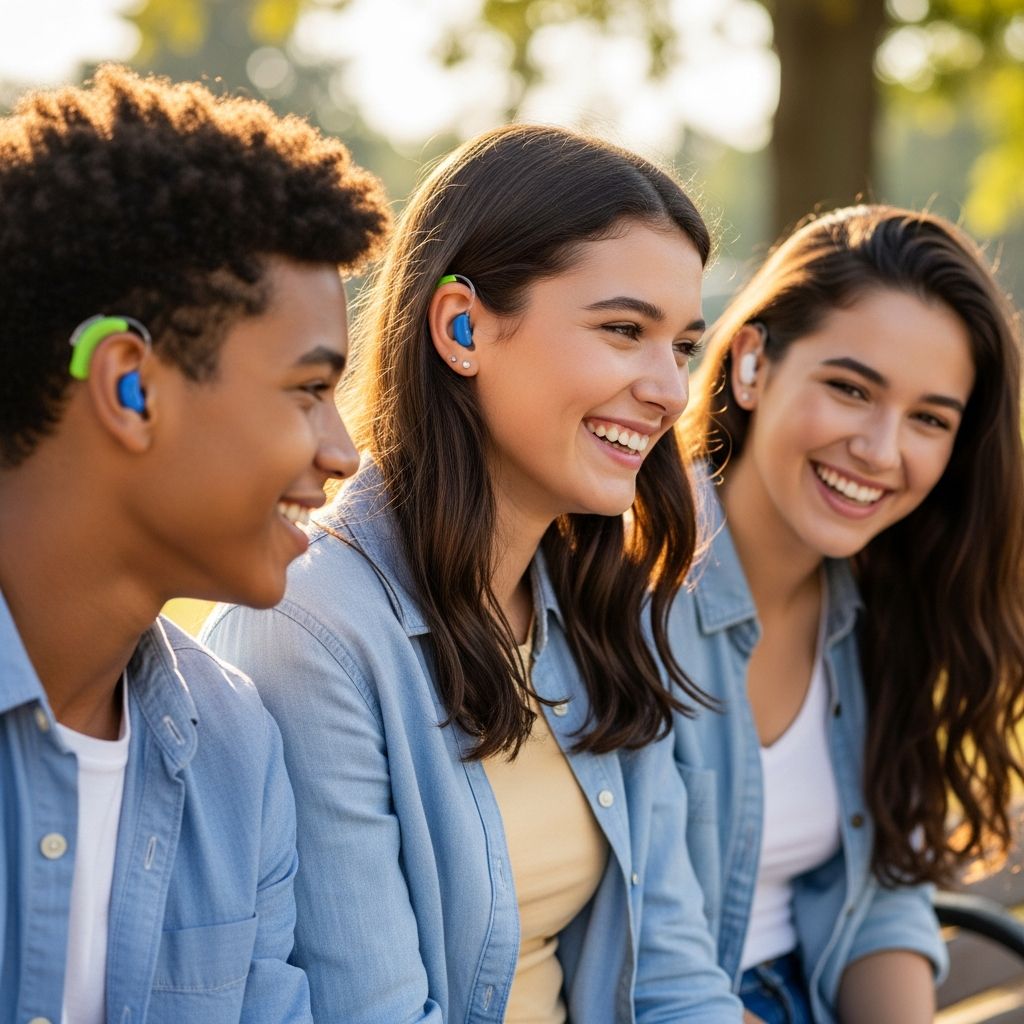
Living with hearing loss as a teenager can feel overwhelming, but hearing aids and modern hearing technology make it possible to stay connected at school, online, and with friends. This guide explains how hearing aids work, what options exist for teens, and how to feel confident using them every day.
Why Hearing Matters So Much in Your Teen Years
Your teen years are full of talking, learning, and social life. Healthy hearing supports:
- School success – understanding teachers, class discussions, and videos
- Friendships – joining conversations at lunch, on the bus, or online
- Safety – hearing alarms, traffic, and important announcements
- Mental health – feeling included instead of isolated or left out
For many teens with permanent sensorineural hearing loss, hearing aids are one of the main tools clinicians use to improve access to sound.
How the Ear Hears – and Where Hearing Aids Help
To understand hearing aids, it helps to know the basic path sound takes to your brain:
- Sound waves enter the outer ear and travel down the ear canal.
- They make the eardrum vibrate, moving three tiny middle-ear bones.
- These bones send vibrations into the inner ear (cochlea), a fluid-filled structure lined with thousands of hair cells that convert vibration into electrical signals.
- The signals travel along the auditory nerve to the brain, where they are processed as sound.
In sensorineural hearing loss, many of the inner-ear hair cells are damaged or missing. Hearing aids do not fix those cells, but they make incoming sounds stronger so the remaining hair cells and the auditory nerve can pick up more detail.
What a Hearing Aid Actually Does
Even tiny hearing aids include several important parts:
- Microphone – picks up sound from the environment
- Digital processor (chip) – analyzes, cleans up, and amplifies sounds at different pitches
- Receiver (speaker) – sends the processed sound into your ear
- Power source – a disposable or rechargeable battery
- Controls and software – programs, apps, or buttons that let you change listening settings
Modern digital hearing aids can adjust sound in many frequency bands, reduce some background noise, and focus more on speech than on unimportant sounds.
Common Hearing Aid Styles for Teens
Audiologists consider your type and level of hearing loss, ear shape, lifestyle, and preferences before recommending a style.
| Style | Where It Sits | Typical Use | Pros for Teens |
|---|---|---|---|
| Behind-the-Ear (BTE) | Resting behind the ear, with tubing to an earmold | Mild to profound hearing loss | Durable, easy to handle, works well with school accessories, flexible for growing ears |
| Receiver-in-Canal (RIC/RITE) | Behind the ear with a thin wire to a small speaker in the canal | Usually mild to severe hearing loss | Discreet, comfortable, often has strong connectivity features |
| In-the-Ear (ITE) | Custom shell filling part of the outer ear | Mild to severe hearing loss | Easy to insert, looks like a single piece, often good for older teens with stable ear size |
| In-the-Canal (ITC) / Completely-in-Canal (CIC) | Small devices sitting partly or deeply in the ear canal | Mild to moderately severe hearing loss | Very discreet; can be hard to see from the outside |
For many school-age children and younger teens, BTE hearing aids are the first choice because they are sturdy, easy to adjust, and compatible with educational accessories like FM or digital modulation (DM) systems.
Special Features Teens Often Find Helpful
Because teens move between many noisy and quiet settings each day, hearing aids often include extra tools to keep up:
- Multiple listening programs – for classes, sports, music, or noisy hangouts
- Directional microphones – focus on sound coming from in front of you to improve speech understanding in noise
- Noise reduction and feedback control – reduce hums, whistling, and background noise
- Telecoil (T-coil) – receives sound from compatible sound systems in theaters, auditoriums, and some classrooms
- Bluetooth connectivity – streams calls, music, and videos from smartphones, laptops, or tablets directly to your ears
- Rechargeable batteries – avoid frequent battery changes, useful for busy schedules
School Technology That Works With Hearing Aids
Many schools use devices that send a teacher’s voice directly to your hearing aids so you can hear more clearly even when there is distance or background noise.
- Personal FM or DM systems – the teacher wears a microphone that transmits their voice straight into your hearing aids, which can greatly improve understanding in class, in the car, or in noisy places.
- Sound-field systems – speakers placed around the classroom amplify the teacher’s voice for everyone, improving listening for all students.
- Remote microphones – small wireless mics that friends, coaches, or family can wear, sending their voice to your devices in difficult listening situations.
Getting Fitted for Hearing Aids
Before anyone chooses a hearing aid, an audiologist carries out a full hearing evaluation and talks with you and your family about daily listening needs.
The Hearing Evaluation
A complete assessment often includes:
- Questions about your medical and listening history
- Looking into your ears (otoscopy)
- Tests in a sound booth to measure what pitches and volumes you can hear in each ear
- Speech tests to see how you understand words at different volumes and in quiet or noise
Programming and Fine-Tuning
Once a style is chosen:
- The audiologist takes an impression or chooses appropriate ear pieces.
- They program the hearing aids using your test results so sound is set for your specific hearing pattern.
- You try the hearing aids in the office while the audiologist adjusts volume, tone, and special features.
- Follow-up visits fine-tune settings based on your real-life experience at home and school.
Daily Life: Using Hearing Aids With Confidence
It takes time to get used to amplified sound, but most teens adjust over days to weeks. Strategies that help include:
- Wearing them consistently during waking hours so your brain adapts to new sound levels.
- Starting in calm environments (home, quiet room) before tackling busy cafeterias or sports events.
- Sitting closer to teachers or speakers and looking at their face when possible.
- Asking people to repeat or rephrase when you miss something, instead of pretending to understand.
- Using assistive tech (FM/DM, captions, remote mics) when offered to make listening less tiring.
Caring for Your Hearing Aids
Good care keeps hearing aids working well and can prevent unexpected problems.
- Daily checks
- Look for cracks, moisture, or blocked openings.
- Check sound with a listening tool or as shown by your audiologist.
- Cleaning
- Wipe the outside with a dry, soft cloth.
- Use a small brush or tool (if provided) to gently clear wax from openings.
- Never use water, cleaning wipes with alcohol, or household cleaners on hearing aids.
- Moisture protection
- Remove them before showering, swimming, or applying hair products.
- Store them in a dry case or a dehumidifier kit at night if recommended.
- Battery care
- Recharge devices as directed or replace disposable batteries when low.
- Keep spare batteries available if you use disposables.
- Store batteries away from young children and pets; they can be dangerous if swallowed.
Hearing Aids, Identity, and Confidence
It is normal for teens to worry about standing out. Many people of all ages now wear devices in or on their ears, including earbuds, headphones, and wireless headsets, so hearing aids are less noticeable than ever. Designing how your aids look can even feel like self-expression.
- Custom colors or designs for earmolds or shells if your audiologist offers them.
- Explaining your hearing loss briefly to close friends, so they understand how to help.
- Asking for simple changes, like facing you when they talk or avoiding covering their mouth.
- Connecting with other teens who have hearing loss through support groups or online communities.
Questions to Ask Your Audiologist
Bringing prepared questions can help you feel more in control at appointments:
- What type of hearing loss do I have, and how strong is it in each ear?
- Why are you recommending this specific hearing aid style for me?
- What special features (Bluetooth, telecoil, programs) will be useful for my school and hobbies?
- How often should I schedule checkups for my hearing and my hearing aids?
- What should I do if one hearing aid stops working or gets wet?
- Are there school accommodations or classroom devices I should know about?
Frequently Asked Questions (FAQs)
Do hearing aids restore normal hearing?
No. Hearing aids improve access to sound by amplifying it, but they do not restore the inner ear to its original condition. With proper fitting and consistent use, many teens hear enough to follow conversations and succeed in school more easily.
Will I need hearing aids forever?
It depends on the cause and stability of your hearing loss. Many types of permanent sensorineural hearing loss are long-lasting, so ongoing amplification is recommended. Your audiologist will monitor your hearing over time and may adjust technology as your needs change.
What if my hearing changes?
If you notice that sounds seem different, you are turning up the TV more, or you have more trouble in class, let your parents or guardian and audiologist know. A new hearing test and programming changes can often help.
Can I play sports with hearing aids?
Many teens safely play non-contact sports while wearing hearing aids, often using clips or sports headbands to keep them in place. For heavy contact or water sports, your audiologist can advise when to remove them and how to protect them from damage.
Are hearing aids covered by insurance or other programs?
Coverage varies by country, region, and insurance plan. Some health systems, school programs, or state and national services help families obtain hearing aids for children and teens. Your audiologist or clinic social worker can help you explore options.
References
- Hearing Aids (for Teens) — Nemours KidsHealth. 2023-05-01. https://kidshealth.org/en/teens/hearing-aids.html
- Hearing Aids for Children — American Speech-Language-Hearing Association (ASHA). 2022-06-28. https://www.asha.org/practice-portal/professional-issues/hearing-aids-for-children/
- Hearing Aids — Boston Children’s Hospital. 2023-03-10. https://www.childrenshospital.org/treatments/hearing-aids
- Hearing Aids: How to Choose the Right One — Mayo Clinic. 2023-08-02. https://www.mayoclinic.org/diseases-conditions/hearing-loss/in-depth/hearing-aids/art-20044116
- Types of Hearing Aids — Together by St. Jude™. 2022-11-15. https://together.stjude.org/en-us/medical-care/rehabilitation/audiology/hearing-aids-in-teens-and-adults.html
- Teenagers with Hearing Loss — Phonak. 2023-02-20. https://www.phonak.com/en-nz/campaign/hearing-loss-children