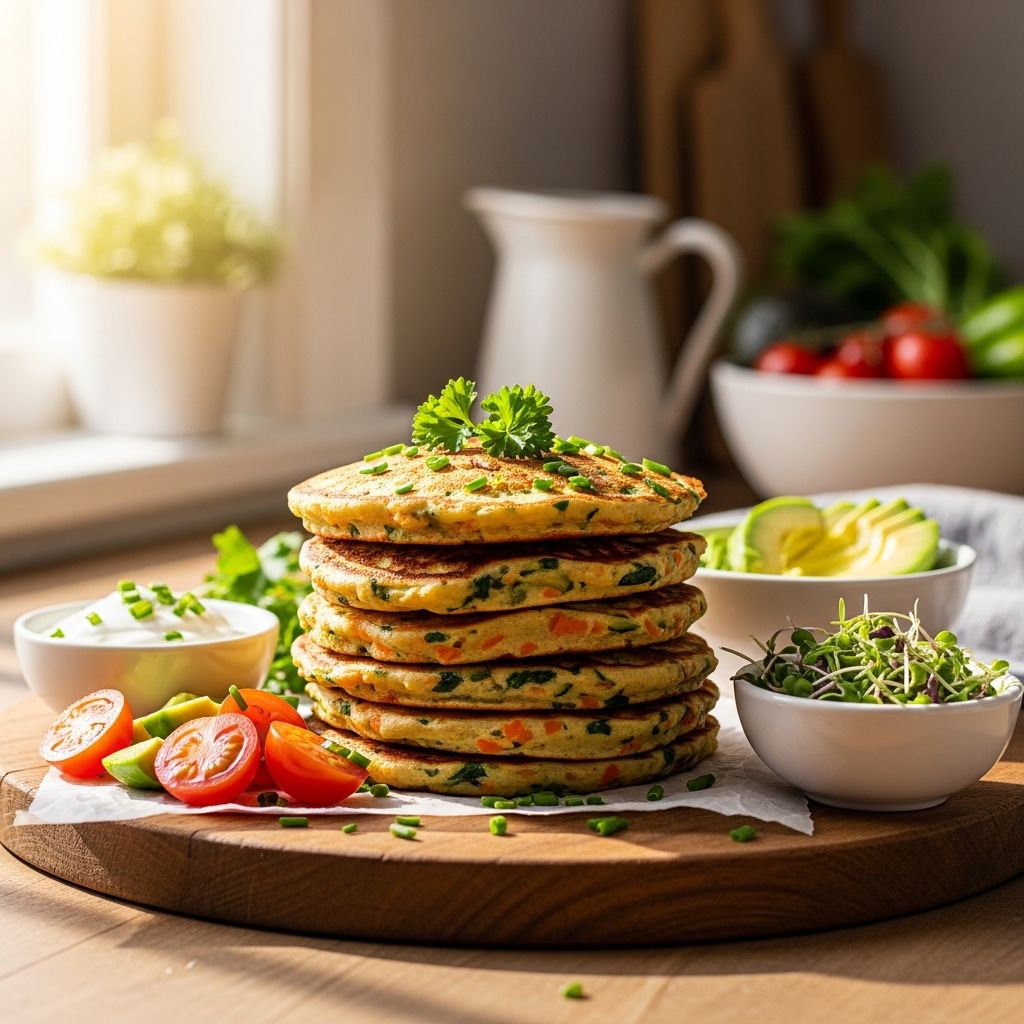
Vegetable pancakes transform the classic breakfast staple into a powerhouse of nutrition, blending shredded produce with simple batters for a savory treat that appeals to children and adults alike. These versatile dishes pack fiber, vitamins, and minerals into every bite, making them ideal for busy families seeking wholesome meals.
Why Vegetable Pancakes Are a Smart Choice for Families
Incorporating more vegetables into daily diets can be challenging, especially with picky eaters, but veggie pancakes offer a clever solution. By finely chopping or grating ingredients like carrots, zucchini, and cabbage, they become nearly invisible while delivering essential nutrients. A typical serving provides around 200 calories, 5-9 grams of protein, and significant dietary fiber—up to 6 grams per portion—supporting digestion and sustained energy.
These pancakes stand out for their adaptability. They align with various dietary needs, from gluten-free to vegan, and can be prepared in under 20 minutes. Oats, a key ingredient in many recipes, add beta-glucan fiber that aids heart health and stabilizes blood sugar levels. Parents appreciate how this dish sneaks in veggies without compromising flavor, often enhanced by garlic, scallions, or mild spices.
Nutritional Breakdown of Veggie Pancakes
Understanding the health benefits starts with the numbers. Here’s a comparison of nutritional profiles from popular preparations:
| Nutrient (per serving) | Standard Veggie Pancake | Oat-Based Version | Korean-Style |
|---|---|---|---|
| Calories | 200-315 | ~183 | 183 |
| Protein (g) | 5-8 | 7-9 | 9 |
| Fiber (g) | 6-7 | 5-6 | 5.4 |
| Total Fat (g) | 7-11 | 3.5 | 3.5 |
| Sodium (mg) | 630 | Low | 208 |
This table highlights how choices in flour, oil, and veggies impact the profile. Opting for whole grains like oats or whole-wheat flour boosts fiber and reduces refined carbs, while baking minimizes fat.
Essential Ingredients for Success
Building a great veggie pancake batter requires balance. Start with a base of flours: all-purpose, whole-wheat, oats, semolina, or rice flour for texture and nutrition. Oats flour, made by grinding rolled oats, provides a gluten-free option when paired with chickpea flour.
- Vegetables (2-3 cups total): Grated carrots for sweetness, shredded cabbage for crunch, zucchini or bell peppers for moisture, onions or scallions for savoriness, and greens like spinach for iron.
- Liquids and Binders: Ice-cold water (2-2.5 cups) for crispiness, eggs or flax eggs for structure, yogurt (Greek or plant-based) for tenderness.
- Seasonings: Salt, pepper, garlic, soy sauce, or herbs to elevate taste without overpowering.
- Fats: Minimal oil for pan-frying or none for baking.
Proportions matter: Aim for a pancake-like consistency—not too thick, not runny. Fresh, seasonal produce maximizes flavor and antioxidants.
Step-by-Step Guide to Making Veggie Pancakes
Preparation is straightforward, taking 15-30 minutes total. Follow these steps for foolproof results:
- Prep Veggies: Wash, peel if needed, and grate or finely chop 2-3 cups of mixed vegetables. A food processor pulses them to uniform bits without liquifying.
- Mix Dry Ingredients: Combine 1-1.25 cups flour (e.g., 1 cup oats + 1/2 cup semolina + 1/4 cup rice) with salt and pepper.
- Form Batter: Whisk in cold water gradually to avoid lumps, then fold in veggies, eggs or yogurt. Rest 5-10 minutes for flavors to meld.
- Cook: Heat a non-stick pan over medium with 1 tsp oil. Spoon 1/4 cup batter per pancake, flatten slightly, and cook 2-3 minutes per side until golden. Keep warm in a 275°F oven.
- Serve: Pair with yogurt dip, soy sauce, or applesauce.
For larger batches, double ingredients and freeze cooked pancakes between parchment for quick reheats.
Customizing for Diets and Preferences
Versatility defines veggie pancakes. Make them gluten-free by swapping semolina for chickpea flour and using certified oats. For vegan versions, replace eggs with flaxseed (1 tbsp ground flax + 3 tbsp water per egg) and yogurt with plant-based alternatives. Oil-free cooking works on quality non-stick surfaces.
Global twists add excitement:
- Korean-Inspired: Use broccoli, cauliflower, and kimchi for probiotics and spice.
- Indian-Style: Add cumin, ginger, and cilantro with bottle gourd.
- Western Fritters: Zucchini and sweet potato with herbs.
Kids’ versions hide veggies finely; adventurous eaters enjoy chunkier textures.
Tips for Perfect Pancakes Every Time
- Use ice-cold water to prevent gluten development for tender results.
- Don’t overmix batter to keep pancakes light.
- Grate veggies just before mixing to retain crispness.
- Adjust water for humidity—thicker batter yields fluffier pancakes.
- Freeze extras: Reheat in toaster for crisp revival.
Health Advantages Beyond Basics
These pancakes contribute to broader wellness. High veggie content supplies vitamins A, C, K from carrots and greens, plus potassium for blood pressure regulation. Oats’ soluble fiber lowers cholesterol, per dietary guidelines. Low glycemic index makes them suitable for steady energy, ideal for school mornings.
For children, they promote veggie familiarity, combating picky eating. Studies from health organizations emphasize such creative preparations increase produce intake by 20-30% in young eaters.
Meal Ideas and Pairings
Beyond breakfast, serve as lunch wraps with protein or dinner sides. Pair with eggs for balance or fruit smoothies for contrast. A batch of 8-10 pancakes feeds a family of four generously.
Frequently Asked Questions
Can I make veggie pancakes ahead of time?
Yes, prepare batter and refrigerate up to 7 days or freeze cooked pancakes for 1 month. Thaw and reheat as needed.
Are veggie pancakes suitable for toddlers?
Absolutely, cut into small pieces. Use mild flavors and monitor for choking hazards with chunkier veggies.
How do I reduce sodium in the recipe?
Skip soy sauce, use fresh herbs, and low-sodium salts. Korean styles naturally clock in under 210mg per serving.
What if my pancakes fall apart?
Add an extra egg or more flour. Ensure medium heat to cook through without burning exteriors.
Can I bake instead of fry?
Yes, preheat oven to 400°F, use parchment-lined sheets, and bake 10-12 minutes per side for healthier results.
References
- Vegetable Pancake Nutrition — SnapCalorie. 2023. https://www.snapcalorie.com/nutrition/vegetable_pancake_nutrition.html
- Healthy Savory Vegetable Pancake With Oats — Fit Meal Ideas. 2023. https://fitmealideas.com/healthy-savory-vegetable-pancake-with-oats/
- Korean Vegetable Pancakes — American Heart Association Recipes. 2024-01-17. https://recipes.heart.org/en/recipes/korean-vegetable-pancakes
- Vegetable Pancakes — Denver Health Medical Plan. 2023. https://www.denverhealthmedicalplan.org/blog/recipe/vegetable-pancakes
- Korean Vegetable Pancakes — The Sylvia Center. 2023. https://www.sylviacenter.org/korean-vegetable-pancakes/