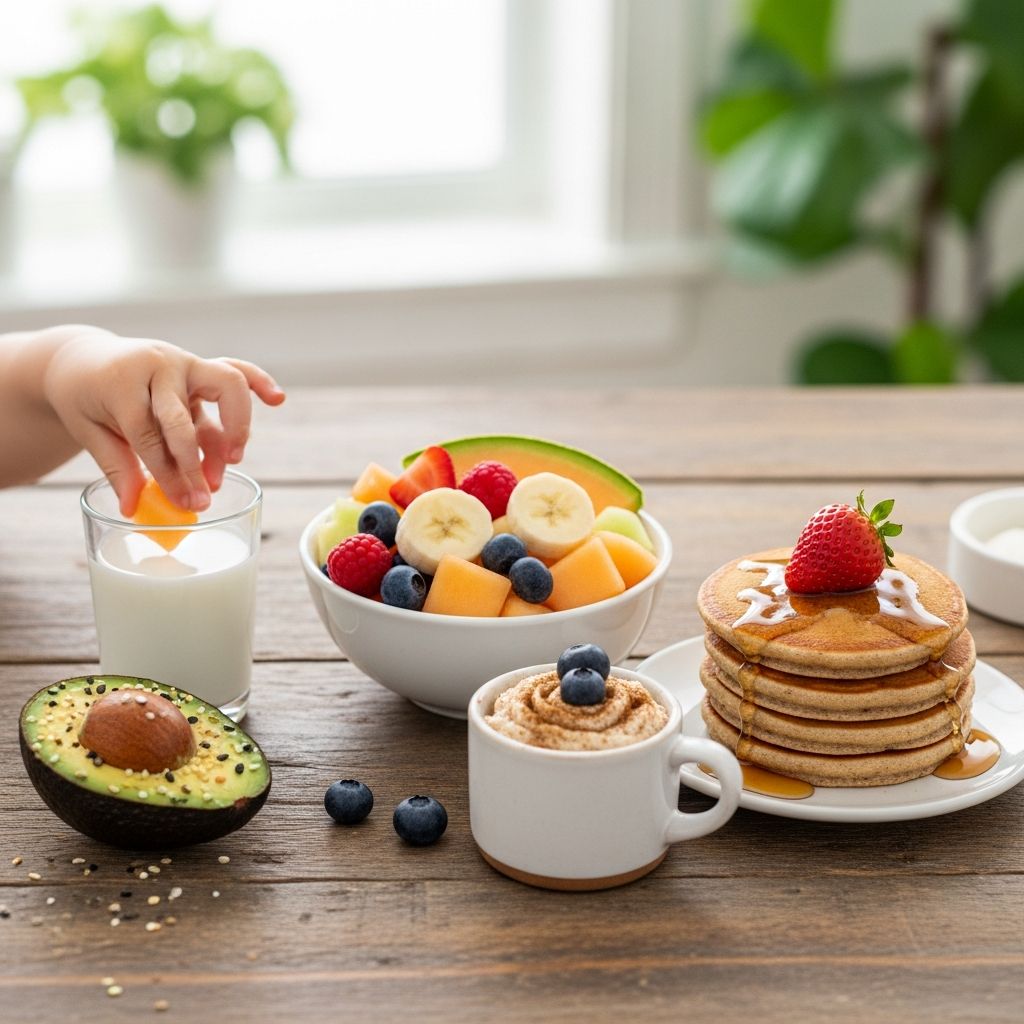
Toddlers aged 1-3 require about 1,000–1,400 calories daily, spread across three meals and two to three snacks to support rapid growth and high energy levels. Breakfast sets the tone for the day, providing essential nutrients like iron, calcium, and healthy fats for brain development and physical activity.
Essential Nutritional Guidelines for Toddler Breakfasts
Balanced breakfasts should incorporate grains, fruits or vegetables, proteins, and dairy or alternatives. Toddlers need whole grains for sustained energy, with at least half from sources like whole wheat bread or fortified cereals. Include iron-rich foods such as fortified grains or lean meats paired with vitamin C sources like strawberries to enhance absorption. Limit milk to 16-24 ounces daily to avoid filling up on liquids and reducing appetite for solids.
Healthy fats from avocados or nut butters aid brain growth, while proteins from eggs or yogurt promote fullness. Offer foods every 2-3 hours, respecting hunger cues to foster healthy eating habits.
Daily Portion Recommendations
Use these age-appropriate servings to guide breakfast prep:
| Food Group | 2-Year-Olds | 3-Year-Olds |
|---|---|---|
| Grains | 3 oz (half whole-grain) | 4-5 oz (half whole-grain) |
| Vegetables | 1 cup | 1.5 cups |
| Fruits | 1 cup | 1-1.5 cups |
| Milk/Dairy | 2 cups | 2.5 cups |
| Protein | 2 oz | 3-4 oz |
Examples: 1 oz grain = 1 bread slice; 1 oz protein = 1 egg or 1/4 cup beans.
Quick and Easy Grain-Based Breakfasts
Whole grains provide fiber for digestion and steady energy. Start with iron-fortified, low-sugar cereals paired with fruit and milk for a simple win.
- Oatmeal Power Bowl: Cook 1/4 cup rolled oats with 1/2 cup milk, top with 1/4 cup mashed banana and a sprinkle of chia seeds (healthy fat boost). Offers carbs, protein, and potassium.
- Whole Grain Toast Duo: 1/2 slice whole wheat toast with 1 tbsp peanut butter and thin apple slices. Provides 1 oz grain and protein.
- Cereal Mix-Up: 1/2 cup fortified cereal with 1/3 cup berries and 1/2 cup yogurt. Balances grains, fruit, and dairy.
Protein-Packed Savory Options
Proteins help toddlers stay full until snack time. Eggs and yogurt are versatile and nutrient-dense.
- Mini Veggie Scramble: Scramble 1 egg with finely chopped spinach and 1 tbsp cheese, serve with 1/2 whole grain toast. Includes protein, veggies, and iron.
- Yogurt Parfait Layers: Layer 1/2 cup plain yogurt, 1/4 cup mixed berries, and 1 tbsp granola. Calcium-rich and probiotic-packed.
- Bean Breakfast Mash: 1/4 cup mashed black beans on 1/2 corn tortilla with avocado slices. Plant-based protein and fats for vegetarians.
Fruit-Forward Sweet Breakfasts
Fruits add natural sweetness and vitamins; aim for variety in colors.
- Smoothie Sippers: Blend 1/2 cup milk, 1/2 banana, 1/4 cup strawberries, and 1 tbsp nut butter. Portable and hydrating.
- Pancake Bites: Small whole grain pancakes (1/2 cup batter) topped with 1/4 cup peaches and a yogurt drizzle. Fun finger food.
- Fruit Yogurt Dip: 1/2 cup yogurt with apple wedges for dipping, plus a handful of whole grain crackers. Encourages self-feeding.
On-the-Go Breakfasts for Busy Mornings
Prep-ahead options suit daycare or travel, maintaining nutrition.
- Muffin Tin Eggs: Baked egg muffins with diced veggies and cheese (1 egg per muffin). Freeze and reheat.
- Overnight Oats Jar: Mix 1/4 cup oats, 1/2 cup milk, and fruit; refrigerate overnight. Grab-and-go.
- Cheese and Cracker Pack: Whole grain crackers, cheese cubes (1 oz), and fruit slices. No-cook convenience.
Adapting for Picky Eaters and Special Diets
Toddlers may reject new foods; offer choices and pair favorites with nutrients. For vegetarians, emphasize beans, tofu, and fortified foods for iron and B12.
- Involve kids in prep to build interest.
- Offer small portions of new items alongside trusted foods.
- Use fun shapes or dips for veggies/fruits.
Sample Full-Day Menu Integrating Breakfast
A balanced day: Breakfast (300 cal), snack, lunch, snack, dinner.
| Meal | Ideas | Key Nutrients |
|---|---|---|
| Breakfast | Yogurt parfait + toast | Grains, dairy, fruit |
| Morning Snack | Cheese + crackers | Protein, grains |
| Lunch | Bean sandwich + veggies | Protein, veggies |
| Afternoon Snack | Fruit + nut butter | Fruit, fats |
| Dinner | Chicken + rice + peas | Protein, grains, veggies |
Frequently Asked Questions
What if my toddler refuses breakfast?
Respect hunger cues; offer a small snack later if needed. Keep trying variety without pressure.
How much milk is too much at breakfast?
Limit to 1/2 cup per meal to leave room for solids.
Are nut butters safe for toddlers?
Yes, smooth versions from 6 months if no allergies; spread thinly to prevent choking.
Can I use plant-based milks?
Choose fortified options for calcium/vitamin D; check with a doctor.
How do I prevent choking?
Cut foods small, supervise, avoid hard items.
References
- Nutrition Guide for Toddlers — Nemours KidsHealth. 2023. https://kidshealth.org/en/parents/toddler-food.html
- Nourishing Your Toddler: Breakfast Ideas, Snacks, and Picky Eating — Little Bellies. 2024. https://littlebellies.com/learn-play/nourishing-your-toddler-breakfast-ideas-snacks-and-picky-eating/
- Healthy Breakfasts for Kids: It’s All About Balance — FDA. 2023-05-01. https://www.fda.gov/consumers/consumer-updates/healthy-breakfasts-kids-its-all-about-balance
- What to Feed Toddlers 12-24 Months — Healthy Eating Research. 2021-08. https://healthyeatingresearch.org/wp-content/uploads/2021/08/What-to-feed-12-24-month-olds.pdf
- Nutrition Information for Toddlers — MyPlate.gov. 2024. https://www.myplate.gov/life-stages/toddlers
- Sample Menu for a 2-Year-Old Child — HealthyChildren.org. 2023. https://www.healthychildren.org/English/ages-stages/toddler/nutrition/Pages/Sample-One-Day-Menu-for-a-Two-Year-Old.aspx