Snacks play a big role in what school-age kids eat each day. When they are chosen well, snacks can boost concentration, support steady energy, and fill in important nutrients kids might miss at meals. This guide walks you through how to build better snacks, easy ideas to pack, and strategies to handle picky eating, busy schedules, and school rules.
Why Snacks Matter for School-Age Kids
By the time kids reach elementary school, they are growing steadily, spending hours in class, and often dashing off to sports or after-school programs. Many kids go three to four hours between meals. A thoughtfully planned snack can:
- Prevent energy dips and mid-morning or afternoon “crashes”
- Help kids stay focused and alert in class
- Provide extra calories and nutrients needed for growth
- Model what balanced, satisfying eating looks like
Research shows that patterns built in childhood, including snacking habits, can influence diet quality and health later in life.
The Building Blocks of a Balanced Snack
A snack does not need to be fancy to be healthy. A simple rule of thumb is to include at least two food groups and aim for a mix of:
- Fiber-rich carbohydrates (fruit, vegetables, whole grains)
- Protein (dairy, beans, lean meats, nuts or seeds where allowed)
- Healthy fats (nuts, seeds, avocado, some oils)
Carbohydrates give quick energy, while protein and fat slow digestion so kids stay satisfied longer and avoid rapid swings in blood sugar. Fiber from fruits, vegetables, and whole grains also supports digestion and gut health.
| Component | Role in the Body | Kid-Friendly Examples |
|---|---|---|
| Fiber-rich carbs | Provide energy, support digestion, help kids feel full | Fresh fruit, carrot sticks, whole-grain crackers, oatmeal |
| Protein | Builds muscles and tissues, supports growth | Yogurt, cheese sticks, hummus, beans, edamame |
| Healthy fats | Support brain development and absorption of some vitamins | Nuts, seeds, nut or seed butters, avocado |
How Much Is Enough? Portion and Timing Tips
Snacks should take the edge off hunger without replacing meals. Aiming for a small snack about two to three hours after the last meal usually works well for school-age kids.
- Offer one small snack between breakfast and lunch if there is a long gap.
- Plan one after-school snack, especially if dinner will be later or your child has sports.
- Keep portions child-sized: enough to satisfy, not so big that they arrive at the next meal full.
School guidelines or after-school programs may set their own snack times; working with those schedules can help kids come to meals hungry but not starving.
Choosing Healthier Everyday Snack Options
Most of the time, focus on snacks that offer vitamins, minerals, and fiber instead of a lot of added sugar or salt. Health agencies recommend that snacks for children lean heavily toward fruits, vegetables, and whole grains.
Fruit-Focused Ideas
- Fresh fruit (apple slices, clementines, berries, grapes cut for safety)
- Fruit salad or fruit cups packed in water or 100% juice, not syrup
- Frozen fruit pieces or homemade fruit-and-yogurt pops
- Freeze-dried fruit with no added sugar for a crunchy option
Fruits provide natural sweetness, vitamin C, potassium, and fiber that many kids do not get enough of.
Vegetable-Forward Snacks
- Carrot sticks, sugar snap peas, or bell pepper strips with hummus
- Cucumber rounds or cherry tomatoes (sliced for younger kids) with a yogurt-based dip
- Mini salads in small containers with a simple dressing on the side
Most children fall short of daily vegetable recommendations; snacks are an ideal chance to add one more serving.
Whole-Grain Choices
- Whole-grain crackers with cheese or seed butter
- Mini whole-wheat pitas or tortillas with beans or veggies
- Air-popped popcorn lightly seasoned (for kids old enough to handle it safely)
- Homemade muffins baked with oats or whole-wheat flour
Whole grains add fiber, B vitamins, and longer-lasting energy compared with refined grains like white crackers or pastries.
Quick Snack Pairings Kids Can Pack
These simple combinations use common pantry and fridge items and are easy for kids to help assemble:
- Yogurt parfait: Plain yogurt layered with fruit and a sprinkle of granola for crunch.
- Cheese and fruit: String cheese plus grapes or apple slices.
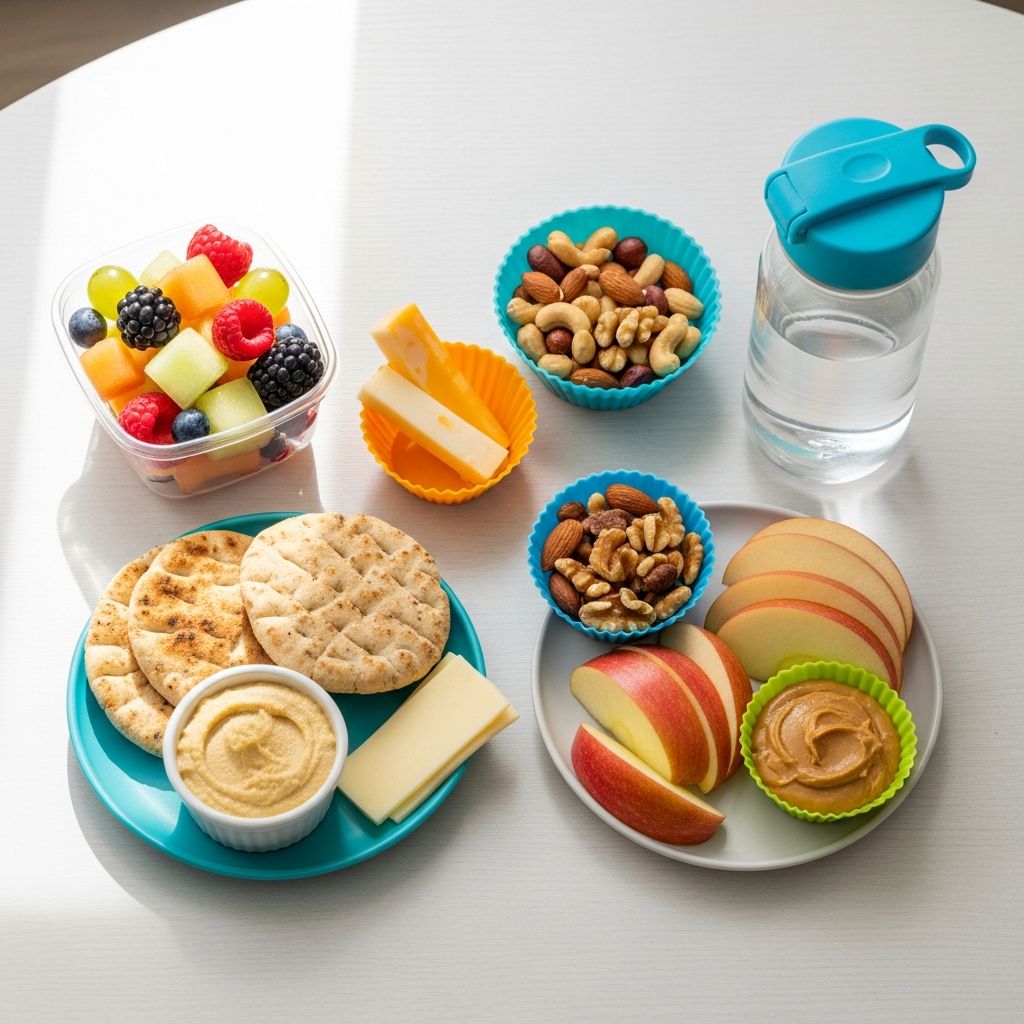
- Crunchy dipper box: Whole-grain crackers, carrot sticks, and a small container of hummus.
- Mini trail mix: Whole-grain cereal, unsweetened dried fruit, and seeds (or nuts if school allows).
- Bean-based snack: Roasted chickpeas or edamame with a side of fruit.
Store these in small reusable containers or snack-size bags so they are easy to grab on busy mornings.
Reading Labels: What to Watch For
Packaged snacks can be convenient, but some are closer to dessert than to a nourishing mini-meal. When you buy packaged foods, check:
- Ingredients list: Look for simple ingredients you recognize. Whole grains, real fruit, and basic dairy are good signs.
- Added sugars: Many children already get more added sugar than recommended. Aim for little or no added sugar in everyday snacks.
- Sodium (salt): Choose products with lower sodium, especially chips, crackers, and jerky.
- Serving size: Some packages contain more than one serving; kids might eat the whole bag without realizing it.
Some school systems also set limits for calories, saturated fat, and added sugars in classroom snacks, which can help guide your choices.
Working Around School Rules and Allergies
Many schools have safety and nutrition policies for foods brought from home. Common rules include:
- Nut-free classrooms or entire buildings to protect children with severe allergies
- Restrictions on candy, soda, and energy drinks
- Guidelines for celebrating birthdays and holidays with healthier options
To stay within these rules and still pack satisfying snacks:
- Use seed butters (like sunflower or pumpkin seed) where peanut or tree-nut butter is not allowed.
- Rely on fruit, vegetables, dairy, and whole grains as the backbone of most snacks.
- Ask your child’s teacher or school nurse for a list of acceptable options if your child’s class has specific restrictions.
If your child has food allergies or intolerances, talk with the school in advance so a safe plan is in place for snacks, classroom events, and field trips.
Helping Picky Eaters Try New Snacks
Many school-age kids have strong opinions about food. Gentle structure and repeated exposure tend to work better than pressure. Research suggests that encouraging children to explore new foods without forcing them, and involving them in food preparation, can increase acceptance over time.
Practical Strategies
- Offer a safe favorite plus something new. Pair a known snack (like crackers) with a new dip (like hummus).
- Use fun shapes and colors. Cut fruits and vegetables into sticks, coins, or simple shapes.
- Let kids help. Younger children can wash fruit; older kids can assemble their own snack boxes.
- Stay neutral. Avoid bribing or forcing bites; calmly re-offer new foods on different days.
It may take many tries before a child accepts a new food, so think of snack time as one more chance to gently expand what they eat.
Snacks for Busy Afternoons and Sports
After-school hours can be hectic. For kids heading straight to practice or a game, snacks should provide enough carbohydrates for quick energy plus some protein for muscles.
- Whole-grain crackers or a small roll with cheese or turkey
- Banana or orange plus a yogurt cup
- Homemade oatmeal bar with milk
For most activities, water is the best drink. Sports drinks are usually unnecessary for typical school-age sports and can add a lot of extra sugar.
When Treats Fit In
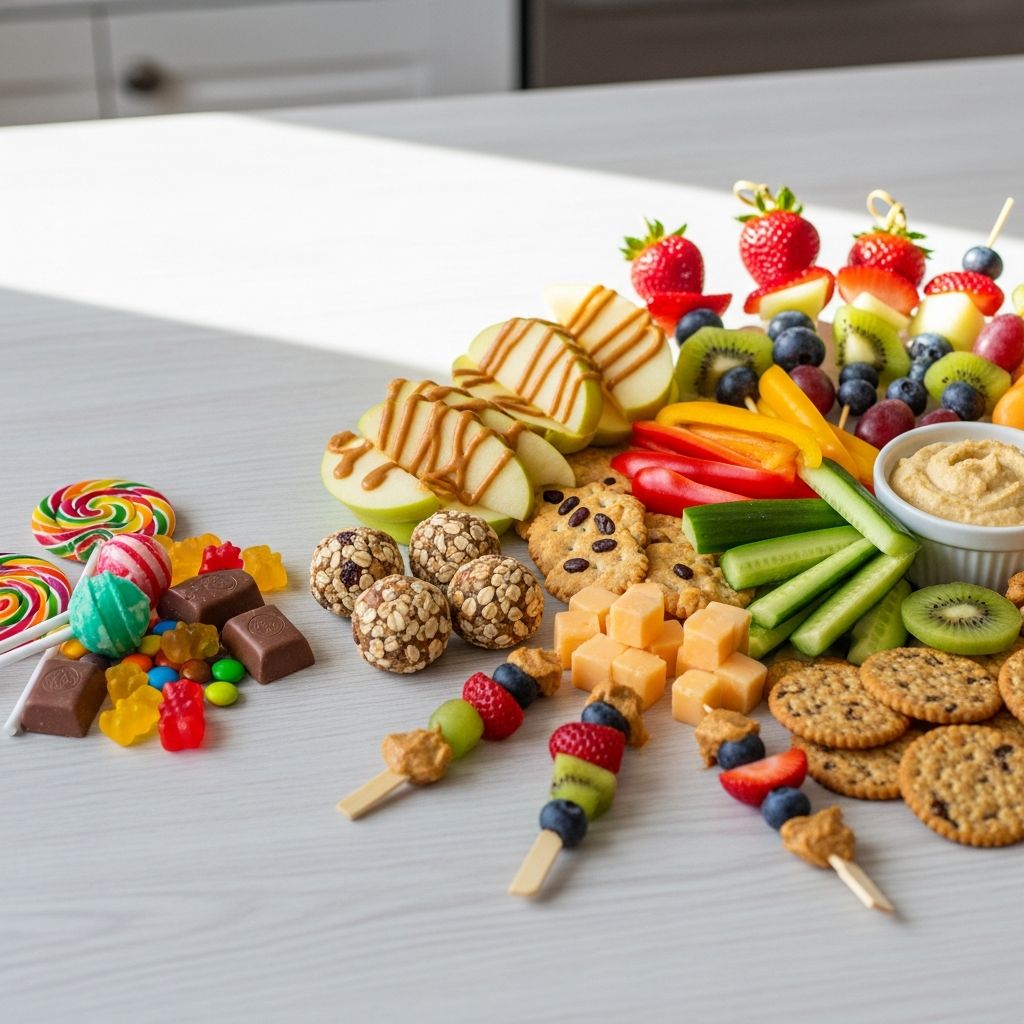
Less nutritious snacks like chips, cookies, and candy can be part of childhood without becoming everyday staples. You might:
- Keep treats for weekends, parties, or special events.
- Serve them alongside healthier foods so they are not the only option.
- Avoid using sweets as rewards for behavior, so they do not take on extra power.
Balance over the week matters more than any single snack. The goal is that most daily snacks support kids’ health while leaving room for fun foods at times.
Sample One-Day Snack Plan
This simple outline shows how snack choices can fit around meals. Portions should be adjusted for your child’s age, size, and activity level.
- Mid-morning: Apple slices and a cheese stick
- After school: Carrot sticks with hummus and a small whole-grain pita
- Optional evening snack (if needed): Plain yogurt with berries
On other days, rotate in different fruits, vegetables, and whole grains to keep snacks interesting and varied.
Frequently Asked Questions (FAQs)
How many snacks does my school-age child need each day?
Most school-age children do well with one mid-morning and one after-school snack, spaced a few hours away from meals. Very active kids or those with long gaps between meals may need one extra small snack. Watch your child’s appetite at meals and adjust if snacks seem to be replacing main meals.
What is a good calorie range for a snack?
There is no single number that fits every child, but many schools use snack guidelines around 200 calories or less, with limits on saturated fat and added sugars. The focus should be on food quality and balance rather than strict calorie counting for healthy children.
Are prepackaged snacks always unhealthy?
Not always. Some packaged items like plain yogurt cups, unsalted nuts (where allowed), whole-grain crackers, or frozen fruit can be nutritious. Reading labels and choosing options lower in added sugar, sodium, and saturated fat can make prepackaged snacks convenient and healthy.
My child only wants chips or sweets. What can I do?
Offer structured choices rather than open-ended ones. For example, ask, “Would you like yogurt and berries or cheese and crackers?” Keep less nutritious snacks out of everyday rotation, and serve them occasionally without making a big deal. Over time, kids often become more flexible when healthier choices are the norm at home.
Should my child drink juice with snacks?
Small amounts of 100% fruit juice can fit into a child’s diet, but whole fruit is usually a better option because it has fiber. Water and milk are generally the best everyday drinks with snacks.
References
- 31 Healthy Snacks for Kids to Take to School — GoodRx Health. 2022-09-06. https://www.goodrx.com/well-being/diet-nutrition/healthy-snacks-for-kids-at-school
- 30 Healthy Snacks for Kids (Back-to-School Friendly) — The Real Food Dietitians. 2023-08-10. https://therealfooddietitians.com/healthy-snacks-for-kids-back-to-school-snacks/
- 28 Healthy Snacks Your Kids Will Love — Healthline. 2020-04-22. https://www.healthline.com/nutrition/healthy-snacks-for-kids
- Healthy School Snacks: Ideas for Parents, Teachers, and More — Center for Science in the Public Interest. 2022-05-01. https://www.cspi.org/highlight/healthy-school-snacks
- Healthy Classroom Snack List — Madison Metropolitan School District. 2021-09-01. https://www.madison.k12.wi.us/food-service/healthy-classroom-snack-list