Parenting demands constant energy, yet finding time for balanced eating often falls by the wayside. This guide provides a roadmap to snacks that are simple to assemble, packed with nutrients, and appealing to both adults and children. From portable mixes to no-bake treats, these options prioritize protein, fiber, and healthy fats to sustain you through school runs, practices, and everything in between.
Why Snacks Matter in a Parent’s Day
Maintaining steady blood sugar levels helps prevent fatigue and irritability, especially during hectic schedules. According to the U.S. Department of Agriculture (USDA), snacks should contribute 20-30% of daily caloric intake, emphasizing whole foods rich in macronutrients. For parents juggling multiple roles, nutrient-dense choices like nuts, fruits, and yogurt provide sustained energy without the crash from sugary alternatives.
Children benefit similarly; the Academy of Nutrition and Dietetics recommends snacks every 3-4 hours to support growth and focus. Prioritizing these moments fosters healthy habits while keeping everyone content.
Quick-Prep Snack Recipes for On-the-Go
These recipes require minimal ingredients and time, making them ideal for mornings or pre-practice rushes. Each yields 10-12 servings, storable for up to a week in the fridge.
No-Bake Energy Spheres
These bite-sized powerhouses combine oats, nut butters, and seeds for a protein boost. Mix 1 cup rolled oats, ½ cup almond butter, ¼ cup honey, 2 tablespoons chia seeds, ½ cup flaxseeds, and ½ cup dark chocolate chips. Roll into balls and chill. They deliver healthy fats and fiber for lasting fullness.
- Customization: Swap chocolate for dried cranberries or add vanilla extract.
- Nutrition per serving: ~150 calories, 5g protein, 3g fiber.
Pre-Portioned Smoothie Blends
Prepare bags of frozen fruits and greens ahead. For a Banana Berry Boost, blend 1 sliced banana, 1 cup mixed berries, 1 scoop protein powder, 1 cup almond milk, and spinach. A Chocolate Peanut Delight uses frozen banana, peanut butter, chocolate protein, and oatmeal. These provide antioxidants and muscle recovery support.
| Smoothie Type | Key Ingredients | Benefits |
|---|---|---|
| Banana Berry Boost | Banana, berries, protein powder, almond milk, spinach | Antioxidants, protein, vitamins |
| Chocolate Peanut Delight | Frozen banana, peanut butter, chocolate protein, oatmeal | Energy sustainment, healthy fats |
Crunchy and Portable Favorites
Texture adds satisfaction to snacks. Opt for options that travel well in bags or cups.
- Custom Trail Combinations: Blend 1 cup mixed nuts (almonds, walnuts), ½ cup dried fruits (raisins, apricots), ¼ cup seeds (pumpkin, sunflower), and ¼ cup dark chocolate. High in protein and fiber, this curbs hunger effectively. Watch portions for young children due to choking risks.
- Baked Veggie Crisps: Slice sweet potatoes, kale, or zucchini, toss with olive oil and herbs, bake at 350°F for 20-25 minutes. Store for a week; a crunchy alternative to processed chips.
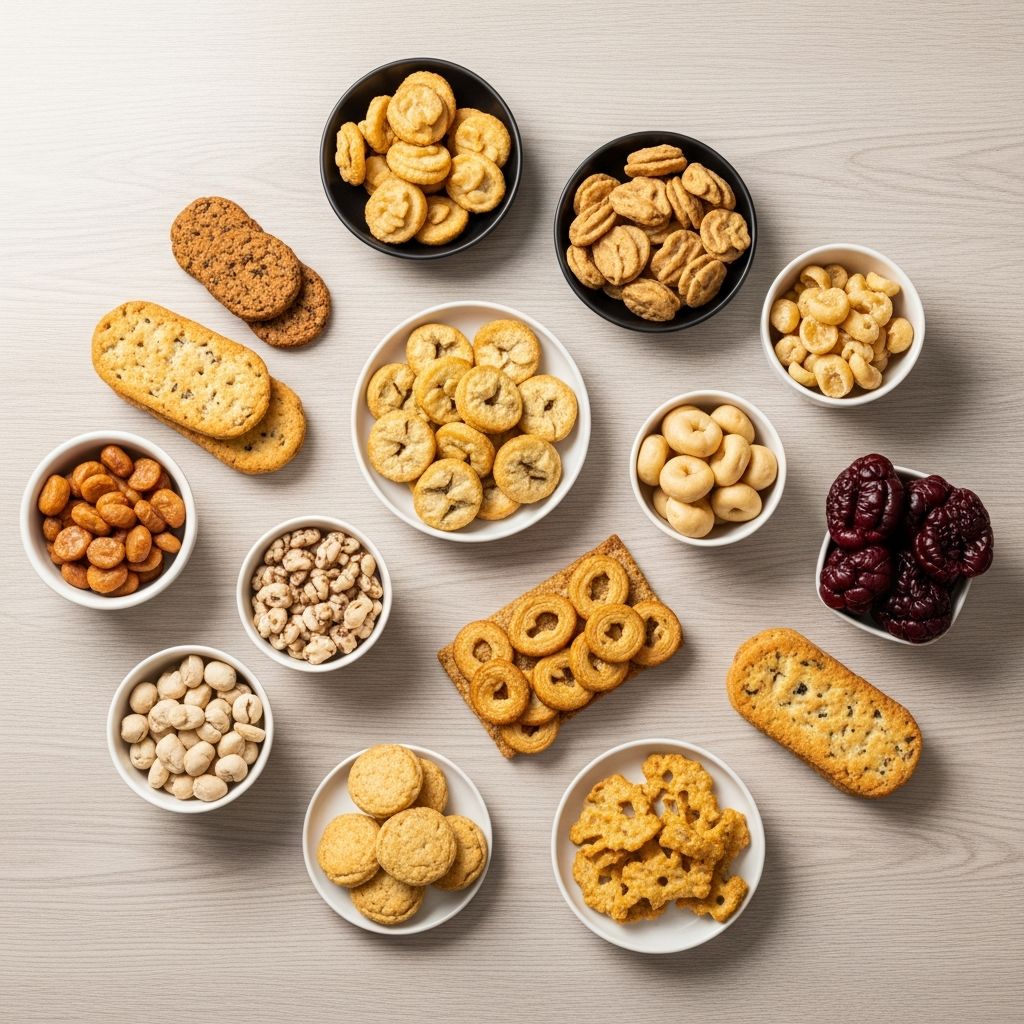
- Specialty Grain Crackers: Choose seed-based varieties like those with 3g protein and 4g fiber per serving. Pair with cheese or fruit for balance.
Protein-Rich Picks for Sustained Energy
Protein stabilizes energy. Incorporate these into rotations:
- Hard-boiled eggs or pre-peeled packs (6g protein).
- Greek yogurt layered with granola, fruit, and flaxseeds.
- Meat sticks like Chomps (10g protein, no added sugar).
- Nut butter on apple slices or celery.
Parfaits in cups offer visual appeal for kids, combining yogurt, berries, honey, and seeds for antioxidants and recovery.
Family-Friendly Snack Stations
Set up a dedicated counter zone with divided containers for nuts, fruits, popcorn, and pretzels. This encourages self-selection while promoting portion control. For toddlers, prioritize soft textures like yogurt bark: spread yogurt on a sheet, top with fruits and cereal, freeze, and break into pieces.
Navigating Store-Bought Options Wisely
Not all packaged snacks are equal. Seek items under 150 calories with minimal added sugars:
| Snack | Calories | Protein/Fiber | Added Sugar |
|---|---|---|---|
| Triscuit Thin Crisps | ~120 | 3g/4g | 0g |
| Harvest Snaps Loops | ~100 | 4g/2g | 0g |
| Kodiak Waffles | ~140 | 12g/3g | 4g |
| Aloha Protein Minis | ~130 | 6g/2g | 1g |
Popcorn remains a low-calorie winner (add to mixes), but choose plain for kids under 4 to avoid choking.
Age-Appropriate Adjustments
Tailor snacks by developmental stage:
- Toddlers (1-3 years): Soft fruits, yogurt melts, mini cheese cubes. Avoid whole nuts.
- Preschoolers (4-6 years): Cut grapes/apples, cheese sticks, veggie sticks with dip.
- School-age (7+): Energy balls, trail mix, smoothies for active days.
- Parents: Layer in caffeine-free boosts like green tea-infused yogurt.
Meal Prep Strategies for the Week
Batch-prep Sundays: Make 20 energy spheres, portion 5 trail mixes, freeze 10 smoothie bags, bake two trays of crisps. Use airtight containers for freshness. This saves 30+ minutes daily. Track preferences in a family snack log to rotate and avoid boredom.
Common Nutrition Pitfalls to Avoid
Steer clear of high-sugar items disguised as healthy (e.g., yogurt-covered raisins at 120 calories with hidden sugars). Focus on whole ingredients. Hydration pairs best—offer water-infused fruits like cucumber slices.
Frequently Asked Questions
How often should parents and kids snack?
Aim for 2-3 snacks daily, spaced 2-3 hours from meals, per USDA guidelines, to maintain energy without spoiling appetite.
Are energy balls safe for young children?
Yes, if nut-free versions are made and supervised; they’re soft and nutrient-dense but check for allergies.
What’s the best portable snack for sports practices?
Trail mix or banana with nut butter offers quick carbs, protein, and electrolytes for recovery.
Can snacks help with picky eaters?
Absolutely—involve kids in assembly for familiarity; fun shapes from veggie crisps encourage trials.
How to keep snacks under 150 calories?
Portion pre-packaged items like 27 Cheez-Its or pair small servings of nuts with fruit.
Integrating these snacks transforms chaotic days into fueled adventures. Experiment to find family favorites, ensuring nutrition supports every step.
References
- Dietary Guidelines for Americans — U.S. Department of Agriculture. 2020-2025. https://www.dietaryguidelines.gov/
- Snack Recommendations for Children — Academy of Nutrition and Dietetics. 2023-01-15. https://www.eatright.org/
- Nutrition and Athletic Performance — American College of Sports Medicine. 2024-03-10. https://www.acsm.org/
- Healthy Eating Plate — Harvard T.H. Chan School of Public Health. 2022-07-20. https://www.hsph.harvard.edu/nutritionsource/healthy-eating-plate/
- Protein Needs for Active Individuals — Mayo Clinic. 2025-01-05. https://www.mayoclinic.org/