Fueling Your Journey: The Art of Road Trip Snacking
Long drives present unique challenges when it comes to maintaining proper nutrition and energy levels. Unlike a stationary meal at home or in a restaurant, eating while traveling requires careful consideration of portability, mess factor, nutritional value, and sustained energy release. The difference between arriving at your destination feeling energized versus exhausted often comes down to the snacking choices made during those hours behind the wheel. Strategic snacking transforms extended travel from a challenging endurance test into an enjoyable part of the overall journey experience.
Understanding Your Snacking Needs on Extended Drives
Road trips demand a different nutritional approach than regular daily eating patterns. When sitting in a car for extended periods, your body requires sustained energy without the heaviness that comes from full meals. The ideal snacking approach combines multiple food categories—fruits, proteins, healthy fats, and whole grains—to maintain stable blood sugar levels and prevent the energy crashes that lead to fatigue and poor driving focus. Additionally, the mental stimulation of having varied snack options helps combat the monotony of long-distance driving, keeping passengers engaged and satisfied.
The challenge intensifies when considering practical constraints: limited refrigeration, no access to utensils or plates, restricted space in vehicles, and the need to avoid creating distracting messes while driving. These factors eliminate many conventional snack choices and favor portable, self-contained options that maintain their integrity during transport and consumption.
Fresh Produce That Travels Well
Fruits and vegetables form the foundation of a solid road trip snacking strategy, offering vitamins, fiber, and hydration with minimal processing. The key lies in selecting produce varieties that withstand transportation without bruising or requiring refrigeration.
- Apples and oranges maintain structural integrity during travel and don’t require refrigeration for several hours
- Bananas provide quick carbohydrates and potassium, though they’re best consumed within the first 24 hours to prevent browning
- Clementines and tangerines offer convenient portion control and natural wrapping
- Grapes provide refreshing hydration and natural sweetness without mess if consumed from a sealed container
- Baby carrots deliver satisfying crunch and pair well with hummus or ranch dip for added protein
- Celery sticks offer substantial fiber and work as an edible vehicle for nut butter
- Cherry tomatoes provide antioxidants and natural sweetness in individual-serving portions
When packing fresh produce, consider texture and shelf stability. Harder vegetables like carrots and celery resist crushing better than softer options. Placing heavier items on top of produce in coolers or bags can compromise texture, so organize packing strategically to protect delicate items.
Protein-Dense Options for Sustained Energy
Protein serves a crucial function during road trips by promoting satiety and maintaining stable blood sugar levels, preventing the energy fluctuations that impair concentration and driving ability. Protein-rich snacks require careful selection to avoid refrigeration complications and mess during consumption.
Portable Protein Sources
- String cheese and cheese cubes provide dairy-based protein and calcium in convenient single-serving packages
- Hard-boiled eggs offer complete proteins with all nine essential amino acids, though they do require coolers with ice packs
- Beef jerky and dried meat products like biltong deliver concentrated protein without refrigeration requirements
- Nuts including almonds, cashews, pistachios, and walnuts provide plant-based protein alongside healthy fats
- Nut butter packets offer versatility—eaten straight from the packet or paired with crackers or apple slices
- Roasted chickpeas deliver plant-based protein with satisfying crunch and require no refrigeration
- Greek yogurt cups or tubes provide dairy protein, though they necessitate coolers or consumption within specific timeframes
The advantage of these protein sources extends beyond nutrition: they promote feelings of fullness that reduce the temptation to pull into fast-food establishments and make unnecessary dietary compromises. Combining protein with complex carbohydrates creates even more sustained energy release compared to consuming either macronutrient alone.
Complex Carbohydrates That Stabilize Blood Sugar
While simple sugars provide quick energy spikes, they inevitably lead to crashes that impair driving performance and focus. Complex carbohydrates, particularly whole grains, deliver sustained energy without the subsequent energy dip.
- Whole grain crackers and crisps pair with cheeses and proteins for balanced snacking
- Granola and cereal bars provide convenient, portable carbohydrate-based nutrition, particularly options without chocolate coatings that might melt
- Pretzels deliver satisfying crunch while remaining shelf-stable and mess-free
- Popcorn serves as an excellent whole grain snack, particularly homemade varieties drizzled with light butter or coconut oil
- Whole wheat fig bars and oat-based snacks offer fiber and nutrients in familiar, grab-and-go formats
- Trail mix combining nuts, seeds, and whole grains (rather than chocolate or candy-heavy versions) provides balanced macronutrients
These complex carbohydrate options work particularly well when paired with proteins or healthy fats, as this combination extends satiety and energy release even further. A cheese cracker with a handful of almonds offers superior sustained energy compared to crackers alone.
Healthy Fats for Cognitive Function
Often misunderstood as something to avoid, healthy fats play a crucial role in maintaining alertness and cognitive function—essential qualities for safe driving. Additionally, fats promote satiety more effectively than carbohydrates alone, meaning you’ll feel satisfied longer and avoid excessive snacking.
- Nuts and seeds provide omega-3 and omega-6 fatty acids essential for brain function
- Nut butters deliver concentrated healthy fats alongside protein, making them satisfying snack choices
- Avocado-based snacks like guacamole cups pair well with vegetables or whole grain crackers
- Olive-based snacks offer Mediterranean-style healthy fats in convenient formats
- Dark chocolate—in moderation and chocolate-covered nut varieties—combines healthy fats with antioxidants
Portion control becomes important with fats due to their caloric density. While two tablespoons of nut butter offers nutritious sustenance, mindlessly consuming larger quantities can exceed a meal’s caloric intake. Pre-portioned packets eliminate guesswork and prevent overindulgence.
Sweet Treats Without Guilt or Mess
Road trips often involve cravings for sweet flavors, whether driven by habit, boredom, or genuine hunger. Strategic sweet snack choices satisfy these cravings while minimizing mess and providing some nutritional value.
- Freeze-dried fruits deliver concentrated flavor and nutrition without the stickiness of fresh fruit or the processing of traditional dried fruit
- Dried fruit including raisins, cranberries, and dried mango provide natural sweetness and fiber
- Fruit leather and real fruit gummies offer fruity flavors derived from actual juice and purée rather than artificial ingredients
- Applesauce pouches and squeeze packs provide mess-free sweetness requiring no utensils
- Yogurt-covered pretzels balance sweetness with savory crunch and salt—satisfying multiple flavor preferences simultaneously
- Small-format chocolate items like dark chocolate peanut butter cups or chocolate-covered almonds prevent overindulgence through portion control
The advantage of these options over traditional candy lies in their nutritional density. Freeze-dried fruit provides vitamin C and fiber; yogurt-covered pretzels add calcium; dark chocolate delivers antioxidants. These treats satisfy sweet cravings while delivering actual nutritional benefits rather than empty calories.
Strategic Snack Packing and Organization
Even the most nutritious snacks fail to deliver their intended benefits without proper planning and organization. Thoughtful packing ensures snacks remain fresh, accessible, and mess-free throughout your journey.
- Organize snacks by category: proteins, carbohydrates, fruits, and treats—allowing easy selection based on energy needs and cravings
- Use individual portion containers rather than large packages to prevent overeating and reduce waste
- Pack refrigerated items in insulated bags with ice packs, separated from non-perishable snacks
- Place messy or potentially sticky items in sealed containers to prevent contamination of the vehicle interior
- Position frequently accessed snacks where passengers can reach them without distracting the driver
- Include napkins, wet wipes, and small bags for waste disposal with your snacking supplies
This organizational approach prevents the chaotic snacking that often occurs during road trips—where passengers grab multiple items haphazardly, creating mess and confusion about what remains available. Strategic organization makes nutritious choices the default option rather than requiring active decision-making when fatigued.
Combination Snacking: Greater Than the Sum of Parts
The most satisfying and sustained-energy road trip snacks combine multiple food categories, creating balanced bites that address various nutritional needs simultaneously.
| Combination Snack | Nutritional Benefits |
|---|---|
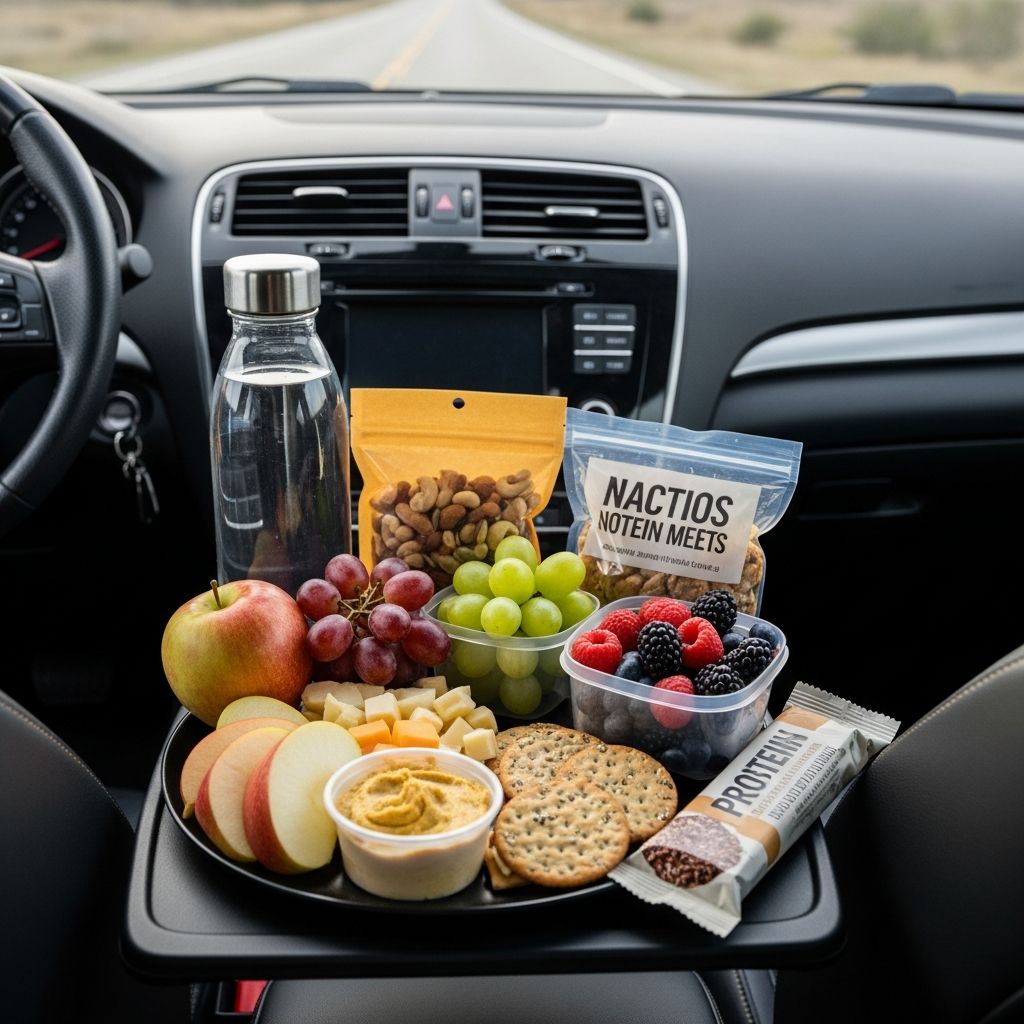
| Cheese and whole grain crackers with apple slices | Protein, healthy fats, complex carbs, fiber, vitamins |
| Almonds with dried cranberries and dark chocolate chips | Protein, healthy fats, antioxidants, natural sweetness |
| Celery sticks with almond butter | Fiber, protein, healthy fats, micronutrients |
| Whole grain crackers with pepperoni and cheese | Complex carbs, protein, fat, salt for electrolyte balance |
| Homemade trail mix with nuts, seeds, and whole grains | Complete macronutrient profile, sustained energy |
These combination approaches prevent the common road trip pitfall of consuming only one snack category—such as eating crackers without protein, or protein without carbohydrates—which leads to incomplete satiety and unsustainable energy levels.
Beverages Beyond Water
While water remains essential for hydration during driving, strategic beverage choices can enhance snacking satisfaction and provide additional nutritional benefits. Avoid sugary sodas and energy drinks, which create energy crashes identical to simple sugar snacks. Instead, consider:
- Herbal teas served in thermoses provide warm beverages without caffeine jitters
- Coconut water offers electrolytes without excessive sugar
- Vegetable-based juices or vegetable juice blends provide micronutrients
- Moderate amounts of coffee or tea satisfy caffeine needs for daytime driving
Foods to Avoid During Extended Driving
Certain snacks undermine road trip success through excessive mess, distraction potential, or nutritional drawbacks. Avoiding these prevents vehicle contamination and maintains focus on the road:
- Chocolate-covered items prone to melting in warm vehicles
- Extremely sticky or messy items like candy or caramel that coat hands and the steering wheel
- Foods with powerful odors that linger in vehicle interiors
- Overly sugary options that create energy crashes and impair alertness
- Items requiring both hands to consume, preventing safe vehicle operation
- Deeply fried foods that leave greasy residue on hands and surfaces
Frequently Asked Questions About Road Trip Snacking
How far in advance should I pack snacks for a road trip?
Pack perishable items like cheese and yogurt the morning of your trip or place them in a well-insulated cooler with fresh ice packs. Non-perishable snacks can be packed a day or two ahead. This timing balances convenience with food safety considerations.
Can I reuse plastic containers for snack storage during road trips?
Yes, clean plastic containers work well for organizing and protecting snacks. Use separate containers for messy items to prevent cross-contamination. Ensure containers have secure lids to prevent spills during vehicle movement.
What’s the best way to prevent fresh fruit from browning during a road trip?A: Place apple or pear slices in containers with lemon or lime juice, which prevents oxidation. Keep whole fruits in sealed bags away from direct sunlight. Consume softer fruits like bananas within the first day of travel.
Q: How should I handle nut allergies when planning snacks for multiple passengers?
Designate separate containers for nut-based and nut-free snacks, clearly labeling each. Keep nut-free options like seeds, roasted chickpeas, and fruit available. Wipe down surfaces after nut consumption to prevent allergen transfer.
Are energy bars sufficient as a meal replacement during long drives?
While energy bars provide convenient nutrition, they work better as snacks supplementing a balanced diet rather than complete meal replacements. Combine bars with fresh fruit, vegetables, and adequate protein for more complete nutrition during extended journeys.
How can I avoid overeating snacks during a long road trip?
Pre-portion snacks into individual containers rather than eating from large packages. This limits access and prevents mindless consumption. Take planned breaks every 2-3 hours to step out, move around, and reset hunger cues before resuming the drive.
What snacks work best for overnight or very long road trips?
Focus on sustained-energy combinations: nuts with dried fruit, cheese with whole grain crackers, and roasted chickpeas. Avoid high-sugar items that create crashes when you need to stay alert during night driving. Include protein-rich snacks that promote satiety through long stretches.
References
- 50 Best Snacks For Traveling In the Car — Rudi’s Bakery. 2024. https://rudisbakery.com/best-snacks-for-traveling-in-the-car/
- 21 of the Best Road Trip Snacks (We’ve Tried Them All!) — Dorm Therapy. 2024. https://www.dormtherapy.com/best-road-trip-snacks-100010871
- 30+ Best Snacks on Road Trips (Plus What To Skip!) — Don’t Waste the Crumbs. 2024. https://dontwastethecrumbs.com/25-best-snacks-for-road-trips/
- 10 Tasty Road Trip Snacks that Won’t Clog your Arteries — Peas and Hoppiness. 2024. https://peasandhoppiness.com/10-tasty-road-trip-snacks-that-wont-clog-your-arteries/
- The Best Road Trip Snacks for Kids (and Toddlers) — Big Brave Nomad. 2024. https://www.bigbravenomad.com/blog/the-best-road-trip-snacks-for-kids
- Healthy Road Trip Snacks — Shutterbean. 2025. https://www.shutterbean.com/2025/healthy-road-trip-snacks/