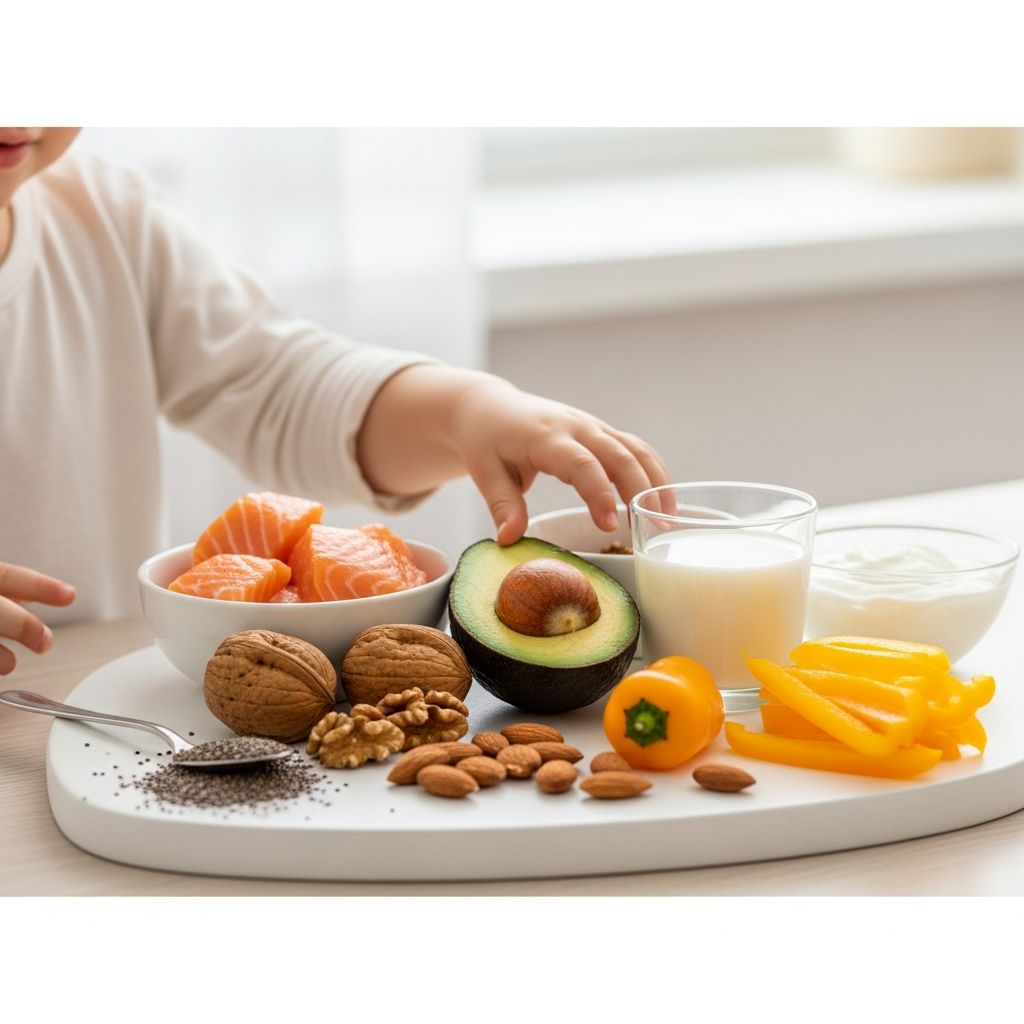
Fats are often seen as something to avoid, but the right kinds in the right amounts are essential for children’s growth, brain development, and long-lasting energy. This guide explains how fats work in a child’s body, which types support health, which should be limited, and how parents can put this into practice at the dinner table.
Why Children Need Fat in Their Diet
Fat is more than just a source of calories; it plays a central role in building every cell in a child’s body, especially the brain and nervous system. Certain vitamins that support vision, immunity, and healthy skin can only be absorbed when there is fat present in the meal.
For children, fat also provides concentrated energy, which is important because growing bodies and active brains can burn a surprising amount of fuel during the day. Including sensible portions of healthy fats in meals and snacks helps kids feel satisfied longer and prevents constant hunger between meals.
- Fat supports brain development and learning, especially in the first years of life.
- It helps the body absorb fat-soluble vitamins (A, D, E and K).
- It cushions organs and helps keep body temperature stable.
Understanding the Main Types of Dietary Fat
Not all fats behave the same way in the body. Some support a healthy heart and blood vessels, while others can gradually raise the risk of heart disease later in life if eaten in large amounts over many years. Knowing the basic categories makes it easier to scan a food label and choose better options for your family.
Fats in food are usually a mix, but one type tends to dominate. The aim is not to remove fat completely but to shift the balance toward the types that protect long-term health while limiting those that can be harmful when eaten regularly in large amounts.
| Type of Fat | Typical State at Room Temperature | General Effect on Health | Common Food Sources |
|---|---|---|---|
| Unsaturated fats (mono- and polyunsaturated) | Mostly liquid | Support heart health when they replace less healthy fats | Vegetable oils, nuts, seeds, oily fish, avocado |
| Saturated fats | Usually solid | Can raise unhealthy blood cholesterol when eaten in excess | Fatty meats, full-fat dairy, butter, some tropical oils |
| Trans fats | Solid or semi-solid | Linked to increased heart disease risk; best to avoid | Some commercial baked goods, fried foods, hard shortenings |
Friendly Fats: Unsaturated Fats That Support Health
Unsaturated fats are often called “good” or “heart-healthy” fats because they tend to help maintain healthier levels of blood cholesterol when they are used in place of more harmful fats. These fats are mostly found in plant foods and in certain fish.
There are two main kinds of unsaturated fat, and both can play a role in a child’s balanced diet. Adding small portions of these foods to meals can improve both nutrition and flavor without encouraging overeating.
Monounsaturated Fats
Monounsaturated fats are found in many everyday ingredients that can easily be worked into family meals. When they replace a portion of saturated fat in the diet, they can support healthier blood cholesterol patterns over time.
Parents can use these fats in cooking or as toppings to increase taste and satisfaction, especially in meals that might otherwise seem dry or bland to a child.
- Common sources include olive oil, canola oil, peanut oil, avocados, and many nuts such as almonds and peanuts.
- They can be used in salad dressings, drizzled over roasted vegetables, or blended into dips and spreads.
- Nut butters (without added hydrogenated oils) provide both healthy fats and protein for growing kids.
Polyunsaturated Fats and Essential Fatty Acids
Polyunsaturated fats include essential fatty acids that the body cannot make on its own. These are especially important for brain function, vision, and the health of cell membranes.
Two well-known families of essential fats are omega-3 and omega-6 fatty acids. Both are needed, but modern diets often contain far more omega-6 than omega-3, so it helps to emphasize fish, nuts, and other omega-3 sources.
- Omega-3 fats are found in oily fish (such as salmon and sardines), ground flaxseed, chia seeds, walnuts, and some fortified foods.
- Omega-6 fats occur in many vegetable oils, including sunflower, corn, and soybean oil, and in foods made from them.
- Serving fish one to two times per week and sprinkling seeds or nuts on cereals or yogurt can boost intake of beneficial polyunsaturated fats.
Fats to Limit: Saturated Fat
Saturated fats are not toxic, and they do appear naturally in many nutritious foods. However, when they make up a large portion of a person’s daily fat intake, they can gradually lead to higher levels of “unhealthy” blood cholesterol, which is a risk factor for heart disease later in life.
Children do not need to avoid saturated fat completely, but it is wise to keep portions modest and replace a share of these fats with unsaturated options. This can be done without making kids feel deprived or taking away all of their favorite foods.
- Common sources include fatty cuts of red meat, poultry with skin, full-fat milk, cheese, butter, cream, and many commercially baked goods.
- Tropical oils such as coconut and palm oil are also high in saturated fat, even though they may appear in products marketed as natural.
- Choosing lean meats, trimming visible fat, and opting for lower-fat dairy products are simple ways to reduce saturated fat intake.
Fats to Avoid When Possible: Trans Fat
Trans fats are created when liquid oils are processed in a way that makes them more solid and stable on the shelf. This process changes the structure of the fat so that it behaves very differently in the body compared with natural unsaturated fats.
Even small, regular amounts of artificial trans fats can increase the risk of heart disease over time. Because they offer no health benefit, the goal for families should be to keep intake as close to zero as possible.
- Trans fats have traditionally been found in some stick margarines, commercial pastries, crackers, and fried fast foods.
- On ingredient lists, words such as “partially hydrogenated oil” signal the likely presence of trans fat.
- Many countries now limit or ban artificial trans fats, but it is still worth scanning labels, especially on snack foods and baked goods.
How Much Fat Do Children Need?
The amount of fat a child needs changes with age, size, and activity level, but in general, children require a higher percentage of calories from fat than most adults. Very strict, low-fat diets are not recommended for growing kids unless directed by a healthcare professional for a specific medical reason.
A practical way to think about it is to aim for a moderate amount of fat at each meal, with an emphasis on unsaturated sources. Toddlers and younger school-aged children often need a little more fat than teenagers, especially if they are very active or going through a growth spurt.
- Include a visible source of fat at each meal, such as avocado, nuts, seeds, oily fish, or a drizzle of plant oil in cooking.
- Avoid making “fat-free” the main goal; instead, focus on “fat-smart” choices.
- If you are concerned about your child’s weight or growth, discuss individual needs with a pediatrician or registered dietitian.
Reading Food Labels to Make Better Fat Choices
Food labels can be a powerful tool for parents trying to improve the quality of fat in the family diet. The nutrition panel on packaged foods usually lists total fat, and often breaks this down into saturated and trans fat, with some products also listing polyunsaturated and monounsaturated fat.
By comparing products on the shelf, families can gradually swap to options that contain more of the healthier fats and less of the types to limit. This approach allows children to keep enjoying familiar foods while gently upgrading their nutritional profile.
- Try choosing foods with lower saturated fat and no artificial trans fat.
- Look for items that use plant oils like olive, canola, or sunflower oil instead of solid fats such as shortening or lard.
- Pay attention to serving sizes, as it is easy to underestimate how much fat is actually being consumed.
Practical Ways to Add Healthy Fats to Kids’ Meals
Small, simple changes spread throughout the day can have a bigger impact than a few dramatic changes that are hard to maintain. Rather than completely overhauling your family’s menu, consider adding or swapping one or two items at a time.
Using healthy fats to enhance the flavor and texture of food can also make children more open to trying fruits, vegetables, and whole grains that they might otherwise refuse.
Breakfast Ideas
- Top oatmeal with chopped nuts and a spoonful of nut butter instead of flavored syrups.
- Serve whole-grain toast with avocado slices and a squeeze of lemon instead of butter.
- Blend a smoothie with milk or yogurt, ground flaxseed, and a small handful of walnuts.
Lunch and Dinner Ideas
- Use olive or canola oil to sauté vegetables instead of frying them in solid fats.
- Swap breaded and deep-fried chicken for baked or grilled chicken brushed with a small amount of oil.
- Offer salmon, trout, or other oily fish once or twice a week, flavored with herbs and citrus rather than heavy creamy sauces.
Snack Upgrades
- Provide a small handful of nuts or seeds (for children old enough to handle them safely) instead of chips or candy.
- Serve cut-up vegetables with hummus or yogurt-based dips made with olive oil.
- Offer plain yogurt with fruit and a sprinkle of granola containing nuts and seeds rather than pre-sweetened varieties.
Balancing Fat with the Rest of the Plate
Healthy fat intake is only one part of a bigger picture that also includes fiber, protein, and overall energy intake. Meals that pair healthy fats with vegetables, fruits, whole grains, and lean proteins are more likely to give children the full set of nutrients they need.
Balanced meals also help keep blood sugar steady, which can improve mood, attention, and behavior throughout the day. Encouraging kids to notice how they feel after balanced meals can support better eating habits as they grow older.
- Think of the plate as divided into sections: plenty of colorful vegetables and fruits, a portion of whole grains, a lean protein, and a modest serving of healthy fat.
- Use fats to bring other foods together, such as olive oil on vegetables or nuts in salads, rather than serving fatty foods by themselves.
- Watch sugary drinks and desserts, which can add extra calories on top of the fat already present in meals.
Helping Kids Build a Healthy Relationship with Fat
How adults talk about food shapes the way children feel about eating. Instead of labeling foods as “good” or “bad,” it can be more helpful to talk about foods that help the body grow strong and those that are better saved for occasional treats.
Teaching kids that fat has an important job in the body—rather than something to fear—makes it easier for them to accept moderate amounts of tasty, nourishing fats in their diet and avoid extremes like very low-fat or highly processed, high-fat eating patterns.
- Use neutral, factual language: for example, explain that some fats help the heart and brain, while others may be harmful if eaten too often.
- Involve children in choosing healthy fats at the store, such as picking a new nut to try or selecting a type of fish for dinner.
- Model balanced choices yourself, showing that you enjoy foods with healthy fats without overeating.
Frequently Asked Questions About Fats and Kids
Are low-fat diets safe for children?
Very restrictive low-fat diets are generally not appropriate for healthy children because they may interfere with growth and the absorption of important vitamins. Unless a healthcare professional has advised a specific plan for a medical condition, the goal should be to include a moderate amount of fat, emphasizing unsaturated sources.
Should I avoid giving my child any saturated fat?
There is no need to eliminate saturated fats entirely, especially because many nutritious foods, such as dairy products and certain meats, naturally contain them. The key is to serve these foods in reasonable portions and to include plenty of foods rich in unsaturated fats throughout the week.
What about whole milk versus low-fat milk?
Recommendations for milk fat can vary by age and health status, so it is best to follow guidance from your pediatrician or local health authority. In general, younger children may use higher-fat dairy as part of their growth needs, while older children and teens often do well with lower-fat options if their overall diet contains enough healthy fats from other sources.
Are plant-based diets safe for my child’s fat needs?
Plant-based diets can meet a child’s fat requirements if they include good sources of unsaturated fats such as nuts, seeds, avocados, plant oils, and, if desired, fortified plant milks. Parents following a vegan or mostly plant-based approach should pay extra attention to omega-3 intake and may wish to consult a dietitian for tailored advice.
How can I tell if my child is eating too much fat?
Signs that a child may be consuming more fat than needed include frequent intake of fried foods, heavy use of creamy sauces, and regular consumption of desserts and snack foods that are rich in both sugar and fat. Looking at the pattern of eating over a week—rather than focusing on a single meal—can give a clearer picture of whether adjustments are needed.
Key Takeaways for Busy Parents
Supporting your child’s health does not require a perfect diet, but small, steady changes in the quality of fats can pay off over time. Aim to include more unsaturated fats from plants and fish, keep saturated fats in check, and steer clear of artificial trans fats as much as you reasonably can.
By offering a variety of flavorful, nutrient-dense foods and modeling balanced eating yourself, you help your child build habits that support heart health, learning, and well-being far into the future.