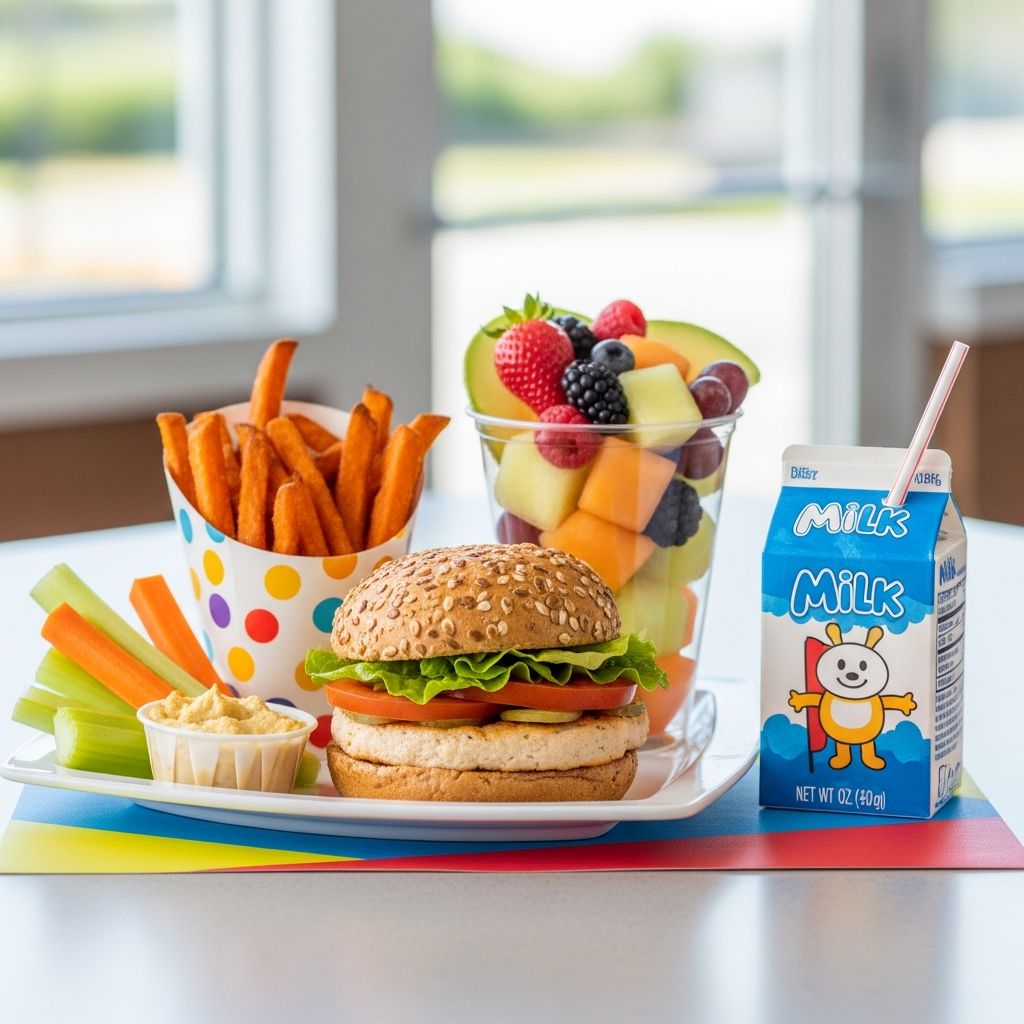
Fast food offers quick solutions for busy families, but its impact on children’s health requires careful consideration. With children consuming an average of 13.8% of daily calories from fast food, parents must prioritize options that align with nutritional guidelines to prevent excess calorie, fat, and sodium intake.
Understanding the Nutritional Landscape of Kids’ Fast Food
Children’s menus at fast food chains often promise convenience, yet many items exceed recommended daily intakes for key nutrients. Studies reveal that kids’ meals frequently surpass caloric limits, with contributions reaching over 100% of daily needs for energy, carbohydrates, and lipids, particularly in preschoolers where snacks like popcorn can provide up to 270% of energy recommendations. This overabundance stems from high levels of saturated fats, added sugars, and sodium, contributing to about one-third of children’s calories from added sugars and solid fats sourced from fast food items such as sugary drinks, fries, pizza, and desserts.
On days when children aged 2-11 eat fast food, they consume an extra 126 calories, while adolescents add 309 calories compared to home-cooked meals. Full-service restaurants add even more, with 160 extra calories for kids and 267 for teens. These excesses correlate with poorer diet quality, including reduced intake of fruits, vegetables, and milk.
Key Nutritional Concerns in Popular Fast Food Items
- Excess Calories: A typical kids’ meal can approach or exceed 500-1000 calories, far beyond the 400-600 needed for a single meal in young children, leading to potential weight gain.
- High Saturated Fats and Sodium: Nearly all kids’ meal items surpass limits for saturated fat and sodium, increasing risks for heart health issues over time.
- Added Sugars: Sugary drinks in kids’ meals add 179 calories and 19 grams of sugar on average, dominating empty calorie sources.
- Lack of Fiber and Micronutrients: Minimal vegetables or whole grains mean deficiencies in fiber, vitamins, and minerals essential for growth.
| Nutrient | Daily Recommendation (Ages 4-8) | Typical Kids’ Meal Contribution | % of Daily Intake |
|---|---|---|---|
| Calories | 1200-1800 | 500-800 | 30-60% |
| Saturated Fat | <10% of calories | 10-20g | >100% |
| Sodium | <1900mg | 800-1500mg | 40-80% |
| Added Sugars | <25g | 20-40g | 80-160% |
This table illustrates how a single fast food meal can dominate a child’s daily nutrient budget, emphasizing the need for moderation.
Strategies for Healthier Fast Food Selections
Parents can transform fast food outings into nutritionally balanced experiences by focusing on customization. Opt for grilled proteins over fried, such as chicken sandwiches without breading, which reduce fat content significantly. Replace fries with apple slices or side salads when available, as some chains now offer fruits and vegetables as standard options.
Choose water, milk, or unsweetened beverages instead of sodas to slash added sugars. For burgers, select smaller sizes or remove half the bun to control portions. Yogurt parfaits or fruit cups serve as better dessert alternatives, providing protein and micronutrients over empty calories.
Customizing Popular Chain Meals
- Burger-Based Meals: Order plain burgers with lettuce, tomato, and mustard; pair with yogurt or fruit; milk or water to drink.
- Chicken Options: Grilled nuggets or tenders with carrot sticks or apples; avoid dipping sauces high in sugar.
- Taco or Wrap Choices: Bean or veggie-inclusive options; skip cheese and sour cream for lighter versions.
- Pizza Slices: Thin crust with veggie toppings; limit to one slice with a side salad.
These adjustments can cut calories by 20-50% while boosting nutrient density, making meals closer to dietary guidelines.
Age-Appropriate Portion Guidance
Portion sizes vary by age: Toddlers (1-3 years) need smallest options, around 300-400 calories per meal; school-age (4-11) 500-700; teens up to 900. Fast food value meals often ignore this, so split adult portions or share kids’ meals among siblings. Adolescents consume 16.7% of calories from fast food versus 11.4% for younger kids, highlighting the need for teen-specific vigilance.
Frequency and Long-Term Impact
Limit fast food to once weekly to mitigate risks. About one-third of children eat fast food daily, linking to higher obesity rates. Regular consumption displaces nutrient-rich home foods, perpetuating cycles of poor habits. Balance with home-cooked meals emphasizing whole foods.
Industry Improvements and Parental Advocacy
Recent shifts include more fruit sides and lower-calorie options, but kids’ meals still often fail standards. Parents can advocate for clearer labeling and default healthy sides. Regulations for nutritional info empower better choices, potentially curbing obesity.
Frequently Asked Questions
Is fast food ever okay for kids?
Yes, occasionally with smart choices; it provides convenience but should not exceed once a week to avoid nutritional excesses.
What drink should I pick for my child?
Water or low-fat milk; avoid sugary drinks that add up to 19g sugar per serving.
Can I make fries healthier?
Baked options or veggie swaps like apples reduce fat; portion to half serving.
How does fast food affect weight?
Extra 126 calories per kids’ fast food day contributes to overweight risk; monitor frequency.
Are there vegetarian fast food options?
Yes, salads, bean burritos, or veggie wraps; customize to add proteins like beans.
Building Healthy Habits Beyond Fast Food
Teach kids menu reading for nutrition facts. Involve them in choices to foster awareness. Combine fast food with active play to offset calories. Home replication of healthier versions reinforces lessons. Long-term, these habits reduce obesity prevalence, with evidence showing regulated kids’ meals improve diets.
By applying these principles, parents ensure fast food fits into a healthy lifestyle without compromising growth or well-being.
References
- Nutritional Quality of Fast Food Kids Meals and Their Contribution to… — PMC/NCBI. 2020-04-08. https://pmc.ncbi.nlm.nih.gov/articles/PMC7146270/
- Healthy Restaurant Kids’ Meals Fast Facts — Voices for Healthy Kids. 2020-09-28. https://voicesforhealthykids.org/assets/resources/healthy-kids-meals-9.28.2020.pdf
- Parents’ report of fast-food purchases for their children — UConn Rudd Center. 2018-08-31. https://uconnruddcenter.org/wp-content/uploads/sites/2909/2020/09/272-10-Healthier-Kids-Meals-Parent-Survey-Report_Release_8_31_18.pdf
- Fast Food Intake Among Children and Adolescents in the United States — CDC. 2020-08-05. https://www.cdc.gov/nchs/products/databriefs/db375.htm
- Happier Meals for Kids at the Drive-Thru — Academy of Nutrition and Dietetics. 2023. https://www.eatright.org/food/planning/away-from-home/happier-meals-for-kids-at-the-drive-thru