Feeding a 2-year-old often feels like a mix of science, art, and negotiation. One day they love broccoli, the next day they declare it “yucky” and throw it on the floor. This guide helps you offer healthy foods, set gentle limits, and build a positive relationship with food that can last a lifetime.
Understanding Your 2-Year-Old’s Appetite
Many parents worry that their toddler is not eating enough, but appetite naturally slows down after the rapid growth of infancy. Around age two, many children seem to eat very little at some meals and more at others, which can still be perfectly healthy. The key is to focus on patterns over a week, not a single day or meal.
At this age, toddlers are gaining independence and often use food to express preferences—and sometimes power. This is normal development, not a sign of you failing as a parent. Your job is to offer nutritious options regularly; your child’s job is to decide whether and how much to eat from what you provide.
The Parent and Toddler Roles at Mealtimes
A helpful way to reduce mealtime stress is to think in terms of clear roles. Parents and caregivers decide what food is offered, when it is offered, and where meals and snacks happen. Toddlers decide how much to eat from what is on offer—and sometimes they may choose not to eat at all.
When these roles are respected, pressure around eating usually decreases. Avoid coaxing, bribing, threatening, or bargaining with treats in exchange for “just three more bites.” These tactics can make toddlers more resistant and disconnect them from their natural hunger and fullness cues.
Building a Balanced Toddler Plate
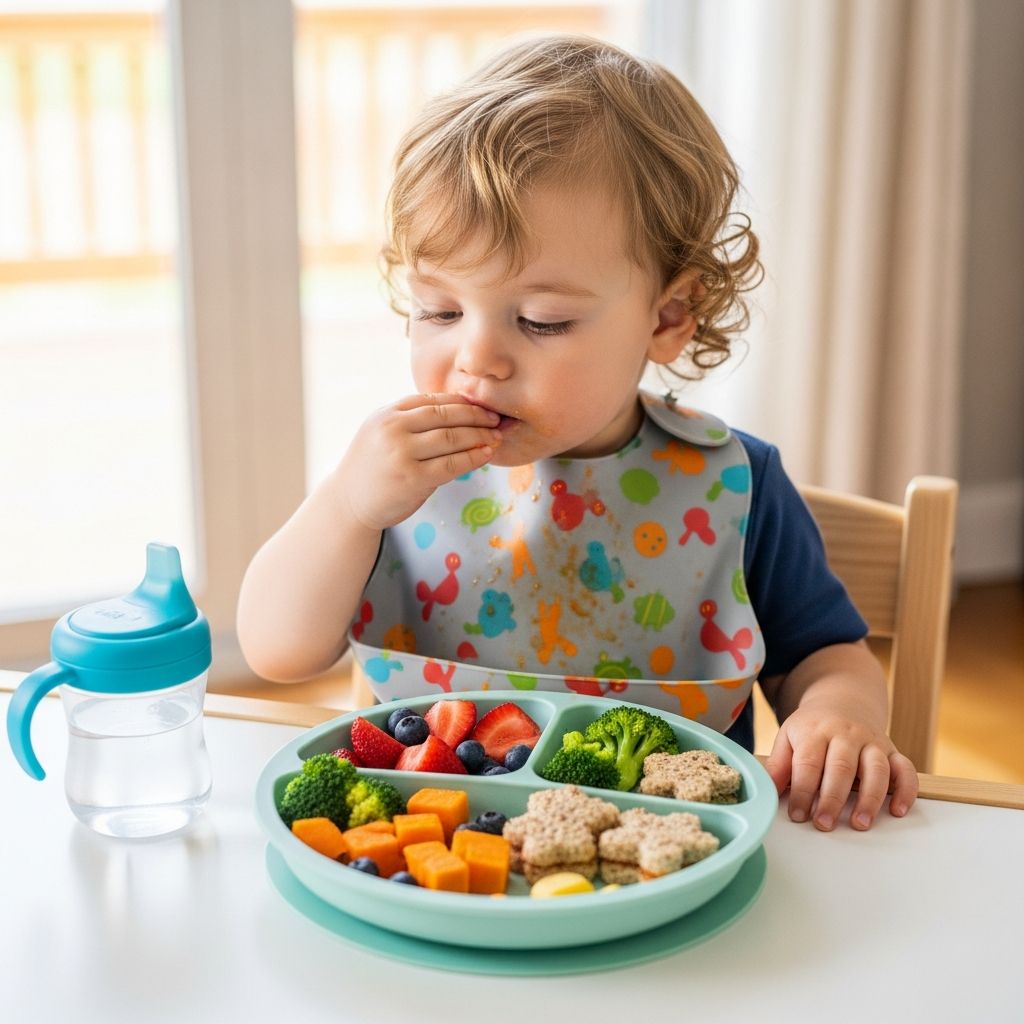
You do not need complicated recipes to feed your 2-year-old well. A simple way to think about balance is to build most meals from four main components: vegetables or fruits, grains or starchy foods, protein-rich foods, and healthy fats. You can adjust textures, cut foods into small pieces, and serve familiar favorites alongside new tastes.
At this age, variety matters more than perfection. If your child skips vegetables at lunch but eats some at dinner, that still counts. Offer small portions, allow seconds of any part of the meal, and avoid labeling foods as “good” or “bad.” Instead, talk about how different foods help the body grow strong, move, think, and play.
Example Toddler Plate Structure
| Plate Section | Examples | Why It Helps |
|---|---|---|
| Vegetables or Fruits | Soft carrot sticks, peas, sliced banana, small apple pieces, berries cut as needed | Provide vitamins, minerals, and fiber for growth, immunity, and digestion. |
| Grains or Starches | Whole-grain toast, brown rice, pasta, oatmeal, corn tortillas, potatoes | Offer energy to fuel play, learning, and movement. |
| Protein-Rich Foods | Beans, lentils, eggs, chicken, fish without bones, tofu, hummus | Support muscle growth, tissue repair, and many body processes. |
| Healthy Fats | Avocado, nut or seed butters (thinly spread), olive oil on veggies, full-fat yogurt | Help brain development, hormone production, and absorption of some vitamins. |
Sample Meal and Snack Ideas
Below are simple ideas you can mix and match. Always adjust sizes to your child’s appetite and cut foods to reduce choking risk. Serve the same basic foods the rest of the family is eating when possible, just modified for texture and salt levels.
Breakfast Ideas
- Oatmeal cooked soft, topped with mashed banana and a spoonful of yogurt.
- Scrambled egg with diced tomato and spinach, served with whole-grain toast fingers.
- Whole-grain waffle cut into strips with a thin spread of nut butter and soft fruit on the side.
Lunch Ideas
- Mini sandwich with mashed beans or hummus on soft whole-grain bread, cucumber slices, and orange segments.
- Rice bowl with small pieces of chicken, peas, and carrots, lightly seasoned.
- Pasta spirals with tomato sauce, finely chopped vegetables, and grated cheese.
Dinner Ideas
- Soft-cooked salmon flakes, mashed sweet potato, and green beans cut into small pieces.
- Turkey or lentil meatballs, small potato cubes, and soft-cooked broccoli.
- Stir-fried tofu cubes with mixed vegetables served over brown rice.
Snack Ideas
- Plain yogurt with mashed fruit or a sprinkle of oats.
- Slice of cheese with whole-grain crackers and cherry tomato halves (quartered as needed).
- Apple slices cooked until soft with a bit of cinnamon, served with a spoonful of nut or seed butter.
- Vegetable sticks (such as cooked carrot batons) with hummus for dipping.
How Much Food Does a 2-Year-Old Need?
Portion sizes for toddlers are much smaller than adult portions. A rough guideline is that a toddler serving might be about a quarter to a third of an adult serving, but every child is different. Some meals will be eaten enthusiastically and others barely touched, and that can still be within a healthy range.
If your child is growing steadily, is generally energetic, and their health provider is not concerned, small appetites alone are not usually a problem. Instead of counting bites, pay attention to whether you are offering balanced foods regularly and giving your child chances to respond to their natural hunger and fullness signals.
Illustrative Toddler Portion Ranges
| Food Type | Typical Toddler Portion Range | Notes |
|---|---|---|
| Cooked Vegetables | 2–4 tablespoons | Offer at most meals; expect some to be left on the plate. |
| Fruit | 2–4 tablespoons or a small piece | Serve fresh or lightly cooked; avoid large, hard pieces. |
| Grains or Starches | 2–4 tablespoons of rice, pasta, or half a slice of bread | Whole grains add fiber and longer-lasting energy. |
| Protein-Rich Foods | 1–3 tablespoons of meats, beans, or alternatives | Spread across meals and snacks during the day. |
| Milk or Fortified Alternative | About 1/2 cup per serving | Offered a few times daily, keeping room for solid foods. |
Smart Drink Choices for Toddlers
What a 2-year-old drinks can affect appetite and dental health. Water should be the main drink offered between meals and snacks. Milk or a suitable fortified alternative can be offered with meals, within the limits recommended by your healthcare provider.
Juice, even 100% juice, adds sugar without the fiber of whole fruit; if used at all, it is best kept to very small amounts and not offered in a bottle. Sugary drinks like soda, sweet teas, or sports drinks are not needed and can crowd out the appetite for more nourishing foods.
Handling Picky Eating Calmly
Most toddlers go through phases of picky eating, and it can feel frustrating or even alarming. Try to see picky phases as a normal developmental stage, not a long-term sentence. Consistency in offering healthy foods without pressure usually helps more than short-term tricks or battles.
When introducing a new food, serve just a small amount alongside familiar favorites. It can take many gentle exposures before a toddler decides to taste, and even more before they enjoy it. Celebrate curiosity—touching, smelling, or licking a new food—as progress, not failure.
Practical Tips for Picky Eaters
- Offer very small portions of new foods so the plate does not feel overwhelming.
- Include at least one food your child usually accepts at each meal.
- Avoid making separate “special” meals; instead, adjust the family meal slightly for toddler-friendly textures.
- Use neutral language. Instead of “You have to eat your peas,” try “Here are your peas. You can eat them if you want.”
- Keep mealtimes relaxed and limit distractions such as toys or screens.
Creating a Positive Mealtime Environment
What happens around the food can be just as important as the food itself. Toddlers learn not only by tasting but also by watching how adults eat and behave at the table. Sitting together for at least some meals, when possible, shows children that eating is a shared, enjoyable part of daily life.
Try to keep mealtimes predictable by serving meals and snacks at roughly consistent times. When a child knows that another opportunity to eat is coming soon, it is easier to accept that the current meal will end even if they did not eat much. This predictable rhythm can reduce grazing and improve appetite at sit-down meals.
Safety Considerations When Feeding Toddlers
Even the healthiest food can be risky if it is not served in a toddler-safe way. Young children are still developing chewing and swallowing skills, so some shapes and textures can increase choking risk. Supervision, appropriate food preparation, and calm eating help keep them safe.
Serve foods in small, manageable pieces and avoid offering hard, round, or very sticky foods that are difficult to chew. Encourage your child to sit while eating rather than running or lying down with food in their mouth.
Common Foods to Modify or Avoid for Safety
- Cut grapes and cherry tomatoes into quarters lengthwise instead of serving them whole.
- Cook raw vegetables like carrots until soft, then cut into thin sticks or small pieces.
- Spread nut or seed butters thinly on bread or crackers rather than serving in large spoonfuls.
- Avoid hard candies, popcorn, whole nuts, and large chunks of tough meat for young toddlers.
Helping Toddlers Listen to Their Bodies
One of the greatest gifts you can offer your child is respect for their own hunger and fullness cues. When you honor “all done” signals, even if the plate is not empty, your child learns that it is safe to trust their body. Over time, this can reduce overeating and emotional eating later in life.
Talk about hunger and fullness in simple terms: “Is your tummy still hungry, or is it feeling full now?” Avoid insisting on finishing everything “so it doesn’t go to waste”—leftover food can be stored, but overriding body signals can have longer-term costs.
When to Seek Extra Support
While most feeding challenges at age two are normal, there are times when extra help is important. If your child consistently refuses many foods, seems to struggle with chewing or swallowing, is losing weight, or mealtimes are extremely stressful for the whole family, consider talking with a pediatrician or dietitian.
Early guidance can uncover medical, sensory, or developmental issues that need attention, and it can also give you more tools and reassurance. You do not need to wait until things feel severe; asking questions early is a proactive way to support your child’s growth.
FAQs About Healthy Eating for 2-Year-Olds
1. What if my 2-year-old refuses vegetables?
Keep offering a small amount of vegetables at most meals without pressure or bargaining. Try different forms—raw, cooked, blended into sauces, or served with dips—and let your child see you enjoying them. Repeated, low-pressure exposure often works better than insisting on a certain number of bites.
2. How many snacks should my toddler have?
Many toddlers do well with three main meals and two or three snacks spaced throughout the day. Try to make snacks mini-meals with protein, produce, and grains rather than only sweet or packaged foods. A predictable rhythm helps prevent constant grazing and supports better hunger at meals.
3. Is it okay to give treats and sweets?
Occasional sweets can fit into a generally balanced diet, but they do not need to be daily. When you do offer them, serve them in a calm, neutral way as part of a snack or meal instead of using them as a reward or “bribe.” This can prevent sweets from becoming overly exciting or emotionally charged.
4. Should I hide vegetables in other foods?
Adding vegetables to sauces, soups, or baked dishes can boost nutrition, but it is also valuable for your toddler to see, smell, and recognize vegetables as they are. A balanced approach is to sometimes mix vegetables into dishes and also regularly offer them in visible, simple forms.
5. What if my child eats very little for dinner?
Appetite often varies across the day, and some toddlers naturally eat more at breakfast or lunch than at dinner. Offer a balanced meal at a consistent time, keep the mood relaxed, and avoid grazing right before dinner. If your child is generally growing well and eating across the day, a light dinner now and then is usually not a concern.
Final Thoughts
Feeding a 2-year-old is less about perfect menus and more about steady routines, varied foods, and a warm, low-pressure environment. When you provide structure, model enjoyment of nourishing foods, and trust your child’s appetite, you lay strong foundations for a positive relationship with food in the years ahead.