Sweet treats do not have to mean food coloring overload, mystery ingredients, and a sugar crash before bedtime. With a few smart swaps and simple ideas, you can serve healthier desserts that still taste like dessert, not punishment. This guide walks you through family-friendly ideas inspired by classic favorites, using fruit, yogurt, oats, and chocolate in a more balanced way.
Why “Healthy Dessert” Actually Matters
Dessert can absolutely fit into a balanced diet, especially for kids, when it leans on whole foods instead of relying only on added sugar. Research shows that high intakes of added sugars, especially in drinks and sweets, are linked to increased risk of childhood obesity and poor diet quality. At the same time, public health agencies emphasize that fruit, whole grains, and nuts support heart health and long-term wellbeing.
You don’t have to ban sweets; instead, you can:
- Highlight natural sweetness from fruit.
- Use whole grains and fiber-rich ingredients.
- Add a bit of protein or healthy fat to keep tummies full.
- Keep portions kid-sized, not bakery-sized.
Core Ingredients for Smarter Sweets
Stocking a few versatile basics makes it easy to throw together better-for-you desserts on busy weeknights.
1. Naturally Sweet Fruit
Fresh, frozen, or baked fruit delivers flavor, color, and nutrients without needing much extra sugar.
- Bananas: Great for “nice” cream, muffins, and chocolate-dipped bites. The riper they are, the sweeter they taste.
- Berries: Perfect for parfaits, freezer pops, and quick sauces.
- Apples & pears: Delicious baked with a crunchy oat topping.
- Mango, peaches, pineapple: Brighten smoothies and frozen treats.
2. Protein-Rich Dairy and Alternatives
Yogurt and milk (or fortified alternatives) help desserts feel more substantial and less like a sugar rush. Plain yogurt with fruit typically has far less free sugar than pre-sweetened versions.
- Plain Greek yogurt: Thick, creamy, and high in protein.
- Milk or fortified soy milk: Good for puddings and smoothies.
- Cottage cheese or ricotta: Can be blended into creamy fruit dips.
3. Whole Grains and Fiber Boosters
Whole grains and seeds add texture and fiber, which helps kids feel full and supports digestion.
- Rolled oats: Ideal for crumbles, bars, and cookie-style bites.
- Whole wheat flour: Swap in for part of the white flour in muffins and quick breads.
- Chia and flax seeds: Thicken puddings and add omega-3 fats.
4. Healthy Fats for Staying Power
In growing kids, moderate amounts of unsaturated fats support brain and body development when used instead of saturated and trans fats.
- Nut and seed butters: Peanut, almond, sunflower, or tahini give desserts a creamy, satisfying texture.
- Nuts and seeds: Sprinkle over yogurt, fruit, and bars.
- Avocado: Blends smoothly into chocolate puddings and mousses.
Quick Dessert Ideas by Texture and Temperature
Sometimes kids want something cold, sometimes something chewy, sometimes warm and cozy. Use this table to match a craving with a lighter option.
| Craving | Healthier Dessert Idea | Key Benefits |
|---|---|---|
| Creamy & cold | Frozen yogurt pops with blended fruit | Protein, calcium, no artificial colors |
| Chewy & snackable | Oat-based energy balls with nut butter | Whole grains, healthy fats, portable |
| Warm & cozy | Baked apples with oat-nut topping | Fruit-forward, high fiber |
| Chocolatey | Cocoa-chia pudding with berries | Omega-3s from chia, less sugar than mousse |
| Crunchy & sweet | Dark chocolate-dipped fruit slices | Portion-controlled chocolate, whole fruit |
Fruit-Forward Desserts That Feel Special
Transform simple fruit into desserts that look impressive but take very little effort.
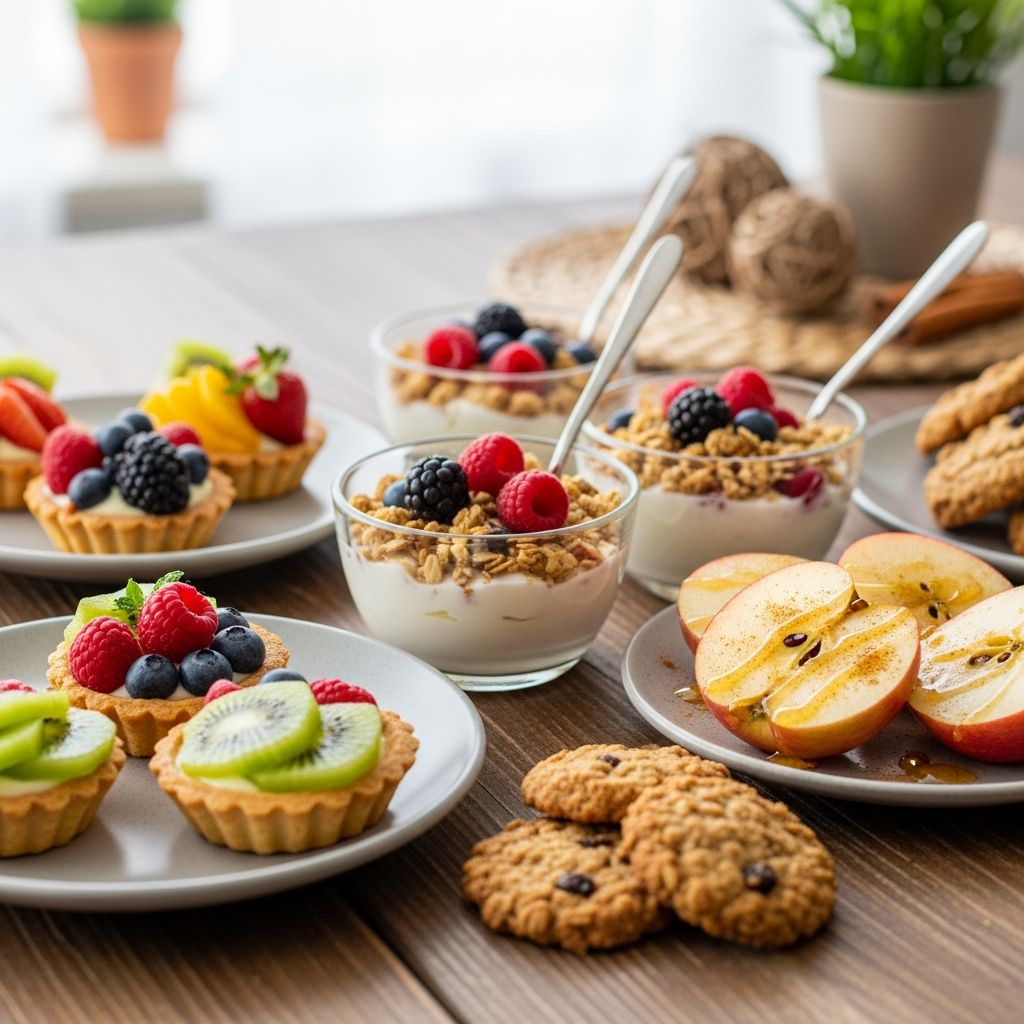
Colorful Yogurt Fruit Cups
Layer fruit and yogurt into clear glasses for a pretty, parfait-style dessert.
- Alternate spoonfuls of plain Greek yogurt with berries, sliced bananas, or diced peaches.
- Add a sprinkle of granola, crushed nuts, or toasted oats on top.
- For extra fun, let kids assemble their own layers at the table.
This approach keeps added sugars low while offering protein and probiotics from yogurt and fiber from fruit and grains.
Warm Baked Fruit with Crunch
Baked fruit is a great alternative to heavier pies.
- Core apples or pears and place in a baking dish.
- Fill the centers with a mixture of oats, chopped nuts, cinnamon, and a drizzle of maple syrup.
- Bake until the fruit is tender and the topping is golden.
Served with a spoonful of yogurt, this becomes a satisfying dessert that highlights whole foods rather than crust and frosting.
Chocolate-Dipped Fruit Bites
Kids love the magic of crisp chocolate around juicy fruit.
- Melt a small amount of dark chocolate and let it cool slightly.
- Dip strawberries, banana slices, mandarin segments, or pineapple chunks.
- Set on parchment and chill until the chocolate is firm.
Using dark chocolate in modest amounts adds flavor and a bit of beneficial cocoa compounds while keeping sugar portions moderate.
No-Bake Treats for Busy Nights
When you don’t want to turn on the oven, these ideas come together quickly and store well for snacks all week.
Oat and Nut Butter Energy Balls
These bite-sized treats feel like cookie dough but offer more staying power.
- Combine rolled oats, nut or seed butter, a bit of honey, and add-ins like mini chocolate chips or dried fruit.
- Roll into small balls and refrigerate until firm.
- Serve 1–2 per child as a dessert or snack.
Chia Pudding in Fun Flavors
Chia seeds swell in liquid, creating a pudding-like texture that kids can customize.
- Stir together milk (or fortified plant milk), chia seeds, vanilla, and a little honey or maple syrup.
- Refrigerate a few hours or overnight until thick.
- Top with mashed berries, cocoa powder, or sliced fruit before serving.
Chia provides fiber and plant-based omega-3 fats, making this dessert more nourishing than many packaged puddings.
Blender “Nice” Cream
Frozen bananas whizzed in a blender can mimic the creaminess of soft-serve ice cream.
- Freeze ripe banana slices.
- Blend with a splash of milk until creamy, scraping down the sides as needed.
- Flavor with peanut butter, cocoa, or berries.
Because the sweetness comes from fruit, you avoid the high added sugar content of many ice cream products.
Lighter Bakes: Muffins, Bars, and Cookies
Homemade baked goods let you control both ingredients and portion size. Small changes can significantly improve the overall nutrition profile.
Smarter Muffins and Quick Breads
Muffins can quickly turn into cupcakes in disguise, but a few swaps help:
- Replace part of the white flour with whole wheat flour or oat flour.
- Use mashed banana, pumpkin, or applesauce for moisture and sweetness.
- Reduce sugar compared to traditional recipes; often half the sugar still tastes great, especially with ripe fruit.
Adding grated zucchini or carrot is another way to slip in vegetables while keeping a tender texture.
Oaty Bars for Dessert or Lunchboxes
Think of these as a cross between cookies and granola.
- Mix oats, chopped nuts or seeds, a bit of sweetener, and just enough fat to hold everything together.
- Press into a pan, bake lightly, then cut into small bars or squares.
- Include mini chocolate chips or dried fruit for extra appeal.
Compared to many packaged bars, homemade versions can be lower in sugar and free from unnecessary additives.
Cookies with a Better Balance
Cookies are always popular; the goal is to make them a little more balanced without losing the fun.
- Use oats and nut butter to provide fiber and healthy fats.
- Choose dark chocolate chips and keep them small for flavor in every bite.
- Make cookies smaller so kids can enjoy one or two without overdoing it.
Helping Kids Build a Healthy Relationship with Dessert
How you talk about dessert can matter just as much as what you serve. Nutrition and pediatric groups suggest that overly restricting foods can backfire and make sweets more appealing. Instead, focus on balance and variety.
- Avoid labeling foods as “bad” or “forbidden.”
- Serve dessert with or after meals rather than using it as a reward.
- Let kids help stir, layer, and taste as you cook; this often makes them more willing to try new ingredients.
- Model balance by enjoying dessert yourself in reasonable portions.
Frequently Asked Questions (FAQs)
How much sugar is okay for kids in desserts?
Health guidelines recommend limiting added sugars to less than 10% of daily calories for everyone over age 2, and avoiding added sugars in drinks and foods for children under 2. In practice, that means keeping everyday desserts modest in portion and relying more on fruit for sweetness.
Are honey and maple syrup healthier than white sugar?
Honey and maple syrup do contain trace minerals and sometimes antioxidants, but your body still treats them as added sugars. They can be useful for flavor because a small amount goes a long way, yet the total quantity should still be limited.
Is fruit “too much sugar” for dessert?
Whole fruit comes packaged with fiber, water, and beneficial vitamins and plant compounds. Public health organizations encourage eating a variety of fruits daily, and they do not count naturally occurring sugars in whole fruits the same way as added sugars. For most kids, fruit-based desserts are an excellent choice.
How can I make dessert inclusive for allergies?
Many ideas here can be adapted: use certified gluten-free oats for gluten sensitivity, swap dairy yogurt for fortified soy or coconut yogurt, choose seed butters instead of nut butters, and check labels on chocolate for milk or nut traces. Simple fruit-forward desserts are often the easiest to customize.
Do healthy desserts still count as treats?
Yes. A dessert can be both nourishing and fun. Adding fruit, whole grains, and protein does not mean kids lose the joy of a sweet bite—it just means they get more nutrients alongside it.
References
- Dietary Guidelines for Americans 2020–2025 — U.S. Departments of Agriculture and Health and Human Services. 2020. https://www.dietaryguidelines.gov
- Making Healthy Choices: A Guide on Whole Grains, Fruits, and Vegetables — U.S. Department of Agriculture, MyPlate. 2023. https://www.myplate.gov/eat-healthy/what-is-myplate
- Dietary Fats and Cardiovascular Disease: A Presidential Advisory — Sacks FM et al., American Heart Association. Circulation. 2017-06-15. https://www.ahajournals.org/doi/10.1161/CIR.0000000000000510
- Feeding Patterns and Eating Behaviors in Early Childhood — HealthyChildren.org, American Academy of Pediatrics. 2022. https://www.healthychildren.org/English/healthy-living/nutrition/Pages/Feeding-Your-1- to-3-Year-Old.aspx