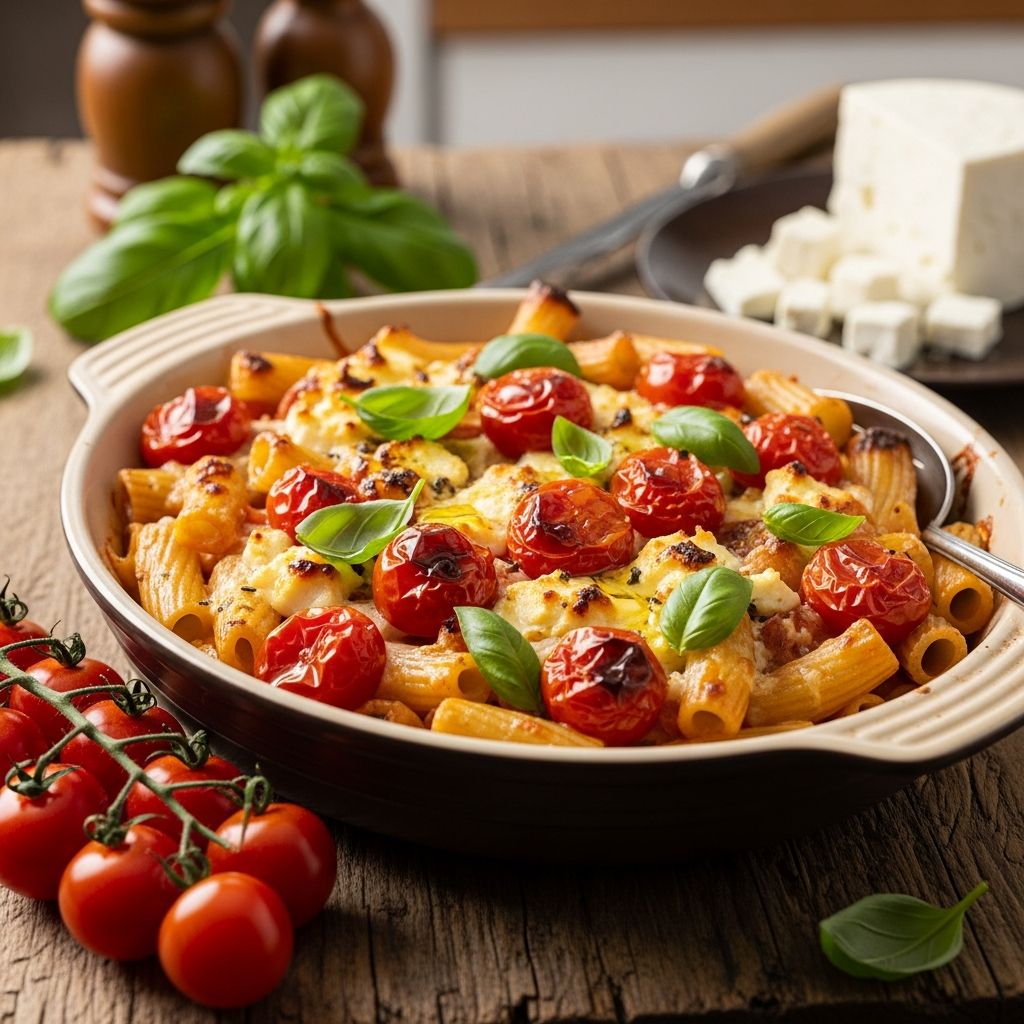
This oven-baked feta pasta transforms simple ingredients into a creamy, flavorful dish that’s both comforting and nutrient-dense. Cherry tomatoes burst under high heat, mingling with softened feta to form a natural sauce, while fresh basil and garlic add vibrant notes. Perfect for weeknight dinners, it supports balanced eating with options for whole grains, lean proteins, and plenty of vegetables.
Why This Recipe Stands Out for Everyday Nutrition
In a world of quick TikTok trends, this version prioritizes health without sacrificing taste. Traditional baked feta pasta went viral for its ease, but adaptations like this one incorporate whole wheat or legume-based pastas for extra fiber and protein, helping stabilize blood sugar and promote satiety. Cherry tomatoes provide lycopene, an antioxidant linked to heart health, while feta offers calcium and probiotics from fermentation.
Family meal times benefit from dishes like this: minimal prep means more table time, and the one-pan method reduces cleanup. Customize with spinach for iron or chicken for complete proteins, making it versatile for kids, adults, or fitness-focused eaters. Studies from the USDA emphasize such Mediterranean-inspired meals for longevity, blending healthy fats from olive oil with plant-based elements.
Essential Ingredients for Success
Gather these pantry staples and fresh produce for a foolproof bake. Quantities serve 4-6, scaling easily for larger gatherings.
- 2 pints cherry or grape tomatoes: Their small size ensures even roasting and natural sweetness.
- 8-10 oz block feta cheese: Full-fat for creaminess; choose goat or sheep milk for easier digestion.
- 12 oz pasta: Opt for whole wheat penne, chickpea rotini, or lentil elbows for 10-15g protein per serving.
- 1/4 cup extra-virgin olive oil: Heart-healthy fats that carry flavors.
- 4 garlic cloves, minced: Fresh for punchy aroma.
- 1/2 cup fresh basil, chopped: Adds brightness; reserve some for garnish.
- Optional protein boost: 1 lb diced chicken breast or 2 cups spinach.
- Seasonings: 1/2 tsp salt, 1/4 tsp black pepper, pinch of red pepper flakes.
These selections keep calories around 400-500 per serving while delivering balanced macros: 40% carbs from pasta and tomatoes, 30% fats from oil and feta, 30% protein.
Step-by-Step Cooking Guide
Prep time: 10 minutes. Bake time: 35-40 minutes. Total: Under 50 minutes.
- Preheat oven to 400°F (200°C). Use a 9×13-inch baking dish for even heat distribution.
- Assemble the base: Scatter tomatoes in the dish. Nestle the feta block in the center. Drizzle olive oil generously over everything. Sprinkle garlic, salt, pepper, and half the basil on top. For protein, add diced chicken around the edges, seasoned lightly.
- Bake uncovered: Roast for 30-35 minutes until tomatoes blister and burst, releasing juices. Feta will soften and turn golden. If desired, broil 2-3 minutes for a bubbly top—watch closely to avoid burning.
- Cook pasta meanwhile: Boil in salted water to al dente (8-10 minutes). Drain, reserving 1/2 cup pasta water.
- Combine and sauce: Mash feta and tomatoes into a creamy mixture with a fork. Toss in hot pasta, adding reserved water tablespoon-by-tablespoon until silky. Fold in spinach (if using) to wilt and remaining basil.
- Serve hot: Garnish with extra basil, cracked pepper, or a lemon squeeze for zest.
Tips: Use oven-safe dishes only. For gluten-free, chickpea pasta holds up best without getting mushy.
Nutrition Breakdown and Health Benefits
This dish shines nutritionally. Per serving (1.5 cups with chicken):
| Nutrient | Amount | % Daily Value* |
|---|---|---|
| Calories | 420 | 21% |
| Protein | 28g | 56% |
| Carbs | 35g | 13% |
| Fiber | 8g | 29% |
| Fat | 18g | 23% |
| Sodium | 650mg | 28% |
*Based on 2,000-calorie diet. Tomatoes contribute vitamin C (50% DV) and potassium. Feta provides 20% DV calcium. Whole grain pasta boosts B vitamins for energy metabolism.
Health perks include improved gut health from fermented feta and fiber-rich pasta, per Harvard T.H. Chan School of Public Health guidelines on Mediterranean diets reducing chronic disease risk by 25%.
Customizations for Every Dietary Need
- Vegan swap: Use plant-based feta alternative and tofu cubes.
- Low-carb: Sub zucchini noodles or spaghetti squash; yields 250 calories, 10g net carbs.
- Kid-friendly: Blend sauce smooth, add mozzarella shreds.
- Extra veggies: Stir in broccoli or artichokes pre-bake.
- Spice it up: Add chili flakes or swap basil for oregano.
These tweaks maintain the core method while fitting keto, paleo, or high-fiber plans.
Common Mistakes and Pro Tips
Avoid soggy pasta by cooking al dente and mixing post-bake. Don’t skip pasta water—it’s starchy magic for emulsification. Fresh garlic outperforms jarred for flavor depth. Store leftovers in airtight containers up to 3 days; reheat with a splash of water or broth.
For meal prep, assemble unbaked trays and freeze; thaw overnight before baking.
Frequently Asked Questions
Can I make baked feta pasta ahead of time?
Yes, bake the feta-tomato base up to 2 days early. Reheat gently and toss with freshly cooked pasta for best texture.
Is this recipe gluten-free?
Easily—use chickpea, lentil, or rice pasta. Ensure feta and oil are certified GF.
How do I reduce sodium?
Choose low-sodium feta, skip added salt, and use half the oil with broth drizzle.
Can I use regular tomatoes instead of cherry?
Yes, halve Roma tomatoes, but cherry varieties roast sweeter and faster.
What’s the best pasta shape?
Penne or rotini trap sauce best; long strands like spaghetti work too.
Pairing Ideas and Serving Suggestions
Serve with a crisp green salad, garlic bread, or grilled veggies. Wine pairing: Light Pinot Grigio cuts the richness. For kids, pair with fruit skewers.
This recipe’s appeal lies in its adaptability— a base for creativity while delivering reliable results night after night.
References
- Dietary Guidelines for Americans, 2020-2025 — U.S. Department of Agriculture and U.S. Department of Health and Human Services. 2020-12-01. https://www.dietaryguidelines.gov/sites/default/files/2020-12/Dietary_Guidelines_for_Americans_2020-2025.pdf
- Mediterranean Diet and Health — Harvard T.H. Chan School of Public Health. 2023-05-15. https://www.hsph.harvard.edu/nutritionsource/healthy-weight/diet-reviews/mediterranean-diet/
- Nutrient Content of Tomatoes — USDA FoodData Central. 2024-01-10. https://fdc.nal.usda.gov/fdc-app.html#/food-details/170457/nutrients
- Calcium in Dairy Products — National Institutes of Health Office of Dietary Supplements. 2022-08-22. https://ods.od.nih.gov/factsheets/Calcium-HealthProfessional/
- Whole Grains and Fiber Recommendations — FDA. 2023-11-01. https://www.fda.gov/food/nutrition-education-resources-materials/labeling-nutrition