Understanding the Growing Obesity Crisis Among Young People
Global health projections paint an increasingly concerning picture regarding childhood weight trends. Research indicates that by 2050, approximately one in six children and adolescents worldwide will be living with obesity, while an additional significant portion will be classified as overweight. In the United States specifically, the situation is even more acute, with forecasts suggesting that by 2050, roughly one in five children, at least one in three adolescents, and two in three adults will be affected by obesity. These projections represent a dramatic escalation from current levels, highlighting a public health challenge that demands immediate, thoughtful intervention.
The trajectory of childhood weight gain has accelerated dramatically over recent decades. Between 1990 and 2021 alone, obesity prevalence among male adolescents in the United States increased by 158.4%, while female adolescents experienced a 185.9% increase. This rapid escalation underscores how profoundly environmental, dietary, and lifestyle factors have shifted in ways that disadvantage young people. Understanding these trends is crucial for parents, educators, and healthcare providers who wish to support children’s wellbeing without resorting to shame-based interventions that can cause lasting psychological harm.
Why Traditional Weight-Focused Approaches Often Backfire
Many conventional strategies for addressing childhood weight rely on direct focus on body size, calorie counting, or restrictive eating patterns. However, extensive research demonstrates that these approaches frequently produce counterproductive outcomes, particularly in young people whose bodies and psyches are still developing. When children internalize messages that their bodies are “wrong” or “need fixing,” the emotional consequences can be profound and long-lasting.
Body shaming and weight-focused messaging correlate with increased rates of eating disorders, disordered eating behaviors, depression, and anxiety in children and adolescents. These psychological consequences can persist into adulthood, affecting self-esteem, relationship quality, and overall life satisfaction. Furthermore, shame-based approaches often fail to achieve sustainable weight management because they address symptoms rather than underlying drivers of unhealthy patterns. Children who feel judged about their bodies may actually engage in more emotional eating or develop avoidant relationships with physical activity, perpetuating the very patterns parents and caregivers hoped to change.
The distinction between supporting health and criticizing appearance is essential. Parents, family members, and healthcare providers must recognize that a child’s worth and value are entirely separate from their body size, and communication should consistently reinforce this separation.
Foundational Principles for Health-Centered Parenting
Effective, compassionate approaches to supporting children’s health rest on several core principles that shift focus away from body size and toward genuine wellbeing:
- Health over appearance: Frame conversations around what bodies can do and how they feel rather than how they look. Celebrate strength, endurance, flexibility, and energy rather than physical appearance.
- Unconditional acceptance: Communicate consistently that your love, support, and pride in your child are entirely unconditional and unrelated to body size or appearance.
- Modeling balanced attitudes: Children absorb parental attitudes toward food, exercise, and bodies. Demonstrating a balanced, non-obsessive relationship with health sends powerful messages.
- Focus on behavior rather than outcomes: Emphasize the importance of specific healthy behaviors—eating nutritious foods, moving regularly, sleeping well—rather than fixating on weight numbers or scale measurements.
- Addressing root causes: Explore underlying factors contributing to unhealthy patterns, such as stress, emotional regulation difficulties, food insecurity, or limited access to safe physical activity spaces.
Building Positive Food Relationships Without Restriction
Creating a healthy relationship with food is foundational to long-term wellbeing, yet many modern food environments and parenting approaches inadvertently create anxiety and dysfunction around eating. Children develop more balanced food relationships when parents avoid labeling foods as strictly “good” or “bad,” a binary classification that can generate guilt, shame, and paradoxically, increased cravings for restricted items.
Instead, parents benefit from adopting approaches that normalize all foods within reasonable contexts. This might mean:
- Offering a variety of nutritious options at meals while including foods children enjoy, even if those foods are less nutritionally dense
- Allowing children to develop internal hunger and fullness cues by respecting their appetite rather than requiring “clean plates”
- Avoiding using food as reward or punishment, which can distort children’s ability to recognize genuine physical hunger
- Involving children in meal planning and preparation, which increases investment in and enjoyment of foods
- Minimizing pressure around eating certain foods while maintaining consistency with family eating patterns
Research on intuitive eating and non-diet approaches demonstrates that when children are trusted to self-regulate their food intake within an environment offering varied, accessible options, they tend to develop more balanced eating patterns than those subject to external control or restriction.
Physical Activity as Joy Rather Than Obligation
Movement and physical activity are essential for children’s physical and mental health, yet framing exercise as punishment for body size or as mandatory calorie-burning creates negative associations that can persist into adulthood. Instead, parents can cultivate genuine enjoyment of movement by:
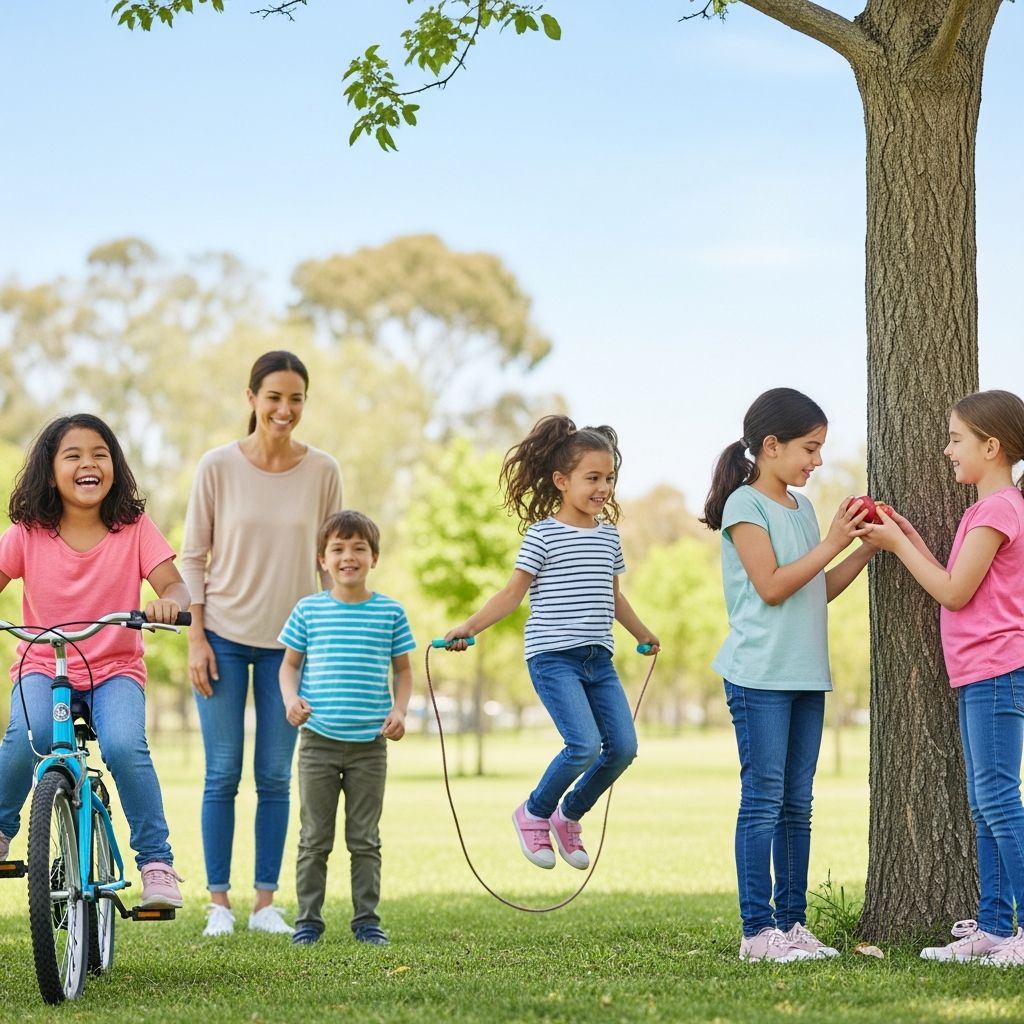
- Identifying activities the child genuinely enjoys, whether sports, dance, nature exploration, cycling, or play with friends
- Emphasizing how movement makes them feel—stronger, more energized, more focused, better able to manage stress
- Creating family activity traditions that are fun first and health benefits secondary
- Reducing sedentary time through gradual, positive changes rather than restrictive rules
- Acknowledging barriers to physical activity, such as cost, transportation, safety concerns, or social anxiety, and problem-solving collaboratively
When children experience physical activity as something they choose because it feels good rather than something imposed upon them for appearance-related reasons, they’re more likely to maintain active lifestyles into adulthood.
Navigating Family Comments and Social Pressures
Extended family members, peers, and well-meaning friends may make comments about children’s bodies or eating habits. Parents play a crucial protective role by:
- Establishing clear boundaries with family members about discussing the child’s body, weight, or eating patterns
- Preparing brief responses to redirect inappropriate comments
- Privately reassuring children after negative comments, validating their feelings while reinforcing their inherent worth
- Teaching children language to advocate for themselves when peers make comments about their bodies
- Creating a family culture where appearance-focused commentary is minimized
Children with parents who actively protect them from body-critical messaging develop greater resilience and more positive self-image, even in appearance-focused cultural contexts.
Sleep, Stress, and Mental Health Connections
The relationship between adequate sleep, stress management, and healthy weight is well-established but often overlooked in discussions of childhood health. Sleep deprivation disrupts hormones regulating hunger and satiety, increases cravings for calorie-dense foods, and impairs emotional regulation. Similarly, chronic stress activates physiological responses that promote weight gain and increase emotional eating behaviors.
Supporting children’s overall health requires attention to:
- Age-appropriate sleep schedules and sleep hygiene
- Stress management tools suited to the child’s age and preferences
- Mental health support when anxiety or depression is present
- Open communication about sources of stress and worry
- Balancing academic and extracurricular pressures
When children’s foundational needs for sleep and emotional security are met, supporting other health behaviors becomes significantly easier.
When Professional Support Is Beneficial
For some families, professional guidance enhances health-promotion efforts. Pediatricians, registered dietitians trained in non-diet approaches, and therapists specializing in childhood health can provide evidence-based support that respects the importance of psychological wellbeing alongside physical health. When seeking professional guidance, parents should:
- Ask explicitly about professionals’ approaches to weight and body image
- Seek providers who emphasize health behaviors rather than weight loss
- Ensure providers communicate respectfully with children, avoiding shame or blame
- Look for providers trained in intuitive eating, Health at Every Size (HAES) frameworks, or similar approaches that separate health from appearance
Creating Environments That Support Healthy Choices
Individual efforts matter, but environmental factors significantly influence children’s health patterns. Parents can advocate for and create supportive environments by:
- Stocking homes with accessible nutritious foods
- Limiting marketing exposure and screen time (which increases both sedentary behavior and exposure to unhealthy food advertising)
- Supporting school policies prioritizing physical education and healthy cafeteria options
- Working to ensure safe spaces for outdoor play and community recreation
- Advocating for equitable food access in communities with limited grocery options
While individual family choices matter, broader systemic changes addressing food insecurity, neighborhood safety, and equitable access to resources are essential for meaningful progress on population health.
The Intergenerational Impact of Parental Modeling
Children’s attitudes toward food, bodies, and health are profoundly shaped by observing parental behaviors and attitudes. Parents who demonstrate balanced eating patterns, regular physical activity pursued for enjoyment rather than punishment, and self-acceptance despite imperfect bodies teach powerful lessons. Conversely, parents who engage in chronic dieting, negative body talk, or exercise motivated by appearance-shame model problematic patterns children may internalize.
Working on one’s own relationship with health and bodies, while challenging, represents one of the most impactful gifts parents can give their children.
Frequently Asked Questions
Q: At what point should I become concerned about my child’s weight?
A: Rather than focusing on weight, discuss health patterns with your pediatrician. Concerns should center on health behaviors—nutrition, physical activity, sleep, emotional wellbeing—rather than body size. Pediatricians can assess whether a child’s growth pattern is appropriate for their individual trajectory.
Q: How do I address my child’s diet without triggering disordered eating?
A: Frame dietary discussions around how foods make their body feel and function, not appearance. Avoid labeling foods as forbidden or “bad.” Involve them in food choices, model balanced eating yourself, and let them develop hunger and fullness awareness rather than imposing external eating rules.
Q: What should I do if my child makes negative comments about their own body?
A: Listen without judgment and avoid dismissing their feelings. Gently redirect toward appreciation for what their body can do. Identify where the negative message originated and consider limiting that source’s influence. Reassure them of their inherent worth independent of appearance.
Q: How can I encourage physical activity without making it feel like punishment?
A: Involve your child in choosing activities they genuinely enjoy. Emphasize how movement makes them feel—energized, strong, capable. Make it social and fun rather than solitary and obligatory. Participate together when possible.
Q: Is it ever appropriate to discuss weight with my child?
A: Direct focus on weight is generally unnecessary and potentially harmful. If medical concerns exist, discuss them in age-appropriate language emphasizing overall health rather than appearance. Allow your pediatrician to address any medical weight-related issues.
References
- Child Obesity to Triple by 2050, New Global Study Finds — Conexiant. 2024. https://conexiant.com/endocrinology/articles/child-obesity-to-triple-by-2050/
- By 2050, two-thirds of adults and one-third of adolescents could face obesity in the US — News Medical. November 19, 2024. https://www.news-medical.net/news/20241119/By-2050-two-thirds-of-adults-and-one-third-of-adolescents-could-face-obesity-in-the-US.aspx
- National-level and state-level prevalence of overweight and obesity among children, adolescents, and adults in the USA, 1990–2021, and forecasts up to 2050 — PubMed. 2024. https://pubmed.ncbi.nlm.nih.gov/39551059/
- Overweight and Obesity Expected to Affect Half of Adults by 2050 — JAMA Network. 2024. https://jamanetwork.com/journals/jama/fullarticle/2832502
- A third of children worldwide forecast to be obese or overweight by 2050 — Murdoch Children’s Research Institute. 2024. https://www.mcri.edu.au/news/news-stories/third-children-worldwide-forecast-obese-overweight-2050
- Obesity in children and youth: Statistics and facts — National Institute of Diabetes and Digestive and Kidney Diseases (NIDDK). 2024. https://www.niddk.nih.gov/health-information/health-statistics/overweight-obesity