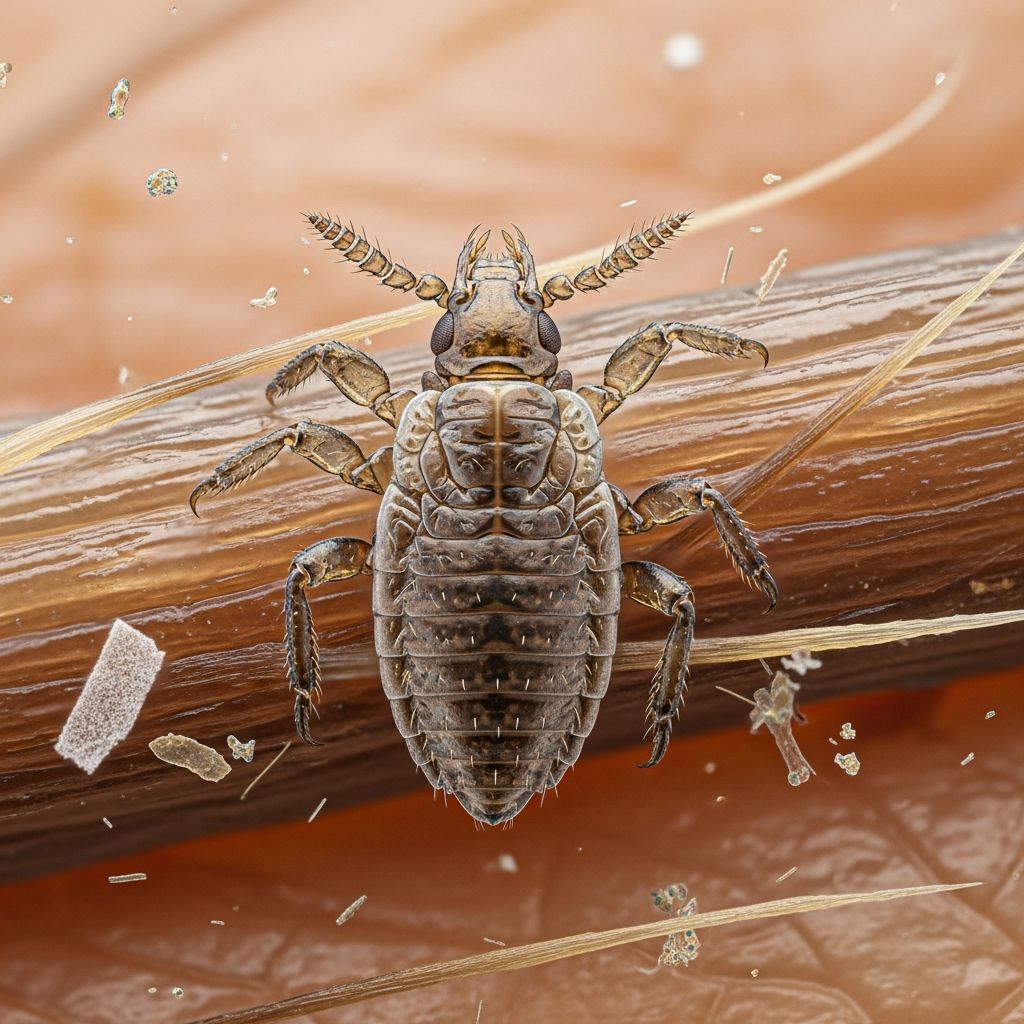
Head lice are tiny insects that live in hair on the human scalp and feed on small amounts of blood from the skin. Although they can be upsetting to find, they do not spread serious diseases and can be treated safely and effectively with the right steps. Understanding what lice are, how they spread, and how to get rid of them helps families stay calm and act quickly.
What Exactly Are Head Lice?
Head lice are very small wingless insects that live close to the scalp where it is warm and easy for them to find food. They are usually grayish or brownish in color and are just a few millimeters long, which makes them hard to see unless you look closely. Lice crawl from hair to hair but cannot jump or fly.
Lice eggs are called nits, and they are glued firmly to the hair shaft, usually near the scalp. Fresh nits tend to appear white, yellow, or tan and can be confused with dandruff, but unlike dandruff they stay stuck to the hair even when brushed.
Life Cycle of a Louse
Knowing the life cycle of lice helps explain why treatment often needs to be repeated. Female lice lay eggs on hair strands close to the scalp, where warmth helps them develop. After about a week, the eggs hatch into young lice called nymphs, which then grow into adults within another week or so.
Adult lice can live for several weeks on a person’s head if they are not treated, but they survive only a short time away from the human scalp. Because of this, most infestations come from direct head-to-head contact rather than from furniture or the environment.
How Head Lice Spread
Head lice most commonly spread through direct contact between people’s hair, such as when children play closely together, share hugs, or lean over the same tablet or book. This is why lice are especially common in school-age children and groups where kids spend time near one another. Indirect spread through objects is less common but still possible in some situations.
- Sharing items like hats, hairbrushes, combs, hair accessories, and headphones can occasionally transfer lice from one person’s hair to another.
- Using the same pillows, sleeping bags, or blankets in close succession may rarely allow lice to move from one head to the next, especially during sleepovers or camps.
Common Myths vs. Facts
Many families feel embarrassed when lice appear, but having head lice is not a sign of poor hygiene. Lice can live in clean or dirty hair and prefer any scalp that offers warmth and access to blood. They also do not carry or transmit serious illnesses.
| Myth | Fact |
|---|---|
| Lice only infest dirty hair. | Lice can live in any clean or dirty hair; cleanliness does not prevent them. |
| Lice can jump or fly between heads. | Lice can only crawl; they move through close head-to-head contact. |
| Having lice means a home is unsanitary. | Homes of all cleanliness levels can see lice; it is about contact, not dirt. |
| Harsh pesticides are needed to get rid of lice. | Many cases can be managed with safer medications and careful combing. |
Signs and Symptoms to Watch For
Some people with head lice feel very itchy, but others have almost no symptoms at first. Paying attention to subtle signs can help detect an infestation early, before lice spread to others at home or school. The main symptom is itching of the scalp, neck, or ears caused by a reaction to lice bites.
- Persistent scratching around the back of the neck, behind the ears, and on the top of the head.
- Small red bumps or sores on the scalp from scratching, which can occasionally become crusted or irritated.
- Sensation of something moving or tickling in the hair, especially at night when lice are more active.
- Visible nits attached to hair strands close to the scalp, often most noticeable behind the ears and along the neckline.
How to Check for Head Lice
When lice are suspected, a careful examination of the scalp under good lighting is important. It helps to part the hair in small sections and look very closely from the roots to the tips. A fine-toothed nit comb can make it easier to find lice and nits, especially in thick or long hair.
Sitting the child near a bright window or using a flashlight helps highlight the tiny moving insects. If something found in the hair can be easily brushed or blown away, it is likely dandruff or debris; if it is firmly stuck to the hair, it is more likely to be a nit.
When to Call a Health Professional
Most head lice cases can be treated at home with guidance from a pharmacist or pediatrician. However, professional medical advice is helpful if this is a child’s first episode, if over-the-counter treatments have failed, or if there is concern about skin infection from scratching. Children with very sensitive skin, allergies, or other medical conditions may require a more tailored approach.
- Seek medical care if the scalp appears very red, painful, swollen, or has yellow crusts that might indicate infection.
- Consult a doctor if a child is younger than the age recommended on the lice product label or if there is any doubt about which medicine is safest.
Overview of Treatment Options
Treating head lice generally involves a combination of medicated products and careful combing. Medicines designed specifically for lice, called pediculicides, may be available without a prescription or by prescription depending on the ingredient and local rules. Many products kill live lice but may not destroy every egg, which is why repeating treatment and continued combing are often recommended.
Parents should always read labels closely, follow instructions exactly, and avoid using more medication than directed. Overuse or misuse of lice products will not make them work better and can increase the chance of side effects.
Medicated Shampoos and Lotions
Several types of medicated shampoos, rinses, and lotions are commonly used to treat head lice. Some are applied to damp hair after shampooing, while others go onto dry hair. After the product sits on the hair for the recommended time, it is rinsed off and the hair is combed carefully to remove dead lice and loosened nits.
- Over-the-counter products often contain ingredients that affect the nervous system of lice, causing them to die. Many require a second application about a week later to kill newly hatched lice.
- Prescription lotions and creams may be used if nonprescription products fail or where local resistance patterns make certain medicines less effective.
Step-by-Step Home Treatment Plan
A structured plan helps families stay organized and improves the chances of fully clearing lice. The following general steps can be adapted to match the specific product being used. Always adjust timing and application according to the directions on the medication label.
- Confirm the diagnosis. Carefully check the child’s hair for moving lice and firmly attached nits, especially behind the ears and at the nape of the neck.
- Choose an appropriate medication. Pick a product that is suitable for the child’s age and follow any guidance from a health professional.
- Apply the product correctly. Use enough medication to fully cover the scalp and hair, and leave it on for exactly the amount of time instructed, then rinse as directed.
- Comb out lice and nits. While the hair is still damp, use a fine-toothed nit comb to remove as many lice and eggs as possible, working in small sections.
- Repeat checks. Examine the hair every few days for two weeks and continue combing to remove any remaining nits.
- Retreat if required. If the label or doctor recommends a second treatment, perform it on the correct day to target recently hatched lice.
Effective Combing Techniques
Nit combing is an important part of many treatment plans and is sometimes used alone in families that prefer to minimize medication use. For best results, hair should be damp and detangled with regular conditioner before combing. This helps the nit comb slide more easily through the strands.
- Divide the hair into small sections and comb from the scalp all the way to the ends, wiping the comb on a white paper towel after each pass.
- Take extra time around the ears and neck, where lice and nits often gather.
- Rinse the comb frequently and clean it well after each session to remove trapped lice and eggs.
Household Cleaning Without Going Overboard
Because lice prefer to remain on the scalp, environmental cleaning can be focused and does not require strong insect sprays. Items that were in contact with the affected person’s head in the previous few days should be cleaned or set aside. Deep, whole-house insecticide treatments are not necessary and may pose health risks.
- Wash recently used hats, pillowcases, sheets, and towels in hot water and dry them on high heat.
- Soak combs, brushes, and hair accessories in hot soapy water for several minutes before using them again.
- Vacuum carpets, upholstered furniture, and car seats where the child’s head may have rested, rather than spraying chemicals.
- Items that cannot be washed, such as certain stuffed animals, can be sealed in a plastic bag for a few days to ensure any lice present die off.
School, Friends, and Social Situations
Discovering lice on a child often raises questions about school attendance and notifying others. Many experts recommend that after the first treatment is done, children can return to school or daycare as long as most live lice are gone and active treatment is underway. Strict “no-nit” policies are becoming less common because they can keep children out of school even when they are no longer likely to spread lice.
Families should let close contacts and caregivers know about the infestation so they can check their own children and treat promptly if needed. Clear communication helps limit the spread while also reducing shame or blame among families.
Helping Kids Cope Emotionally
For many children, hearing that they have lice is embarrassing and scary. Adults can help by staying calm, explaining that lice are common, and emphasizing that it is not the child’s fault. Keeping the conversation factual and gentle can turn a stressful situation into a learning opportunity about germs, hygiene, and body care.
- Avoid teasing or making jokes about bugs in hair, which can increase anxiety.
- Offer distractions, such as a favorite movie or audiobook, during long combing sessions.
- Reassure the child that lice go away with treatment and do not mean anything bad about who they are.
Practical Prevention Tips
No method completely guarantees that lice will never return, but certain habits can lower the risk of spread. Teaching children a few simple rules about personal items and space can make a big difference, especially during school months or sleepover seasons. Prevention strategies should be realistic and easy for children to remember.
- Encourage kids to avoid head-to-head contact during play, photos, or sports when possible.
- Remind children not to share hats, helmets, hairbrushes, combs, barrettes, or headphones with friends.
- Keep long hair tied back in braids, buns, or ponytails during school and group activities.
- Do quick scalp checks after camp, sleepovers, or when the school reports a lice case in the class.
Frequently Asked Questions
Do lice prefer dirty hair?
No. Lice can live equally well in clean or dirty hair. They care far more about having a warm place to live and easy access to blood than about how often hair is washed.
Can pets catch or spread head lice?
Head lice are a human-specific parasite and do not live on dogs, cats, or other common household animals. There is no need to treat pets when a family member has head lice.
Is shaving the head the only sure cure?
Shaving the head is usually unnecessary. With proper use of lice medications and thorough combing, most families can clear an infestation without extreme measures like cutting all the hair.
Do I need special lice sprays for my home?
In most situations, focused cleaning, washing bedding, and vacuuming are enough. Strong insect sprays used on furniture or carpets are generally not recommended for routine head lice cases because the risks may outweigh the benefits.
What if lice keep coming back?
Repeated cases can happen if eggs are missed during treatment, if the medication is not used exactly as directed, or if lice are picked up again from an untreated contact. In these situations, a health professional can help review the treatment steps and suggest alternative products or strategies.
Key Takeaways for Families
- Head lice are common in children and are more of a nuisance than a health danger.
- They spread mainly through close head-to-head contact and can affect anyone, regardless of cleanliness.
- Successful treatment combines proper use of lice medications with thorough combing and reasonable household cleaning.
- Open communication with schools, friends, and healthcare providers helps manage outbreaks without stigma or panic.