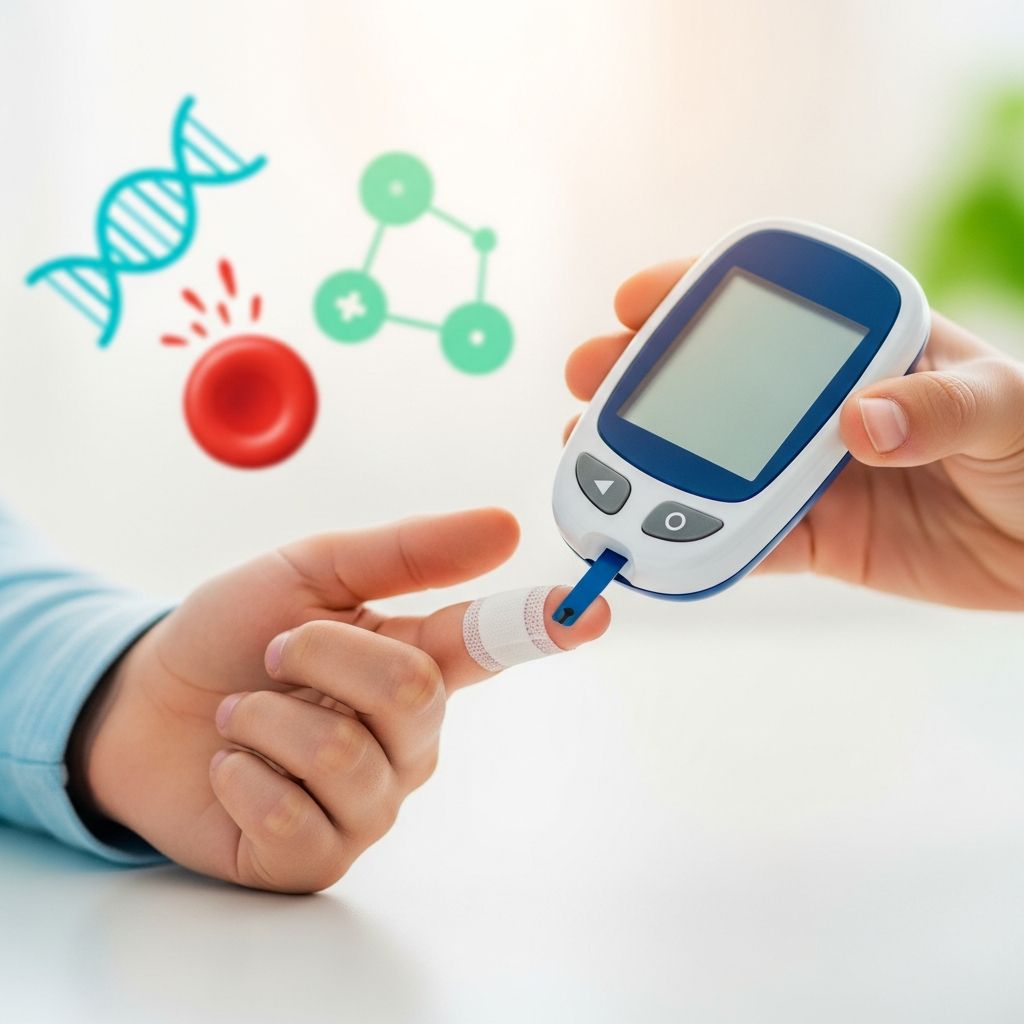
For families raising a child with diabetes, the HbA1c test (often called the A1C test) is one of the most important numbers you will hear at clinic visits. It gives the diabetes team a picture of your child’s average blood sugar over the past two to three months and helps guide long-term care.
What Is HbA1c?
Hemoglobin A1c is a blood test that measures the percentage of your child’s red blood cells that have sugar (glucose) attached to a protein called hemoglobin. Hemoglobin carries oxygen in red blood cells. When blood sugar levels are higher, more glucose sticks to hemoglobin, and the HbA1c percentage goes up.
This test is also called:
- A1C
- glycated hemoglobin
- glycosylated hemoglobin
The result is reported as a percentage, not as a single blood sugar reading.
How HbA1c Reflects Long-Term Blood Sugar
Red blood cells live in the body for about 2–3 months. During that time, glucose in the bloodstream sticks to hemoglobin. Because of this, the HbA1c test shows your child’s average blood sugar level over the previous 2–3 months, rather than just at one moment in time.
Key points to remember:
- Daily finger-stick or sensor readings show what blood sugar is right now.
- HbA1c shows how blood sugar has been doing overall over weeks to months.
- Both types of information are important for safe, effective diabetes care.
Why HbA1c Matters for Children With Diabetes
For a child with type 1 or type 2 diabetes, HbA1c is a powerful tool for the care team and the family. Research has shown that better long-term blood sugar control can lower the risk of diabetes-related eye, kidney, and nerve problems later in life.
HbA1c helps to:
- Evaluate diabetes control: It offers an objective, standardized way to see how well the treatment plan is working.
- Guide treatment decisions: If HbA1c is above the agreed target, the team may adjust insulin doses, meal plans, activity, or technology such as pumps and sensors.
- Support long-term health: Keeping HbA1c closer to the goal range over the years reduces the risk of microvascular complications (eye, kidney, nerve disease).
How Often Is the HbA1c Test Done?
For most children with established diabetes, HbA1c is checked at regular diabetes clinic visits, often about every three months. This timing matches the life span of red blood cells and allows the team to review how things have gone since the last visit.
In some situations, the test may be ordered more or less often, for example:
- More often when diabetes is newly diagnosed or when treatment is changing significantly.
- Regularly (at least twice a year) when blood sugar has been stable and in range, as recommended for many people with diabetes.
- As part of diagnosing or checking for type 2 diabetes or prediabetes in at-risk youth.
Typical HbA1c Ranges and What They Mean
HbA1c results are usually interpreted as follows for adults and for diagnostic purposes:
| HbA1c Result (Adults / Diagnosis) | General Interpretation* |
|---|---|
| Below 5.7% | Considered in the normal range for people without diabetes |
| 5.7% to 6.4% | Suggests prediabetes |
| 6.5% or higher | In adults, can help diagnose diabetes (confirmatory testing is usually done) |
*These ranges are general guides for adults. Target levels for children already living with diabetes are personalized and may differ by age, health status, and risk of low blood sugar.
Targets for Kids: Why Age and Safety Matter
For children and teens who already have diabetes, the goal is not to meet a single number for everyone. Instead, diabetes teams use individualized targets that balance long-term protection from complications and short-term safety from low blood sugar.
Factors that influence a child’s HbA1c goal can include:
- Age and stage of development
- Risk of severe hypoglycemia (very low blood sugar)
- Access to tools like insulin pumps and continuous glucose monitors
- Other medical conditions
- Family routines, support, and ability to manage complex treatment plans
Your child’s diabetes team will recommend a personalized HbA1c target and discuss what that means in terms of day-to-day blood sugar goals.
HbA1c vs. Daily Blood Sugar Checks
Parents sometimes wonder why they still need to check blood sugar so often if HbA1c shows an average. The two types of information do different jobs and work together.
| Daily Readings (Finger-Sticks / CGM) | HbA1c Test |
|---|---|
| Shows the current blood sugar at that moment. | Shows the average over 2–3 months. |
| Used to make immediate decisions about food, insulin, and activity. | Used to assess overall diabetes control and guide long-term planning. |
| Can show highs and lows throughout the day. | Does not show patterns of highs and lows, only the overall average. |
| Can change quickly from one reading to the next. | Changes more slowly over weeks as patterns shift. |
How the HbA1c Test Is Done
The HbA1c test is a simple blood test. Depending on where your child receives care, it may be performed in one of two ways:
- Finger-stick (point-of-care) test: A small drop of blood from a finger is analyzed in the clinic, with results usually available within minutes.
- Laboratory test: Blood is drawn from a vein and sent to a lab. Results are typically ready within a day or so.
Fasting (not eating overnight) is not usually required for HbA1c testing, which makes it easier for children compared with some other blood tests.
Understanding Your Child’s Result
When you receive an HbA1c result, your child’s diabetes provider will usually:
- Tell you the HbA1c percentage
- Explain how this compares with your child’s agreed target
- Discuss what this level suggests about overall blood sugar patterns
- Work with you to decide whether changes are needed
Even if the HbA1c is above target, it is a tool for learning, not a grade. Many factors—growth, hormones, illness, stress, and daily schedules—can affect blood sugar in children and teens. The goal is to use the information to make practical adjustments, not to assign blame.
Improving HbA1c Safely
If your child’s HbA1c is above the target agreed on with the care team, the next step is to explore what might help bring it closer to goal without causing frequent or severe lows (hypoglycemia).
Possible strategies your team may suggest include:
- Reviewing insulin doses and timing for meals and corrections
- Checking whether carbohydrate counting is accurate
- Adjusting overnight or basal insulin settings
- Looking for blood sugar patterns in meter or CGM downloads
- Planning for sports, school exams, sleepovers, and other routine disruptions
- Considering diabetes technology such as pumps or continuous glucose monitoring, when appropriate
Changes are usually made step by step, with close follow-up to make sure they are safe and effective.
Limitations of the HbA1c Test
Although HbA1c is widely used and very helpful, it is not perfect for every child or every situation.
HbA1c may be less reliable when a child has:
- Conditions that change red blood cell life span (for example, some types of anemia)
- Recent heavy blood loss or transfusions
- Certain hemoglobin variants (some inherited blood conditions)
In these situations, your child’s diabetes team may rely more on daily glucose data and other tests, or may use alternative markers of long-term blood sugar control.
HbA1c and Risk of Future Complications
Large clinical studies have shown that, in people with type 1 diabetes, higher average HbA1c levels are strongly linked with a greater chance of long-term complications such as diabetic eye disease (retinopathy), kidney disease (nephropathy), and nerve damage (neuropathy).
In research, keeping HbA1c around or below 7% in adults with type 1 diabetes was associated with a 35–76% reduction in the risk of these microvascular complications compared with higher levels. While children have different targets and are still growing, this research supports the idea that good blood sugar management across childhood and adolescence can help protect health in adulthood.
Supporting Your Child Emotionally
Clinic days and lab results can be stressful, especially for children and teens who may feel judged by a number. Parents can help by:
- Reminding your child that HbA1c is a tool, not a report card.
- Focusing on what you both can change going forward, rather than what went wrong.
- Celebrating small improvements or stable results, even if the overall target is not yet reached.
- Talking openly with the diabetes team about worries, burnout, or practical challenges at home or school.
Many families find it helpful to involve children in understanding their HbA1c number in age-appropriate ways, such as simple explanations for younger kids or more detailed goal-setting discussions with teens.
Frequently Asked Questions (FAQs)
Does my child need to fast before an HbA1c test?
No. HbA1c testing does not normally require fasting, because it reflects average blood sugar over several months, not the level at the moment of the blood draw.
Can HbA1c be used to diagnose diabetes in children?
For adults and many older youth, HbA1c is one of the standard tests used to help diagnose diabetes or prediabetes (6.5% or higher can indicate diabetes, 5.7–6.4% suggests prediabetes). Some children may need additional tests, especially if type 1 diabetes is suspected, because symptoms can appear quickly and blood sugar levels may change rapidly.
Why is my child’s HbA1c higher than the meter averages I see?
There are several possible explanations, including missing some high readings overnight or between checks, differences in how averages are calculated, or timing gaps in monitoring. Continuous glucose monitors can sometimes help uncover patterns not seen with occasional finger-sticks.
Is a lower HbA1c always better?
In general, lower HbA1c values are linked with lower risk of long-term complications. However, in children, goals must also protect against frequent or severe hypoglycemia. Your child’s care team will recommend a target that balances both safety and long-term protection.
What if we feel overwhelmed by trying to reach the HbA1c target?
You are not alone. Many families find diabetes care challenging at times. Tell the diabetes team if you feel burned out or stuck. They can help with practical tips, mental health support, school plans, and adjustments to the treatment regimen to make it more manageable.
References
- Hemoglobin A1C (HbA1c) Test — MedlinePlus, U.S. National Library of Medicine. 2023-05-15. https://medlineplus.gov/lab-tests/hemoglobin-a1c-hba1c-test/
- Hemoglobin A1C — StatPearls, National Center for Biotechnology Information (NCBI). 2023-01-30. https://www.ncbi.nlm.nih.gov/books/NBK549816/
- Routine Diabetes Tests and Screenings for Children — UCSF Benioff Children’s Hospitals. 2022-08-01. https://www.ucsfbenioffchildrens.org/education/routine-diabetes-tests-and-screenings
- Hemoglobin A1c (HbA1c) Test: What do the results mean? — Mayo Clinic. 2022-12-02. https://www.mayoclinic.org/tests-procedures/a1c-test/about/pac-20384643
- What do Youth with Type 1 Diabetes Know about the HbA1c Test? — Mulvaney et al., Diabetes Care. 2010-06-01. https://pmc.ncbi.nlm.nih.gov/articles/PMC2885742/
- Understanding A1C Test — American Diabetes Association. 2023-04-10. https://diabetes.org/about-diabetes/a1c