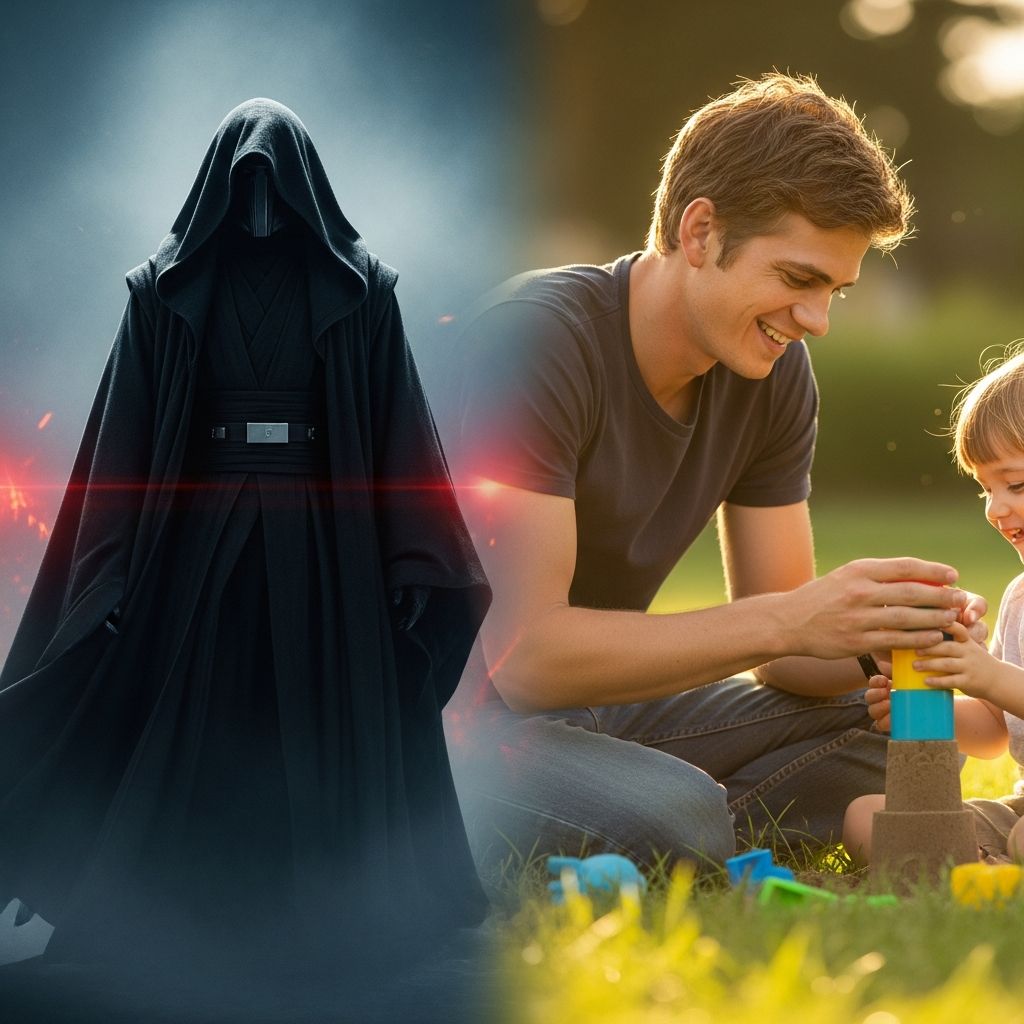
Hayden Christensen’s return to the Star Wars universe in Obi-Wan Kenobi and Ahsoka reignited interest not only in his portrayal of Anakin Skywalker and Darth Vader, but also in the quieter, more grounded life he built away from Hollywood. His story has become a touchstone for millennial fans now navigating adulthood and parenthood themselves.
The Actor Behind a Generation’s Anakin
Christensen is a Canadian actor who first gained widespread recognition for his role as Anakin Skywalker in the Star Wars prequel trilogy, appearing in Attack of the Clones (2002) and Revenge of the Sith (2005). His performance captured a volatile mix of insecurity, anger, love, and idealism that spoke to a younger generation growing up with the prequels rather than the original films.
For many millennial viewers, Anakin was the first Skywalker they saw on the big screen. His fall from gifted, impulsive Jedi to tragic villain became a kind of emotional mirror for young men wrestling with identity, anger, and expectations. That resonance has only grown as those same fans have become adults, partners, and parents themselves.
Stepping Away from the Spotlight
After the prequel trilogy, Christensen did not follow the typical blockbuster path of nonstop big-budget roles. Instead, he intentionally lowered his profile, choosing a slower, more private life. This move puzzled some observers at the time; with global recognition from Star Wars, he could easily have chased more celebrity.
Several factors shaped this choice:
- Creative control: After massive franchise work, smaller projects and time away from constant publicity allowed him more say over what he pursued.
- Emotional balance: Major franchises can bring intense scrutiny and pressure. Many actors describe this as both a career boost and a psychological strain, especially when internet culture amplifies every reaction.
- Space for a personal life: Distance from Hollywood physically and professionally created room for family, close relationships, and a more ordinary daily rhythm.
His retreat from high-visibility roles offered a counter-narrative to the assumption that fame must always be maximized. Instead, he treated fame as one part of life, not its organizing center.
Fatherhood as a New Center of Gravity
Everything shifted again when Christensen became a father. He has spoken about how the birth of his daughter made him reconsider his priorities and choices, and how being a dad became a central focus in his life. This mirrors a broader pattern: research on modern fatherhood finds that contemporary dads are more involved and emotionally engaged with their children than previous generations, spending significantly more time on childcare and household duties than fathers did in the 1960s.
Key ways fatherhood reshaped his world include:
- Reordered priorities: Career decisions began to orbit around stability, presence, and availability for his child.
- Different relationship to fame: Public recognition became secondary to privacy and normalcy for his daughter.
- More selective projects: Roles and commitments had to justify time away from home, both practically and emotionally.
Co-Parenting and a Modern Family Model
Christensen shares parenting responsibilities for his daughter with actress Rachel Bilson. While their romantic relationship ended, their approach to co-parenting has been consistently described as cooperative and mutually respectful. This reflects a larger cultural shift: many separated or divorced parents now attempt to maintain a stable, cohesive parenting front even when their romantic partnership ends, a trend supported by research showing that lower conflict between parents supports better outcomes for children.
| Aspect of Co-Parenting | Traditional Stereotype | Modern Approach (Illustrated by Christensen & Bilson) |
|---|---|---|
| Communication | Minimal and often conflict-heavy | Cooperative, focused on the child’s needs |
| Homes | Primary home + occasional visits | Two functioning homes, both treated as safe and stable |
| Public Narrative | Private or adversarial | Respectful, emphasizing trust and shared responsibility |
This kind of collaborative co-parenting has been associated with fewer behavioral problems, better emotional adjustment, and stronger parent–child ties, compared with situations where parents are in ongoing, high-conflict relationships.
A Farm, Not a Fortress: Life Away from Hollywood
Rather than centering his life in Los Angeles, Christensen chose to live on a farm in Canada. The image is almost mythic: the actor best known for playing one of cinema’s most iconic villains building a life among open fields and routine chores instead of red carpets.
A rural or semi-rural home base offers several advantages for a public figure and parent:
- Privacy: Distance from entertainment hubs can reduce paparazzi presence and everyday scrutiny.
- Slower pace: Farm work and country living naturally impose a different rhythm, often more predictable and grounded.
- Hands-on life for kids: Children raised around animals, land, and practical tasks often develop a tangible sense of responsibility and connection to the natural world.
While this setting contrasts sharply with the gleaming surfaces of science fiction, it aligns well with the values many modern parents are seeking: balance, presence, and a sense of reality that can be hard to maintain in hyper-urban, fame-saturated environments.
Returning to the Helmet: Reclaiming Darth Vader
When Disney and Lucasfilm invited Christensen back to portray Anakin/Vader in the series Obi-Wan Kenobi (2022) and later Ahsoka (2023), it was more than just fan service. It represented a chance to revisit a complex character with the added depth of life experience, including more than a decade of fatherhood.
For his return as Darth Vader, Christensen underwent substantial physical preparation. He notably increased his weight to more fully inhabit the imposing silhouette of the character in the suit. Transformations like this—whether gaining or losing large amounts of weight, or training intensely for action—involve close coordination with nutritionists and medical professionals, because rapid or extreme body changes can place stress on the cardiovascular system, joints, and metabolism.
Yet the more interesting shift was emotional and thematic rather than physical. The series explored:
- Anakin’s lingering humanity: Flashbacks showed a younger Anakin in training, exposing the seeds of both his heroism and his downfall.
- Regret and memory: The show leaned into shared history between Obi-Wan and Anakin, asking how relationships survive betrayal—or fail to.
- Parallels to parenthood: The tragedy of a man separated from his children and ignorant of their survival resonates differently for viewers who are now parents themselves.
Anakin Skywalker as a Mirror for Millennial Men
When the prequels first released, reactions were sharply divided. Over time, however, a generational shift has changed how they are perceived. Younger audiences who grew up with the prequels have embraced Anakin’s story as a sincere, if uncomfortable, exploration of emotional vulnerability, fear of loss, and the consequences of unchecked anger.
From that perspective, Anakin is less a cautionary tale about abstract evil and more a story about:
- Emotional repression: His inability to fully articulate or healthily manage fear and attachment pushes him toward catastrophic choices.
- Institutional failure: The Jedi Order’s rigidity and suspicion of attachment leaves him without effective support.
- Destructive coping: In place of help, he turns to power and control, echoing patterns seen in real-world cycles of violence and abuse.
Modern psychological research underscores the importance of teaching boys and young men emotional literacy and self-regulation, as these skills strongly relate to mental health, relationship quality, and reduced aggression. Anakin’s tragic arc becomes, in this light, a dramatized worst-case scenario of what can happen when those supports fail.
Darth Vader and the Idea of the “Tragic Father”
Darth Vader is one of popular culture’s defining images of a broken father: powerful yet profoundly disconnected from his children until it is almost too late. His story complicates the typical heroic dad narrative by insisting that love and redemption are possible, but not guaranteed.
Hayden Christensen’s own life stands as a deliberate inversion of that pattern:
- Vader is emotionally distant; Christensen emphasizes presence and active involvement as a father.
- Vader’s power isolates him; Christensen steps away from certain forms of power—fame, constant visibility—to preserve close relationships.
- Vader’s story ends in sacrifice; Christensen’s story, as it continues, is about sustainable, day-to-day commitment.
By returning to the role as an older actor and a dad, he adds a new layer: the man under the mask now knows firsthand what it means to raise a child, and that knowledge quietly informs how audiences see his Vader—no longer just a villain, but a symbol of what might have been avoided if care and connection had come sooner.
Balancing Franchise Legacy and Real Life
Living with an iconic role can be a blessing and a burden. Actors associated with large franchises sometimes struggle with typecasting or public expectations. Christensen’s career path offers one blueprint for navigating that tension:
- Selective engagement: He does not reject Star Wars or its fandom, but he also does not let it define every choice he makes.
- Grounded home life: A stable, private base gives him the option to dip into and out of the spotlight without losing his personal identity.
- Reframed legacy: With time, the prequels have undergone critical reappraisal, and his performance has been newly appreciated by fans who have grown into adulthood alongside his Anakin.
Lessons from Hayden Christensen’s Journey
While most people will never carry the weight of a global franchise, the contours of Christensen’s story reflect challenges many adults face: career vs. family, public expectations vs. private values, and the question of how to rewrite a narrative you did not fully control in your twenties.
Some takeaways that resonate beyond celebrity:
- Career pauses can be strategic, not failures. Stepping back can create space for growth, new skills, or more authentic priorities.
- Fatherhood can refine, not erase, ambition. Many modern fathers adjust goals rather than abandon them, pursuing work that fits the life they want with their children, not just the life they imagined before.
- Co-parenting with respect matters. Even when romantic relationships end, maintaining a united front for children’s sake can dramatically improve their wellbeing.
- Iconic roles do not have to own you. It is possible to honor the past, reengage with it on your own terms, and still build a rich, independent identity.
Frequently Asked Questions (FAQs)
What is Hayden Christensen best known for?
He is best known for playing Anakin Skywalker / Darth Vader in the Star Wars prequel films and later in the Disney+ series Obi-Wan Kenobi and Ahsoka.
Why did Hayden Christensen step back from major Hollywood roles?
After the prequel trilogy, he chose to live more privately, focus on smaller projects, and later prioritize fatherhood and family life over constant blockbuster visibility.
How did becoming a father influence his career choices?
Fatherhood led him to reprioritize his time and energy, making him more selective about roles and more focused on stability, presence, and co-parenting effectively with his daughter’s mother.
Does Hayden Christensen still embrace his connection to Star Wars?
Yes. His return in Obi-Wan Kenobi and Ahsoka shows that he values the character and the fans, even as he balances that legacy with a quieter personal life.
What makes his portrayal of Anakin resonate with millennial fans?
His version of Anakin captures insecurity, anger, idealism, and emotional confusion—experiences many millennial viewers recognize from their own adolescence, which now feel even more poignant as they become parents and reflect on the costs of unresolved inner conflict.
References
- Hayden Christensen — Wikipedia. 2024-10-31. https://en.wikipedia.org/wiki/Hayden_Christensen
- Modern Fatherhood: Working Fathers in the UK — Working Families / UK Government Equalities Office. 2018-06-11. https://assets.publishing.service.gov.uk/media/5b345a9c40f0b607c8edfbaf/Modern_Fatherhood_Report_2018.pdf
- Family Structure, Family Processes, and Children’s Outcomes — Amato, P. R., Annual Review of Sociology. 2010-08-11. https://doi.org/10.1146/annurev.soc.012809.102244
- Extreme Weight Changes and the Risk to Health — Harvard T.H. Chan School of Public Health. 2020-03-02. https://www.hsph.harvard.edu/nutritionsource/healthy-weight/weight-fluctuation/
- Adolescent Emotional Development and Mental Health — National Institute of Mental Health (NIMH). 2022-09-15. https://www.nimh.nih.gov/health/topics/child-and-adolescent-mental-health