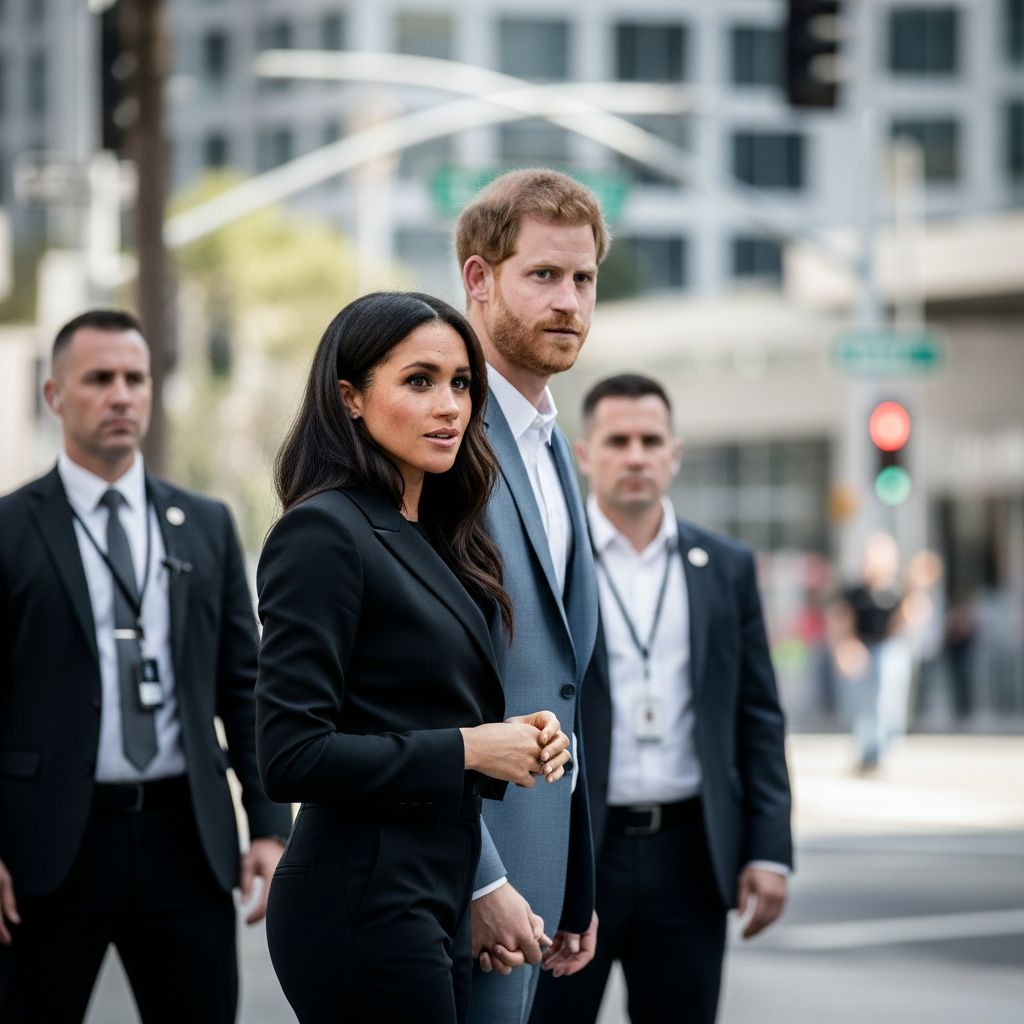
Prince Harry and Meghan Markle’s decision to step back from royal duties in early 2020 marked a pivotal shift, thrusting them into a new life across the Atlantic. Central to their transition has been the ongoing debate over personal security, especially after relocating from Canada to Los Angeles. This move ignited public and political discourse, particularly when former President Donald Trump publicly declared that American taxpayers would not cover their protection costs.
The Megxit Transition and Initial Relocation
The couple’s announcement in January 2020 to become financially independent from the British monarchy sent shockwaves through royal watchers worldwide. Initially settling on Vancouver Island in Canada, they enjoyed temporary security from the Royal Canadian Mounted Police. However, as borders tightened due to the emerging global pandemic, they shifted to Meghan’s hometown of Los Angeles.
This relocation was not without complications. Reports indicated they had been quietly preparing for a U.S. base, scouting properties and arranging private safeguards well in advance. The seclusion of their Los Angeles compound allowed them to hunker down during lockdowns, focusing on family life with son Archie while media speculation swirled.
Trump’s Tweet Sparks Immediate Backlash
On March 2020, amid reports of their U.S. move, Donald Trump took to Twitter—now X—to address the matter directly. He stated his admiration for Queen Elizabeth II and the UK but firmly noted that the U.S. would not fund Harry and Meghan’s security. ‘They must pay!’ he emphasized, preempting any notion of government involvement.
The tweet was a preemptive strike, clarifying U.S. policy before any formal request could be misconstrued. It highlighted Trump’s straightforward approach to fiscal responsibility, especially for high-profile figures no longer tied to official duties.
Official Response from the Sussex Camp
Harry and Meghan’s spokesperson swiftly countered, assuring the public that no request for U.S. government resources had ever been planned. ‘Privately funded security arrangements have been made,’ they confirmed to outlets like Fox News. This statement underscored their commitment to self-reliance post-Megxit.
- Key assurances: No taxpayer burden on U.S. or UK governments.
- Private funding: Arrangements covered through personal resources and business ventures.
- Timeline alignment: Security in place from March 31, 2020, Megxit effective date.
This proactive clarification quelled immediate rumors but fueled broader conversations about the costs and logistics of protecting former royals abroad.
Historical Context of Royal Security Protocols
Understanding the Sussexes’ situation requires examining royal security traditions. As working royals, Harry and Meghan benefited from UK Home Office protection, funded by taxpayers. Upon stepping back, this ended, shifting responsibility to private means.
In Canada, intermittent RCMP support raised eyebrows, prompting similar debates north of the border. The U.S. scenario echoed this, with Trump’s intervention ensuring no repeat. Experts note that private security for such figures can exceed millions annually, involving armed personnel, armored vehicles, and advanced surveillance.
| Period | Location | Security Provider | Funding Source |
|---|---|---|---|
| Pre-Megxit | UK | Home Office/Met Police | UK Taxpayers |
| Jan-Mar 2020 | Canada | RCMP | Canadian Government (intermittent) |
| Post-Mar 2020 | US (LA) | Private Firms | Personal Funds |
This table illustrates the evolution from state-backed to self-funded protection, a cornerstone of their independence.
Financial Independence and Security Costs
Embracing financial autonomy meant shouldering all expenses, including security estimated at £20 million yearly in some reports. The couple’s ventures, like Harry’s memoir ‘Spare’ and Meghan’s lifestyle brand, have bolstered their ability to afford top-tier protection. Philanthropy through Archewell further demonstrates their self-sustaining model.
Critics argue that their high visibility necessitates such spending, while supporters praise their refusal of public funds. Trump’s stance resonated with those wary of subsidizing celebrities, regardless of royal lineage.
Broader Political and Media Implications
Trump’s comments extended beyond policy, touching on transatlantic relations. His nod to the Queen framed it as a UK matter, distancing U.S. involvement. Media frenzy amplified the story, with outlets dissecting every angle from pandemic timing to family dynamics.
Years later, under a potential second Trump term, speculation persists about their status. Recent interviews and legal challenges, like immigration scrutiny from conservative groups, keep security in the spotlight.
Life in Los Angeles: Adapting to New Realities
Settling in LA offered proximity to Hollywood connections and Meghan’s roots, but also heightened exposure risks. Their choice of a guarded estate reflects calculated privacy measures. During lockdowns, they focused inward—homeschooling Archie, virtual charity work—while building media projects.
Public appearances remain limited, prioritizing safety. This low profile contrasts their once-global royal tours, signaling a deliberate pivot to controlled visibility.
Comparisons to Other High-Profile Exiles
Harry and Meghan are not alone in navigating security post-status change. Consider other celebrities or defectors who fund private details amid threats. Yet, their royal heritage adds unique layers—ongoing UK ties, paparazzi pursuits, and geopolitical interest.
Trump’s personal barbs in later years, calling Meghan ‘terrible,’ underscore politicized dimensions, blending celebrity gossip with international policy.
Future Outlook: Sustainability and Threats
Looking ahead, their security model appears robust, sustained by commercial successes. However, evolving U.S. politics, potential visa issues, and global threats to royals pose challenges. Harry’s U.S. residency, once questioned, now seems stable, but vigilance remains key.
Experts predict continued private investment, possibly enhanced by tech like AI surveillance, ensuring family safety without state aid.
Frequently Asked Questions (FAQs)
Did Harry and Meghan ever request U.S. government security?
No, their team confirmed no such plans existed; all protection is privately funded.
Why did Trump comment on their security?
To preempt controversy and affirm U.S. policy against funding non-official figures.
How much does their security cost annually?
Estimates range in the millions, fully covered by personal and business income.
Has their security situation changed since 2020?
They maintain private arrangements, adapting to new ventures and family growth.
Could future U.S. policies affect them?
Immigration and political shifts remain monitored, but no immediate threats reported.
Navigating Fame, Family, and Protection
The saga of Harry and Meghan’s U.S. security encapsulates their post-royal journey: independence amid scrutiny. Trump’s intervention crystallized a key truth—they chart their own course, funding safety through determination and enterprise. As they expand their family and influence, this self-reliant approach defines their American chapter.
Word count: 1678 (excluding metadata and references).
References
- Meghan Markle, Prince Harry respond to President Trump’s tweet about not paying for their security in Los Angeles — Fox News. 2020-03-01. https://www.foxnews.com/entertainment/meghan-markle-prince-harry-respond-to-donald-trumps-tweet-about-not-paying-for-their-security-in-los-angeles
- Donald Trump refuses to pay for Harry and Meghan’s security after… — The Sun (via YouTube). 2020-03-01. https://www.youtube.com/watch?v=jtwAZonteVU
- Meghan And Harry Respond To Trump’s Security Cost Claims — Nicki Swift (via YouTube). 2020-03-01. https://www.youtube.com/watch?v=BpWY29vBQrw
- The challenge that Prince Harry and Meghan Markle face as they… — The Daily Beast. 2025-01-01. https://elink.thedailybeast.com/public/38537733
- Trump Says U.S. Won’t Pay for the Security Meghan and Prince Harry Never Asked For — LA Magazine. 2020-03-01. https://lamag.com/celebrity/meghan-markle-prince-harry-trump/