Halloween Safety for Children with Food Allergies
Halloween represents one of the most anticipated holidays for children, filled with costumes, decorations, and the excitement of collecting treats from around the neighborhood. However, for families managing food allergies, this beloved holiday can transform into a period of genuine concern. Approximately one in thirteen children in the United States has a food allergy, making Halloween a time when parents must remain particularly vigilant to prevent potentially serious reactions. The widespread presence of common allergens in traditional Halloween candies and treats means that families need comprehensive strategies to ensure their children can participate in the festivities safely without compromising their health.
Understanding Common Halloween Allergens
The majority of Halloween candies and confections contain at least one of the major food allergens that pose risks to sensitive children. Peanuts and tree nuts are prominent ingredients in many popular Halloween treats, ranging from chocolate bars with nut fillings to candy coatings containing nut particles. Beyond nuts, milk and egg are ubiquitous in chocolate products, caramels, and other confections commonly distributed during trick-or-treating. Additional allergens frequently found in Halloween treats include soy, wheat, and sesame, which may appear in less obvious products or as cross-contamination risks during manufacturing.
The challenge intensifies when considering snack-size or fun-size candy variations. Many people mistakenly assume that miniature versions of popular candies contain identical ingredients to their full-size counterparts, but this assumption can be dangerously incorrect. Manufacturers sometimes alter production processes or ingredient formulations for smaller packages, potentially introducing or removing allergens. This variation means that even if a family has deemed a particular brand safe in the past, purchasing different package sizes requires renewed scrutiny and ingredient verification.
Pre-Halloween Planning and Communication
Successful navigation of Halloween for allergy-prone families begins well before October 31st. The foundation of safe Halloween experiences rests on open communication and proactive planning with all parties involved in your child’s celebration. If your family will be attending parties hosted by friends, neighbors, or community organizations, reaching out to hosts several weeks in advance allows time for menu planning and accommodation preparation. Providing specific details about your child’s allergies enables hosts to make informed decisions about food selections and to identify which dishes are safe options.
Parents should develop a clear communication strategy that extends to their children as well. Children need age-appropriate education about their specific allergies, what foods to avoid, and how to respond when offered treats by neighbors during trick-or-treating. Teaching children to politely decline unknown foods and to wait until they return home before consuming any candy establishes critical safety habits that protect them throughout the evening.
Implementing Comprehensive Candy Inspection Protocols
Upon returning home with a collection of Halloween treats, systematic inspection of every single item becomes essential. Federal law requires that food manufacturers disclose common allergens on packaging labels, and this requirement applies even to miniature candy products. However, thorough label reading demands attention to detail that goes beyond simply scanning for allergen names. Parents should examine ingredient lists for specific allergens relevant to their child’s condition, but also watch for advisory statements such as “may contain,” “produced in a facility with,” or “processed on shared equipment with” common allergens. These statements indicate cross-contamination risks that may trigger reactions in severely allergic individuals.
When label information remains unclear or is entirely absent, contacting the candy manufacturer directly represents the safest course of action rather than making assumptions. Manufacturers maintain detailed information about their ingredients and production processes and can definitively answer questions about allergen content. This proactive approach eliminates uncertainty and prevents accidental exposures that could result in emergency room visits or more serious medical complications.
Developing a Safe Trick-or-Treating Strategy
Rather than allowing children to navigate their Halloween route independently, families managing food allergies benefit from organizing a planned circuit of pre-identified homes whose occupants understand the allergy situation and have agreed to participate safely. This personalized approach transforms trick-or-treating from a potentially risky random house-to-house expedition into a controlled event where parents know exactly what treats their children will receive.
When organizing this curated route, families should request that neighbors place allergy-safe items in trick-or-treat bags. Examples of naturally allergen-friendly options include fresh apples, lollipops, bubble gum, crayons, temporary tattoos, stickers, small notepads, and novelty toys. Providing specific suggestions to neighbors removes guesswork and demonstrates appreciation for their participation in keeping your child safe while maintaining the spirit of the holiday tradition.
Parents should accompany children throughout the evening rather than allowing independent trick-or-treating. This supervision ensures constant monitoring and immediate availability if allergic reactions occur. Additionally, parents should carry two doses of epinephrine auto-injectors throughout the evening, along with a fully charged cell phone for emergency communications if needed. This preparedness transforms a potentially frightening situation into one where appropriate medical response can be initiated immediately if necessary.
The Swap Strategy and Incentive Programs
A highly effective approach employed by many allergy-aware families involves the candy swap system. Rather than allowing children to consume whatever candy they collect, this strategy asks children to bring their haul home where parents can inspect items and identify unsafe selections. Any candy containing or potentially cross-contaminated with allergens is removed and replaced with safe alternatives that parents have pre-selected or purchased in advance. Options for replacement items extend beyond just allergy-safe candy and might include special toys, books, games, or even monetary rewards that children find equally exciting as the traditional candy rewards.
This approach offers multiple advantages beyond immediate safety. It teaches children that their health takes priority over every other consideration, reinforces the importance of waiting before consuming unknown foods, and demonstrates that safety accommodations still allow them to participate fully in holiday traditions. Some families increase the appeal of swapped items by making the exchange feel special, allowing children to choose their preferred replacement items from a curated selection rather than simply having candies removed.
Hosting Allergy-Friendly Halloween Events
Parents and community members who host Halloween parties or celebrations bear responsibility for creating inclusive environments where children with food allergies feel welcome and safe rather than excluded or anxious. This commitment begins with intentional menu design that prioritizes allergen awareness and ingredient transparency. Hosts should plan food options that naturally avoid common allergens while still maintaining festive and appealing presentations that children find exciting.
Building a safe snack menu means offering alternatives like fresh fruit arrangements, vegetable platters with dip, popcorn, pretzels, rice cakes with toppings, or specially selected allergy-friendly baked goods. When serving any packaged foods, hosts should keep original packaging available so parents and children can verify ingredient safety. Clearly labeling all prepared foods with complete ingredient lists removes ambiguity and empowers families to make confident eating decisions.
Beyond food considerations, hosts should design parties around activities that reduce focus on eating altogether. Costume contests, pumpkin decorating stations, Halloween-themed games, scavenger hunts, and craft activities provide entertainment value that makes food less central to the celebration. This shift in emphasis benefits all children, as it creates a more inclusive atmosphere where those with allergies feel equally engaged in the festivities as their peers.
Embracing the Teal Pumpkin Project
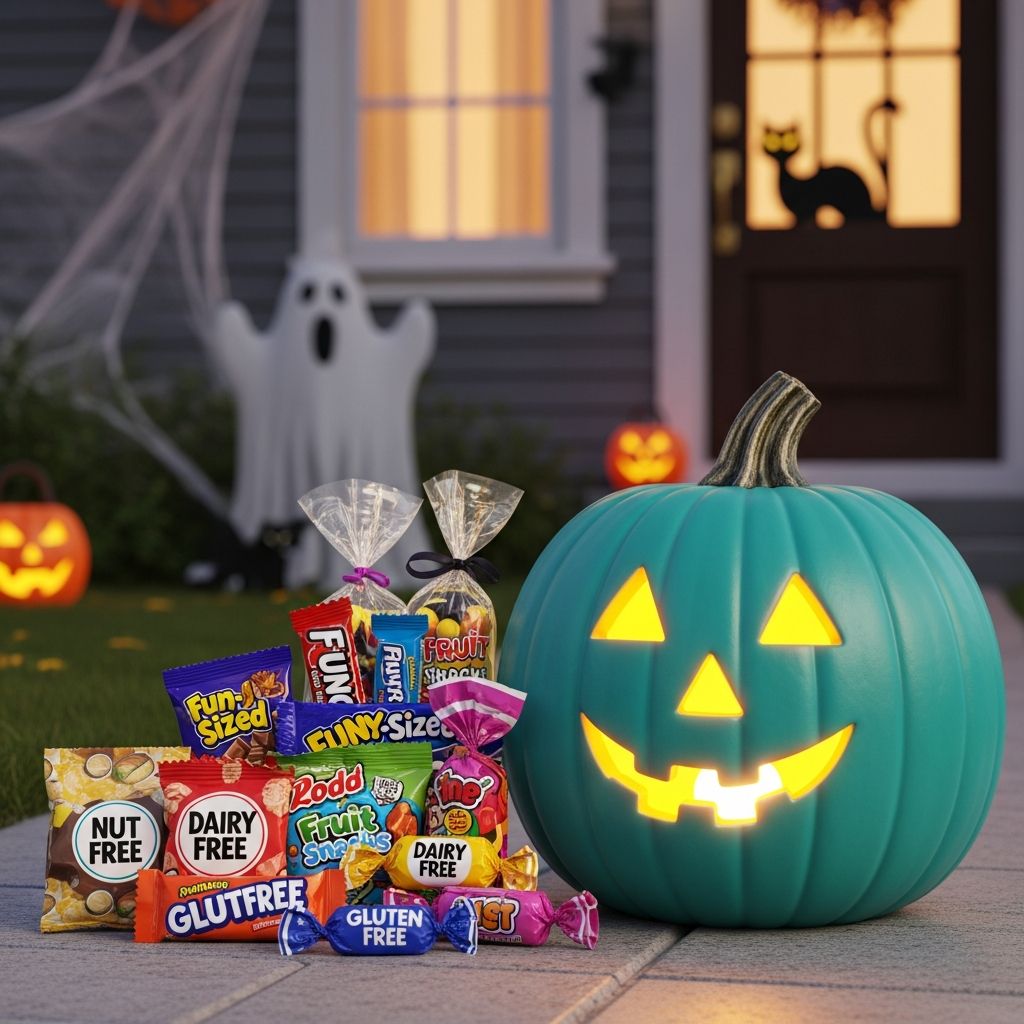
The Teal Pumpkin Project represents a grassroots initiative designed to increase Halloween inclusivity for children with allergies, autism, and other conditions where traditional trick-or-treating presents challenges. Participating households display a teal-colored pumpkin on their porch and offer non-food alternatives instead of candy to trick-or-treaters. This visible signal allows families with food-allergic children to identify safe stopping points throughout their neighborhood, reducing the stress and disappointment of being unable to accept treats at most homes.
If your household does not give out Halloween candy, displaying a teal pumpkin communicates this information clearly to trick-or-treaters, preventing awkward interactions where children must refuse candy offers. Non-food treat options that appeal to children include glow sticks, pencils, bookmarks, temporary tattoos, bouncy balls, hair clips, and small puzzle games. The Teal Pumpkin Project demonstrates that Halloween magic need not depend on candy, and many children find novelty items equally or more exciting than traditional treats.
Managing Home Candy Safety
After Halloween night concludes, the candy collected by children without allergies requires careful management in households containing food-allergic members. Leaving treats scattered throughout the house or stored in easily accessible locations creates unnecessary temptation and increases accident risks. Designating a specific, child-proof storage location for candy belonging to non-allergic household members ensures that allergic children cannot accidentally access unsafe items. In some households, purchasing separate safe treats for allergic children ensures they have their own accessible supply of allowed foods.
Teaching non-allergic siblings about their role in protecting their allergic brother or sister reinforces the seriousness of allergies while fostering empathy and mutual support. Siblings can help monitor for accidental exposures, ensure safe treats remain accessible, and avoid inadvertently sharing contaminated foods that could trigger reactions.
Addressing Homemade Treats Safely
Homemade baked goods and candies require special caution during Halloween season. Even when offered with the best intentions from well-meaning neighbors and friends, homemade items present significant risks because their exact ingredients and preparation methods cannot be definitively verified. Foods prepared in kitchens where allergen-containing items are also prepared face cross-contamination risks, and homemade recipes may contain hidden allergens that even prepared-food labels would clearly identify. Federal regulations requiring allergen disclosure apply to commercial food products but not to homemade items, leaving parents without reliable ingredient information.
Families should establish a household rule that children do not consume any homemade items received while trick-or-treating, regardless of the neighbor’s assurances about ingredients. Teaching children to politely decline these offers protects them while maintaining neighborly relationships. If the neighbor seems hurt by the refusal, parents can thank them for the thought while explaining that medical restrictions require sticking with items they can verify independently.
Emergency Preparedness and Response
Despite all precautions, accidental exposures occasionally occur during Halloween celebrations. Parents of children with severe food allergies must maintain comprehensive emergency preparedness throughout the evening. Carrying two epinephrine auto-injectors represents the minimal acceptable standard, as some severe allergic reactions require more than one dose of epinephrine to achieve control. Having backup auto-injectors ensures that if the first injection proves insufficient, immediate access to a second dose prevents delay in appropriate medical care.
Recognizing early symptoms of allergic reactions allows for rapid epinephrine administration before symptoms progress to anaphylaxis. Symptoms may include itching or tingling in the mouth, swelling of lips or tongue, hives, vomiting, abdominal pain, or breathing difficulties. Any suspected allergic reaction warrants immediate epinephrine administration followed by emergency medical care, even if symptoms seem mild or appear to improve after injection. Emergency medical personnel need to evaluate the child and provide follow-up care to prevent biphasic reactions that can occur hours after the initial exposure.
Age-Appropriate Allergy Education
Teaching children to self-advocate regarding their allergies becomes increasingly important as they grow older and begin navigating social situations more independently. Young children need simple, clear instructions about not eating unknown foods and seeking adult permission before consuming any treats. Older children benefit from understanding why their allergies matter, what specific foods they must avoid, and how to communicate their needs to friends and adults in leadership positions.
Children should understand that refusing food from peers never requires elaborate explanations or apologies. A simple statement like “I’m allergic to that, so I can’t eat it” communicates the boundary effectively. Role-playing these conversations and practicing polite refusals in safe environments builds confidence that transfers to real-world situations where peer pressure might otherwise compromise safety decisions.
Creating Inclusive Halloween Cultures
Building truly allergy-safe Halloween celebrations requires shifting cultural perspectives that normalize food-focused celebrations. Communities can support this transformation by promoting awareness of the Teal Pumpkin Project, encouraging non-food party alternatives, and celebrating the creativity that emerges when Halloween fun extends beyond candy. Schools and community organizations can implement allergy-friendly Halloween policies that establish expectations for safe celebrations where all children feel included.
Normalizing discussions about food allergies removes stigma and makes it easier for families to communicate their needs without awkwardness. When Halloween planning automatically includes questions about dietary restrictions and allergies, rather than treating these as special accommodations, all families benefit from more intentional and inclusive celebrations.
Frequently Asked Questions
Q: What should I do if my child has an allergic reaction during trick-or-treating?
A: Administer epinephrine immediately if your child shows any signs of allergic reaction, including itching, swelling, hives, or breathing difficulties. Call emergency medical services right away, even if symptoms seem to improve after epinephrine injection, as biphasic reactions can occur.
Q: Can I trust allergen-free labeled candies?
A: While helpful, allergen-free labels do not guarantee safety from cross-contamination during manufacturing. Always read ingredient lists carefully and look for statements about facility sharing or equipment sharing. When in doubt, contact the manufacturer directly.
Q: How do I explain allergies to neighbors participating in our trick-or-treat route?
A: Provide specific, written information about safe treat options and give neighbors concrete suggestions. Most people appreciate clear guidance and want to participate in keeping children safe once they understand the seriousness of food allergies.
Q: Is it okay to let my food-allergic child trick-or-treat alone?
A: No. Children with food allergies should always be supervised by a responsible adult carrying epinephrine auto-injectors and emergency contact information throughout trick-or-treating.
Q: What non-food treats appeal to children as much as candy?
A: Glow sticks, temporary tattoos, stickers, small toys, bouncy balls, novelty pencils, and mini puzzle games often appeal to children equally or more than candy, especially when presented with enthusiasm.
References
- Five Tips for Hosting a Food Allergy-Friendly Halloween Party — University of Arizona Health Sciences. https://healthsciences.arizona.edu/news/blog/five-tips-hosting-food-allergy-friendly-halloween-party
- Halloween Allergy Safety Tips for a Fun and Safe Celebration — Corpus Christi Allergy. 2024-09-23. https://corpuschristiallergy.com/halloween-allergy-safety-tips/
- How to Stay Safe on Halloween with Asthma and Allergies — Allergy and Asthma Network. https://allergyasthmanetwork.org/news/allergy-safe-halloween-happy-haunting/
- Halloween Food Safety Tips for Parents — United States Food and Drug Administration. https://www.fda.gov/food/buy-store-serve-safe-food/halloween-food-safety-tips-parents
- Avoid a Food Allergy Scare on Halloween — American Academy of Pediatrics (HealthyChildren.org). https://www.healthychildren.org/English/health-issues/injuries-emergencies/Pages/Avoid-Food-Allergy-Scare-on-Halloween.aspx
- FAACT’s Halloween Safety Tips — Food Allergy and Anaphylaxis Connection Team (FAACT). https://www.foodallergyawareness.org/holidays/halloween/
- Halloween & Food Allergy Inclusiveness — Thermo Fisher Scientific. https://www.thermofisher.com/allergy/us/en/living-with-allergies/food-allergies/halloween-food-allergies-and-teal-pumpkin-project.html