The **H. pylori antigen test** is a straightforward diagnostic tool used to detect *Helicobacter pylori* bacteria in children’s stool samples. This common infection affects the stomach lining and can lead to issues like ulcers or inflammation, though many kids show no signs.
Understanding H. Pylori Bacteria in Children
*Helicobacter pylori*, often shortened to H. pylori, is a spiral-shaped bacterium that thrives in the acidic stomach environment by producing protective enzymes. It embeds itself in the stomach’s mucus layer, evading the immune system and potentially causing chronic irritation over time. In children, infections are widespread, especially in areas with poor sanitation, but most cases remain silent without causing noticeable problems.
Pediatric experts note that H. pylori typically enters the body during childhood through contaminated food, water, or close contact. Once established, it can persist lifelong unless treated, leading to conditions like gastritis (stomach lining inflammation) or peptic ulcers in about 10-15% of cases. Early detection via tests like the antigen stool method is crucial for symptomatic children to prevent complications.
Common Symptoms Pointing to H. Pylori in Kids
Many children harbor H. pylori without any discomfort, with only 5-10% experiencing symptoms tied to ulcers or gastritis. When present, signs often mimic other tummy issues, making testing essential for accurate diagnosis.
- Abdominal discomfort: A gnawing or burning pain below the ribs, worsening on an empty stomach or at night, and easing with food or antacids.
- Digestive upset: Frequent burping, bloating, nausea, or vomiting.
- Appetite and growth issues: Loss of hunger, unintended weight loss, or failure to thrive.
- Serious red flags: Blood in stool (appearing black or tarry), bloody vomit resembling coffee grounds, severe persistent pain, fever, or anemia from iron deficiency.
Parents should watch for patterns: pain peaking 2-3 hours post-meal or overnight often signals H. pylori-related ulcers. Unexplained anemia or growth delays warrant investigation, as the bacteria can impair nutrient absorption.
| Symptom | H. Pylori Related | Typical Tummy Ache |
|---|---|---|
| Gnawing pain on empty stomach | Common | Rare |
| Nighttime awakening with pain | Frequent | Uncommon |
| Relief with eating/antacids | Typical | Variable |
| Bloating/burping | Often present | Sometimes |
| Weight loss/anemia | Possible complication | Rare |
How the H. Pylori Antigen Test Works
The antigen test targets specific proteins (antigens) shed by H. pylori into the stool, offering a non-invasive alternative to invasive procedures like endoscopy. It’s highly accurate for active infections, detecting the bacteria directly rather than antibodies.
Preparation steps:
- Avoid antibiotics or bismuth (e.g., Pepto-Bismol) for 2-4 weeks prior, as they can suppress bacteria and cause false negatives.
- Stop proton pump inhibitors (PPIs) like omeprazole 1-2 weeks before testing.
- No special diet needed, but follow kit instructions precisely.
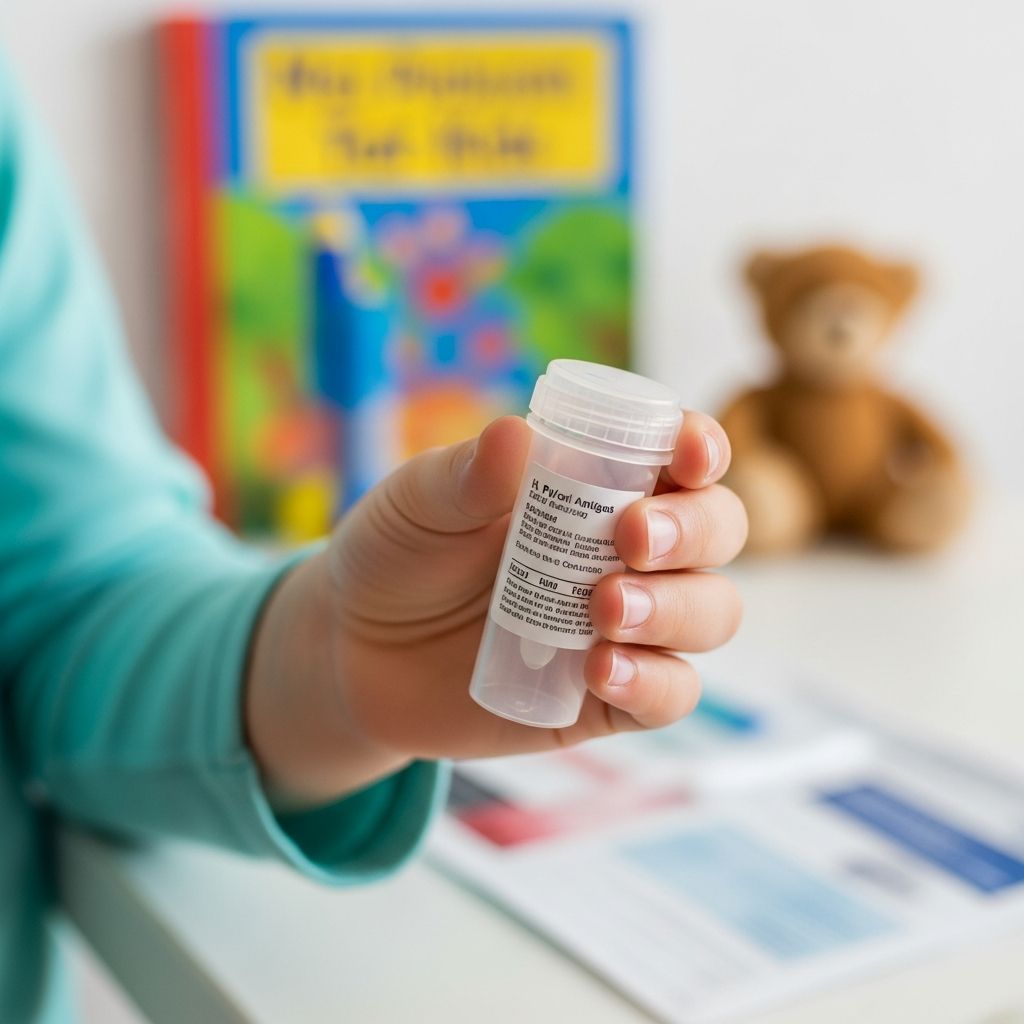
During the test, parents collect a small stool sample at home using a provided kit, seal it, and deliver to the lab within hours for freshness. Results arrive in 1-3 days: positive indicates active infection needing treatment; negative rules it out reliably.
Why Choose the Stool Antigen Test for Children?
Unlike breath tests requiring fasting or endoscopy (which involves sedation), the stool antigen test is child-friendly, painless, and feasible for toddlers. It’s cost-effective and recommended by pediatric guidelines for initial screening in symptomatic kids.
Accuracy stands at over 90% for detecting current infections, outperforming blood tests that can’t distinguish past from active cases. For confirmation in tricky scenarios, doctors may pair it with urea breath tests or biopsies.
Treatment Options After a Positive Test
A confirmed H. pylori infection in children typically requires a 10-14 day course of triple therapy: two antibiotics (e.g., amoxicillin, clarithromycin) plus a PPI to reduce stomach acid. Probiotics may accompany to minimize side effects like diarrhea.
Follow-up testing, often another antigen stool sample 4 weeks post-treatment, verifies eradication. Success rates exceed 85% with first-line regimens, but resistant strains may need adjusted protocols.
- Common regimen: Amoxicillin + Clarithromycin + Omeprazole.
- Side effects: Mild nausea, taste changes; rare allergies require immediate medical attention.
- Lifestyle tips: Hygiene emphasis, safe water, handwashing to prevent reinfection.
Preventing H. Pylori Spread in Families
H. pylori transmits via fecal-oral or oral-oral routes, thriving in crowded or unsanitary settings. Families can reduce risk by:
- Ensuring clean drinking water and thorough food washing.
- Promoting hand hygiene before meals and after bathroom use.
- Avoiding shared utensils or kissing during active infection.
Screening siblings or parents may be advised if a child tests positive, especially with shared symptoms.
When to Seek Urgent Medical Help
Not all symptoms need testing, but alarm signs demand prompt care:
- Intense, unrelenting belly pain.
- Vomiting blood or material like coffee grounds.
- Black, tarry, or bloody stools.
- Sudden weight loss or dehydration.
These could indicate bleeding ulcers or perforation, requiring emergency intervention.
Frequently Asked Questions About H. Pylori Antigen Testing
Is the stool antigen test safe for infants?
Yes, it’s non-invasive and suitable from infancy, with no radiation or sedation involved.
How accurate is the test?
Over 90-95% sensitive and specific for active infections when properly prepped.
What if the test is positive but my child has no symptoms?
Treatment is debated; guidelines recommend it only for symptoms or complications like anemia.
Can H. pylori return after treatment?
Possible due to reinfection or resistance; retest confirms success.
Does diet affect test results?
No, but avoid suppressants like antibiotics beforehand.
Long-Term Outlook for Infected Children
With timely detection and eradication, most kids recover fully without lasting damage. Untreated, risks include chronic gastritis or rare malignancy later in life, underscoring early action. Regular check-ups monitor growth and iron levels post-treatment.
Empowering parents with knowledge about tests like the H. pylori antigen stool method ensures proactive digestive health management.
References
- Pediatric H. pylori infection – Children’s Health — Children’s Health. 2023. https://www.childrens.com/specialties-services/conditions/helicobacter-pylori-h-pylori-infection
- What Are the Symptoms of Helicobacter Pylori? — Arnold Palmer Hospital for Children. 2023. https://www.arnoldpalmerhospital.com/pediatric-specialties/arnold-palmer-hospital-center-for-digestive-health-and-nutrition/conditions/helicobacter-pylori/symptoms
- Helicobacter pylori Infections — Nemours KidsHealth. 2024. https://kidshealth.org/en/parents/h-pylori.html
- Helicobacter pylori infection in children — PMC – NIH. 2020-07-21. https://pmc.ncbi.nlm.nih.gov/articles/PMC7402006/
- Helicobacter Pylori in Children — UR Medicine / University of Rochester. 2024. https://www.urmc.rochester.edu/encyclopedia/content?contenttypeid=90&contentid=p01996
- H. Pylori Infection: Symptoms, Causes & Treatments — Cleveland Clinic. 2024. https://my.clevelandclinic.org/health/diseases/21463-h-pylori-infection
- Helicobacter pylori infection — UCSF Benioff Children’s Hospitals. 2023. https://www.ucsfbenioffchildrens.org/medical-tests/helicobacter-pylori-infection