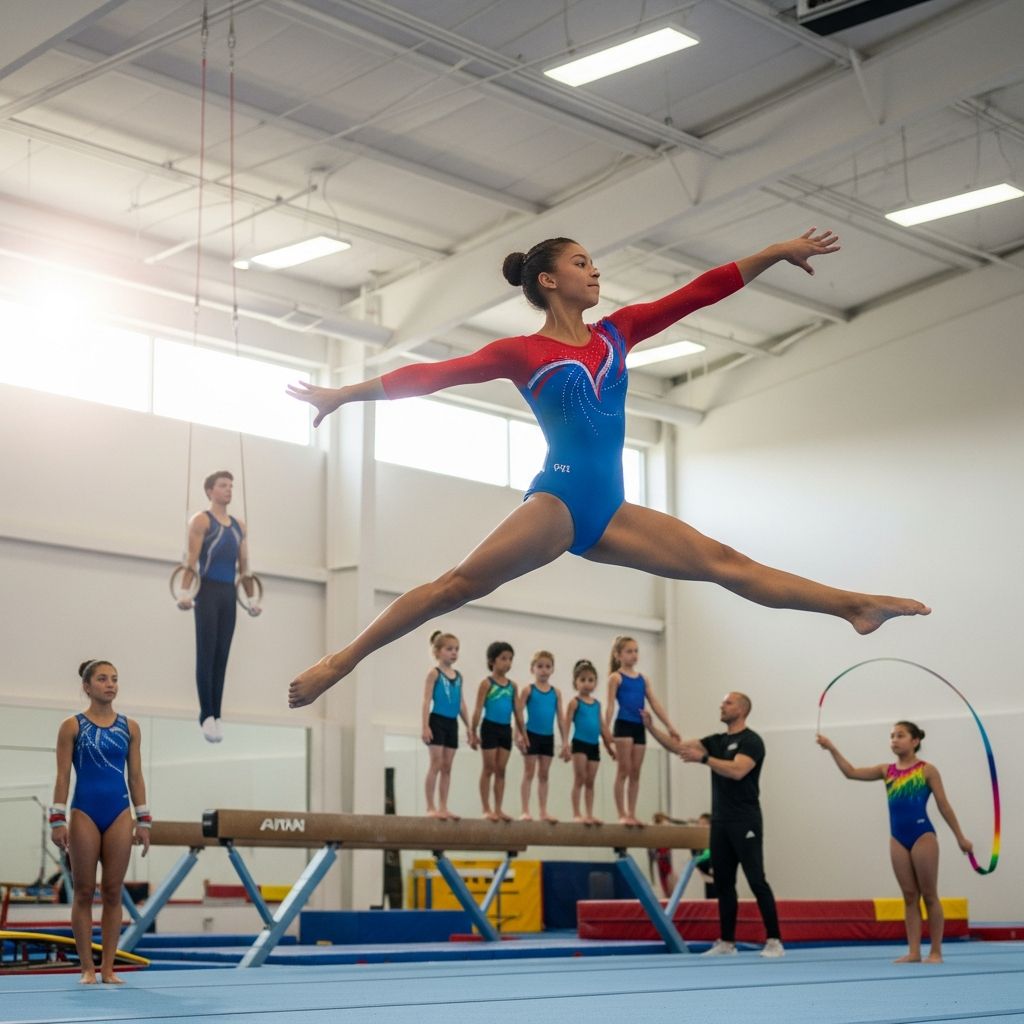
Gymnastics has evolved from a niche Olympic discipline into a mainstream sport that millions of children and adults participate in worldwide. While the flips, twists, and balance beam routines are captivating to watch, the real story sits behind the numbers: who is doing gymnastics, what they gain from it, and what risks they face along the way.
This article explores the contemporary gymnastics landscape, from participation trends and health benefits to injury patterns, training culture, and practical safety tips for families. It is an original overview designed for parents, coaches, and anyone curious about how gymnastics fits into modern sport and youth development.
Gymnastics Today: Who Is Participating?
Gymnastics is no longer confined to elite training centers or Olympic hopefuls. Recreational programs, preschool classes, after-school clubs, and adult fitness sessions have broadened the sport’s reach and made basic tumbling skills accessible to many communities. This expansion has led to a diverse participant base that spans ages, genders, and ability levels.
- Recreational classes often focus on fundamental movement patterns like jumping, rolling, and balancing, aiming more at physical literacy than competition.
- Competitive tracks include artistic, rhythmic, trampoline, acrobatic, and parkour-style programs, each with distinct equipment and skill demands.
- Adult gymnastics and “ninja” style fitness classes have emerged as alternatives for ex-gymnasts and newcomers seeking strength and agility training.
Growth in participation also reflects broader cultural trends: increased attention to children’s physical activity, the visibility of Olympic stars, and the popularity of social media clips showcasing advanced skills. Together, these factors help explain why gymnastics remains a prominent choice among youth sports.
Types of Gymnastics and What They Emphasize
“Gymnastics” is an umbrella term for multiple disciplines that share core elements such as strength, flexibility, and body control but differ in apparatus, rules, and aesthetic emphasis. Understanding these varieties helps families choose the format that best fits a child’s interests and temperament.
- Artistic gymnastics: The most widely known form, featuring apparatus like floor, vault, bars, and beam (for women) or rings, high bar, and parallel bars (for men). Routines combine acrobatics with dance and strength elements.
- Rhythmic gymnastics: Performed on the floor using apparatus such as ribbon, hoop, ball, and clubs. It emphasizes flexibility, coordination, and expressive movement to music.
- Trampoline and tumbling: Focuses on high-flying skills, flips, and twists on a trampoline or tumble track, with an emphasis on airtime and precision of landings.
- Acrobatic gymnastics: Partners or groups perform balances, throws, and catches, blending dance, acrobatics, and teamwork.
- Parkour and freestyle-based programs: Newer offerings that emphasize obstacle navigation, vaulting, and creative movement in a controlled environment.
Each discipline has different risk and skill profiles, but all rely on similar foundational capacities: core strength, spatial awareness, and disciplined practice. For many children, starting in a broad-based recreational class provides a foundation before specializing in a particular discipline.
Key Gymnastics Participation Patterns
Several participation patterns tend to emerge in gymnastics programs around the world. While precise numbers differ by country and region, the general trends are relatively consistent and influence how clubs structure their programs and how coaches plan training.
- Early entry age: Many gymnasts begin between ages 3 and 8, often through playful classes that emphasize coordination rather than formal skills.
- Female majority: Artistic and recreational gymnastics programs frequently see higher enrollment of girls than boys, particularly in pre-teen and teen years.
- Drop-off in later adolescence: As school demands, social interests, and other sports compete for time, some athletes reduce training or leave the sport in the mid-to-late teenage years.
- Growing adult interest: Adult gymnastics and tumbling classes, while still a smaller segment, have gained visibility as cross-training for other sports and as a creative fitness outlet.
These patterns shape the coaching challenges and health considerations at each age: supporting playful exploration in young children, managing growth spurts in tweens, balancing training and recovery for teenagers, and preventing overuse or return-to-sport injuries in adults.
Major Benefits of Gymnastics Participation
Participation in gymnastics offers a mix of physical, psychological, and social benefits. Because the sport requires whole-body strength, coordination, and balance, it builds a strong foundation for both everyday movement and performance in other sports.
- Physical benefits: Improved core strength, flexibility, dynamic balance, and body awareness, which can support posture, reduce falls, and enhance performance across other activities.
- Motor skill development: Skills like jumping, landing, rolling, and hand support positions translate into better coordination and agility in games and daily life.
- Mental and emotional growth: Gymnastics encourages goal setting, perseverance, stress management during performance, and the ability to accept feedback and learn from mistakes.
- Social skills: Athletes learn to take turns, encourage teammates, work in groups, and navigate competition respectfully.
When programs are well-run and developmentally appropriate, these benefits can extend far beyond the gym, contributing to lifelong habits of physical activity and resilience.
Understanding Injury Risks in Gymnastics
Like any sport that involves impact landings, overhead skills, and complex rotations, gymnastics carries a real risk of injury. That reality often worries parents, but context matters: injury patterns in gymnastics differ from collision sports, and many injuries relate to overuse rather than catastrophic accidents.
- Common acute injuries: Sprains, strains, and contusions, particularly in ankles, wrists, knees, and shoulders, often occur during landings or missed hand placements.
- Overuse injuries: Stress reactions in the spine or lower extremities, tendon irritation, and growth plate issues may develop when repetitive impact or high volume outpaces rest and recovery.
- High-risk skills: Skills involving blind landings, multiple rotations, or head-first positions require particularly careful skill progressions and spotting.
Comparisons with other sports show that while gymnastics does have a meaningful injury rate, it is not uniquely dangerous when proper coaching, equipment, and safety rules are in place. The main risk amplifiers are excessive training hours, rushed skill progressions, and inadequate attention to pain and fatigue.
Frequent Injury Sites and Their Causes
Some body regions experience more strain in gymnastics because of the sport’s mechanical demands. Understanding these patterns can help families and coaches spot problems early and adapt training.
| Body region | Typical causes | Prevention focus |
|---|---|---|
| Ankles and feet | Hard landings, under-rotation, awkward dismounts, repetitive impact on floor and vault | Landing mechanics, leg strength, progressive surface hardness, adequate rest |
| Wrists and hands | Weight-bearing on hands in tumbling and bar skills, repeated loading in support positions | Wrist conditioning, gradual skill progressions, proper hand placement and shapes |
| Knees | Twisting landings, growth spurts, repetitive jumping and tumbling | Hip and core strength, landing alignment, monitoring pain during growth |
| Spine (especially lower back) | Repetitive backbends and hyperextension, insufficient core stability, rapid growth | Core control, limiting extreme extension repetitions, balanced strength training |
| Shoulders and elbows | Support on bars and rings, impact through upper limbs during tumbling | Shoulder stability, technique on swinging skills, appropriate training volume |
Many of these problems can be mitigated by emphasizing technique, monitoring training load, modifying skills during growth spurts, and encouraging athletes to report discomfort early rather than pushing through pain.
Training Volume, Specialization, and Burnout
One of the most debated aspects of modern gymnastics is the combination of early specialization and high training volume. Some competitive programs introduce intense training schedules at young ages, which can accelerate technical progress but also heighten risks of overuse injuries, psychological burnout, and social isolation.
- Early specialization: Focusing on gymnastics year-round, to the exclusion of other sports, can narrow motor experiences and increase repetitive stress on the same joints and tissues.
- High weekly hours: As competitive levels increase, training may climb from a few hours per week to more than 15–20 hours, particularly for older youth, making rest and cross-training critical.
- Burnout signs: Loss of enjoyment, chronic fatigue, frequent minor injuries, anxiety about practice or competition, and withdrawal from teammates can indicate that the balance has shifted too far.
Practical safeguards include gradually increasing hours with age, scheduling off-seasons or lower-intensity phases, integrating other forms of physical activity, and prioritizing athlete input about how their bodies and minds feel. Sustainable training often produces better long-term results than short bursts of extreme intensity.
Creating a Safer Gym Environment
Safety in gymnastics is not only about mats and equipment; it also involves coaching philosophy, communication, and the broader culture of the gym. A protective environment recognizes that healthy development and long-term participation are more important than short-term scores.
- Progressive skill teaching: Coaches should require mastery of foundational skills before introducing more difficult elements, using drills, spotting, and safety equipment to reduce risk.
- Quality equipment: Properly maintained mats, pits, and apparatus, along with appropriate footwear and grips, can soften impacts and improve grip and stability.
- Open communication: Athletes need to feel safe saying “I’m not ready” or reporting pain without fear of punishment or ridicule.
- Emergency planning: Facilities should have clear procedures, first-aid supplies, and staff training for responding to injuries or emergencies.
When these elements are present, gymnastics can remain challenging and exciting while minimizing preventable harm. Parents can play a role by observing practices, asking questions, and partnering with coaches to keep athlete well-being at the center.
How Parents Can Evaluate a Gym or Program
Choosing the right gymnastics program involves more than checking class times and fees. Families should look for clear safety practices, supportive coaching styles, and age-appropriate expectations. A healthy environment is one in which the child feels excited, supported, and appropriately challenged.
- Watch a full class and note how coaches speak to athletes, give corrections, and respond to mistakes or fears.
- Ask about coach education, certifications, background checks, and continuing education requirements.
- Review policies about injury reporting, return-to-play, bathroom supervision, and communication with parents.
- Consider whether the training schedule fits your child’s age, school demands, and need for free time.
Programs that emphasize long-term athlete development, respect, and enjoyment are more likely to support both performance and health than those that prioritize medals at all costs.
Psychological Well-Being and Gym Culture
Beyond physical safety, gymnastics culture has a powerful influence on an athlete’s self-image and mental health. The sport’s emphasis on perfection and public performance can be constructive when handled with care, but harmful if paired with criticism, unrealistic body expectations, or emotional neglect.
- Healthy culture: Encourages effort, celebrates progress, allows mistakes as part of learning, and resists shaming athletes for performance or body shape.
- Red flags: Frequent yelling, humiliation, threats, or pressure to train through pain can signal an unhealthy environment.
- Body image: Comments about weight or appearance, especially during adolescence, can contribute to disordered eating or low self-esteem.
Parents and coaches can protect young gymnasts by emphasizing intrinsic goals—such as mastery, courage, and teamwork—over external markers like scores, ranking, or social media attention. Conversations about rest, food, and mental health should be as normal as discussions of flexibility and strength.
Practical Tips to Reduce Injury and Stress
Families and coaches can implement simple but powerful strategies to reduce the risk of both physical and psychological harm. Many of these strategies apply to all youth sports but are especially relevant in gymnastics because of its technical difficulty and training volumes.
- Ensure a gradual warm-up that moves from gentle mobility to sport-specific drills before heavy tumbling or dismounts.
- Include strength and conditioning focused on the core, hips, and shoulders to support landings and overhead positions.
- Monitor training load by noting hours per week, intensity, and competition frequency, adjusting when fatigue or pain rises.
- Allow at least one full rest day per week and aim for seasonal breaks from high-intensity training.
- Encourage athletes to speak up about pain, dizziness, or fear, and take these reports seriously.
- Seek medical evaluation for persistent pain, swelling, repeated falls, or suspected concussion.
These practices, though straightforward, can significantly improve athletes’ long-term experience and keep gymnastics a positive part of their lives rather than a source of chronic problems.
Frequently Asked Questions About Gymnastics
What is a good age for a child to start gymnastics?
Many children begin in playful parent-and-tot or preschool classes between ages 3 and 5, where the focus is on basic coordination, listening, and fun rather than formal skills. More structured skill development typically ramps up between ages 6 and 9, when children have better attention spans, strength, and understanding of safety rules.
How many hours per week is reasonable for a young gymnast?
For early elementary school children in recreational programs, 1–4 hours per week is usually sufficient to build skills and enjoy the sport. As athletes progress to competitive levels, hours may increase, but it is wise to expand gradually and weigh the demands of school, sleep, and social life before committing to very high volumes.
Is gymnastics more dangerous than other youth sports?
Gymnastics has a meaningful injury risk because it involves high-impact landings and complex skills, but it is not uniquely dangerous when proper coaching, equipment, and progressions are in place. Many injuries are similar in type and frequency to those seen in other jumping and landing sports, such as basketball or volleyball, especially when training loads are comparable.
How can parents tell if a program is pushing athletes too hard?
Warning signs include children consistently dreading practice, frequent minor injuries or pain that is dismissed, pressure to train when clearly unwell, and coaches who ignore or ridicule safety concerns. In balanced programs, coaches adapt training when athletes struggle, communicate openly with families, and treat rest and recovery as integral to performance.
What should a parent do if a child is afraid of a new skill?
Fear is a normal part of learning advanced gymnastics skills, and it should be addressed with patience rather than shame. Parents can support their child by validating the fear, talking with coaches about breaking the skill into smaller steps or using more spotting, and focusing on effort and safety instead of insisting on immediate performance.
Can gymnastics contribute to long-term health?
When practiced in a supportive environment with reasonable training volumes, gymnastics can foster lifelong habits of activity, strong musculoskeletal health, and confidence in one’s body. Former gymnasts often report that the strength, coordination, and discipline they developed in the gym benefit them in other sports, work, and daily life.
Balancing Ambition and Well-Being in Gymnastics
Gymnastics will likely continue to capture the public imagination with its dramatic routines and iconic Olympic moments. Yet the most important measure of success is not medals, but how effectively the sport helps participants grow into healthy, confident, and capable people.
By understanding participation trends, recognizing both the benefits and risks, and insisting on environments that prioritize safety and respect, families and coaches can ensure that gymnastics remains a source of joy and empowerment. With thoughtful guidance, the sport can offer not only spectacular performances but also strong, resilient athletes who carry the lessons of the gym into every area of their lives.