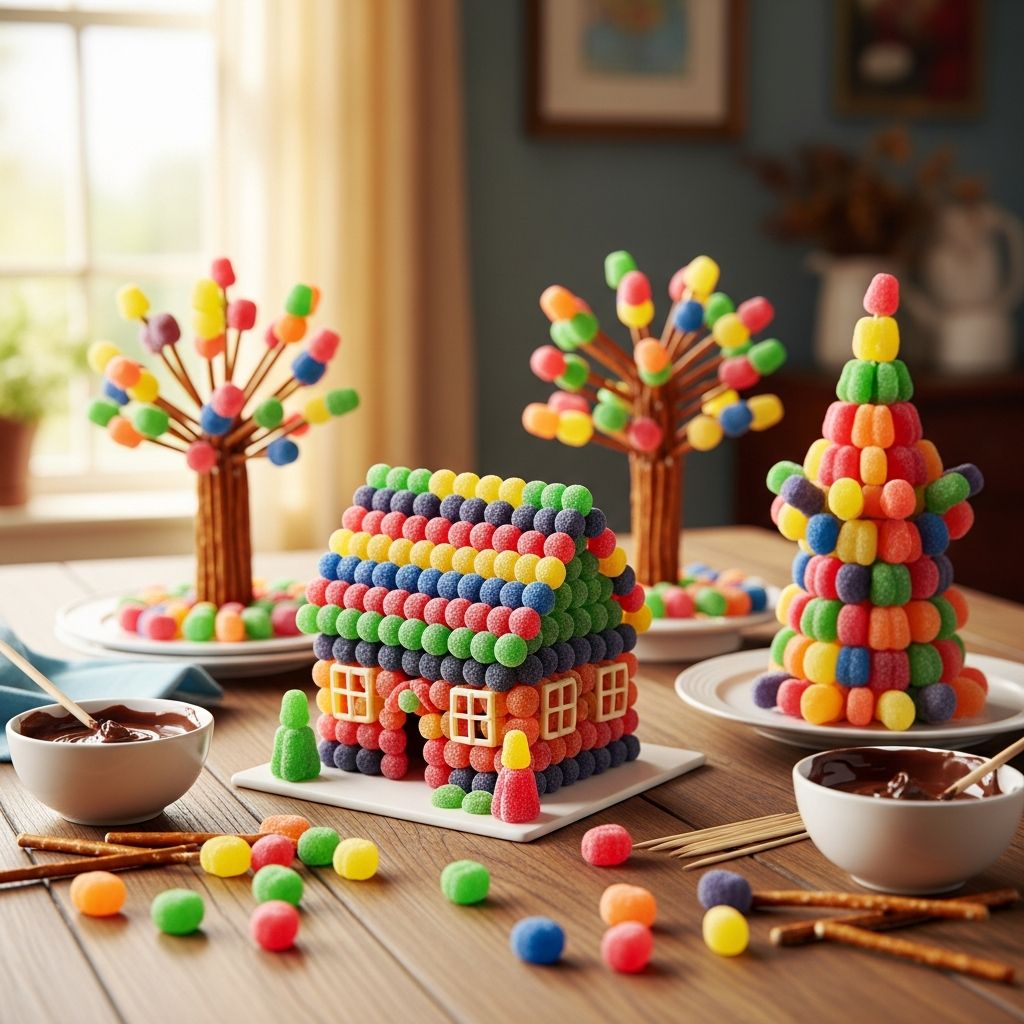
Gumdrops are more than just a nostalgic candy; they are also a surprisingly versatile building material for creative family crafts. With a few basic supplies, children can transform these sugary domes into cheerful sculptures, centerpieces, and hands-on learning projects.
Why Gumdrop Crafts Are Perfect for Families
Using gumdrops for crafting offers a rare mix of sensory play, creativity, and simple engineering that appeals to both kids and adults. The bright colors and soft, sticky texture invite experimentation while remaining easy to handle for little hands.
- Gumdrops are colorful and visually engaging, encouraging children to explore patterns and design.
- The soft texture makes it easy to connect gumdrops with toothpicks or skewers, supporting early STEM concepts.
- This craft is highly adaptable—ideal for holidays, classroom projects, rainy afternoons, or party activities.
Materials and Tools You Will Need
Before starting, gather everything you need in one place so kids can dive right into building. Most of the supplies are inexpensive and easy to find in any grocery or discount store.
- Assorted gumdrops or spice drops in different colors and sizes
- Toothpicks (round wooden ones work best)
- Optional: wooden skewers for taller sculptures
- Wax paper, parchment paper, or a plastic tray as a work surface
- Small bowls or cups for sorting gumdrops by color
- Child-safe scissors (if you plan to cut gumdrops)
- Paper towels or wipes for sticky fingers
Set Up a Kid-Friendly Crafting Station
A little preparation goes a long way toward a smooth and stress-free crafting session. Set up a designated space with easy-to-clean surfaces and clear boundaries so children know where the building area begins and ends.
- Cover the table with a wipeable cloth or paper to protect surfaces from sugar and crumbs.
- Place each child’s gumdrops and toothpicks in separate bowls to minimize arguments and spills.
- Keep a trash bowl nearby for broken toothpicks and small candy pieces.
Basic Building Techniques for Gumdrop Structures
Gumdrop sculptures are easiest when kids first learn a few simple building techniques. Once they understand how to make sturdy shapes, they can branch out into more elaborate creations.
Creating Simple Shapes
Start with basic geometric forms that teach stability and balance. Squares and triangles provide a foundation for more complex designs.
- Squares: Insert a toothpick between two gumdrops, then repeat until you form a square frame.
- Triangles: Connect three gumdrops with toothpicks to form a triangle, showing how this shape creates strong supports.
- Hexagons or circles: Use multiple gumdrops and toothpicks to create ring-like shapes that can become wheels or crowns.
Building Upwards: Towers and Pyramids
Once children can make flat shapes, encourage them to think vertically. Stacking shapes helps explain concepts such as weight, gravity, and support in a hands-on way.
- Gumdrop towers: Stack layers of squares or triangles on top of one another, inserting toothpicks vertically between floors.
- Pyramids: Create a square base, then gradually reduce the number of gumdrops on each higher layer.
- Observation tip: Ask kids which structures wobble and which stand tall, and invite them to strengthen weak spots.
Fun Project Ideas for All Ages
After mastering the basics, kids can explore themed projects that match seasons, celebrations, or school topics. The ideas below are designed to be flexible so families can adapt them to their own traditions.
Mini Gumdrop Cities
Turn the table into a colorful cityscape by assigning each child a “plot of land.” Encourage them to design mini neighborhoods and landmarks.
- Construct small houses using cubes and triangles for roofs.
- Create a central “park” with gumdrop trees made from stacked candy and toothpicks.
- Connect buildings with gumdrop “streetlights” or archways to form roads.
Holiday-Themed Creations
Because gumdrops are often associated with winter festivities, they work beautifully for seasonal decorations, but they can also brighten other holidays throughout the year.
- Winter: Build candy forests, snowy cottages, or whimsical characters for a dessert table.
- Spring: Use pastel gumdrops to design flowers, butterflies, and tiny garden scenes.
- Birthdays: Write an age number or the birthday child’s initials from connected gumdrops.
Educational Benefits: Sneaking in STEM Learning
While kids see a bowl of candy, adults can see an opportunity for hands-on learning. Gumdrop crafts naturally support several academic skills without feeling like homework.
| Skill Area | What Kids Practice | How the Craft Helps |
|---|---|---|
| Math | Counting, sorting, comparing quantities, basic geometry | Children count gumdrops, create patterns, and explore shapes like triangles and cubes. |
| Science | Balance, gravity, structural stability | Kids test which designs topple and which remain strong, adjusting supports as they learn. |
| Art & Design | Color choice, symmetry, visual planning | Choosing color schemes and arranging pieces fosters creativity and design thinking. |
| Fine Motor | Hand-eye coordination, pincer grip, control | Placing toothpicks into small candies strengthens the muscles needed for writing. |
Safety Tips and Age-Appropriate Adjustments
Since this craft uses both small candies and sharp toothpicks, tailoring it to your children’s ages is essential. With a few adjustments, even toddlers can participate safely under close supervision.
- For preschoolers, consider using thicker craft sticks and larger gumdrops to reduce the risk of pokes.
- Remind older kids to point toothpick tips away from their faces and from siblings as they build.
- Establish a clear “no sword-fighting” rule with toothpicks and skewers before you begin.
Managing the “Snack Versus Craft” Dilemma
Because the building material is edible, kids will naturally want to snack. Setting expectations early keeps the project focused while still allowing treats in a controlled way.
- Agree ahead of time on a reasonable number of gumdrops each child may eat once their sculpture is finished.
- Offer a separate bowl labeled “snacks” so kids do not eat pieces that have been handled excessively.
- Plan a quick hand-washing break before anyone eats their creations.
Display and Storage Ideas
Finished gumdrop sculptures make colorful temporary decorations. Because they are food-based, however, they are best displayed for short periods rather than long-term keepsakes.
- Place sculptures on small plates or cardboard bases covered with foil for easy transport.
- Use them as centerpieces for family dinners, kids’ parties, or classroom celebrations.
- After a day or two, decide whether to enjoy a few pieces as a treat or compost and say goodbye.
Creative Variations for Different Ages
One of the biggest advantages of this craft is its flexibility. The same basic materials can support activities for toddlers, school-age kids, teens, and even adults.
Toddlers and Preschoolers
Very young children benefit from simplified tasks that focus on sensory exploration and basic coordination.
- Provide large gumdrops and thick, blunt skewers or craft sticks instead of sharp toothpicks.
- Emphasize color sorting, simple stacking, and basic shape recognition.
- Keep sessions short and guided, focusing on the fun of squishing and pressing pieces together.
School-Age Kids
Elementary-age children are ready for more complex building challenges, friendly competitions, and STEM extensions.
- Challenge kids to build the tallest tower that can stand on its own for at least ten seconds.
- Assign themes such as “bridges,” “space stations,” or “fantasy castles” to spark imagination.
- Encourage them to draw a simple blueprint before they start building.
Teens and Adults
Older crafters can use gumdrops for detailed sculptures, party decor, or even as an icebreaker activity at gatherings. This age group often enjoys the nostalgic factor as much as the creative challenge.
- Create elaborate centerpieces using layered platforms and repeating geometric patterns.
- Host a friendly competition to design the most intricate or imaginative structure within a time limit.
- Incorporate other decorative elements such as ribbons, LED tealights, or paper backdrops for dramatic displays.
Integrating Gumdrop Crafts into Parties and Events
Gumdrop building stations work particularly well at birthday parties, classroom celebrations, and themed events. The activity keeps hands busy while giving each guest a personalized creation to take home.
- Set up a self-serve station with bowls of gumdrops, cups for each child, and plenty of toothpicks.
- Provide simple “idea cards” with pictures of towers, animals, or shapes to inspire shy builders.
- Offer small boxes or food-safe bags so kids can transport their sculptures without damage.
Cleaning Up After the Craft
Once the building session ends, cleanup is usually quick and painless. Planning for it ahead of time ensures the activity does not leave a sticky aftermath.
- Ask children to break down any unwanted structures and discard broken toothpicks in a designated container.
- Shake table covers carefully into the trash to remove loose sugar and candy bits.
- Wipe surfaces with a damp cloth or sponge to remove any sugary residue.
Frequently Asked Questions About Gumdrop Crafts
Can children eat the gumdrops after building?
Yes, as long as hands were washed beforehand and the pieces have not been on the floor or in contact with unclean surfaces, children can enjoy some gumdrops after the project. Many families set a limit on how much candy may be eaten to avoid sugar overload.
How long will a gumdrop sculpture last?
Gumdrop structures usually stay intact at room temperature for a few days, though the candy gradually hardens as it is exposed to air. If you want to keep a sculpture longer for display, store it in a cool, dry place away from direct sunlight.
What if my child is too young for toothpicks?
For toddlers or children with special safety considerations, replace toothpicks with thicker, blunt-ended sticks or even dry spaghetti strands. Always supervise closely and adjust the activity to match the child’s abilities.
Can we use other candies instead of gumdrops?
Yes, many chewy or soft candies can substitute for gumdrops as long as they are thick enough to hold a toothpick securely. Large jelly candies, marshmallows, or soft caramels can all be used to create similar building experiences.
Is this a good activity for classrooms?
Gumdrop crafting works very well in classrooms when planned with clear rules and expectations. Teachers can connect the project to lessons on shapes, structures, measurement, or even creative writing by asking students to describe their finished sculptures.
Final Thoughts
Turning a simple bag of gumdrops into a collection of colorful mini sculptures is an easy way to bring art, engineering, and family time together in one project. With just a few tools and a bit of imagination, kids of all ages can build towers, cities, and whimsical scenes that sparkle with color and creativity.