Sharing a home with a grandmother or elderly relative can turn an ordinary childhood into a rich tapestry of stories, routines, treats, and hard-won wisdom. This article explores what it feels like to grow up in a multigenerational household, how an older caregiver shapes a childs daily life, and why those memories tend to stay vibrant for decades.
The Magic of an Elderly Relative at Home
When an elderly relative lives under the same roof, the home often takes on a quieter, slower rhythm that feels different from the rush of modern parenting. Children experience time in a new way: afternoons stretch longer, conversations linger, and small rituals become big memories.
- Children often feel a unique sense of safety and continuity when an elderly relative is present most days.
- Grandparents and older relatives introduce traditions, manners, and stories that might otherwise fade away.
- Because many older adults are past the pressure of full-time work, they may have more patience for listening, playing, and simply being present.
Everyday Routines That Become Lifelong Memories
Daily routines with an elderly relative often feel small at the time but later stand out as defining details of childhood. The walk to the corner shop, the bus ride into town, the way the table was laid, or a particular phrase gently repeated can all become cherished memories.
Simple Outings With Grandma
Many children who grow up with a grandmother remember outings that were not glamorous but deeply meaningful: trips to local markets, discount stores, or department shops; sitting on public transport together; or visiting neighbors. What makes these memories special is the relational focus rather than the destination.
- Outings give children a chance to see how an older generation interacts with shopkeepers, neighbors, and strangers.
- Errands become lessons in money, patience, and social etiquette.
- Children feel included in the adult world, rather than shuffled aside.
Quiet Moments at Home
Not every memory is an adventure. Many of the most powerful ones are quiet: watching quiz shows together, folding laundry, or listening to an older relative hum a tune while cooking. These moments create an emotional backdrop of security and familiarity.
- Regular routines help children feel grounded and less anxious.
- Children learn that love often appears in small, consistent acts rather than grand gestures.
- Over time, these routines become part of a childs personal story about what home feels like.
Homemade Food and the Taste of Love
Many people who grew up with an elderly relative in the home associate that period with particular smells and flavors. From slow-cooked stews to freshly baked cakes, older relatives often express care through nourishing, home-cooked food.
Why Grandmas Cooking Feels Different
Older generations frequently learned to cook from scratch, stretching ingredients and wasting very little. Meals prepared by a grandmother or elderly caregiver often reflect times of scarcity, when thrift and creativity were essential, and this mindset shapes both the food and the stories that accompany it.
- Children witness the full process: peeling vegetables, mixing dough, and waiting patiently while food bakes or simmers.
- Recipes are often passed down orally or through handwritten notes, turning cooking into a form of storytelling.
- Special treats, such as cakes or biscuits, often become linked to celebrations or comfort after a difficult day.
Food, Culture, and Family Identity
Meals prepared by an elderly relative often carry cultural and family significance. Specific dishes may be tied to national holidays, religious events, or family milestones, making the kitchen a place where heritage is preserved and explained.
- Food traditions help children understand where their family comes from and what makes it unique.
- Older relatives use cooking time to teach manners, gratitude, and sharing.
- As children grow up, they may recreate these recipes to feel closer to the relative who first made them.
| Memory | What Children Learn | Long-Term Impact |
|---|---|---|
| Baking cakes or biscuits together | Following steps, measuring, patience while waiting for results | Stronger bond, early interest in cooking, fond sensory memories |
| Big family Sunday lunches | Sharing, table manners, family roles | Association between mealtimes and connection |
| Simple, frugal weekday meals | Appreciation of resources, food waste awareness | Lasting respect for money and food |
Old-Fashioned Values in a Modern Childhood
Elderly relatives often carry values shaped by earlier, tougher decades. They may emphasize thrift, honesty, direct communication, and a strong work ethic. These values can provide a useful counterbalance to the faster, more convenience-driven pace of modern life.
Directness and Plain Speaking
Many older adults are known for being plain-spoken and direct. Children who grow up around this type of communication often learn to value honesty over polite avoidance, even if it can feel blunt at times.
- Direct feedback can help children develop resilience and self-awareness.
- Children may learn to handle disagreement without assuming that love has vanished.
- Plain speaking often comes with rich humor and storytelling, which keeps family life lively.
Frugality and Resourcefulness
Older relatives who lived through hardship or economic uncertainty often keep a close eye on spending and waste. Growing up around this mindset can leave children with a deeper appreciation for the value of money and the importance of looking after possessions.
- Children learn to mend, reuse, or repurpose rather than immediately replace items.
- They see that happiness does not depend on constant new purchases.
- Conversations about saving, budgeting, and planning for the future feel normal rather than stressful.
The Emotional Bond Between Child and Grandparent
The emotional relationship between a child and a live-in grandparent can be uniquely intense. The older relative is often a caregiver, confidant, and playmate, but also a link to family history and earlier generations.
Special One-on-One Attention
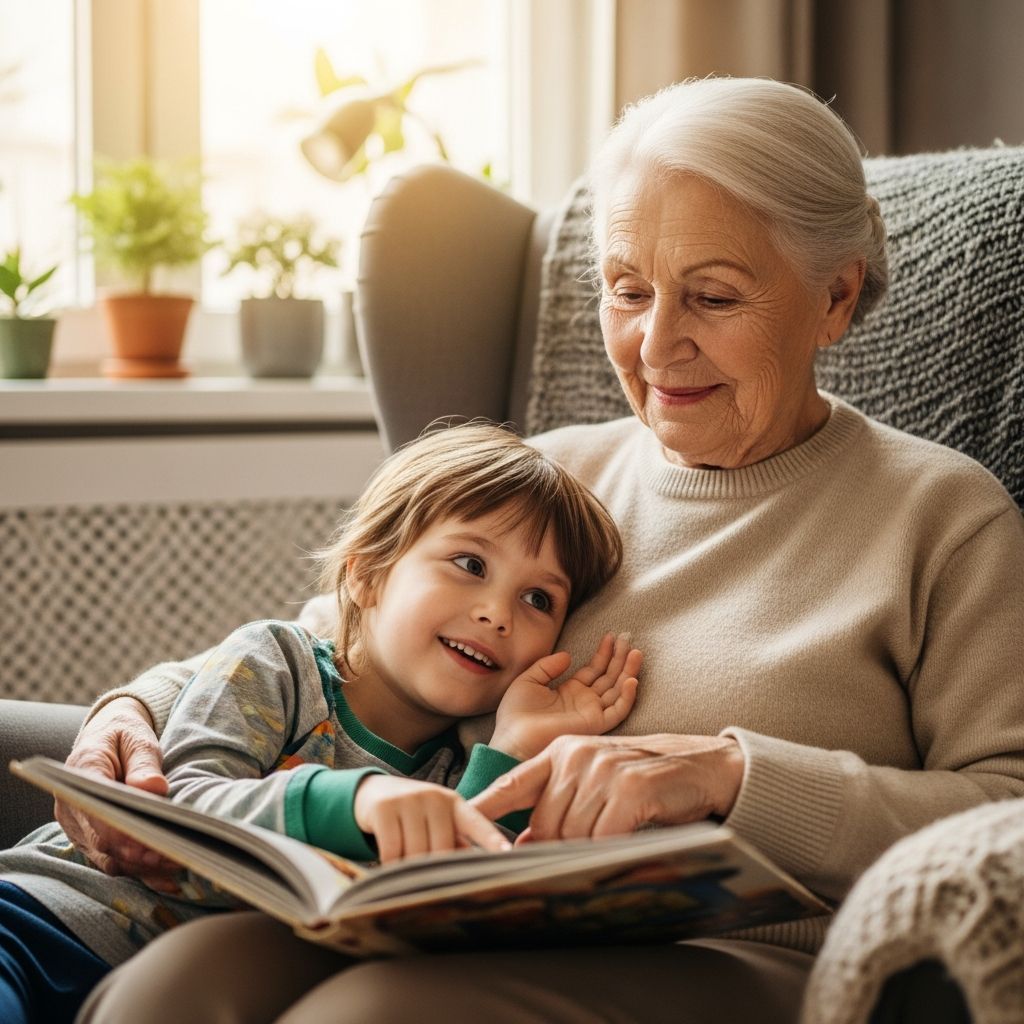
Because an elderly relative may have fewer outside obligations, they can sometimes give children the kind of slow, undistracted attention that busy parents struggle to provide. This feels especially powerful to a child who craves being heard and seen.
- Children may share secrets or worries with a grandparent they feel might judge them less.
- Grandparents can act as emotional buffers during times of family tension.
- Games, crafts, and stories offered by an older relative often feel more personal and less rushed.
Passing Down Stories and Family History
One of the greatest gifts an elderly relative gives is a sense of continuity. Through repeated stories, children hear about ancestors, migrations, hardships, joys, and everyday details of earlier eras, forming a stronger sense of identity.
- Children learn that their family has a past longer than their own memory.
- Stories about past struggles can make current challenges feel less overwhelming.
- Family history becomes a living narrative rather than a set of names and dates.
Balancing Caregiving Roles in a Multigenerational Home
When an elderly relative lives with parents and children, caregiving relationships move in both directions. Adults may support the older person with health needs while the older person supports the family with childcare or household tasks.
Benefits of Shared Responsibility
A multigenerational living arrangement can ease pressure on parents while giving older relatives a renewed sense of purpose. Children benefit from seeing cooperation and reciprocity in action.
- Parents may feel more confident leaving children at home when they know a trusted older adult is present.
- Older relatives who take part in caregiving often feel less isolated or obsolete.
- Children witness a model of family members looking after one another through all stages of life.
Challenges and How Families Can Respond
Despite the rewards, living with an elderly relative can introduce tensions. Generational differences in parenting style, discipline, and privacy expectations can cause conflict if not openly addressed.
- Clear conversations about boundaries and roles help avoid misunderstandings.
- Parents may need to gently balance respect for the older relative with consistency in their own parenting choices.
- Regular family check-ins can give everyone space to voice feelings and adjust routines.
Coping With Aging and Loss
One of the hardest parts of growing up with an elderly relative is eventually facing their decline and death. Yet this experience, while painful, can also teach children profound lessons about empathy, mortality, and the value of time.
Watching Health and Energy Change
As children grow older, they may see their once-active grandparent or elderly caregiver slowing down. This can be confusing or frightening, but it also opens the door to age-appropriate conversations about the body, health, and care.
- Children learn that aging is a natural part of life, not a shameful secret.
- Helping with small tasks for an older relative can foster responsibility and compassion.
- Families can normalize medical visits, medications, and adaptations as part of caring, not something to hide.
Grief, Memory, and Continuing Bonds
When an elderly relative dies, the child who lived with them may feel a deep sense of loss. Creating rituals of remembrance can help transform grief into a lasting, comforting connection.
- Keeping recipes, objects, or photos connected with the relative can make their presence feel ongoing.
- Parents and caregivers can invite children to share stories, draw pictures, or write letters to the person who died.
- Over time, the intense sadness often shifts into gratitude and quiet pride in having shared those years together.
Key Takeaways: Why Growing Up With an Elderly Relative Matters
Living with a grandmother or elderly relative does more than change a childs schedule; it helps shape their values, emotional resilience, and sense of belonging. The home becomes a place where history, affection, and everyday responsibility meet.
- Children gain a living link to earlier generations and family traditions.
- Daily routines and homemade food become emotional anchors that last a lifetime.
- Exposure to aging, illness, and death, while painful, can deepen empathy and maturity.
Frequently Asked Questions
Is it good for children to live with a grandparent or elderly relative?
For many families, sharing a home with an elderly relative offers emotional and practical benefits. Children gain another trusted adult who can provide attention, guidance, and a unique perspective on life, while older relatives often feel more connected and valued.
What challenges might arise in a multigenerational household?
Common challenges include differing views on discipline, generational gaps in values, and privacy concerns. These issues can usually be managed by setting clear expectations, communicating openly, and revisiting agreements as needs change.
How can parents support a close grandparent-grandchild bond?
Parents can encourage shared activities such as cooking, reading, or watching favorite shows together. Making space for the grandparents stories and traditions signals respect and invites the child to see that relationship as important.
How do children cope when a grandparent they live with becomes ill?
Children often cope better when adults offer honest, age-appropriate explanations and invite them to participate in simple caregiving tasks. Allowing questions, acknowledging fear or sadness, and maintaining some normal routines all help.
What can families do after an elderly relative passes away?
Families can honor the persons memory by cooking their favorite dishes, telling stories, or looking at photos together. Giving children time and permission to express their grief, in words or creative activities, supports healing and keeps the bond alive in a new form.