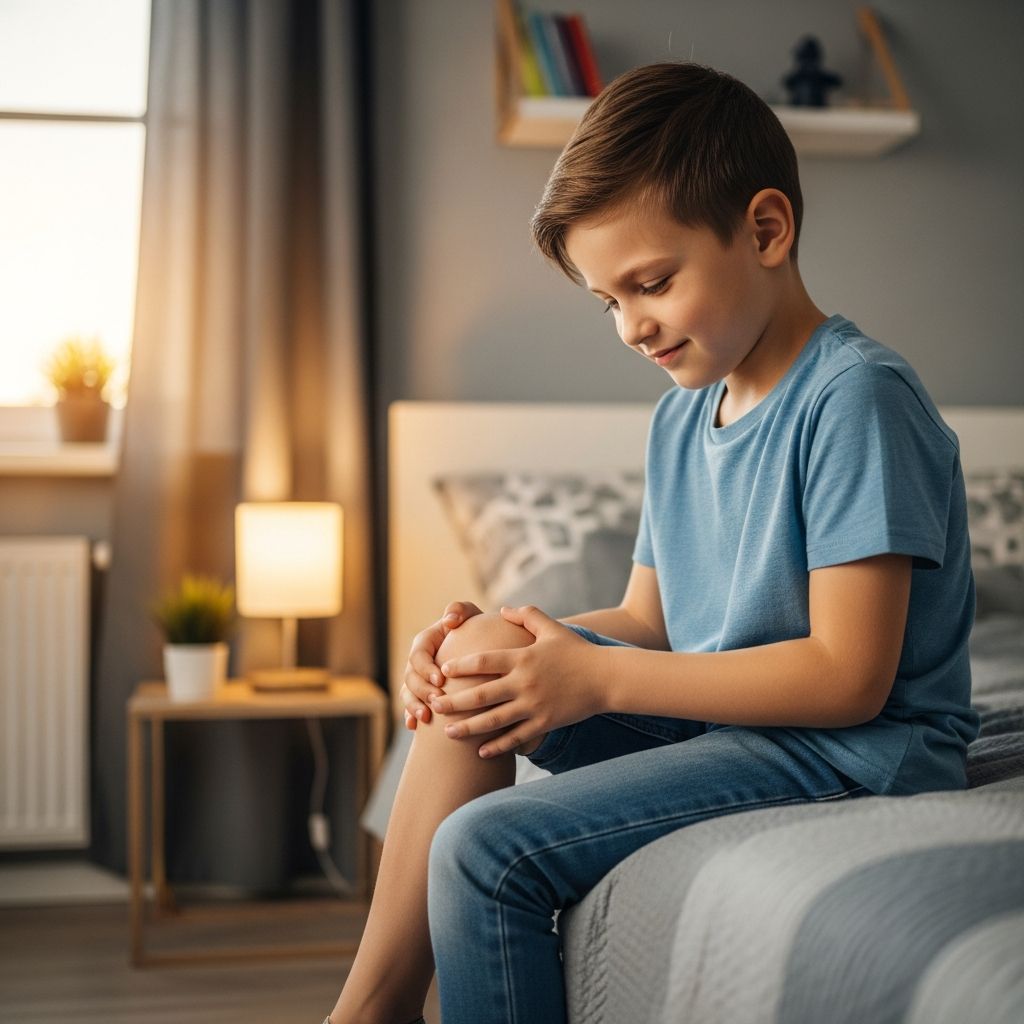
Growing pains refer to recurring, benign discomforts primarily affecting the legs of children, typically emerging in the late afternoon, evening, or nighttime hours. These episodes are widespread among kids aged 3 to 12, resolving without long-term consequences.
Recognizing the Signs of Growing Pains
The hallmark of growing pains is an aching, throbbing, or cramping sensation in the muscles of both legs, sparing the joints. Common sites include the calves, front thighs, shins, or behind the knees. Pain intensifies toward the end of the day after active play and often subsides by morning, allowing normal function.
- Achy or cramp-like feelings in bilateral lower limbs
- Onset in evenings or nights, occasionally disrupting sleep
- Absence of swelling, redness, warmth, or limping
- No impact on daytime activities or appetite
- Intermittent pattern, lasting weeks to months with breaks
Children describe the sensation variably—some as dull throbs, others as sharp cramps—but it remains self-limiting.
Age Groups Most Affected
These discomforts peak in preschoolers (3-5 years) and school-aged children (8-12 years), with some persistence into early teens. Over one-third of children experience them at some point, equally across genders, though girls may report slightly more in certain studies.
| Age Range | Prevalence | Typical Duration |
|---|---|---|
| 3-5 years | High | Weeks to months |
| 8-12 years | Peak | Intermittent until mid-teens |
| 12+ years | Declining | Rare, resolves by adolescence |
Unraveling the True Causes
Contrary to the name, growing pains do not stem from bone growth spurts, as skeletal elongation occurs gradually without pain induction. Instead, experts point to multifactorial triggers related to daily activities and physiology.
- Muscle Fatigue from Overuse: Extended running, jumping, or sports strain leg muscles, leading to delayed soreness.
- Postural Factors: Flat feet, inward foot rolling, or awkward gait increase muscular stress.
- Lower Pain Threshold: Some children perceive normal aches more intensely.
- Genetic Predisposition: Family history raises likelihood.
- Hypermobility or Vitamin D Deficiency: Loose joints or low bone density may contribute.
- Stress or Emotional Factors: Anxiety can amplify somatic complaints, though less common.
Research from institutions like Cleveland Clinic emphasizes that no single etiology exists; it’s often a confluence post-active days.
Effective Strategies for Relief
Most episodes respond to simple, at-home interventions promoting muscle relaxation and comfort. Consistency in routines enhances efficacy.
- Massage: Gently rub affected areas for 10-15 minutes to boost circulation and ease tension.
- Heat Application: Warm baths, heating pads, or socks before bed soothe cramps.
- Stretching: Light calf and thigh stretches post-activity prevent buildup.
- Pain Relievers: Age-appropriate ibuprofen or acetaminophen if needed, per pediatrician guidance.
- Activity Balance: Ensure rest days amid play; proper footwear supports alignment.
Parents report marked improvement with combined approaches, reducing nighttime awakenings.
Differentiating from Serious Conditions
While benign, similar symptoms can mask issues like juvenile arthritis, infections (e.g., osteomyelitis), toxic synovitis, or restless legs syndrome. Vigilance is key.
| Feature | Growing Pains | Red Flags (Seek Doctor) |
|---|---|---|
| Pain Location | Muscles, both legs | One side, joints, persistent |
| Timing | Evening/night, gone by AM | Daytime, constant, worsens activity |
| Associated Signs | None | Fever, rash, swelling, limp, appetite loss |
| Duration/Impact | Intermittent, no disruption | Daily interference, stiffness |
Consult a pediatrician promptly for unilateral pain, morning persistence, or systemic symptoms to rule out pathology.
Role of Nutrition and Lifestyle
Supporting bone and muscle health mitigates risks. Adequate vitamin D (sunlight, fortified foods, supplements if deficient) strengthens density, potentially lessening aches. Balanced diets with calcium, magnesium, and hydration aid recovery.
- Prioritize whole grains, fruits, veggies, lean proteins.
- Limit screen time to encourage restorative sleep.
- Promote consistent bedtime routines minimizing stress.
Studies link deficiencies to heightened sensitivity, underscoring preventive nutrition.
Long-Term Outlook and Prevention
Growing pains universally resolve by mid-adolescence without sequelae. Tracking patterns via journals helps tailor management. Early intervention for posture or foot issues via orthotics prevents recurrence.
Encourage open discussions about pain to alleviate anxiety, fostering resilience. Most families navigate this phase successfully with reassurance and basics.
Frequently Asked Questions (FAQs)
Do growing pains mean my child is growing fast?
No, the name is misleading; pains arise from muscle fatigue or other factors, not rapid skeletal growth.
Can growing pains affect arms or cause headaches?
Primarily legs, but occasional arm involvement or associated headaches occur in some cases.
How long do episodes last?
Typically 10-30 minutes per night, with overall patterns waxing/waning over months.
Is it okay to use painkillers every night?
Use sparingly; prioritize non-drug methods and consult doctors for frequent needs.
Should I limit my child’s sports if pains recur?
Balance activity with rest and stretching; complete avoidance unnecessary.
Are growing pains linked to restless legs syndrome?
Symptoms overlap, but distinct; evaluation clarifies if co-occurring.
References
- Growing pains | Better Health Channel — Better Health Channel, Victoria Government. 2023-05-15. https://www.betterhealth.vic.gov.au/health/healthyliving/growing-pains
- Growing Pains in Kids: Symptoms & Causes — Cleveland Clinic. 2024-02-20. https://my.clevelandclinic.org/health/diseases/13019-growing-pains
- What Are Growing Pains? — Hospital for Special Surgery (HSS). 2023-11-10. https://www.hss.edu/health-library/conditions-and-treatments/list/growing-pains
- Growing Pains: 5 Common Questions Answered — Scottish Rite for Children. 2024-01-05. https://scottishriteforchildren.org/growing-pains-5-common-questions-answered/
- Is it Growing Pains or Something More? — Seattle Children’s Hospital. 2023-08-22. https://www.seattlechildrens.org/healthy-tides/is-it-growing-pains-or-something-more/
- Growing pains — NHS UK. 2024-06-12. https://www.nhs.uk/conditions/growing-pains/