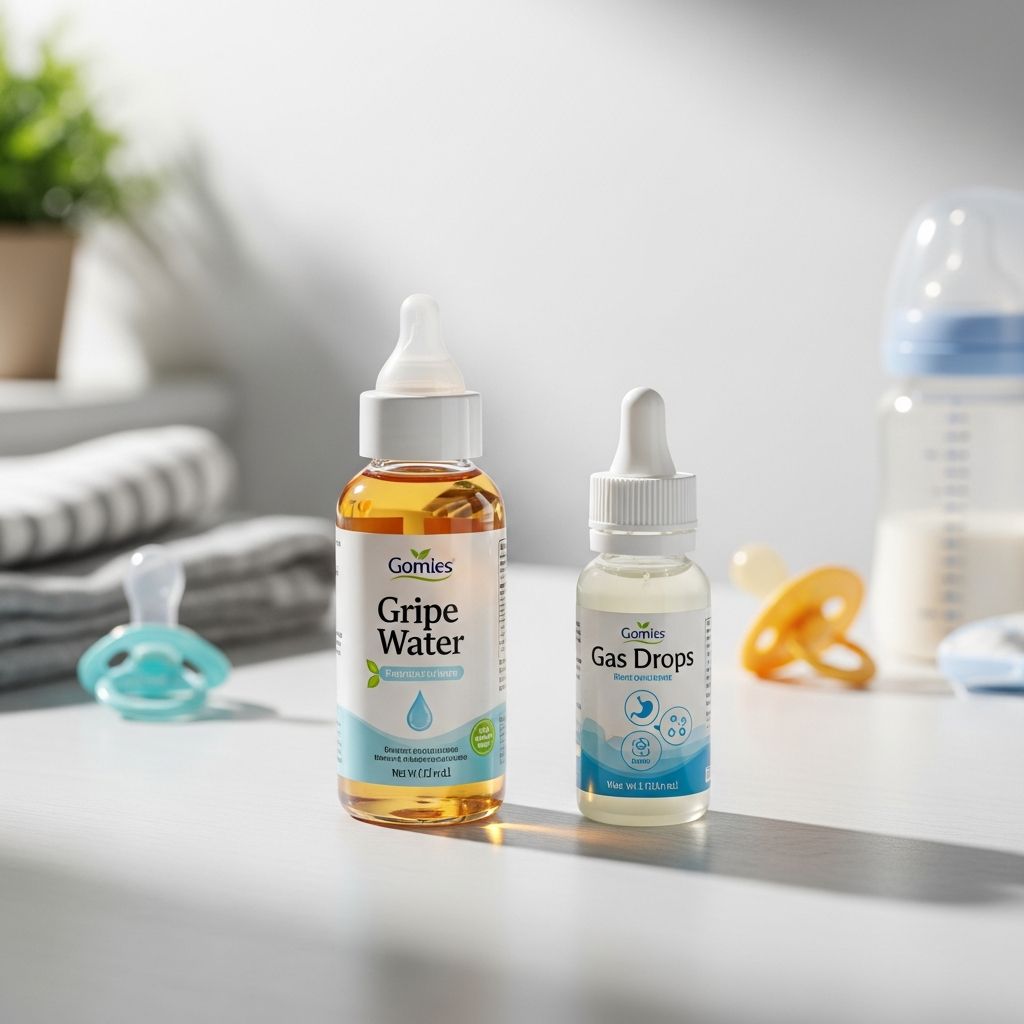
When a baby cries from gas or tummy discomfort, many parents turn to over-the-counter remedies such as gripe water or gas drops for relief. Deciding which option is appropriate can feel confusing, especially in the middle of a long, sleepless night. This guide explains how each remedy works, outlines safety considerations, and offers practical pointers to help you have a more informed conversation with your child’s healthcare provider.
Understanding Infant Gas and Tummy Discomfort
Most young babies swallow a lot of air while feeding or crying, which can lead to trapped gas and a hard, bloated belly. In some cases, this gas contributes to fussiness or appears alongside colic-like crying spells. Although this can be distressing to watch, gas is usually a normal part of early infancy and tends to improve as the digestive system matures.
Remedies such as gripe water and gas drops are marketed to ease these symptoms, but they are not cures for colic and may not work for every baby. Parents often try them as part of a broader toolkit that includes feeding adjustments, burping strategies, and soothing techniques.
What Is Gripe Water?
Gripe water is typically sold as an herbal liquid meant to calm a baby’s stomach and reduce discomfort associated with gas, colic, or hiccups. Formulas vary by brand, but many contain a combination of water, plant-based ingredients, and sometimes sodium bicarbonate or other additives.
Because formulations can differ significantly, parents need to read labels closely, paying attention to herbal components, preservatives, and any sweeteners or flavorings. Alcohol is not appropriate in products for babies, and modern products generally avoid it; if any ingredient seems unclear, check with a healthcare professional before use.
How Gripe Water Is Thought to Help
The herbal ingredients in gripe water are marketed as soothing agents for the digestive tract. Some brands highlight herbs traditionally used for mild digestive upset, aiming to relax intestinal muscles or reduce perceived cramping.
Scientific evidence for gripe water’s effectiveness is limited, and many claims rely on tradition or anecdotal reports from caregivers. Some families feel that their baby settles after a dose, while others see little change, which makes it difficult to predict how a particular infant will respond.
What Are Gas Drops?
Gas drops are over-the-counter products containing simethicone, an anti-foaming agent that acts directly on gas bubbles in the stomach and intestines. Simethicone does not digest the gas; instead, it helps small bubbles combine into larger ones that are easier to pass as burps or flatulence.
Unlike many herbal formulas, simethicone-based gas drops are typically regulated as medications and have a more standardized ingredient list. The active compound is usually not absorbed in significant amounts by the body and instead passes through the digestive system.
How Gas Drops Work in Practice
The goal of gas drops is mechanical rather than soothing: by changing the surface tension of gas bubbles, they may allow trapped air pockets to move through more easily. Parents often mix the recommended dose into breast milk, formula, or a small amount of water, or administer it directly with a dropper.
Some caregivers notice quick changes in their baby’s comfort level, while others see little difference, reflecting that not all crying or fussiness is driven by gas alone. Gas drops are only designed to address gas bubbles and will not correct underlying issues such as reflux, feeding difficulties, or food intolerances.
Main Differences at a Glance
The table below outlines key distinctions between gripe water and gas drops to help clarify how they may fit into your decision-making.
| Feature | Gripe Water | Gas Drops (Simethicone) |
|---|---|---|
| Primary purpose | Marketed to soothe general tummy discomfort and fussiness | Designed specifically to help gas bubbles move through the gut |
| Type of product | Herbal, often sold as a dietary or traditional remedy | Medication containing a single active ingredient |
| Typical ingredients | Water plus herbs and sometimes sodium bicarbonate or flavorings | Simethicone in a liquid base |
| Evidence of effectiveness | Limited research; mostly anecdotal reports | Widely used; evidence supports its ability to combine gas bubbles, though overall impact on colic remains mixed |
| Regulation and consistency | Varies by brand and regulatory category | Typically standardized dosing and labeling |
Safety Considerations for Gripe Water
Because gripe water products can differ so widely, safety depends heavily on the specific formula and how it is stored. Parents should avoid products containing alcohol or high levels of sugar and watch for any ingredients to which their baby might be sensitive.
Improper storage may allow bacteria or mold to grow in opened bottles, so manufacturers’ instructions about refrigeration, shelf life after opening, and expiration dates are important. Any sign of contamination, such as changes in color, smell, or consistency, is a reason to stop using the product and discard it.
Safety Considerations for Gas Drops
Simethicone is generally considered to have a favorable safety profile in infants when used as directed. Because it is usually not absorbed significantly into the bloodstream, its action remains mostly within the digestive tract.
That said, no medication is completely risk-free. It is essential to follow age-appropriate dosing guidelines, pay attention to any other medicines or supplements the baby takes, and consult a healthcare professional if the child has underlying medical conditions or is on specific therapies that could interact with over-the-counter products.
Choosing Which Option to Try First
In deciding whether to try gripe water or gas drops, many parents start by looking at their baby’s pattern of symptoms. A firm, gassy belly and frequent pulling up of the legs may suggest that trapped gas bubbles are a major contributor to discomfort, which aligns more closely with how gas drops are intended to work.
On the other hand, if the baby responds more to comforting, rocking, or other soothing techniques, caregivers might be inclined to explore a calming herbal product after discussing it with a healthcare professional. In all cases, the decision should fit within an overall plan that emphasizes safe feeding practices, frequent burping, and monitoring for more serious symptoms.
Non-Medicinal Strategies to Try First
Before turning to any remedy, many families experiment with simple measures that can reduce air swallowing and support digestion. These approaches do not involve medications and can be used alongside professional medical guidance.
- Ensuring a deep latch during breastfeeding or using appropriate bottle nipples to limit air intake.
- Pausing feeds for gentle burping, especially if the baby seems to gulp quickly.
- Holding the baby upright for a period after feeds to help air rise and escape.
- Offering tummy time when the baby is awake and supervised, which can assist with gas movement.
- Using gentle bicycle-leg movements and abdominal massage with a light touch.
When to Call a Healthcare Professional
Gas and fussiness are common, but some symptoms warrant prompt medical advice. Parents should seek professional help if the baby has a fever, seems unusually lethargic, vomits repeatedly, or shows blood in the stool. Sudden changes in feeding, breathing, or color also require immediate attention.
If a baby seems persistently miserable despite typical soothing efforts and careful use of gas remedies, a healthcare professional can evaluate for conditions such as reflux, allergies, infections, or other causes of discomfort. It is always appropriate to request guidance before starting or continuing any over-the-counter treatment in very young infants.
Practical Tips for Using Gripe Water or Gas Drops
If a healthcare provider agrees that it is reasonable to try a remedy, a few practical steps can make use safer and more organized. Always begin by reading the product’s label completely, noting the recommended age range, concentration, and dosing schedule.
- Use the measuring device provided with the product rather than household spoons.
- Record when each dose is given to avoid accidental extra dosing during long nights.
- Introduce only one new product at a time so that any reactions are easier to trace.
- Stop the product and contact a professional if you notice rash, swelling, breathing changes, or worsening symptoms.
Frequently Asked Questions
Can I give gripe water and gas drops at the same time?
Some caregivers consider using both products, but combining remedies can make it harder to identify what is helping or causing side effects. A healthcare professional can advise whether it is reasonable to use them together for your specific baby, taking into account age, medical history, and current medications.
How quickly should I expect results?
Some parents report that their baby seems calmer within minutes of giving gas drops, while others do not notice a clear change. Herbal products may also appear to help quickly in some cases, but because colic and fussiness can fluctuate naturally, it is difficult to link every improvement directly to a remedy.
Are these products suitable for newborns?
Age recommendations differ across brands, and newborns are particularly vulnerable to dosing errors and ingredient sensitivities. Always confirm with a healthcare professional before giving any remedy to a very young infant, especially in the first weeks of life.
Will gripe water or gas drops cure colic?
Neither remedy is considered a cure for colic. Colic is a complex pattern of crying that may have multiple contributing factors, and research has not identified a single treatment that reliably eliminates it for all babies. Gas remedies may offer some comfort for certain infants but should be viewed as one potential tool rather than a guaranteed solution.
What if nothing seems to help my baby?
Persistent crying can feel overwhelming, even when a baby is otherwise healthy. If you have tried feeding adjustments, soothing techniques, and carefully supervised use of remedies without success, reaching out to a healthcare professional for support and reassurance is important. They can evaluate your baby, rule out medical problems, and suggest coping strategies for both you and your child.
Key Takeaways for Tired Parents
Gripe water and gas drops represent two different approaches to common infant discomfort: one rooted in herbal tradition and general soothing, the other in a targeted, mechanical effect on gas bubbles. Both are widely used, and yet neither is guaranteed to relieve every baby’s symptoms.
The most helpful path usually combines safe, evidence-informed choices about remedies with practical everyday strategies such as good burping habits, calm feeding routines, and regular medical check-ins. With time, most babies outgrow their gassiest phase, and a thoughtful, cautious approach can help families navigate this challenging period more confidently.