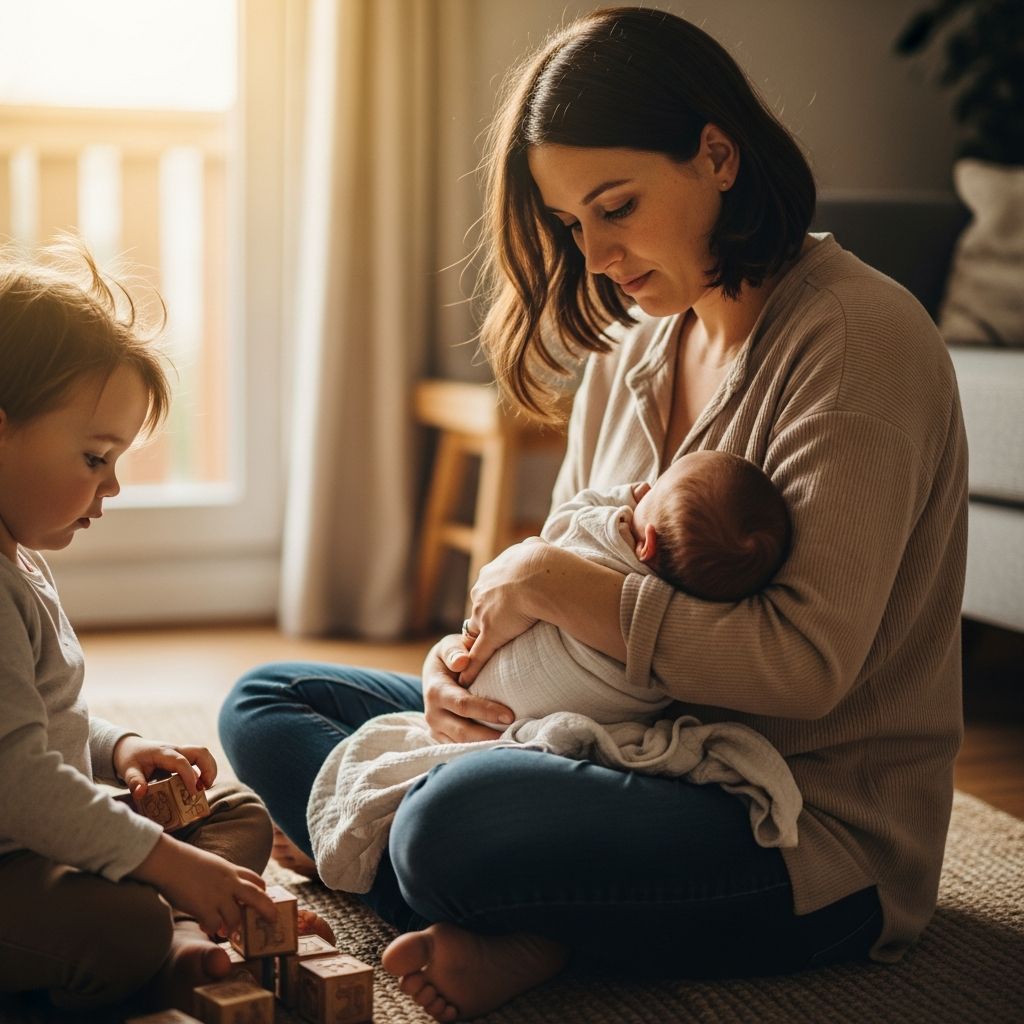
Welcoming a second child brings immense joy, but it often uncovers a deep, unexpected sense of loss for the unique bond with your firstborn. This emotional shift is common among mothers navigating the transition to a larger family.
The Emotional Shift When Expanding Your Family
Becoming a parent to two children transforms daily life in profound ways. The intense, one-on-one connection with your first child—those quiet mornings, undivided cuddles, and exclusive milestones—gives way to divided attention and new routines. Many mothers report feeling a poignant ache, as if grieving the ‘only child’ era that defined their early parenting years.
This isn’t about loving the newborn less; it’s mourning the irreplaceable phase with the older child. Research indicates that parents with a predisposition to larger families often experience higher life satisfaction overall, yet the immediate adjustment involves navigating stress and rumination. Two-parent households provide stability, with shared responsibilities easing the load and modeling healthy dynamics for children.
Understanding the Grief for Your ‘Baby’ No More
The grief surfaces subtly: watching your toddler assert independence while soothing a fussy infant, or realizing bedtime stories now compete with diaper changes. This longing stems from the finality of your firstborn’s babyhood—it’s gone forever, accelerated by the new sibling’s arrival.
- Identity Change: You shift from ‘mom of one’ to ‘mom of multiples,’ altering your self-perception.
- Time Compression: Siblings close age gaps, making childhood stages blur together.
- Hormonal Influence: Postpartum hormones amplify nostalgia and emotional sensitivity.
Studies show that while only-child parents may face different stressors, those open to more children report lower parental stress long-term due to adaptive traits like extroversion. Acknowledging this grief validates your experience and paves the way for healing.
Daily Realities: Balancing Attention in a Multi-Child Home
Practical challenges intensify emotions. Mornings once spent lingering over breakfast become rushed feedings. Playtime evolves into refereeing squabbles or parallel activities. Your firstborn might regress—demanding bottles or extra hugs—mirroring the baby’s needs.
| One-Child Phase | Two-Child Reality |
|---|---|
| Fully focused playdates | Entertaining one while nursing the other |
| Solo outings to the park | Stroller-pushing marathons with gear overload |
| Exclusive milestone celebrations | Combined family events |
Yet, these shifts build resilience. Children in sibling households learn sharing and empathy earlier, with supervised practice fostering social skills. Independence blooms as older kids wait their turn, promoting self-reliance.
Coping Strategies to Honor Your Firstborn’s Place
Reclaim connection amid chaos with intentional acts:
- Scheduled One-on-One Time: Dedicate 15-30 minutes daily for undivided play, like building forts or reading favorites.
- Capture Memories: Journal or photograph ‘big kid’ moments to affirm their growth.
- Verbal Affirmation: Say, “I love our special time together,” reinforcing their value.
- Partner Support: In two-parent homes, divide tasks to free up bonding slots, enhancing family well-being.
Self-care matters too. Short walks or deep breaths combat exhaustion, allowing presence. Positive co-parenting reduces stress, boosting overall satisfaction.
The Hidden Gifts of Siblinghood Emerging Over Time
Beyond initial longing, multiples yield profound rewards. Siblings form lifelong allies, sharing laughs, secrets, and support. Older children gain confidence as role models; younger ones benefit from built-in playmates.
Long-term, this network endures: adult siblings navigate life transitions together, providing emotional buffers into old age. Financial stability in two-parent families amplifies opportunities, like extracurriculars fueling growth. Research links sibling presence to enhanced social skills and reduced selfishness with guidance.
Parental Growth Through the Second Child Journey
Expanding your family accelerates personal evolution. You refine patience, multitask like a pro, and appreciate nuances in each child’s personality—one bold, the other serene. This diversity enriches your world, fostering adaptability.
Parents of multiples often report deeper fulfillment, with extroverted traits and life satisfaction elevated among those inclined toward larger families. Challenges like work-family balance persist, but community resources and strong partnerships fortify resilience.
Navigating Jealousy and Building Inclusive Bonds
Firstborns may exhibit jealousy through tantrums or withdrawal. Respond with empathy: involve them in baby care, like choosing outfits, to cultivate pride.
- Model gentle touches during interactions.
- Praise cooperative moments lavishly.
- Maintain consistent routines for security.
Over time, bonds strengthen. Siblings teach negotiation, empathy, and joy-sharing, benefits compounding across life stages.
Long-Term Family Well-Being in Multi-Child Homes
Decades of data affirm advantages: children in stable two-parent, multi-child homes show academic edge, emotional security, and social prowess. Economic stability enables investments in education and health.
Yet, outcomes hinge on parenting. Enforce sharing, celebrate individuality, and prioritize quality time. The grief fades, replaced by a fuller family tapestry.
Frequently Asked Questions (FAQs)
Is it normal to miss my firstborn after the second baby?
Yes, this grief is widespread, tied to hormonal shifts and phase-ending. It eases with intentional bonding.
How can I help my older child adjust?
Carve out exclusive time, involve them positively, and use consistent routines to rebuild security.
Do siblings really benefit children long-term?
Absolutely—lifelong support networks, social skill practice, and independence emerge.
What if I’m a single parent expanding the family?
Seek community support; benefits persist with focused parenting, though two-parent dynamics add stability.
Will my marriage suffer with two kids?
Prioritize partnership time; strong co-parenting enhances well-being for all.
Embracing this transition honors your growth as a mother. The longing for your firstborn evolves into gratitude for the family you’re building.
References
- Benefits of Having More Than One Child — Babywise Mom. Accessed 2026. https://www.babywisemom.com/benefits-more-than-one-child/
- The Impact of Two Parent Households on Family Well-being — Riaz Counseling. Accessed 2026. https://www.riazcounseling.com/blog-posts/the-impact-of-two-parent-households-on-family-well-being
- Is the Predisposition to Have More Children Beneficial among Parents of One Child? — PMC (NCBI). 2022-07-12. https://pmc.ncbi.nlm.nih.gov/articles/PMC9266142/
- Any BENEFITS of having 3 kids vs 2 kids? — Mr. Money Mustache Forum. Accessed 2026. https://forum.mrmoneymustache.com/mini-money-mustaches/any-benefits-of-having-3-kids-vs-2-kids/