Every morning, millions of parents navigate the school run, contributing to congestion, pollution, and stress. Shifting to greener commute options not only eases traffic but also promotes physical activity, social bonds, and environmental stewardship for children. This article outlines transformative approaches to school travel, drawing on global successes to help families adopt healthier routines.
Why Rethink the Daily School Journey?
The traditional car drop-off creates bottlenecks near schools, exposes kids to exhaust fumes, and discourages exercise. In the U.S., only about one-third of students ride school buses, leaving many reliant on personal vehicles that emit harmful pollutants. Sustainable alternatives cut carbon footprints—electric buses alone can slash energy use by 60% while saving on fuel and maintenance. Beyond ecology, these methods build independence, teamwork, and fitness from a young age, countering sedentary habits early.
Communities worldwide are leading change. Spain’s upcoming Sustainable Mobility Law pushes eco-transport, while U.S. cities electrify fleets and optimize routes with AI. Schools providing bike racks, transit passes, and shuttles see higher participation in green modes. The payoff? Less congestion, healthier youth, and stronger neighborhood ties.
Group Cycling: Bike Buses for Fun Rides
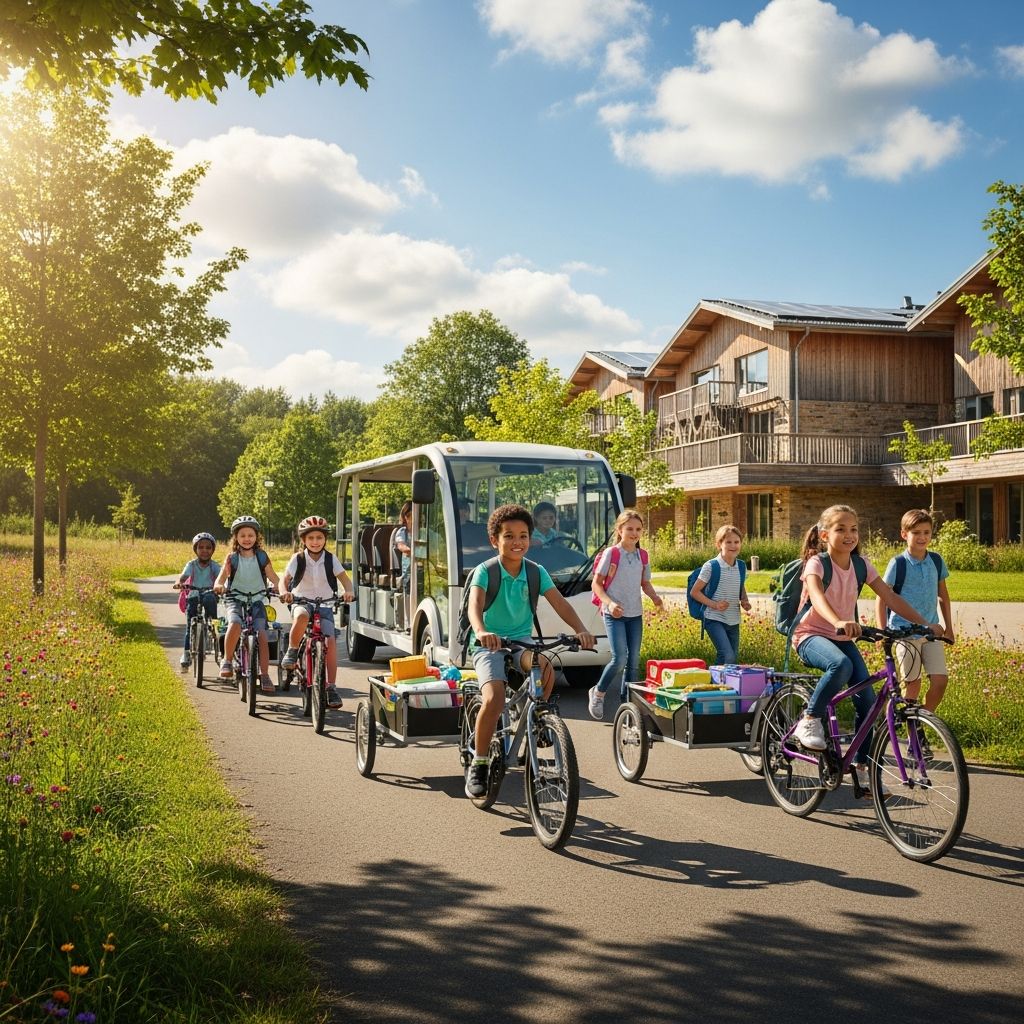
Imagine kids pedaling in a pack like a rolling bus—structured, safe, and spirited. Bike buses organize children into groups following fixed routes and schedules, with adults leading for supervision. This model thrives in places like Barcelona, where apps like BicibúsLAB support over 40 routes across 30 schools, including family-led, volunteer-monitored, or kid-autonomous versions.
Benefits abound: cycling burns calories, strengthens hearts, and teaches road awareness. Groups reduce bullying risks through camaraderie and visibility to drivers. Madrid’s STARS program boosts bike use via infrastructure like lanes and racks. To launch one:
- Map neighborhood routes to school, noting safe paths.
- Recruit 2-3 adult volunteers per group of 8-10 kids.
- Set times, stops, and signals (e.g., flags for visibility).
- Partner with schools for parking and promotion.
Start small—weekly trials build momentum. Events like Bike to School Day amplify enthusiasm.
Pedestrian Power: Organizing Walking School Buses
For shorter distances, walking buses turn footsteps into a convoy. Kids line up single-file or pairs, led and tailed by adults, halting at designated stops en route. Torrelodones, Spain, runs free primary routes for over a decade, now extending to afternoons. This fosters social skills, combats obesity, and clears school gates of cars.
Safety hinges on infrastructure: wider sidewalks, crosswalks, and signage. U.S. examples like Fair Haven, New Jersey, close streets during peak times, prioritizing walkers since no buses serve the area. New Jersey’s Safe Routes program backs such efforts. Implementation tips:
- Survey families for interest and feasible paths.
- Train leaders in traffic rules and first aid.
- Integrate with school bells for punctuality.
- Track participation to refine routes.
Bonus: It sparks pre-class chats, enhancing emotional readiness for learning.
Tech-Boosted Traditional Transport
Upgrade existing systems for sustainability. Electric or hybrid school buses excel—U.S. fleets save $2,000 yearly on fuel per bus. AI tools like BusWhere? optimize assignments, track locations, and monitor safety, cutting miles and hazards. India’s ‘buses of hope’ even deliver mobile education to remote kids.
Schools can add shuttles from transit hubs using low-emission vehicles. Public incentives like free passes or carpool matching apps make buses appealing. In rural areas, shared seats on regular routes serve thousands, as in Galicia, Spain.
| Transport Mode | Emission Reduction | Cost Savings (Annual/Bus) | Health Impact |
|---|---|---|---|
| Electric School Bus | 60% energy efficient | $6,400 total | Reduces exposure to diesel fumes |
| AI Route Optimization | Fewer miles traveled | Variable, via efficiency | Safer, predictable schedules |
| Campus Shuttle | Low-emission | Reduced parking needs | Encourages multi-modal trips |
Carpooling and Ride-Sharing Networks
Not everyone walks or bikes, but carpooling slashes vehicles on roads. Apps match families by address and schedules, while schools offer reduced parking for sharers. Challenges like Carpool Week gamify it with rewards.
For equity, include low-income options via subsidized vans or shared public rides. Flexible staff hours spread peak traffic. Track via surveys: emissions drop, costs plummet, and kids gain friends.
Building Supportive Infrastructure
Ideas falter without paths. Advocate for bike lanes linking homes to schools, secure racks, showers for cyclists, and EV chargers. Crosswalk signals and traffic calming—like speed humps—protect peds.
Student-led projects shine: youth design placemaking features, measuring CO2 and calories to pitch changes. Winners see ideas painted on campus, empowering advocacy. Tools like EPA’s Smart School Siting aid planning. Collaborate with cities for funds.
Health and Community Gains from Active Commutes
Active travel fights childhood obesity—walking burns calories, biking builds muscle. Socially, groups nurture belonging and skills. Environmentally, fewer cars mean cleaner air. Economically, schools save on logistics.
Education seals it: workshops highlight benefits, newsletters promote options. Progress reports celebrate wins, like emission cuts.
Frequently Asked Questions (FAQs)
What age is best for bike or walking buses?
Typically 5-12 years, with supervision scaling to independence as kids mature. Adjust for local laws on solo travel.
How do I convince skeptical parents?
Share data on safety stats, health perks, and success stories. Pilot runs demonstrate ease.
Are electric scooters allowed for kids?
Often restricted to 16+, max 25 km/h in cities. Prioritize bikes or walks for younger ones.
What if my school lacks infrastructure?
Petition via Safe Routes programs or student designs. Start with events to build demand.
Can these work in rural areas?
Yes—shared buses or extended shuttles fill gaps, as in Galicia.
Overcoming Barriers to Change
Weather, distance, or habits challenge shifts. Solutions: rain gear for groups, multi-stop carpools, hybrid models blending bus and walk. Policy aids: laws mandating green plans. Measure success with logs of mode shifts, CO2 calculators.
Families report less morning rush, happier kids, and guilt-free drops. Schools note calmer arrivals, fewer tardies. Globally, from New Delhi’s mobile classes to U.S. electrification, proof abounds.
Start today: chat with neighbors, pitch to PTA. Small steps yield big ripples for planetary health and joyful journeys.
References
- Sustainable school transport: eco-friendly alternatives — Moeve Global. 2023. https://www.moeveglobal.com/en/planet-energy/sustainable-mobility/sustainable-school-transport-alternatives
- Guides #50: Transportation Support — Green Schools Alliance. 2024. https://www.greenschoolsalliance.org/guides-50-transportation-support
- Sustainable Transportation Project — Civic Design Center Youth. 2024. https://youth.civicdesigncenter.org/middle-school/project-based-learning/sustainable-transportation
- We Need Electric School Buses, And We Need More Students Walking and Biking to School — Electric School Bus Initiative. 2023. https://electricschoolbusinitiative.org/we-need-electric-school-buses-and-we-need-more-students-walking-and-biking-school
- How cities can enable safe and sustainable journeys to school — C40 Knowledge Hub. 2024. https://www.c40knowledgehub.org/s/article/How-cities-can-enable-safe-and-sustainable-journeys-to-school