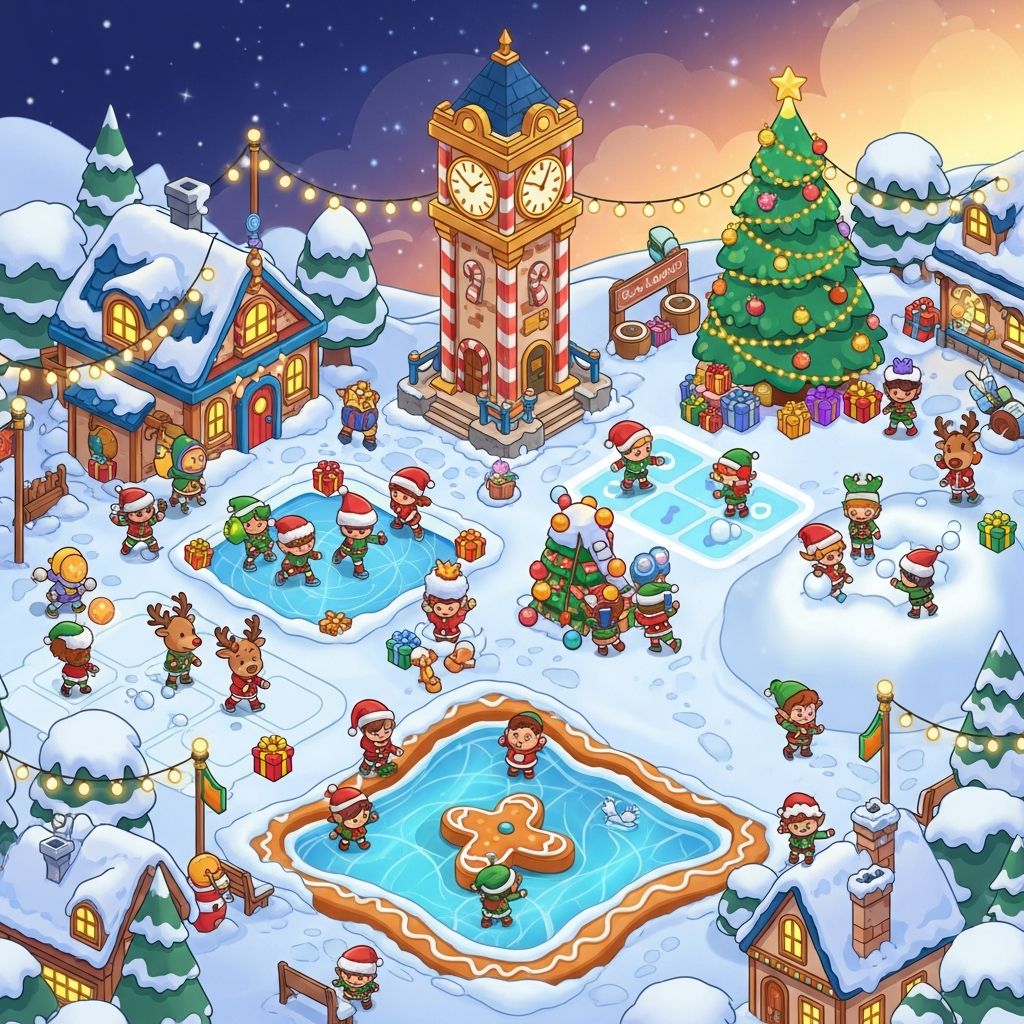
What started as a whimsical way to show Santa’s journey around the globe has quietly grown into a colorful, kid-friendly multiplayer online world where families can play, learn, and celebrate together during the holidays.
The Digital North Pole: More Than a Tracker
Google first introduced its Santa experience in the mid-2000s as a playful visual tracker that showed Santa’s route on a map, inspired in part by the long-running NORAD tradition. Over time, it expanded from a single tracking feature into a full seasonal “village” packed with mini-games, videos, and interactive activities aimed squarely at kids and families.
Instead of treating Christmas Eve as a one-night event, the experience now functions as a month-long destination where children can explore, experiment, and revisit their favorite games, much like returning to a favorite theme park in a browser tab.
From Single-Screen Fun to Multiplayer Holiday Playground
Early versions of Google’s Santa experience were largely single-user; kids clicked through simple scenes and watched Santa’s route unfold. As web technology and home internet speeds improved, it evolved into a more dynamic hub that can support multiple players in shared spaces, turning the village into a light-touch massively multiplayer playground.
Children can now jump into activities where they see other players’ scores, race against the clock together, or contribute collectively to challenges, creating the feeling of celebrating in a bustling digital town square rather than alone on a single device.
Core Ingredients of a Kid-Friendly Online Game
To work as a child-focused multiplayer experience, the Santa village leans on design principles that keep play intuitive, safe, and rewarding. Animations are bright and friendly, controls are simple enough for younger kids, and the tone stays relentlessly positive.
- Minimal text and clear icons so pre-readers can navigate through images and color coding.
- Soft difficulty curves that let children improve through repetition instead of punishing failure.
- Short, replayable game loops that fit into busy family routines and limited device time.
- Gentle sound effects and music that signal success, not stress or aggression.
Why Kids Love This Festive Online World
Children are drawn to the Santa village because it blends the familiar magic of holiday stories with the instant rewards of interactive games. Each visit feels like stepping into a living Advent calendar, where every click might reveal a new toy-making game, a silly elf animation, or a fresh challenge.
The multiplayer elements add excitement: kids can compare scores with friends, siblings, or classmates, cheer each other on during tricky levels, and share funny in-game moments over video calls or in the same room, amplifying the social energy of the holidays.
Educational Surprises Hidden in the Snow
Although the Santa village is positioned as pure fun, many of its activities nudge children toward learning without labeling anything as “homework.” Over the years, the experience has featured coding-themed games, geography tidbits, and problem-solving puzzles that sneak in core concepts while kids are busy chasing elves and loading gifts.
Games that ask children to sequence actions, recognize patterns, or follow multi-step instructions help build executive function skills, while map-based features subtly introduce global awareness and curiosity about different cultures and time zones.
Holiday Gaming Across Devices
One of the strengths of Google’s Santa world is that it lives across devices: web browsers, phones, tablets, smart TVs, and even wearables have all been used as touchpoints over the years. This flexibility allows families to dip into the experience during car rides, at grandparents’ houses, or on the living room couch.
Casting and app integrations have turned simple mini-games into communal events, letting a whole family watch one player steer a sleigh or decorate virtual trees on the big screen while everyone else offers advice, jokes, and cheers.
Inside the Workshop: How Developers Shape the Experience
Behind the playful façade, the Santa village acts as a testing ground for new technologies and design ideas, with Google engineers using it as a sandbox for mapping tools, web animation, and even voice features. Each year, a small core team coordinates volunteers who pitch mini-game ideas and refine older activities.
This constant iteration explains why the experience keeps changing; some years bring brand-new games and story touches, while others focus on polishing visuals, adjusting difficulty, or updating characters to better reflect contemporary concerns, such as environmental themes or health awareness.
Designing for Safety and Child-Friendly Play
Any online space aimed at children must navigate privacy, safety, and screen time concerns, and the Santa village does this by avoiding direct text chat and limiting opportunities for unsupervised communication between players. Interaction is primarily indirect, through leaderboards, shared scores, and simultaneous gameplay.
The experience also keeps content tightly curated: there are no ads for unrelated products, no direct links to age-inappropriate material, and no user-generated content feeds to moderate, which helps caregivers feel safer about letting kids explore more independently.
Comparing Holiday Online Worlds
Families curious about Santa-themed experiences today can choose from several options, including official military-run trackers and independent apps, but Google’s village stands out for its blend of playful polish and broad device support. Other services tend to emphasize the real-time path of Santa’s sleigh, whereas Google leans into a full pre-Christmas playground.
The table below highlights a few key differences between major online Santa experiences as they are generally described in public sources.
| Feature | Google Santa Village | Traditional NORAD-Style Tracker |
|---|---|---|
| Main focus | Interactive mini-games, activities, and a playful village environment. | Real-time map tracking of Santa’s sleigh on Christmas Eve. |
| Multiplayer feel | Shared scores, simultaneous play, and communal challenges. | Primarily a live map with broadcast updates and call centers. |
| Educational content | Games themed around coding, geography, and problem-solving. | Occasional geography and military-related context about tracking. |
| Device support | Web, mobile, and integrations with other Google platforms. | Web and media broadcasts, with some apps depending on the year. |
| Audience tone | Cartoonish, kid-focused, and whimsical. | More traditional and broadcast-style, appealing to a broad age range. |
Tips for Parents Using the Santa Village
Parents can turn the Santa village into a positive seasonal ritual by setting simple ground rules around time limits, co-play, and conversation. Deciding in advance which games to try and how long to stay online helps prevent endless scrolling and encourages more mindful engagement.
- Schedule short “North Pole breaks” of 15–30 minutes instead of open-ended sessions.
- Co-play with younger children, asking them to explain what they see or what choices they are making.
- Use map-based features to talk about different countries, climates, and holiday customs.
- Encourage kids to alternate between physical activities and screen-based games to keep the day balanced.
Making It a Family Tradition
Because the Santa village reappears each holiday season with familiar visuals and recognizable characters, it lends itself naturally to tradition-building. Children who first explored it in kindergarten can return years later and feel a comforting mix of nostalgia and discovery as new games appear.
Families can anchor yearly rituals around it—such as playing a favorite elf game after decorating the tree or checking the Santa map right before bedtime on Christmas Eve—turning a free digital experience into a shared emotional touchstone.
Frequently Asked Questions
Is the Google Santa village free to use?
The experience is offered as a free seasonal website and, in some years, via companion apps, which families can access without subscription fees. While certain features have changed over time, the core interactive village and map remain available at no cost during the holiday period.
Do children need an account to play?
Most mini-games and activities can be launched directly from a browser without signing in, which reduces friction and helps protect children’s privacy. Some optional features that tie into broader Google services may work best when a family account is already in use, but the main kid-friendly content is accessible without a login.
Is there real-time interaction with strangers?
The multiplayer elements focus on parallel play, such as shared high scores and simultaneous participation, rather than direct chat or voice communication with unknown users. This design choice keeps the atmosphere social and exciting while avoiding most of the moderation challenges that come with open messaging tools.
What age group is the Santa village best for?
The visuals, controls, and game mechanics are generally tuned for elementary school children, roughly ages 5 through 11, but older kids and adults often enjoy the sillier mini-games as quick distractions. Younger children can participate with guidance from parents or older siblings, especially in activities that emphasize watching animations and simple tapping.
Does Google update the Santa experience every year?
Over its history, the Santa village has seen waves of change: some years bring significant new games or features, while other years focus on minor tweaks and stability. There have also been stretches with largely recycled content, reflecting broader shifts in how much development time the project receives in a given season.
Why This Multiplayer North Pole Matters
Google’s Santa village shows how a simple concept—watching Santa move across a map—can evolve into a kid-friendly multiplayer world that shapes how a generation experiences the holidays online. By balancing safety, education, and sheer silliness, it proves that large-scale tech projects can still make room for simple, shared joy.
For families, it offers a reminder that the most enduring digital traditions are not about high scores or cutting-edge features, but about the stories, laughter, and small rituals that surround a glowing screen on a winter night.