Food gives your body the power to move, learn, and grow. But with so many choices, it can be hard to know what to eat most of the time and what to save for special moments. A simple idea called Go–Slow–Whoa helps kids and families make sense of everyday foods, sometimes foods, and once-in-a-while treats.
This guide explains how Go, Slow, and Whoa foods work, why they matter for your health, and how you can use them at home, at school, and when eating out.
Why What You Eat Matters
Eating patterns in childhood can affect how you feel now and how healthy you are as you grow up. Health experts recommend that children follow a balanced eating pattern that includes fruits, vegetables, whole grains, lean proteins, and low-fat dairy, while limiting added sugars, saturated fats, and sodium.
- Energy: Food fuels your muscles and brain so you can play, think, and pay attention in school.
- Growth: Nutrients like protein, calcium, iron, and vitamins help your bones, muscles, and organs grow and stay strong.
- Long-term health: Healthy eating can lower the risk of heart disease, type 2 diabetes, and other health problems later in life.
- Mood and focus: Regular, balanced meals help keep your blood sugar steady, which supports concentration and mood.
Instead of thinking of foods as “good” or “bad,” Go–Slow–Whoa shows how often different foods fit into a healthy pattern.
Meet the Three Food Groups: Go, Slow, and Whoa
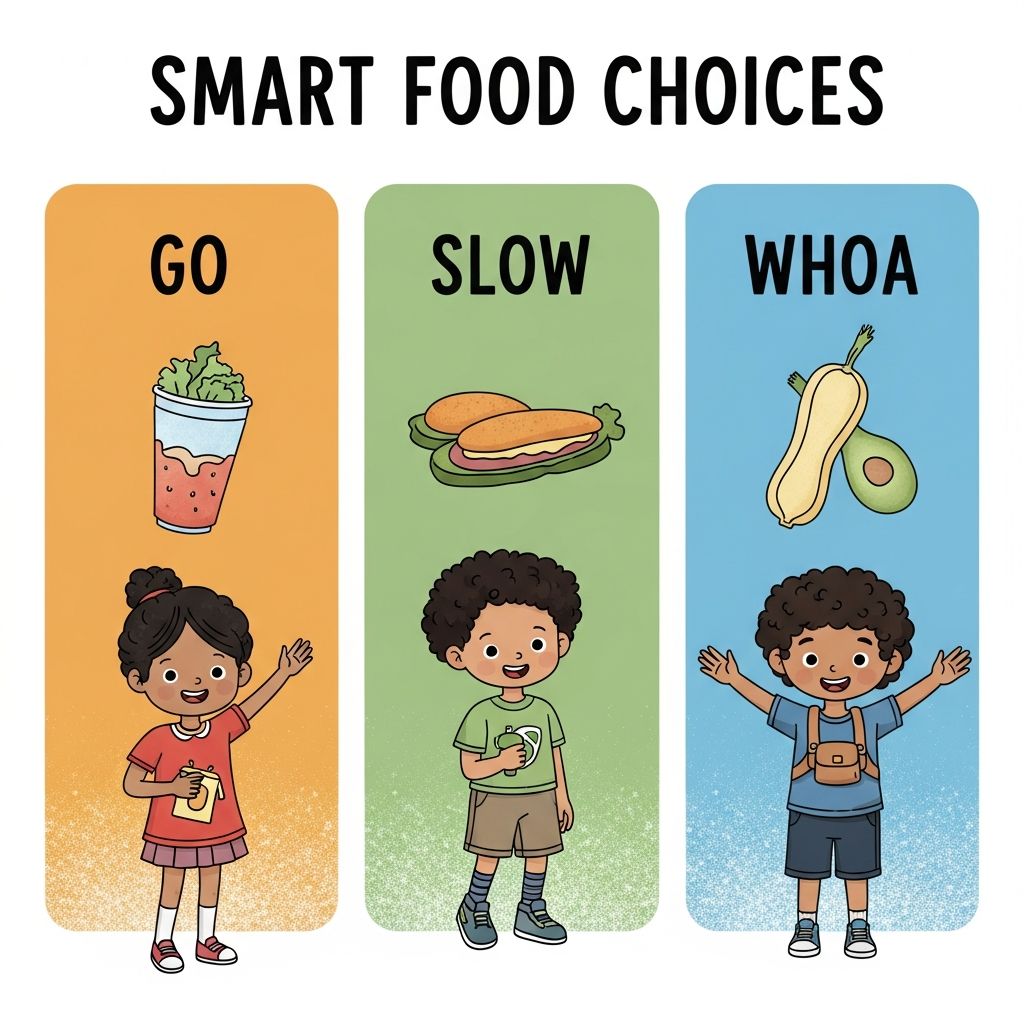
The Go–Slow–Whoa idea is a traffic light style guide created to make healthy eating easier for kids to understand and remember. It focuses on how often you eat certain foods, not on strict rules or diets.
| Type | What It Means | How Often to Eat | Typical Examples |
|---|---|---|---|
| Go | Foods that are usually lower in added sugar, unhealthy fats, and salt, and higher in nutrients. | Enjoy every day, at most meals and snacks. | Fresh fruits, most vegetables, whole grains, beans, plain low-fat milk or yogurt. |
| Slow | Foods that are still okay but may have more sugar, fat, or salt than Go foods. | Eat sometimes, not at every meal. | White bread, flavored yogurt, baked chips, some sauces, cheese. |
| Whoa | Foods high in added sugars, saturated fats, or sodium, or very low in nutrients. | Save for once-in-a-while treats. | Candy, soda, fried foods, donuts, ice cream, many fast foods. |
Go Foods: Everyday Power Picks
Go foods are ones you can enjoy often. They give you vitamins, minerals, fiber, and other nutrients your body needs, without lots of added sugar, unhealthy fat, or salt.
What Makes a Food a Go Food?
- Mostly unprocessed or minimally processed
- Low in added sugars
- Low in saturated and trans fats
- Not very salty
- Rich in nutrients like fiber, vitamins, and minerals
Examples of Go Foods
- Fruits: apples, bananas, berries, oranges, grapes (fresh, frozen, or canned in water or 100% juice)
- Vegetables: carrots, broccoli, spinach, cucumbers, peppers (raw, steamed, or roasted with little added fat)
- Grains: oatmeal, brown rice, whole-wheat bread or tortillas, whole-grain pasta
- Proteins: beans, lentils, eggs, fish, chicken or turkey without skin, unsalted nuts and seeds (if safe for your age)
- Dairy: plain low-fat milk, unsweetened fortified soy milk, plain yogurt, small amounts of cheese
Simple Ways to Add More Go Foods
- Add a fruit or vegetable to every meal and snack.
- Choose water or plain milk instead of sugary drinks.
- Pick whole-grain versions of bread, cereal, and pasta when you can.
- Keep washed, cut-up veggies and fruits where you can see them in the fridge.
Slow Foods: Sometimes Choices
Slow foods are okay to eat, but they are not the best choices all the time. They might have extra sugar, salt, or fat, or they might be more processed than Go foods.
What Makes a Food a Slow Food?
- More added sugar or salt than Go foods
- More added fat, especially saturated fat
- Often more processed or packaged
- Can still offer some nutrients, just not the most nutritious option
Examples of Slow Foods
- Grains: white rice, regular pasta, white bread, waffles, pancakes with syrup
- Dairy and drinks: flavored low-fat yogurt, chocolate milk, some fruit drinks with added sugar
- Snacks: baked chips, granola bars with added sugar, crackers, flavored popcorn
- Extras: salad dressings, ketchup, barbecue sauce, dips with added sugar or fat
How to Handle Slow Foods
- Have Slow foods in smaller portions.
- Try not to include multiple Slow foods in the same meal.
- Pair Slow foods with Go foods (for example, white pasta with veggies and lean protein).
- Read labels to choose versions with less sugar and salt when possible.
Whoa Foods: Once-in-a-While Treats
Whoa foods are extra-rich in added sugars, unhealthy fats, or salt and usually low in helpful nutrients. They can taste great and be part of celebrations, but they are not everyday foods.
What Makes a Food a Whoa Food?
- High in added sugars (like candy, soda, sweetened cereals)
- High in saturated or trans fats (like many fried foods, baked goods, and some fast foods)
- Very salty (like many chips, instant noodles, or fast-food meals)
- Often large portions with lots of calories but few nutrients
Examples of Whoa Foods
- Sweets: candy bars, gummy candy, donuts, pastries, frosted cookies, ice cream sundaes
- Drinks: soft drinks, energy drinks, sports drinks with sugar, sweetened teas and coffees
- Fried and fast foods: fried chicken, french fries, onion rings, burgers with lots of cheese and sauce, fried fish sticks
- Snack foods: regular potato chips, cheese puffs, buttery microwave popcorn
Smart Ways to Enjoy Whoa Foods
- Save Whoa foods for special occasions, not every day.
- Share a dessert or large snack with a friend or family member.
- Choose the smallest size instead of upgrading to larger portions.
- Balance a Whoa food with Go foods the rest of the day.
Building a Balanced Plate with Go–Slow–Whoa
Instead of trying to track every nutrient, you can use Go–Slow–Whoa to build a balanced plate. Health guidelines encourage kids to fill half their plate with fruits and vegetables, with the rest split between grains and protein, plus a side of dairy if desired.
Easy Plate Formula
- Half plate Go fruits and veggies
- One-quarter plate grains (Go if possible, like whole grains)
- One-quarter plate protein (lean meats, beans, eggs, or nuts)
- Go drink: water or plain low-fat milk
Sample Kid-Friendly Meals
- Breakfast: Oatmeal (Go) topped with sliced banana (Go) and a small spoon of chopped nuts (Go); glass of low-fat milk (Go).
- Lunch: Turkey sandwich on whole-wheat bread (Go) with lettuce and tomato (Go), carrot sticks (Go), and a small yogurt (Slow if flavored, Go if plain with fruit added).
- Dinner: Grilled chicken (Go), brown rice (Go), steamed broccoli (Go), and a side of fruit salad (Go).
- Snack: Apple slices (Go) with a spoonful of peanut butter (Go), or air-popped popcorn (Go) with light seasoning.
Using Go–Slow–Whoa in Everyday Life
Knowing about Go, Slow, and Whoa is helpful, but using it in real-life situations is what makes the difference. Kids can learn to make choices and feel proud of their decisions.
At Home
- Keep more Go foods visible: fruit on the counter, ready-to-eat veggies in the fridge.
- Place Whoa foods in harder-to-see spots so they feel like special treats, not everyday snacks.
- Plan meals together and label foods as Go, Slow, or Whoa as you go.
- Cook simple recipes together so kids see how Go foods can be tasty.
At School
- When choosing from the cafeteria line, look for Go options first: fruit, salad, vegetables, water.
- Trade smart: if you bring a Whoa snack, balance it by choosing Go items for the rest of lunch.
- Talk with teachers or school staff about putting Go foods at the front of the line where kids see them first.
Eating Out
- Scan the menu for grilled instead of fried options.
- Pick water or milk instead of sugary drinks.
- Choose a side salad, fruit, or veggies instead of fries when possible.
- Split a dessert or large order of fries with family or friends.
Reading Food Labels Like a Detective
Food packages often look colorful and fun, but the Nutrition Facts label and ingredient list tell the real story about whether a food is more like Go, Slow, or Whoa. Learning to read labels can help older kids and families make informed choices.
Label Clues to Watch For
- Serving size: Check how big one serving really is.
- Added sugars: Look for foods with less added sugar. Words like sucrose, high-fructose corn syrup, or cane sugar mean added sugar.
- Saturated fat: Choose foods with lower amounts per serving.
- Sodium: A lower sodium number often means a better choice.
- Fiber: More fiber usually means the food is closer to a Go choice, especially for grains.
Staying Positive About Food
Healthy eating is not about being perfect. It is about forming habits that help your body and mind feel their best most of the time. Experts in child nutrition and health emphasize that supportive family environments, regular meals, and teaching kids to listen to hunger and fullness cues all help children develop lifelong healthy patterns.
- Avoid calling foods “good” or “bad”; talk instead about how often to eat them.
- Enjoy family meals whenever possible; they are linked with better eating habits in kids.
- Let kids have a voice in planning and preparing meals.
- Focus on what you can add (like more fruits and vegetables) instead of only what to avoid.
Frequently Asked Questions (FAQs)
Can I ever eat Whoa foods?
Yes. Whoa foods are not forbidden; they are simply once-in-a-while choices. Save them for special events, celebrations, or occasional treats, and enjoy them in small portions while choosing mostly Go and some Slow foods the rest of the time.
Are all snacks Whoa foods?
No. Many snacks can be Go or Slow choices. Apple slices with peanut butter, yogurt with fruit, or whole-grain crackers and cheese are examples of snacks that fit well into a healthy pattern. Sugary candy, chips, and soda are more likely to be Whoa snacks.
How many Go foods should I eat each day?
Health guidelines suggest that most of what you eat in a day should be similar to Go foods: lots of fruits and vegetables, whole grains, lean proteins, and low-fat dairy. Try to include Go foods in every meal and snack so they make up the biggest part of your eating pattern.
What if my whole family likes fast food?
Fast food meals are usually Whoa choices because they often contain a lot of sodium, unhealthy fats, and added sugars. If your family eats fast food, you can still make it healthier by choosing grilled items, smaller portions, water instead of soda, and sides like fruit or salad. Over time, try to have fast food less often and cook simple meals at home more frequently.
I am picky. How can I start to like Go foods?
It is normal to need several tries to get used to a new food. Start with small bites of a Go food next to foods you already like, try different cooking methods (like roasting vegetables instead of boiling them), and keep trying over time. Families can model trying new foods together and avoid pressuring kids to eat more than they are comfortable with.
References
- Dietary Guidelines for Americans, 2020–2025 — U.S. Departments of Agriculture and Health and Human Services. 2020-12-29. https://www.dietaryguidelines.gov
- Make Every Bite Count with the Dietary Guidelines — U.S. Department of Agriculture, MyPlate. 2021-01-01. https://www.myplate.gov/eat-healthy/what-is-myplate
- Healthy Drinks, Healthy Kids — Centers for Disease Control and Prevention. 2021-10-15. https://www.cdc.gov/healthyweight/healthy_eating/drinks.html
- Helping Kids Form Healthy Eating Habits — Centers for Disease Control and Prevention. 2021-09-13. https://www.cdc.gov/nutrition/strategies-guidelines/children.html
- Snacks, Sweetened Beverages, and Obesity — Harvard T.H. Chan School of Public Health. 2019-06-01. https://www.hsph.harvard.edu/nutritionsource/healthy-drinks/
- Healthy Eating Research: Nutrition Guidelines for the After-School Setting — Healthy Eating Research (Duke Global Health Institute). 2011-01-01. https://healthyeatingresearch.org/research/nutrition-guidelines-for-the-after-school-setting/
- School Nutrition and Meal Cost Study — U.S. Department of Agriculture, Food and Nutrition Service. 2019-04-01. https://www.fns.usda.gov/school-nutrition-and-meal-cost-study