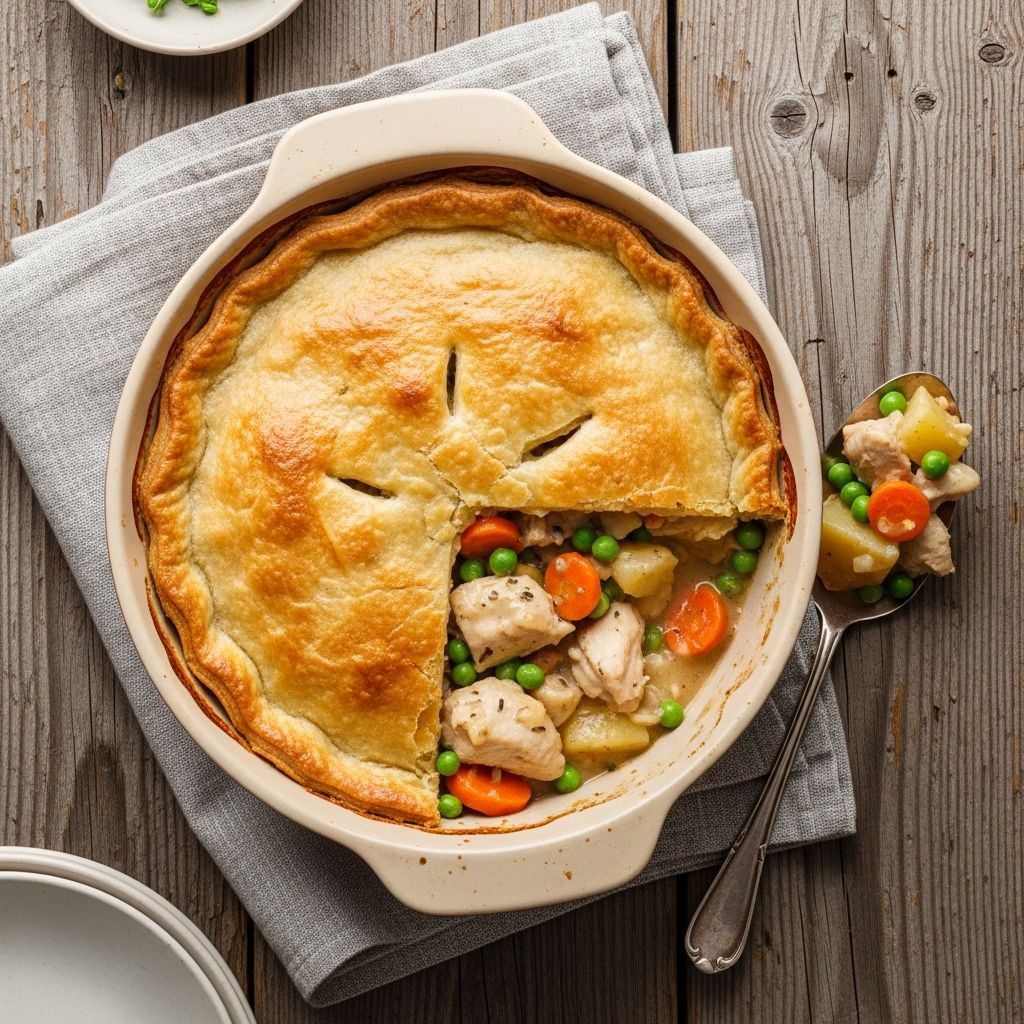
Chicken pot pie is classic comfort food, but traditional recipes rely on wheat flour in both the crust and the sauce. A well-designed gluten-free version delivers the same creamy, savory experience with a flaky top and tender vegetables, but it uses alternative flours and careful technique to keep the texture just right.
This guide walks through an entirely gluten-free chicken pot pie recipe from crust to filling, along with tips for substitutions, make-ahead strategies, and troubleshooting so the dish becomes a reliable staple instead of a once-a-year project.
Why Gluten-Free Pot Pie Works
Gluten-free chicken pot pie succeeds because the rich, flavorful filling does most of the heavy lifting, while the crust adds texture and visual appeal. With the right blend of gluten-free flour, enough fat, and a gentle hand, the crust can still bake up golden and tender on top of a creamy, vegetable-packed sauce.
Rather than trying to mimic gluten perfectly, this approach leans into naturally gluten-free ingredients—chicken, stock, vegetables, dairy or dairy-free alternatives—and uses starches and flour blends only where they matter most: thickening the sauce and forming the crust.
Key Components of a Great Gluten-Free Pot Pie
There are three major elements to focus on: the crust, the filling base, and the vegetable-protein mix. When these are balanced correctly, the result is a cohesive, satisfying dish that reheats well and pleases both gluten-free and gluten-eating diners.
- Crust: Tender and rich with fat, made from a gluten-free flour blend and chilled before baking.
- Filling base: A thickened sauce using gluten-free flour or starch, infused with herbs, onions, and garlic.
- Vegetables and protein: Bite-sized pieces of chicken and mixed vegetables that cook evenly and keep a bit of texture.
Ingredient Overview
The ingredient list below is designed for a family-sized pot pie baked in a standard 9-inch (deep dish) pie plate or similar casserole. The components are flexible, so you can substitute based on availability and dietary preferences.
For the Gluten-Free Crust
- Gluten-free all-purpose flour blend (containing or supplemented with a binding agent like xanthan gum)
- Cold butter or dairy-free stick margarine
- Salt
- Cold water or a mixture of water and milk
- Optional: Egg for an egg wash to enhance browning
For the Chicken and Vegetables
- Cooked chicken (shredded or diced; rotisserie or leftover roasted chicken works well)
- Onion and garlic for aromatic flavor
- Carrots, peas, and celery (fresh or frozen)
- Optional additions: diced potatoes, green beans, or corn
For the Creamy Gluten-Free Sauce
- Butter or oil for sautéing
- Gluten-free flour blend or a mix of flour and starch for thickening
- Chicken stock (verify it is labeled gluten-free)
- Milk, half-and-half, or a dairy-free beverage (such as unsweetened almond or oat drink)
- Salt, pepper, and herbs such as thyme, rosemary, or parsley
Step-by-Step Preparation
Preparing this dish becomes much easier when broken into clear stages. You can make the crust dough, cook the filling, and then assemble right before baking. Each portion can be done ahead of time, which is useful for busy weeknights or entertaining.
1. Making the Gluten-Free Pie Crust
Gluten-free crust can be more delicate than wheat-based dough, so keeping it cold and handling it gently are the two main rules. A food processor simplifies the process, but mixing by hand works as well.
- Whisk gluten-free flour, salt, and any separate binding agent together in a bowl.
- Cut cold butter into cubes and work it into the flour using a pastry cutter or fingertips until the mixture resembles coarse crumbs with some pea-size bits of fat.
- Add cold water gradually, tossing with a fork until the dough holds together when pressed but is not wet or sticky.
- Shape the dough into a disk, wrap tightly, and chill for at least 30 minutes. Chilling allows the flour to hydrate and the fats to firm, improving both texture and handling.
2. Preparing the Filling Base
The filling base is essentially a gluten-free white sauce enriched with stock and aromatics. It coats the chicken and vegetables and keeps them juicy during baking.
- Sauté chopped onion and minced garlic in butter or oil until softened and fragrant.
- Sprinkle gluten-free flour over the vegetables and stir to form a paste. Cook briefly to remove any raw flour taste.
- Slowly whisk in chicken stock, then milk or cream, stirring until smooth.
- Simmer gently until the sauce thickens enough to coat the back of a spoon. Season with salt, pepper, and herbs.
3. Combining Chicken and Vegetables
To keep the filling from becoming watery or overcooked, partially cook heartier vegetables first and fold in more delicate items later. Chicken should be fully cooked before it goes into the pie.
- Steam or lightly simmer carrots and any diced potatoes until just tender.
- Add peas, corn, and green beans near the end if using frozen vegetables; they only need a brief heat-through.
- Stir cooked chicken and vegetables into the prepared sauce, coating everything evenly.
- Taste and adjust seasonings, adding more herbs, salt, or pepper as needed.
Assembling and Baking
This recipe uses a single crust baked on top of the filling to streamline preparation and help the crust bake through. If a double-crust pie is preferred, use extra dough and pre-chill the bottom crust in the dish before filling.
Assembly Steps
- Preheat the oven to a moderately hot temperature (around 190–200°C / 375–400°F).
- Transfer the hot filling to a greased pie dish or shallow casserole, spreading it evenly.
- Roll the chilled dough between two sheets of parchment paper to a circle slightly larger than the baking dish.
- Peel off the top parchment, invert the crust over the filling, and gently peel away the remaining paper.
- Press the edges against the rim of the dish to seal and crimp if desired. Cut small slits in the top to allow steam to escape.
- Brush with beaten egg or milk if a glossy, deeply golden crust is desired.
Baking Guidelines
- Bake until the crust is golden brown and the filling is bubbling around the edges.
- If the edges brown too quickly, cover them loosely with foil while the center finishes baking.
- Let the pie rest for about 10–15 minutes before serving so the filling can thicken slightly and slice cleanly.
Customization Ideas
Gluten-free chicken pot pie is extremely adaptable. Small changes in vegetables, seasonings, or toppings can turn the same base recipe into several different meals throughout the cooler months without feeling repetitive.
Flavor Variations
- Herb-forward: Increase fresh thyme and add chopped parsley just before serving.
- Smoky twist: Add a small amount of smoked paprika or cooked bacon pieces to the filling.
- Lemon and herb: Finish the sauce with a splash of lemon juice and extra black pepper.
Dietary Modifications
- Dairy-free: Use plant-based butter and an unsweetened, neutral dairy alternative in the sauce; skip the egg wash or use a dairy-free beverage instead.
- Lower fat: Replace part of the butter with olive oil and use a lighter milk option; the crust will be less rich but still enjoyable.
- Vegetarian variation: Swap chicken for hearty vegetables (like mushrooms and extra potatoes) and use vegetable stock.
Suggested Quantities Table
The table below provides approximate quantities for a standard 9-inch dish. Adjust slightly based on how deep the pan is and how full you prefer your pot pie.
| Component | Approximate Amount | Notes |
|---|---|---|
| Cooked chicken | 2–3 cups, diced or shredded | Use dark or light meat, or a mixture. |
| Mixed vegetables | 2–3 cups total | Carrots, peas, celery, corn, green beans, potatoes. |
| Gluten-free flour for sauce | About 1/3 cup | Combine with fat to form the base roux. |
| Stock | 1 1/2–2 cups | Thin with more stock if too thick; reduce if too thin. |
| Milk or cream | 1/2–3/4 cup | Adjust for richness and thickness preference. |
| Gluten-free flour for crust | About 2–2 1/2 cups | Enough for a generous single crust or thin double crust. |
| Butter for crust | 3/4–1 cup, cold | More butter yields a richer, more tender crust. |
Serving and Storage Tips
This dish shines as a centerpiece for a cool-weather dinner but also stores well for lunches and leftovers. Proper cooling and storage help maintain the crust’s texture and keep the filling safe to eat.
- Allow the baked pie to cool slightly before cutting to avoid a runny interior.
- Serve with a simple green salad or steamed vegetables to balance the richness.
- Refrigerate leftovers in an airtight container once fully cooled.
Reheating Suggestions
Reheating in the oven keeps the crust from turning soggy. Smaller portions can be reheated in a toaster oven, which often crisp the top even more.
- Cover loosely with foil and warm in a moderate oven until heated through.
- For a crisper top, remove the foil for the last few minutes of reheating.
Frequently Asked Questions
Can the pot pie be frozen?
Yes, this type of pot pie generally freezes well. For best results, assemble the pie, freeze it unbaked until solid, then wrap it tightly. When ready to cook, bake directly from frozen, adding extra time and tenting the crust with foil if it browns too quickly.
Do I have to use a traditional crust?
No. While a classic rolled crust is traditional, some cooks prefer topping the filling with gluten-free biscuits or even a layer of mashed potatoes. These alternatives can be easier to prepare and still provide a satisfying, comforting topping.
How can I prevent a soggy crust?
Ensuring the filling is thick before it enters the oven is crucial. A watery filling will steam the crust instead of allowing it to crisp. Baking on a lower oven rack and using a hot oven also encourages a well-browned, firmer base on the crust.
Can I make the filling in advance?
Yes. Prepare the filling up to a day ahead, cool it, and refrigerate. When ready to bake, bring the filling closer to room temperature while you roll the crust, then assemble and bake. This approach can help the crust bake more evenly and saves time on busy days.
What if my gluten-free dough cracks?
Cracks are common with gluten-free pastry because it lacks the elasticity of wheat dough. Simply press the pieces together with your fingertips once the dough is in place over the filling. Small imperfections usually disappear as the pie bakes and develop a rustic, homemade look.
Bringing It All Together
A thoughtfully composed gluten-free chicken pot pie offers all the cozy satisfaction of the classic version without relying on wheat flour. By focusing on a well-seasoned filling, a properly thickened sauce, and a chilled, fat-rich crust, this dish becomes approachable enough for weeknights and impressive enough for guests.
Once the basic method feels familiar, experiment with different vegetables, herbs, and toppings to create your own signature gluten-free pot pie that friends and family recognize as a favorite.