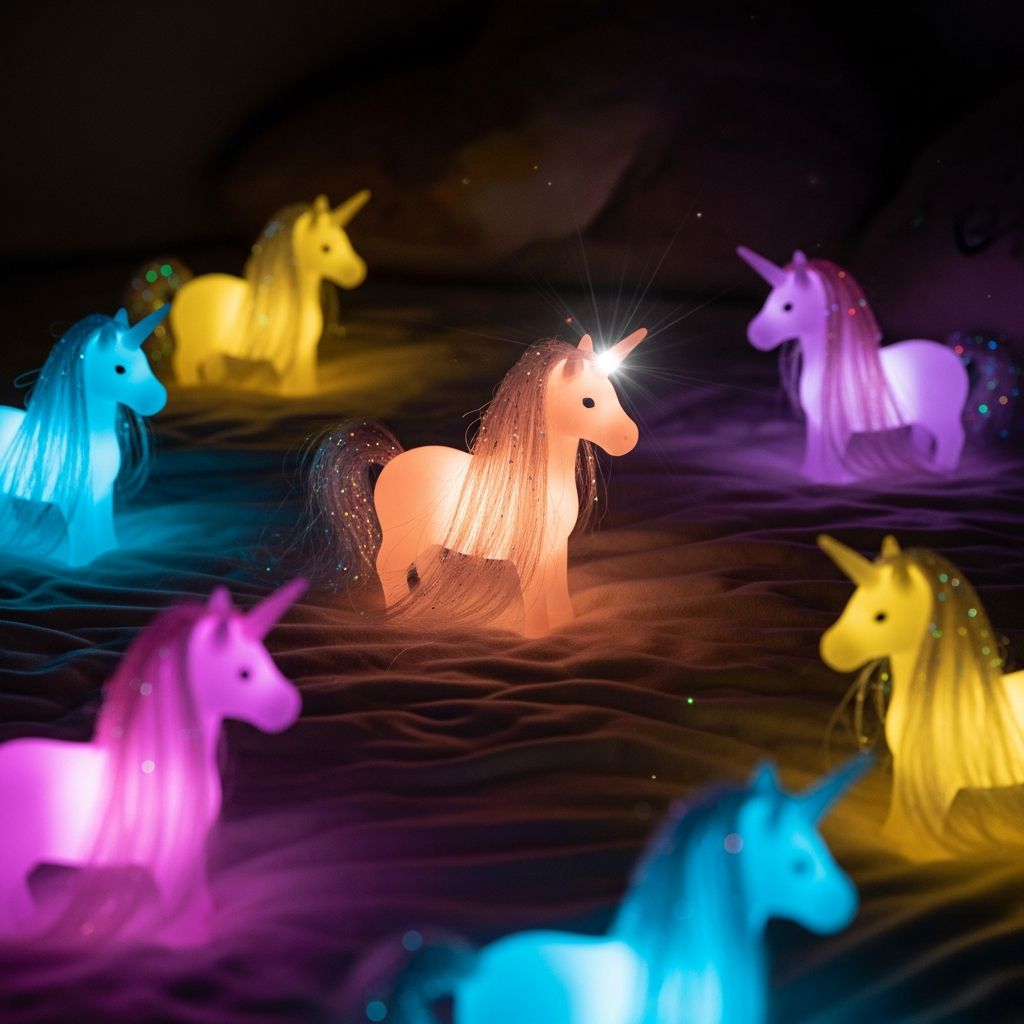
Glow-in-the-dark unicorn toys may look like simple collectibles, but for many kids they become constant companions: perched on bedtime pillows, clipped to backpacks, or cupped in small hands during car rides. These pocket-sized creatures combine three kid obsessions—unicorns, glowing lights, and miniature toys—into one surprisingly useful tool for play, comfort, and even learning.
For parents, that glow is more than a gimmick. Handled thoughtfully, a glow-in-the-dark unicorn can become a mini night-light, a fidget toy, a storytelling prompt, and a way to make the dark feel less scary. Below is a practical, parent-focused guide to why these toys work so well, what to look for, and how to USE them instead of just stepping on them in the hallway at 2 a.m.
What Makes Glow Unicorn Toys So Appealing?
Kids are drawn to glow-in-the-dark unicorns for a mix of visual magic, sensory feedback, and the feeling of having a tiny friend always within reach. The soft glow taps into children’s natural fascination with light and shadow, especially in dim rooms, while the small size makes the toy feel like a secret treasure they can carry everywhere.
- The unicorn theme adds a layer of fantasy and wish-fulfillment—kids see unicorns as symbols of magic, luck, and special powers.
- The glow creates a simple “wow” moment when lights go off, turning an ordinary toy into something that feels alive in the dark.
- Finger-sized or clip-on designs give children a sense of ownership and control: this is their creature, protecting their space.
How Glow-in-the-Dark Actually Works (Kid-Friendly Science)
Glowing toys usually rely on a material that absorbs light and slowly releases it over time. When the toy is exposed to daylight or artificial light, energy is stored in special particles; when the light goes off, that energy is released as a soft visible glow.
Parents can turn this into a simple science lesson:
- “Charge” the unicorn under a lamp for a minute, then move into a darker room together to watch the glow appear.
- Ask questions like, “Is it brighter after we leave it under the light longer?” or “What happens if we cover it with a blanket?”
- Compare how quickly the glow fades and encourage kids to describe what they see using words like “dim,” “bright,” or “fading.”
Emotional Benefits: Comfort, Courage, and Connection
Beyond the visual appeal, a glow-in-the-dark unicorn can become part of a child’s emotional toolkit. Many kids use small toys as transitional objects—items that help them feel safe when they separate from caregivers, such as at bedtime or during daycare drop-off.
- The gentle glow provides a visual anchor in the dark, which can reduce anxiety about shadows or unfamiliar shapes in the room.
- Giving the unicorn a name and personality helps kids externalize worries: “Sparkle is guarding your pillow,” shifts the focus from fear to protection.
- Rituals—like saying goodnight to the unicorn or placing it in a “stable” by the bed—can structure the bedtime routine in a positive way.
Practical Uses Around the House
Parents quickly learn that the best kids’ gear does more than sit on a shelf. A glow unicorn can quietly support daily routines if you build it into the day instead of treating it as just another toy.
Night-Time Helper
- Place the unicorn on a bedside shelf where it is visible but not bright enough to disturb sleep.
- Use the toy as a “sleep guardian”—kids can check that it still glows when they wake at night, instead of calling for a parent immediately.
- For children afraid of the dark, use the unicorn’s glow to show that the room is the same with lights on or off. Walk around together and point out familiar objects.
Travel and Transitions
- Keep the unicorn in a small “adventure pouch” for car rides, plane trips, or doctor visits; pulling it out becomes part of the transition ritual.
- Let kids clip it to a backpack as a tiny piece of home they carry into school.
- If your child uses it as a fidget, teach a clear rule: it can be squeezed or held quietly, but not waved or thrown.
Play Ideas to Stretch Imagination
Because these toys are small and expressive, they lend themselves to low-stakes, highly imaginative play. A single unicorn can support solo play, sibling games, and parent–child storytelling sessions.
- Shadow adventures: Dim the lights and use a flashlight to cast the unicorn’s shadow on the wall. Invite kids to invent what world the shadow-unicorn lives in.
- Glow quests: Hide the toy in a darkened room and give simple clues to help kids search. This encourages problem-solving and movement.
- Unicorn diaries: Older kids can write or draw what their unicorn “did” today, adding a short entry each night.
Mini Size, Big Convenience for Parents
Finger-sized or clip-on unicorn toys are especially attractive to parents because they do not demand a lot of space or complex setup. They tuck into pockets, diaper bags, or center console organizers in the car, always available as a quick distraction or comfort object.
| Feature | Why Kids Like It | Why Parents Appreciate It |
|---|---|---|
| Finger-sized design | Feels like a secret pet that fits in their hand. | Easy to carry; less clutter than larger plush or dolls. |
| Glow-in-the-dark body or hair | Creates a magical “reveal” when lights go off. | No batteries to replace if it uses chargeable glow material. |
| Expressive face or sounds | Kids interpret expressions as moods and build stories. | Offers a simple way to talk about feelings using the toy. |
| Clip or stand | Lets them display the unicorn on a bedframe or backpack. | Keeps the toy off the floor and easier to find at bedtime. |
Using the Toy for Gentle Sensory Play
For many children, especially those who seek or avoid certain sensations, a glow-unicorn can double as a simple sensory tool. The combination of visual glow, smooth or textured plastic, and soft movements in the hand can be satisfying in a calming way.
- Encourage slow, repetitive actions: stroking the mane, tracing the horn, or lightly squeezing the body.
- Pair the toy with deep breaths: “Pet your unicorn while we take three slow breaths together.”
- Keep sound or light-up features muted during wind-down time and more active during daytime play.
What to Look for When Buying a Glow Unicorn Toy
Not all glow-in-the-dark toys are created equal. A little attention to materials, design, and age-appropriateness goes a long way toward making sure the toy is fun and safe rather than frustrating or fragile.
Key Factors to Consider
- Age rating: Follow manufacturer recommendations, especially if there are small detachable parts that could pose a choking risk.
- Glow quality: Check reviews or packaging for how long and how brightly the toy glows after a short “charge” under light.
- Durability: Joints, hair, or accessories should withstand being dropped, stuffed into pockets, and occasionally stepped on.
- Ease of cleaning: Smooth materials that can be wiped down are ideal, especially if the toy travels to playgrounds and restaurants.
- Noise level: If the unicorn makes sounds, make sure there’s a volume control or on/off switch for quiet environments.
Safety Tips for Night-Time and Active Play
Glow-in-the-dark unicorn toys are generally low risk, but a few habits can keep them both safe and useful. Teaching limits early helps kids treat the toy as a companion rather than a projectile.
- Place the unicorn beside the pillow, not under it, to avoid uncomfortable lumps or distractions while falling asleep.
- Set a clear “bed rule”: the unicorn stays in bed at night and does not travel around the house once lights are out.
- Inspect the toy regularly for cracks, exposed electronics (if any), or loose parts, especially if your child chews or mouths objects.
- For younger children, avoid toys with button-cell batteries unless the compartment is securely screwed shut.
Making the Most of the Unicorn Phase
Children’s fascinations come in waves: dinosaurs, trucks, mermaids, then unicorns. Leaning into the unicorn phase with one versatile, well-loved toy often works better than buying a pile of themed items that quickly lose their appeal.
- Use the unicorn in different contexts—bedtime, playtime, travel—so it becomes a consistent, comforting presence.
- Involve your child in caring for it, such as wiping it clean or creating a special “stable” on a shelf, to practice responsibility.
- When the unicorn phase fades, consider saving the toy as a keepsake of this stage rather than rushing to replace it with the next trend.
Frequently Asked Questions
Does the glow keep kids awake?
Most glow-in-the-dark toys emit a soft, fading light that is less stimulating than bright screens or overhead lamps. Placing the unicorn a short distance away from the child, such as on a bedside table, usually keeps the glow soothing rather than disruptive.
How long will the toy glow?
Glow duration depends on the materials used and how long it was exposed to light; many toys glow strongest right after “charging” and then gradually fade over 20–60 minutes. Making “charge time” part of the bedtime routine sets realistic expectations.
Is a glow unicorn appropriate for toddlers?
For toddlers, the main concern is size and detachable parts. Look for larger, one-piece designs without tiny accessories and check that any lights or sounds are securely enclosed and age-rated accordingly.
What if my child becomes too attached?
Strong attachment to a comfort object is common and can be healthy. If the toy has to stay home for school or activities, practice ahead of time: take photos of the unicorn, give it a “job” (guarding the bed), and emphasize that it will be waiting when your child returns.
How can I clean a glow unicorn toy?
Most plastic or silicone toys can be wiped with a damp cloth and mild soap; avoid soaking electronic components if the unicorn has sounds or lights. A quick wipe as part of the weekly room tidy-up keeps the toy looking bright and inviting.
Turning a Trend into a Tool
Glow-in-the-dark unicorn toys may have started as a novelty, but in many families they end up playing a bigger role: easing bedtime jitters, giving kids a small sense of control in the dark, and providing endless fuel for imaginative adventures. With a bit of structure and creativity, that tiny glowing horn can become less of a fad and more of a helpful ally in daily family life.