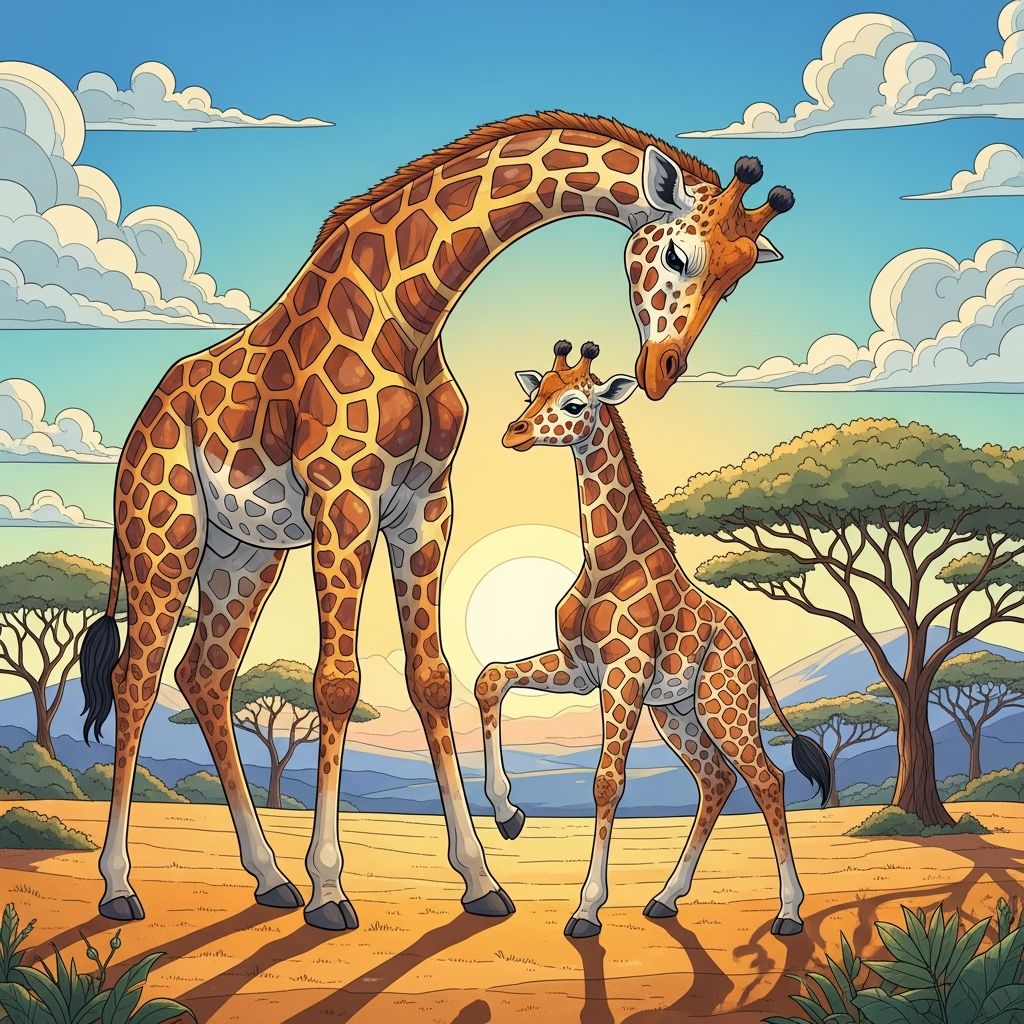
Giraffe coloring pages are more than cute pictures to fill in; they are a low-prep way to spark curiosity about animals, strengthen fine motor skills, and create calm, screen-free moments at home or in the classroom.
Why Giraffes Make Such Great Coloring Subjects
Giraffes instantly grab children’s attention with their long necks, playful expressions, and bold, irregular spots. Their distinct shapes make them easy to recognize even in simple line drawings, which is perfect for young artists still developing visual perception.
The giraffe’s unique pattern also encourages experimentation with colors and textures. Children can follow realistic tan and brown shades or invent rainbow giraffes, which naturally supports creativity and flexible thinking.
- Highly recognizable silhouette that is easy for kids to identify.
- Spot patterns offer natural sections for practicing coloring inside the lines.
- Friendly, gentle look that appeals to toddlers, preschoolers, and older kids alike.
Developmental Benefits of Giraffe Coloring Pages
Coloring might look like simple play, but it supports multiple areas of development at once. When a child grasps a crayon or colored pencil, small muscles in the hands and fingers work hard, building strength for writing, cutting, and self-care skills like buttoning.
Staying within the lines, choosing colors, and finishing a picture also promote attention span and persistence. Over time, children learn to start a task, stick with it, and feel proud of a completed project.
- Fine motor skills: Controlled strokes help prepare for handwriting.
- Hand-eye coordination: Eyes guide the hand to fill in specific areas such as spots, hooves, and leaves.
- Focus and patience: Completing detailed pictures trains children to concentrate for longer periods.
- Emotional regulation: The repetitive motion of coloring can be soothing during transitions or after busy days.
Types of Giraffe Coloring Pages to Try
Not all giraffe coloring pages are the same. Choosing the right style for your child’s age and interests makes the experience more enjoyable and less frustrating. Consider mixing several kinds so your child can explore both playful and realistic giraffe images.
Below is a simple overview of common styles and how they work for different age groups.
Giraffe Page Styles at a Glance
| Style | Best For | Key Features | How It Helps |
|---|---|---|---|
| Simple, Chunky Giraffes | Toddlers & young preschoolers | Thick outlines, large spaces, minimal details | Reduces frustration, encourages big arm movements. |
| Cute Cartoon Giraffes | Preschoolers & early elementary | Friendly faces, playful poses, props like balloons or bikes | Boosts imagination and storytelling skills. |
| Realistic Safari Giraffes | Older elementary kids | Long legs and necks, trees, grasslands, clouds | Encourages attention to detail and nature observation. |
| Pattern-Heavy Designs | Older kids, teens, and adults | Intricate spots, mandala backgrounds, repeating shapes | Supports relaxation and careful, controlled coloring. |
| Educational Pages | All ages (with help for younger kids) | Labels, fun facts, or simple reading prompts | Combines art with science or literacy learning. |
Matching Giraffe Pages to Your Child’s Age
Choosing age-appropriate coloring pages keeps kids engaged and successful rather than overwhelmed. Younger children benefit from big, open spaces and forgiving shapes, while older kids tend to enjoy challenges and details.
Use the ideas below as a flexible guide, adjusting for your child’s unique abilities and interests.
Toddlers (1–3 Years)
- Look for one large giraffe centered on the page with thick, dark outlines.
- Offer chunky crayons or washable markers that are easy to grip.
- Focus on the process: name colors, talk about the giraffe’s body parts, and praise any attempt to color.
Preschoolers (3–5 Years)
- Introduce pages with a few simple details like clouds, grass, or a sun.
- Encourage children to choose their own color combinations, even if the giraffe ends up purple.
- Gently mention staying in the lines as a fun challenge rather than a strict rule.
Early Elementary (5–8 Years)
- Offer more complex scenes such as a giraffe family in the savanna or a zoo setting.
- Invite kids to add elements of their own, like birds, trees, or other animals in the background.
- Use the opportunity to talk about giraffe habitats, food, and height comparisons.
Older Kids, Teens, and Adults
- Choose detailed giraffes with intricate patterns or mandala backgrounds for longer, calming sessions.
- Experiment with colored pencils, gel pens, or fine-tip markers for shading and texture.
- Use coloring as a quiet, shared activity to unwind together after school or work.
Creative Ways to Use Giraffe Coloring Pages
Printed pages do not have to stop at the coloring stage. With a few extra steps, your child’s artwork can become decorations, keepsakes, or educational tools. This adds meaning to the activity and helps children feel proud of their efforts.
Try rotating some of the ideas below over several weeks to keep giraffe-themed play feeling fresh and exciting.
Turn Art into Simple Crafts
- Wall gallery: Frame your child’s favorite giraffe pages or hang them with string and clothespins in a dedicated art corner.
- Giraffe puppets: Cut out colored giraffes, glue them to craft sticks, and use them in pretend play or homemade puppet shows.
- Bookmarks: Trim a narrow strip featuring the giraffe’s neck and laminate or cover with clear tape for a durable bookmark.
- Greeting cards: Fold cardstock, glue a colored giraffe to the front, and add a message inside for birthdays or thank-you notes.
Combine Coloring with Storytelling
- Ask, “Where is this giraffe going?” and invite your child to describe a short adventure in the savanna or at the zoo.
- Encourage children to name their giraffe, giving it a personality and favorite foods or hobbies.
- Help older kids write a few sentences or a short story beneath the colored page, then collect them into a homemade giraffe storybook.
Integrate Simple Learning Activities
- Counting practice: Count the giraffe’s spots, legs, or leaves on nearby trees and write the numbers on the page.
- Color words: Label parts of the giraffe with color names (for example, “brown spots,” “yellow body”) to support early readers.
- Size comparison: Compare your child’s height to a giraffe using a tape measure on the wall, then write the numbers next to the drawing.
Tips for Stress-Free, Screen-Free Coloring Time
A little preparation turns coloring time into a smooth, enjoyable routine rather than a scramble for supplies. Setting up a predictable space and simple rules also helps children transition from active play to quieter activities.
Use these practical tips to make giraffe coloring sessions relaxing for both adults and kids.
Set Up a Simple Coloring Station
- Keep a small basket or box stocked with crayons, colored pencils, and a glue stick, plus pre-printed giraffe pages.
- Store everything at child height so kids can set up and clean up with minimal help.
- Place a wipeable tablecloth or large sheet of paper under the coloring area to protect surfaces.
Create a Calm Atmosphere
- Lower background noise and consider playing gentle music to encourage focus.
- Avoid correcting every coloring choice; instead, comment on effort and interesting color combinations.
- Use coloring as a quiet wind-down routine before bedtime or after school to help children shift gears.
Encourage Independence and Pride
- Let children choose which giraffe page to color and which tools to use.
- Display their finished work on a refrigerator, bulletin board, or in a clear-sleeve binder.
- Invite kids to pick a favorite piece each week to share with family members or classmates.
Ideas for Classrooms, Homeschool, and Groups
Giraffe coloring pages adapt well to group settings like classrooms, daycare centers, and playdates. Because the theme is friendly and non-seasonal, giraffe activities can fit into lessons on animals, colors, or even emotions any time of year.
Use these ideas to turn simple pages into meaningful group learning experiences.
Classroom and Homeschool Projects
- Animal research boards: Have each child color a giraffe and glue it to a poster, then add one fact about what giraffes eat, where they live, or how tall they can grow.
- Math center: Use small giraffe pictures for counting games, simple addition, or pattern activities.
- Writing prompts: Ask older students to write a paragraph from the giraffe’s point of view and attach it to their colored page.
Party and Playdate Fun
- Set up a “giraffe art table” with multiple page styles and shared coloring supplies.
- Provide pre-cut paper crowns and have children glue mini giraffe images on them to create “safari ranger” headbands.
- Send kids home with their artwork rolled up and tied with ribbon as an easy party favor.
Frequently Asked Questions About Giraffe Coloring Pages
How can I make giraffe coloring pages more educational?
Pair coloring with simple facts or questions. Ask what giraffes might eat, invite children to draw leaves on tall trees, or compare the giraffe’s height to a familiar object like a car or classroom door. Older kids can look up one new giraffe fact and write it on the page before decorating.
What if my child only scribbles and doesn’t stay in the lines?
Scribbling is a normal and important stage of early drawing. Instead of pushing for perfection, focus on grip, color recognition, and enjoyment. Over time, as hand control improves, children naturally begin to slow down and aim for the lines without needing pressure.
Which coloring tools work best for giraffe pages?
For younger children, thick crayons or washable markers are easiest to hold and less likely to tear paper. Older kids may prefer colored pencils or fine-tip markers for shading the spots, mane, and background details. Offering a mix of tools allows kids to experiment and find what feels comfortable.
How often should I offer coloring activities?
There is no strict rule. Some children enjoy a short coloring session daily, while others prefer a longer session once or twice a week. It can help to keep a small stack of giraffe pages available so kids can choose them naturally during quiet times.
Can adults benefit from coloring giraffe pages too?
Yes. Detailed giraffe designs with complex patterns can be relaxing for teens and adults. Coloring alongside children models positive screen-free downtime, encourages conversation, and shows that creative activities are enjoyable at any age.
Bringing It All Together
Giraffe coloring pages blend the charm of a beloved animal with real developmental benefits, from fine motor practice to emotional regulation. With thoughtful choices and a bit of creativity, these simple sheets of paper can grow into stories, crafts, and cherished memories.
Whether used at home, in a classroom, or during a relaxed family evening, giraffe coloring pages offer an easy, flexible way to nurture creativity and learning—one gently spotted giant at a time.