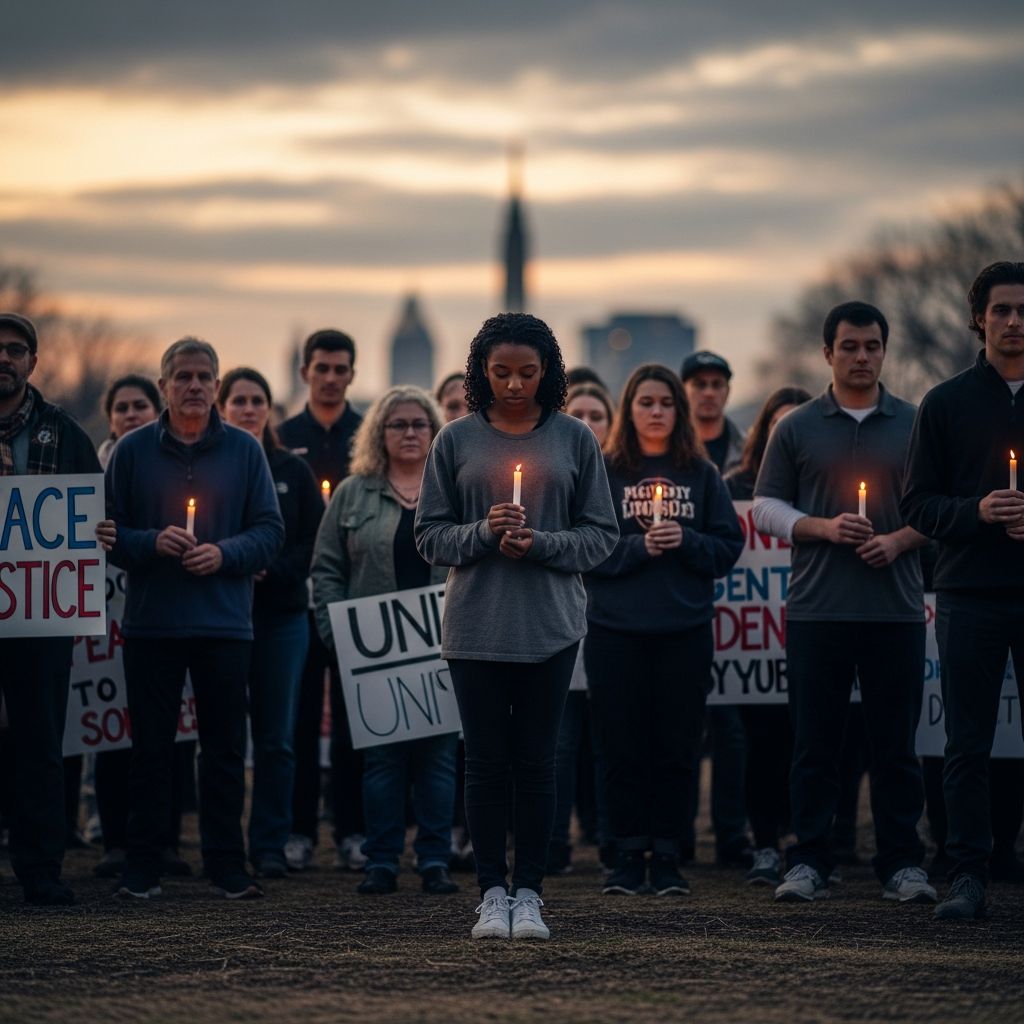
The killing of George Floyd on May 25, 2020, by Minneapolis police officer Derek Chauvin sparked one of the largest protest movements in modern history. What began as a local outcry against police brutality rapidly evolved into a global phenomenon, with demonstrations occurring in over 2,000 cities across 60 countries. Crucially, extensive data reveals that the overwhelming majority of these events—more than 93%—remained peaceful, challenging media narratives focused on isolated violence.
Origins of a Historic Movement
George Floyd, a 46-year-old Black man, died after Chauvin knelt on his neck for over nine minutes during an arrest, an incident captured on bystander video that quickly went viral. Protests erupted within hours at the site of Floyd’s death—East 38th Street and Chicago Avenue in Minneapolis—where thousands gathered to mourn and demand accountability. By the end of the day, a makeshift memorial had formed, symbolizing collective grief and resolve.
The movement aligned closely with Black Lives Matter (BLM), amplifying longstanding demands for an end to racialized police violence. Within days, protests spread nationwide, fueled by social media and shared outrage over systemic injustices. From small towns to major metropolises, participants marched, chanted, and held vigils, often under the slogan “No Justice, No Peace.”
Data-Driven Insights: The Peacefulness Predicament
Contrary to perceptions shaped by sensationalized coverage, rigorous analyses confirm the protests’ predominantly non-violent character. The Armed Conflict Location & Event Data Project (ACLED) tracked over 7,750 BLM-related demonstrations from May 26 to August 22, 2020, finding that 93% involved no violence or property destruction. Peaceful events occurred in over 2,400 locations, while violent ones were confined to fewer than 220—less than 10% of sites.
Further studies corroborate this: The Nonviolent Action Lab and Crowd Counting Consortium reported that by late June 2020, 96.3% of 7,305 demonstrations resulted in no injuries or damage. A comprehensive review of over 10,600 events identified 10,100 as peaceful. Even Pew Research noted increasing peacefulness over time, with non-violent protests rising from 89% in early June to over 96% by September.
| Metric | Value | Source |
|---|---|---|
| Total BLM Demonstrations (May-Aug 2020) | 7,750+ | ACLED |
| Peaceful Protests | 93-96.3% | ACLED, Nonviolent Action Lab |
| Violent Locations | <220 (under 10%) | ACLED |
| Arrests (Mostly Minor) | 14,000 | Wikipedia Summary |
These figures underscore a key truth: Violence, when it occurred, was often localized to specific blocks and included acts like vandalism or clashes with police, not representative of the movement’s core.
Global Reach and Solidarity
The Floyd protests transcended U.S. borders, inspiring actions in Europe, Africa, Asia, and beyond. In London, Berlin, and Paris, crowds rallied against local policing issues while honoring Floyd. Over 60 countries saw solidarity marches, linking American racial justice to worldwide fights against oppression.
Key international hotspots included:
- United Kingdom: Thousands marched in London, toppling a statue of slave trader Edward Colston into Bristol’s harbor.
- Canada: Protests in Toronto and Ottawa demanded reforms to Indigenous policing.
- Australia: Sydney and Melbourne saw demonstrations tying Floyd’s death to Aboriginal deaths in custody.
- Kenya and South Africa: Vigils highlighted parallels with local police abuses.
This global echo amplified BLM’s message, pressuring governments and corporations to address inequality.
Obstacles Faced by Peaceful Demonstrators
Despite their non-violent intent, protesters encountered significant hurdles. Police responses included tear gas, rubber bullets, and mass arrests—over 14,000 nationwide, mostly for curfew violations or blocking roads. Journalists faced assaults, with instances of violence against reporters documented widely.
Counter-protesters and opportunistic looters occasionally escalated tensions, but data shows these were fringe elements. A PMC review highlighted disproportionate force against BLM participants, noting how media emphasis on chaos overshadowed peaceful majorities. In Minneapolis, George Floyd Square became an autonomous zone, maintained peacefully into 2021 as a site of ongoing activism.
Media Portrayals and Public Perception
Media coverage played a pivotal role in shaping views. While 93% of protests were peaceful, footage of fires and skirmishes dominated airwaves, fostering a narrative of widespread anarchy. Scholarly analysis, like a Pace University thesis, argues BLM was framed variably—positively by progressives, negatively by conservatives—but consistently proven peaceful overall.
Video from ABC10 emphasized that only a “very small percentage” involved violence, countering viral clips. Social media exacerbated distortions, with curated violent images influencing opinions more than comprehensive data.
Long-Term Impacts and Legacy
The protests catalyzed tangible changes. Chauvin was convicted of murder in 2021, a rare accountability milestone. Dozens of cities reformed policing: Minneapolis banned chokeholds, Los Angeles increased officer training, and states like Colorado ended qualified immunity.
Corporate pledges poured in—over $50 billion committed to racial equity by firms like Amazon and Apple. BLM’s visibility surged, though debates persist on fund allocation. Memorials like George Floyd Square endure as symbols of resistance.
Broader societal shifts include heightened awareness of microaggressions and policy wins, such as federal investigations into 20+ departments. Yet challenges remain: Police budgets often rose post-protests, and violence against Black communities persists.
Strategies for Effective Non-Violent Action
Scholars classify BLM tactics within non-violent frameworks: symbolic protests (marches, vigils), noncooperation (strikes, boycotts), and interventions (sit-ins). Success hinged on mass participation, clear messaging, and digital amplification.
Lessons for future movements:
- Maintain discipline amid provocations.
- Leverage data to combat misinformation.
- Build diverse coalitions for sustained pressure.
- Focus on policy wins over spectacle.
Frequently Asked Questions (FAQs)
What percentage of George Floyd protests were peaceful?
Over 93% from May to August 2020, rising to 96% later, per ACLED and other trackers.
How did the protests spread globally?
Viral video and BLM solidarity led to events in 60+ countries, linking local issues to U.S. police brutality.
Were arrests mostly for serious crimes?
No, of 14,000 arrests, most were for minor issues like curfews or road blockages.
What changes resulted from the protests?
Police reforms, Chauvin’s conviction, corporate equity pledges, and ongoing memorials like George Floyd Square.
Why did media focus on violence?
Sensational coverage amplified rare incidents, skewing perceptions despite data showing peacefulness.
Conclusion: A Blueprint for Change
The George Floyd protests exemplify how peaceful mass action can drive reform amid adversity. By reclaiming narratives through facts—93%+ non-violent—they reshaped discourse on justice. As echoes continue, their legacy urges sustained, strategic advocacy against inequality.
References
- George Floyd protests — Wikipedia. 2023-10-01. https://en.wikipedia.org/wiki/George_Floyd_protests
- 93% of Black Lives Matter Protests Have Been Peaceful: Report — TIME. 2020-09-03. https://time.com/5886348/report-peaceful-protests/
- Violently Peaceful: Unpacking Portrayals of Black Lives Matter Protests — Pace University Digital Commons. 2021. https://digitalcommons.pace.edu/cgi/viewcontent.cgi?article=1384&context=honorscollege_theses
- Demonstrations and Political Violence in America: New Data for Summer 2020 — ACLED. 2020-09-03. https://acleddata.com/report/demonstrations-and-political-violence-america-new-data-summer-2020
- Protests not as violent as images and videos lead us to believe — ABC10 (YouTube). 2020. https://www.youtube.com/watch?v=zWClmKd6ws4
- Violence Against Black Lives Matter Protestors: a Review — PMC/NCBI (NIH). 2022-05-16. https://pmc.ncbi.nlm.nih.gov/articles/PMC9136198/