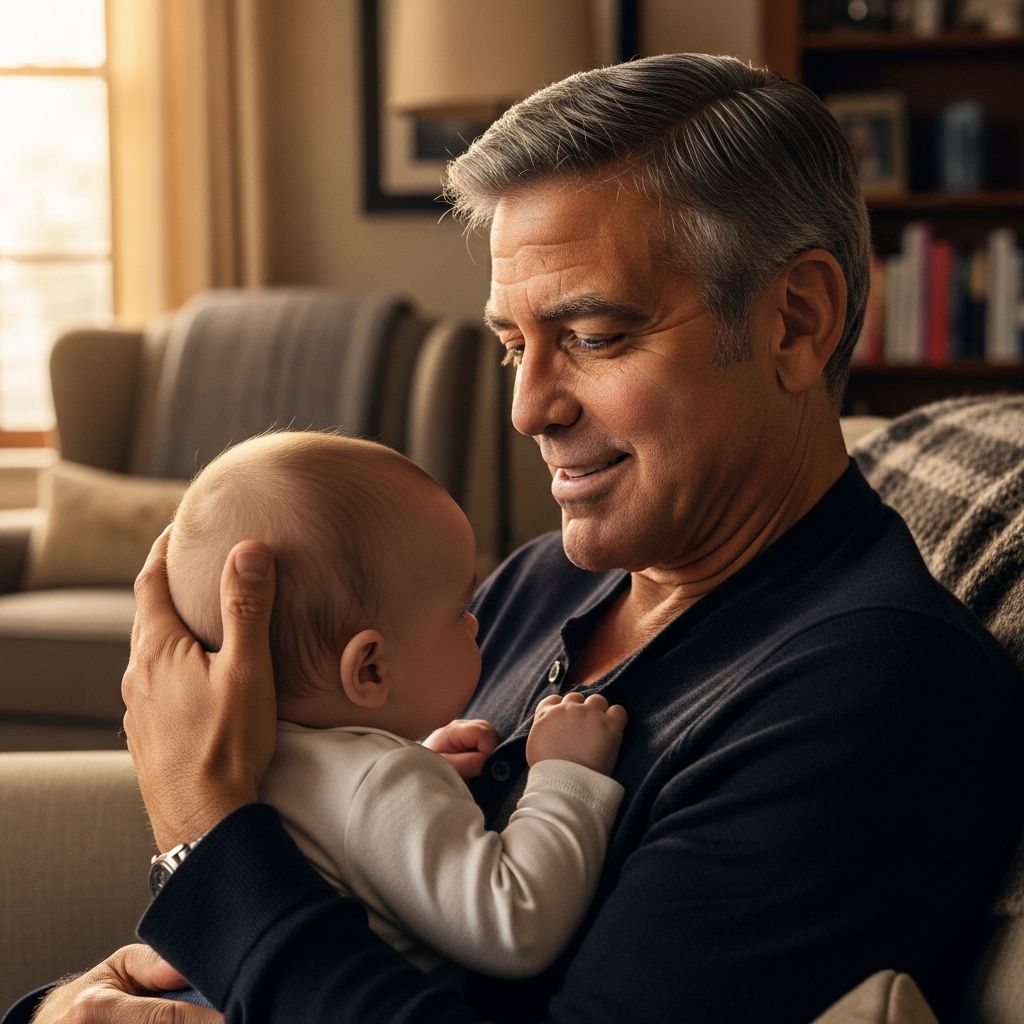
Becoming a father later in life brings unique joys and hurdles, as Hollywood icon **George Clooney** has shared openly about his experiences with newborn twins. His story highlights a universal truth for many dads: connecting emotionally with tiny infants doesn’t always happen instantly.
Why New Fathers Face Bonding Challenges
The initial phase of fatherhood often feels overwhelming. Infants rely heavily on biological instincts tied to the mother, like breastfeeding, which can make dads feel sidelined. Clooney, who welcomed twins Alexander and Ella in 2017 at age 56, admitted to initial difficulties in this area, joking about learning diaper changes through trial and error. This isn’t uncommon; many fathers report a gradual build-up of attachment as they spend consistent time with their babies.
Factors like sleep deprivation, work demands, and the sheer newness of caregiving amplify these feelings. For older dads like Clooney, physical energy levels play a role too—he’s mentioned the exhaustion of chasing energetic toddlers, yet credits late-in-life parenting with fostering greater patience and presence.
- Sleep disruption: Newborns wake frequently, leaving dads fatigued and less attuned.
- Role uncertainty: Traditional expectations may position mothers as primary caregivers.
- Biological differences: Oxytocin bonds form more readily during pregnancy and nursing for moms.
Clooney’s Path to Fatherhood: From nerves to Joy
Prior to twins, Clooney was famously child-free, once declaring he’d never have kids. Meeting human rights lawyer Amal Alamuddin changed that. In interviews, he described pre-birth nerves about managing parenthood, balanced by excitement. Post-birth, he embraced playful antics to entertain the babies, turning challenges into fun moments.
Today, with kids nearing school age, Clooney prioritizes normalcy—strict house rules, shielding from fame, and being an everyday dad who’s sometimes ’embarrassing’ or silly, as his children reportedly see him. This evolution underscores that bonding strengthens over time through daily involvement.
Science Behind Father-Baby Connections
Research shows paternal bonds are vital for child development. Fathers who engage early promote secure attachments, better emotional regulation, and cognitive growth in kids. A study from the National Institutes of Health (NIH) indicates that skin-to-skin contact releases oxytocin in dads too, mimicking maternal responses and accelerating bonding.
For twins, the dynamic intensifies. Clooney has noted the task of handling two at once tests limits but builds resilience. Experts recommend dividing tasks: one parent handles feeding while the other soothes, fostering individual connections.
| Bonding Method | Benefits for Dads | Benefits for Babies |
|---|---|---|
| Skin-to-Skin | Boosts oxytocin, reduces stress | Regulates heartbeat, improves sleep |
| Playtime | Builds confidence in caregiving | Enhances motor skills, laughter |
| Routines | Creates predictability | Supports emotional security |
| Singing/Talking | Strengthens emotional tie | Develops language early |
Practical Strategies for Dads to Build Strong Ties
Start simple. Hold your baby during feeds—even bottle-feeding simulates closeness. Clooney’s diaper-learning phase mirrors advice from pediatricians: hands-on practice demystifies care. Respond to cries promptly; this teaches babies dads are reliable comforters.
Daily rituals matter: Bath time, walks, or bedtime stories create shared memories. For working dads, quality trumps quantity—even 20 focused minutes daily count.
- Master babywearing: Keeps hands free, promotes constant contact.
- Share nighttime duties: Alternating shifts equalizes exhaustion.
- Capture milestones: Photos/videos reinforce your role.
- Seek support: Dad groups normalize struggles.
Amal Clooney’s partnership exemplifies balance; couples who communicate openly navigate parenthood best.
Overcoming Age-Related Fatherhood Hurdles
At 56, Clooney faced jokes about ‘silver fox’ parenting, but he counters with purpose. Older dads often bring stability, financial security, and life wisdom. A Harvard Medical School review notes they tend to be more involved, compensating for energy dips with intentional engagement.
Challenges include joint health—Clooney admits strain from active kids—but benefits like perspective shine. He values ‘little moments’ more deeply, a sentiment echoed in longitudinal studies on paternal age and child outcomes.
Real Dad Stories Echo Clooney’s Experience
Beyond celebrities, everyday fathers share similar tales. One dad of twins described initial detachment melting after co-sleeping trials. Forums (anonymized for privacy) reveal patterns: nerves give way to profound love around 3-6 months, aligning with babies’ social smiling phase.
Clooney’s goal to raise grounded kids despite fame resonates. He balances privacy with world exposure, a model for all parents.
Frequently Asked Questions for New Dads
When will I feel bonded to my baby?
It varies—days for some, months for others. Consistency speeds it up. Patience is key.
Is it harder with twins?
Yes, due to divided attention, but tag-teaming with your partner helps immensely.
How does dad bonding impact kids long-term?
Strong paternal ties link to better academic success, fewer behavioral issues per NIH research.
What if I’m an older dad?
Leverage your strengths: wisdom and presence outweigh physical limits.
Any tips for celebrity parents?
Focus on normalcy—rules, routines, and shielding from excess spotlight, as Clooney does.
Long-Term Rewards of Persistent Effort
Clooney’s updates show thriving kids who view him as ‘regular dad,’ not star—a win. Fathers who persist report deeper fulfillment, with bonds evolving into friendships. Invest now for lifelong returns.
Parenthood tests but transforms. Clooney’s journey proves even icons grapple, emerging stronger.
References
- Early Fatherhood and Child Development — National Institutes of Health (NIH). 2023-05-15. https://www.ncbi.nlm.nih.gov/pmc/articles/PMC10074758/
- Paternal Age and Parenting Outcomes — Harvard Medical School, Harvard Health Publishing. 2024-02-10. https://www.health.harvard.edu/blog/older-fathers-202402103011
- Skin-to-Skin Contact for Fathers — American Academy of Pediatrics (AAP). 2022-11-01. https://publications.aap.org/pediatrics/article/150/5/e2022057995/190000/Skin-to-Skin-Care-for-Procedural-Pain-in
- Father Involvement and Child Well-Being — U.S. Department of Health & Human Services. 2023-08-20. https://aspe.hhs.gov/reports/father-involvement-child-well-being-0
- Oxytocin in Paternal Bonding — Endocrine Society. 2021-09-12. https://academic.oup.com/jcem/article/106/10/e3952/6321740