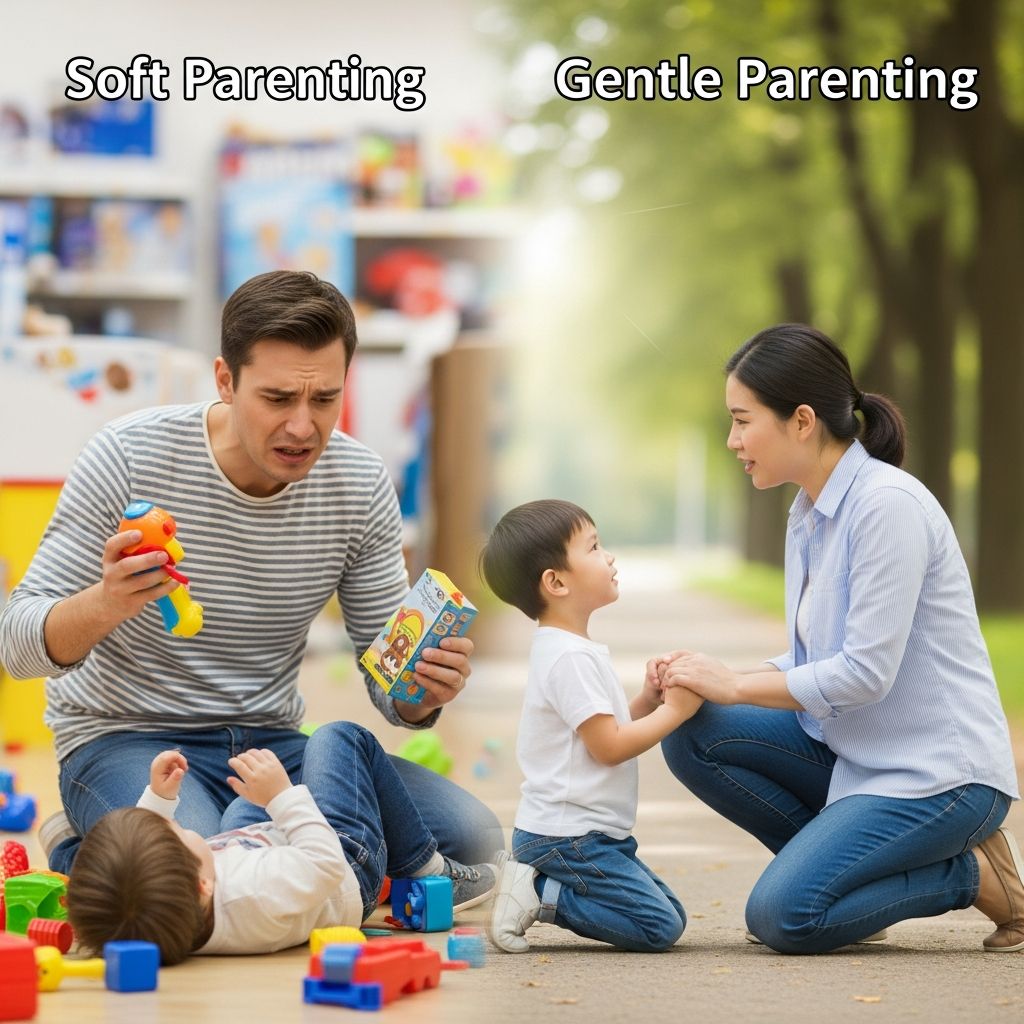
Modern parenting trends emphasize empathy and connection, but soft parenting and gentle parenting are often confused despite distinct approaches to discipline and boundaries. Gentle parenting builds emotional intelligence through firm, empathetic guidance, while soft parenting risks permissiveness by prioritizing child comfort over structure.
Defining Gentle Parenting Fundamentals
Gentle parenting prioritizes mutual respect, emotional validation, and consistent boundaries. Parents view children as capable learners who benefit from understanding their emotions rather than fear-based control. This method encourages curiosity about behavior triggers, asking what unmet needs drive actions and how to respond teachably.
Core elements include:
- Emotional attunement: Acknowledging feelings without endorsing all behaviors.
- Positive guidance: Teaching through modeling and collaborative problem-solving instead of punishments.
- Respectful dialogue: Communicating as equals to foster dignity and trust.
- Connection priority: Strengthening relationships to encourage self-regulation.
Research aligns gentle parenting with authoritative styles, which studies link to confident, resilient children due to balanced warmth and structure.
Understanding the Soft Parenting Approach
Soft parenting emerges as a relaxed response to rigid traditional methods, focusing on avoiding conflict and nurturing immediate emotional comfort. It often manifests in sidestepping ‘no’ to prevent tantrums, allowing child-led decisions, and endless accommodations without resilience-building lessons.
While well-intentioned, this can create anxiety for families lacking anchors. Without clear limits, children miss learning social norms and self-discipline, leading parents to feel overwhelmed. Soft parenting resembles permissiveness, prioritizing short-term harmony over long-term growth.
Core Distinctions: A Side-by-Side Comparison
The divergence lies in boundary enforcement and discipline philosophy. Use this table to clarify:
| Aspect | Gentle Parenting | Soft Parenting |
|---|---|---|
| Boundaries | Clear, consistent, and empathetically enforced | Vague, flexible, or avoided to prevent upset |
| Discipline | Connection-based teaching and natural consequences | Avoidance of conflict or consequences |
| Emotional Response | Validates feelings while guiding behavior | Reactive accommodation focused on comfort |
| Parent-Child Balance | Respects both parties’ needs equally | Prioritizes child’s immediate desires |
| Outcomes | Builds resilience, empathy, self-regulation | May foster dependency, anxiety |
Why Boundaries Matter in Gentle Parenting
Firm limits provide security, signaling safety and predictability. Gentle parents set expectations calmly, like ‘Homework finishes by 8:30; I’m here to support,’ blending empathy with structure. This teaches accountability without harshness, mirroring authoritative parenting’s success in promoting emotional intelligence.
In contrast, soft parenting’s reluctance to enforce rules confuses children, as seen in bedtime battles where ‘maybe later’ erodes routines. Gentle responses validate desires—’I know you want more playtime, but rest is at 9:30; let’s read together’—maintaining authority kindly.
Practical Strategies for Gentle Discipline
Implement gentle parenting through daily tools:
- Co-regulation: Stay calm during outbursts, modeling deep breaths to help children mirror composure.
- Natural outcomes: Let actions teach, e.g., a forgotten jacket means feeling cold, prompting future planning.
- Empathy scripts: ‘You seem frustrated; let’s figure this out together’ invites cooperation.
- Routine flexibility with anchors: Adapt to needs but uphold essentials like meals and sleep.
These differ from soft parenting’s conflict evasion, ensuring children learn real-world limits respectfully.
Addressing Common Misconceptions
A frequent error equates gentleness with permissiveness. Gentle parenting demands firmness; it rejects ‘anything goes’ for guided autonomy. Parents meet their needs too, avoiding resentment from constant yielding.
Another myth: Gentle means no consequences. Logical results, like repairing a broken item, teach responsibility empathetically, unlike punitive measures. Evidence shows this yields empathetic, self-aware kids outperforming permissive-raised peers.
Real-Life Scenarios: Gentle vs Soft in Action
Consider homework resistance:
- Soft: ‘Do it when ready’ leads to procrastination.
- Gentle: Validate struggle, set timeframe, offer help—builds skills.
Bedtime defiance:
- Soft: Extends indefinitely, disrupting sleep.
- Gentle: Acknowledges wish, enforces limit with wind-down ritual.
Friend conflicts:
- Soft: Over-accommodates without guidance.
- Gentle: Listens, suggests solutions, empowers resolution.
Long-Term Benefits of Choosing Gentle
Authoritative/gentle styles correlate with superior outcomes: higher self-esteem, better academic performance, stronger peer relations. Children internalize regulation, thriving independently. Soft approaches may hinder this, risking entitlement or insecurity from absent structure.
Parents benefit too, gaining confidence in balanced authority, reducing burnout. Adapt to family dynamics—no rigid label required; prioritize connection with guidance.
Frequently Asked Questions
What defines gentle parenting from soft parenting?
Gentle parenting uses empathy with firm boundaries; soft parenting avoids limits for harmony, often becoming permissive.
Does gentle parenting allow any discipline?
Yes, via natural/logical consequences and modeling, not punishment.
Can gentle parenting work for neurodiverse kids?
Absolutely, by tuning into unique needs while upholding structure.
Is gentle parenting the same as authoritative?
They overlap in warmth and control, both evidence-backed for positive development.
How to transition from soft to gentle?
Start small: Set one consistent rule, validate emotions, use co-regulation.
Building Your Balanced Parenting Toolkit
Success stems from intention: Slow down, attune, guide firmly. Blend gentle principles with personal style for authentic growth. Track progress through calmer interactions and child’s increasing self-control.
Parenting evolves; refine as children age, drawing from evidence that responsive, bounded approaches nurture thriving families.
References
- Gentle vs. Soft Parenting: What Neurodiverse Parents Need to Know — Grace Chatting. 2023. https://gracechatting.com/adhd/gentle-vs-soft-parenting/
- Gentle vs. Authoritative Parenting — WholeMind Psychology. 2024. https://www.wholemindpsychology.com/blogs/gentlevsauthoritative/
- The Gentle Parenting vs. Permissive Parenting Confusion — Cadenza Center. 2023. https://cadenzacenter.com/the-gentle-parenting-vs-permissive-parenting-confusion-a-therapists-perspective-on-middle-school-parenting/
- Gentle parenting doesn’t have to mean permissive parenting — Your Parenting Mojo. 2023. https://yourparentingmojo.com/captivate-podcast/gentle-parenting-vs-permissive-parenting/
- Which Parenting Style Is Best? — Nurtured First. 2024. https://nurturedfirst.com/baby/best-parenting-style/