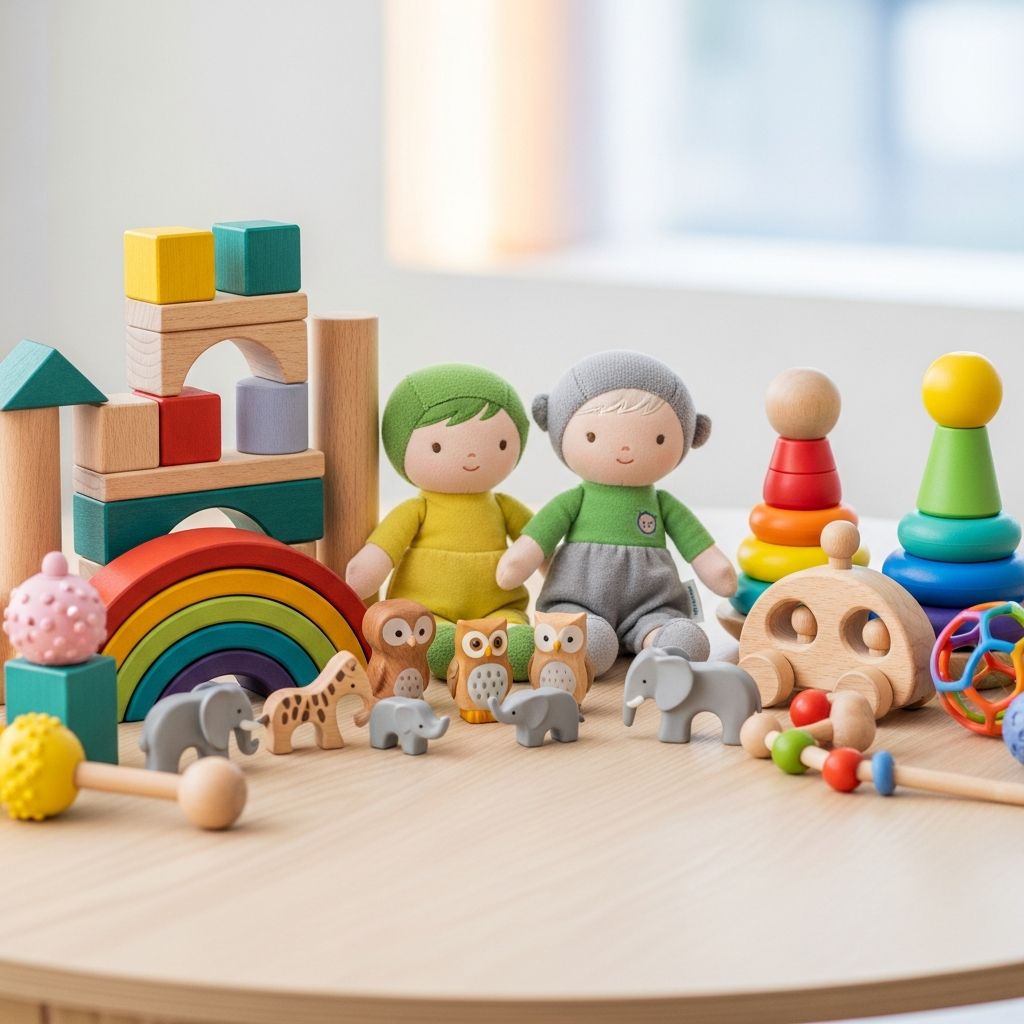
Parents today face toy aisles divided by color, marketing, and outdated expectations, yet children simply want to play, explore, and learn. Gender-neutral toys give kids space to discover who they are without being boxed in by stereotypes.
What “Gender-Neutral” Toys Really Mean
Gender-neutral toys are playthings that are not marketed or designed exclusively for boys or girls, but instead focus on skills, interests, and imagination. They avoid stereotypical colors, messages, and packaging that suggest a toy belongs only to one gender.
These toys invite any child to engage in pretend play, problem-solving, creativity, and social interaction. Rather than telling kids who should play with them, they ask, “What can you build, imagine, or discover with this?”
- They can be simple (blocks, balls, books) or high-tech (robots, coding kits).
- They often emphasize open-ended play with many possible outcomes.
- They support a range of developmental skills across ages.
Why Gendered Toy Marketing Is a Problem
Many toy aisles are divided into “boy” and “girl” sections, which sends powerful messages about what children are expected to like and who they should become. This can quietly limit the skills kids practice and the roles they imagine themselves in.
Boys often get toys centered on competition, vehicles, building, and combat, while girls are frequently directed toward beauty, caregiving, and domestic play. Over time, this shapes how children see their abilities and future possibilities.
- Girls may miss out on building and spatial play that supports STEM learning.
- Boys may have fewer chances to practice nurturing, communication, and empathy.
- Kids who don’t fit into narrow gender expectations can feel excluded or ashamed of their preferences.
Developmental Benefits Of Gender-Neutral Toys
Removing gender labels from toys doesn’t just change a store display; it can broaden a child’s developmental experiences. When every toy is fair game, kids gain access to a richer mix of skills and perspectives.
Gender-neutral play environments tend to promote more balanced growth in problem-solving, creativity, and social-emotional development, because children are encouraged to explore a wider variety of activities.
Cognitive and STEM Skills
- Building sets, puzzles, and construction kits develop spatial reasoning and logical thinking.
- Science kits, magnifying glasses, and coding toys foster curiosity and experimentation.
- Open-ended manipulatives (blocks, gears, magnetic tiles) support pattern recognition and early math concepts.
Social and Emotional Growth
- Pretend play with dolls, animal figures, and play kitchens strengthens empathy and perspective-taking.
- Cooperative games teach turn-taking, negotiation, and handling disappointment.
- Role-play props (doctor kits, tool sets, costumes) help kids experiment with different identities and roles.
Creativity and Language
- Art supplies and musical instruments invite self-expression and divergent thinking.
- Storytelling games and puppets encourage rich language use and narrative skills.
- Simple, versatile toys require children to supply their own ideas instead of following a script.
Skills-First Toy Selection Framework
Instead of starting with “toys for boys” or “toys for girls,” begin with the skills and experiences you want to nurture. This approach helps you quickly see which toys truly serve your child’s growth.
Use the table below as a quick reference when evaluating a toy, whether online or in-store.
| Skill Area | What It Supports | Example Toy Types | Questions to Ask |
|---|---|---|---|
| Problem-solving | Logical thinking, perseverance, planning. | Puzzles, building challenges, mazes, strategy board games. | Does this toy require thinking through steps or trying different strategies? |
| Creativity | Imagination, self-expression, innovation. | Blocks, art supplies, dress-up clothes, open-ended building toys. | Can the toy be used in many different ways over time? |
| Social skills | Communication, cooperation, empathy. | Board games, pretend play sets, puppets, dolls. | Does it invite shared play, taking turns, or role-playing feelings? |
| Physical development | Balance, coordination, strength, motor skills. | Balls, ride-on toys, stacking toys, balance boards. | Will my child use their body actively and safely with this toy? |
| Curiosity | Exploration, experimentation, questioning. | Science kits, nature tools, simple robots, building circuits. | Does this toy invite my child to ask “What happens if…?” |
Practical Examples By Age Group
Every child is different, but certain types of gender-neutral toys tend to work well at different stages. Think of these as starting points, not strict rules, and always follow age-safety guidelines.
Babies and Young Toddlers (0–2 years)
- Soft blocks and textured balls for grasping and early coordination.
- Nesting cups and shape sorters to introduce size, cause and effect, and problem-solving.
- High-contrast picture books showing diverse families, animals, and everyday scenes.
- Stacking rings and simple push-and-pull toys for early motor practice.
Preschoolers (3–5 years)
- Wooden blocks, magnetic tiles, and train sets to build worlds and stories.
- Play kitchens, doctor kits, and tool sets that welcome any child to act out real-life roles.
- Dolls and figurines of varied genders, skin tones, and abilities to encourage inclusive storytelling.
- Large-piece puzzles and beginner board games to learn turn-taking and strategic thinking.
Early School-Age Kids (6–9 years)
- STEM kits (simple circuits, beginner robotics, building sets with challenges).
- Craft kits that focus on making useful objects, not only appearance-based projects.
- Cooperative board games where players work as a team toward a shared goal.
- Sports equipment sized appropriately, such as jump ropes, balls, and beginner skateboards.
Tweens (10–12 years)
- More complex engineering sets and coding projects that highlight creativity and problem-solving.
- Advanced art supplies, instruments, or recording tools for self-directed creative projects.
- Strategy and role-playing games that involve planning, negotiation, and critical thinking.
- DIY kits for woodworking, gardening, or crafting that emphasize real-world skills.
Creating an Inclusive Toy Shelf at Home
Transforming your child’s play space does not require starting from scratch. Small, thoughtful adjustments can turn an existing collection into a more balanced, gender-neutral environment.
Audit What You Already Have
- Lay out your child’s toys and group them by type: building, pretend play, art, active play, and so on.
- Notice if any category is dominated by a particular stereotype (for example, all nurturing toys are pink and all building toys feature male characters).
- Identify simple additions that could balance things out, such as adding a doll with short hair to a collection or introducing a neutral-colored tool set.
Change the Messages, Not Just the Toys
- Avoid labeling toys as “for boys” or “for girls” when talking with your child.
- Use inclusive phrases like “kids who like building” or “anyone who enjoys caring for babies.”
- Model openness by joining in with all types of play, regardless of your own gender.
Display Toys to Encourage Cross-Play
- Store building sets near dolls or animal figures so they can easily be used together in pretend play.
- Place art supplies and costumes within reach so children can naturally combine them with other toys.
- Rotate toys regularly to keep interest high without constantly buying something new.
Talking with Family and Friends About Gifts
Extended family and friends often want to be supportive but may be used to shopping by gender. Clear, kind communication can help align gifts with your values while preserving relationships.
- Share a short wish list organized by interests (building, art, reading, outdoor play) rather than by gender.
- Offer specific examples of the kinds of toys your child enjoys and explain that you’re focusing on skills, not stereotypes.
- When less-than-ideal gifts appear, use them as teaching moments and blend them into a broader mix of options rather than making your child feel guilty for liking them.
Signs a Toy Is Truly Gender-Neutral
Packaging and advertising can be misleading. A toy might be technically neutral in function but marketed in a heavily gendered way. Looking beyond the surface helps you make more intentional choices.
- Flexible storyline: The toy allows multiple roles and outcomes instead of a single, scripted scenario.
- Diverse representation: Characters, if present, show different genders, body types, and backgrounds.
- Color palette variety: The design uses a range of colors, not just one stereotypical scheme.
- Skill focus: Packaging highlights learning, creativity, or cooperation rather than appearance or toughness alone.
- Open audience: Marketing language refers to “kids” or “children,” not only “girls” or only “boys.”
Safety, Durability, and Sustainability
Gender-neutral toys should also meet basic standards for safety and quality. A beautiful idea loses its value if the product breaks easily or contains unsafe materials.
- Check age recommendations and small parts warnings, especially for children under three.
- Look for durable materials (solid wood, thick plastic, reinforced fabric) that can be passed down or shared.
- Consider second-hand options to reduce waste, inspecting items carefully for wear and cleaning them before use.
Frequently Asked Questions
Is choosing gender-neutral toys the same as ignoring my child’s gender?
No. Offering gender-neutral toys is about widening choices, not erasing identity. You can still honor your child’s gender while making sure they are not limited by it in how they play, learn, or imagine the future.
What if my child strongly prefers stereotypical “boy” or “girl” toys?
Preferences are not a problem by themselves. The goal is to make sure those preferences come from genuine interest, not pressure or shame. Keep beloved toys in the mix, but also gently introduce new options and show enthusiasm when your child explores something different.
Will gender-neutral toys confuse my child about who they are?
Children learn who they are from many sources: family, culture, peers, and personal experiences. Providing a wide range of toys simply tells them that many paths are open. It does not dictate their gender identity; it gives them room to grow into themselves.
Are there any toys I should avoid altogether?
Each family will have its own boundaries, but it is worth pausing before bringing home toys that glorify extreme violence, reinforce rigid body ideals, or ridicule any group of people. When in doubt, ask whether the toy supports the values and skills you want to nurture.
How can I introduce gender-neutral toys to an older child?
With older kids, involve them in the process. Talk about their interests and invite them to help choose new games, building sets, or creative tools. Framing the shift around their passions and growing independence makes the change feel empowering instead of imposed.
Moving Toward More Open-Ended Play
Gender-neutral toys are not a trend; they are part of a broader shift toward respecting children as individuals with unique talents and interests. By focusing on skills, curiosity, and empathy, you turn playtime into a powerful foundation for a more flexible, confident future.
Every time you choose a toy for what it helps your child do and feel, rather than who it is “for,” you send a simple, profound message: there is more than one right way to be a boy, a girl, or any kid exploring the world.