Dollhouse-style play has enormous benefits for all children, yet the toy aisle often suggests it is only for kids who love pink, plastic mansions. This guide offers a fresh, original approach to creating miniature worlds that invite every child into imaginative, relationship-rich play without relying on stereotypes or narrow color palettes.
Why Dollhouse Play Matters for Every Child
Dollhouse and miniature-world play gives children a safe space to practice empathy, storytelling, and problem-solving. When children move tiny figures around and narrate everyday scenes, they experiment with emotions, routines, and social dynamics in a way that feels fun and low-stakes.
This kind of play is not inherently “for girls” or “for boys”; it is simply a powerful tool for learning how relationships work, exploring family life, and trying on different roles. Choosing toys and setups that feel welcoming to all children makes it easier for everyone to participate freely.
Rethinking What a Dollhouse Can Be
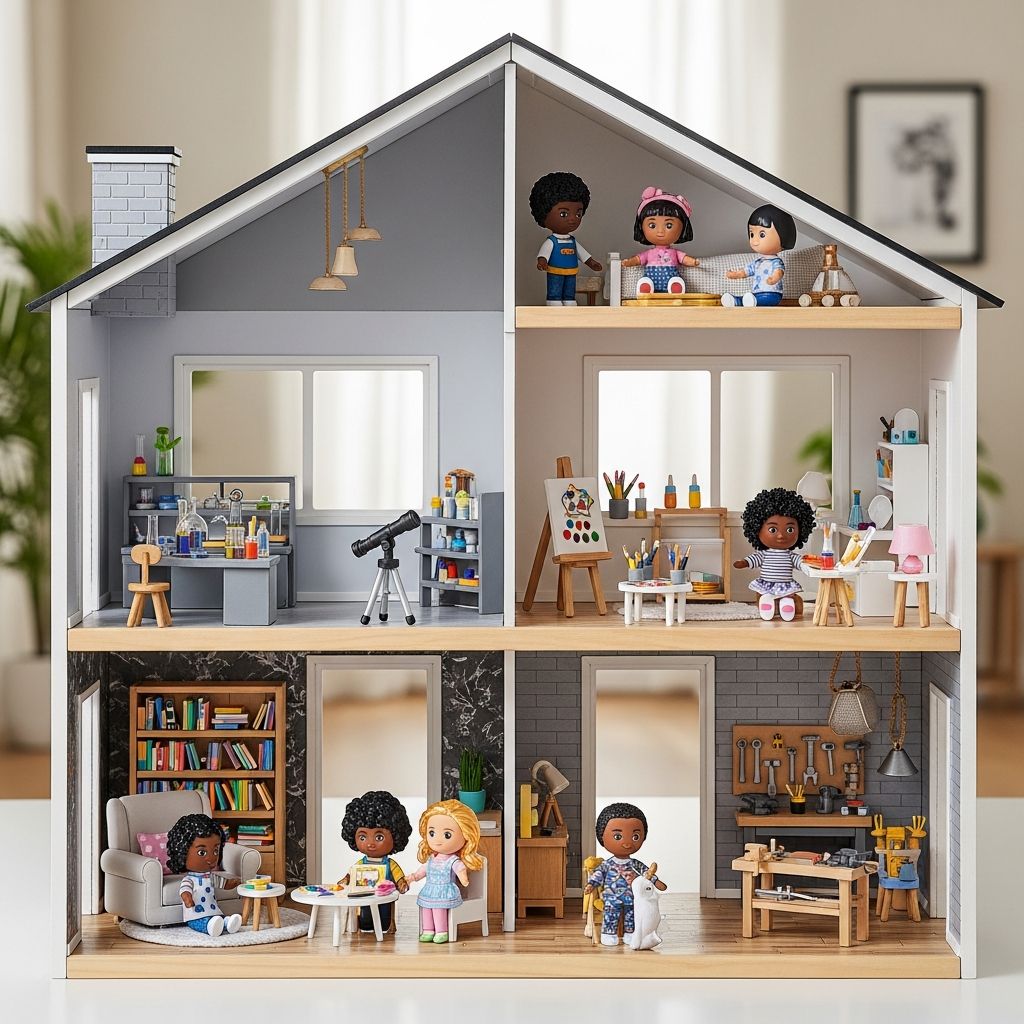
When many adults picture a dollhouse, they imagine a towering pink mansion with sparkles, sweeping staircases, and a built-in narrative about who lives there. In reality, a dollhouse is any small-scale environment that invites storytelling with figures, furniture, and props.
By broadening the definition, caregivers can move away from a single aesthetic and toward a wide range of play settings: apartments, farms, treehouses, city blocks, space stations, emergency services buildings, or even made-up fantasy worlds.
Principles of Gender-Inclusive Miniature Worlds
Instead of focusing on one “perfect” product, it helps to think about the underlying principles that make a play environment feel open and inclusive. Using these ideas as a checklist can guide purchasing decisions and DIY projects.
- Neutral or varied colors: Look for color palettes that mix natural tones, primary colors, or muted shades instead of relying on one gender-coded color.
- Flexible story potential: Choose settings where many kinds of stories make sense, from everyday family life to adventures and emergencies.
- Accessible design: Open fronts, cut-out walls, and multiple sides for play make it easier for more than one child to join in.
- Simple shapes: Clean lines and minimal decoration leave room for children’s imaginations instead of prescribing a script.
- Durable and repairable materials: Wood, sturdy cardboard, and fabric can often be mended or adapted as play evolves.
Categories of Gender-Neutral Dollhouse Alternatives
Once caregivers step beyond the traditional pink house, an entire landscape of options appears. These categories can help organize the possibilities and spark ideas that fit your space, budget, and child’s interests.
1. Modern Town and Apartment Setups
Many children are fascinated by the kind of homes they actually see around them: small apartments, duplexes, townhouses, and city buildings. Scaled-down urban environments can feel immediately relatable and naturally inclusive.
- Stackable blocks or boxes representing different floors of an apartment building.
- Simple wooden or cardboard facades with cut-out windows and open backs for access.
- Street-level details like bus stops, parks, and small shops for expanded storytelling.
2. Nature-Inspired Homes and Treehouses
Treehouses, cabins, and forest hideouts shift the focus from fashion and decor to exploration and adventure. These settings invite storylines involving weather, animals, and outdoor play, which many children find exciting regardless of gender.
- Tiered tree platforms connected by ladders or rope bridges.
- Woodland cabins, tents, or caves built from natural-looking materials.
- Mix-and-match elements like logs, rocks, and fake foliage to rearrange the environment.
3. Working Worlds: Stations, Shops, and Services
Some children prefer action-based scenarios to domestic ones, and miniature workplaces can offer all the benefits of dollhouse play in a different wrapper. These sets highlight community roles and cooperation rather than home decor alone.
- Fire stations, police headquarters, or emergency clinics.
- Construction sites, garages, or workshops.
- Markets, cafes, bakeries, or postal centers where characters interact and help one another.
4. Fantasy and Sci-Fi Bases
Space stations, underwater labs, and magical castles work as dollhouses in disguise, emphasizing storytelling and role-play without relying on familiar domestic scripts. Children who are hesitant about a traditional house may happily spend hours arranging tiny control panels or dragon stables.
- Rocket towers with stacked levels and movable pods.
- Submarines or ocean research bases with airlocks and labs.
- Floating islands, wizard towers, or secret lairs with hidden rooms.
5. Minimalist Open-Ended Structures
Simple frames and platforms with minimal design can transform into anything: a house one day, a hospital the next, a hotel or school the day after that. These pieces match easily with figures you already own and adapt across ages and interests.
- Unfinished wooden frames with sliding floors or adjustable walls.
- Interlocking panels children can rearrange into many floor plans.
- Plain shelves repurposed as multi-room dwellings without labels.
DIY and Low-Cost Dollhouse Alternatives
Creating an inclusive miniature world does not require expensive designer toys. Everyday materials can be transformed into rich play environments with a bit of imagination and child-led input.
Everyday Objects as Rooms
- Cardboard boxes: Shoeboxes, shipping cartons, and cereal boxes become rooms, garages, or elevators when arranged on a shelf or table.
- Storage cubes or crates: Turn open shelves or cubes sideways to create multi-room dwellings without any permanent changes.
- Trays and baking sheets: Use shallow trays as “floors” that can slide in and out, making cleanup easy and play portable.
Custom Decorating Without Stereotypes
Inviting children to decorate their mini worlds helps them “own” the space and nudges the environment away from any fixed idea of who it is for. Instead of defaulting to one color, offer a spectrum of possibilities and let children decide what feels welcoming and fun.
- Scrapbook paper, washi tape, or fabric scraps for flooring and wallpaper.
- Paint sticks or markers in many colors, with reminders that rooms can be any shade.
- Child-made cardboard furniture, signs, and posters that change as interests shift.
Inclusive Characters and Everyday Stories
The figures and stories that fill a miniature world matter just as much as the structure itself. Including a range of characters, roles, and daily scenarios sends a clear message that many kinds of people and families belong in the play space.
Choosing a Variety of Figures
- Mix figures of multiple skin tones, hair textures, body shapes, and abilities.
- Include babies, children, adults, and older characters to represent different life stages.
- Add non-human figures like animals, robots, or mythical creatures for extra flexibility and humor.
Encouraging a Range of Roles
Many classic dollhouse sets subtly assign certain jobs or interests to specific genders. Caregivers can balance this by intentionally mixing roles and leaving space for children to assign jobs in unexpected ways.
- Rotate which figure cooks, drives, fixes things, or comforts others.
- Introduce story prompts where characters take turns leading, helping, or solving problems.
- Normalize multiple family structures, roommates, and non-family households in the stories you co-create.
Quick Comparison of Dollhouse-Style Options
The table below highlights some broad categories of dollhouse-style play environments, focusing on how they tend to support gender-inclusive, open-ended play. Use it as a starting point, not a set of strict rules.
| Type of Setup | Typical Materials | Play Focus | Gender-Inclusiveness Potential |
|---|---|---|---|
| Traditional mansion house | Plastic, bright colors, fixed decor | Domestic life, parties, fashion | Can be inclusive if colors and roles are varied, but often marketed narrowly. |
| Modern town or apartment | Wood, cardboard, mixed colors | Everyday routines, community life | High potential; familiar, realistic settings tend to welcome all children. |
| Treehouse or nature cabin | Wood, fabric, natural textures | Adventure, exploration, outdoor play | High potential; focus on nature and discovery rather than appearance. |
| Workplace or service station | Wood or plastic, vehicle elements | Rescue missions, teamwork, jobs | High potential if roles are open to all figures and not tied to one gender. |
| Minimalist open frame | Wood, simple connectors | Fully child-directed storytelling | Very high potential; lacks built-in scripts about who belongs. |
| DIY box or shelf house | Recycled cardboard, shelves | Customizable, evolving stories | Very high potential when colors and decor are chosen collaboratively. |
Practical Tips for Caregivers
Even the most thoughtfully chosen toy can sit untouched if it is not introduced and used in a way that feels inviting. These small, practical shifts help children feel free to explore dollhouse-style play without fear of judgment or pressure.
- Place it in a shared space: Position the play environment in a common area so all children see it as available, not secretly reserved for one sibling.
- Model playful curiosity: Sit down occasionally and narrate simple, open-ended stories without forcing children to copy your ideas.
- Rotate accessories: Swap furniture, vehicles, and figures in and out so the same structure supports very different scenarios over time.
- Invite, don’t insist: Offer the toy as one among many options and avoid tying it to gendered comments or expectations.
- Listen to the stories: Use your child’s narratives as windows into what they are processing, but resist correcting harmless fantasy details.
SEO-Friendly FAQs About Gender-Neutral Dollhouse Play
Are dollhouses only for girls?
No. Dollhouses are simply tools for storytelling with miniature people and environments, and that kind of play benefits all children. Skills like empathy, cooperation, negotiation, and problem-solving are not tied to any gender, and many boys enjoy arranging furniture, caring for figures, or inventing dramatic rescues inside tiny homes.
How can I make a dollhouse feel more gender-neutral?
Focus on variety rather than erasing any specific color or theme. Mix natural woods and neutral tones with a range of bold colors, choose characters with diverse appearances and roles, and offer multiple types of scenes—mealtimes, repairs, adventures, school, and rest—so the play world reflects real life more than a single stereotype.
Do I need to buy a brand-new wooden dollhouse?
Not at all. While many families appreciate the durability and look of wooden toys, a gender-inclusive play space can be built from cardboard boxes, shelves, or secondhand finds. What matters most is the openness of the design, the flexibility of the stories it invites, and the messages you give your child about who is welcome to play.
My child loves pink and sparkles. Is that a problem?
There is nothing inherently wrong with any color or style; the goal is to expand options, not forbid them. If your child loves bright pink mansions, you can still introduce additional spaces—like a treehouse, fire station, or space base—so they learn that many kinds of worlds and roles are available to them.
What age is best for dollhouse-style play?
Many children begin to enjoy simple small-world play around ages two to three, using larger, sturdy figures and basic furniture pieces. As they grow, the stories usually become more complex, and older children may still enjoy rearranging rooms, designing new buildings, or using the same structures as stages for elaborate action scenes.
Creating a Mini World That Truly Belongs to Your Child
The most powerful dollhouse-style play setups are the ones that feel truly owned by the child. When children help choose colors, place furniture, and decide who lives where, the environment becomes less of a display piece and more of a living, evolving world shaped by their ideas.
By stepping away from rigid stereotypes and pink-only marketing, caregivers can offer children a quiet but meaningful message: every child’s stories, feelings, and relationships deserve space, in miniature and in real life.