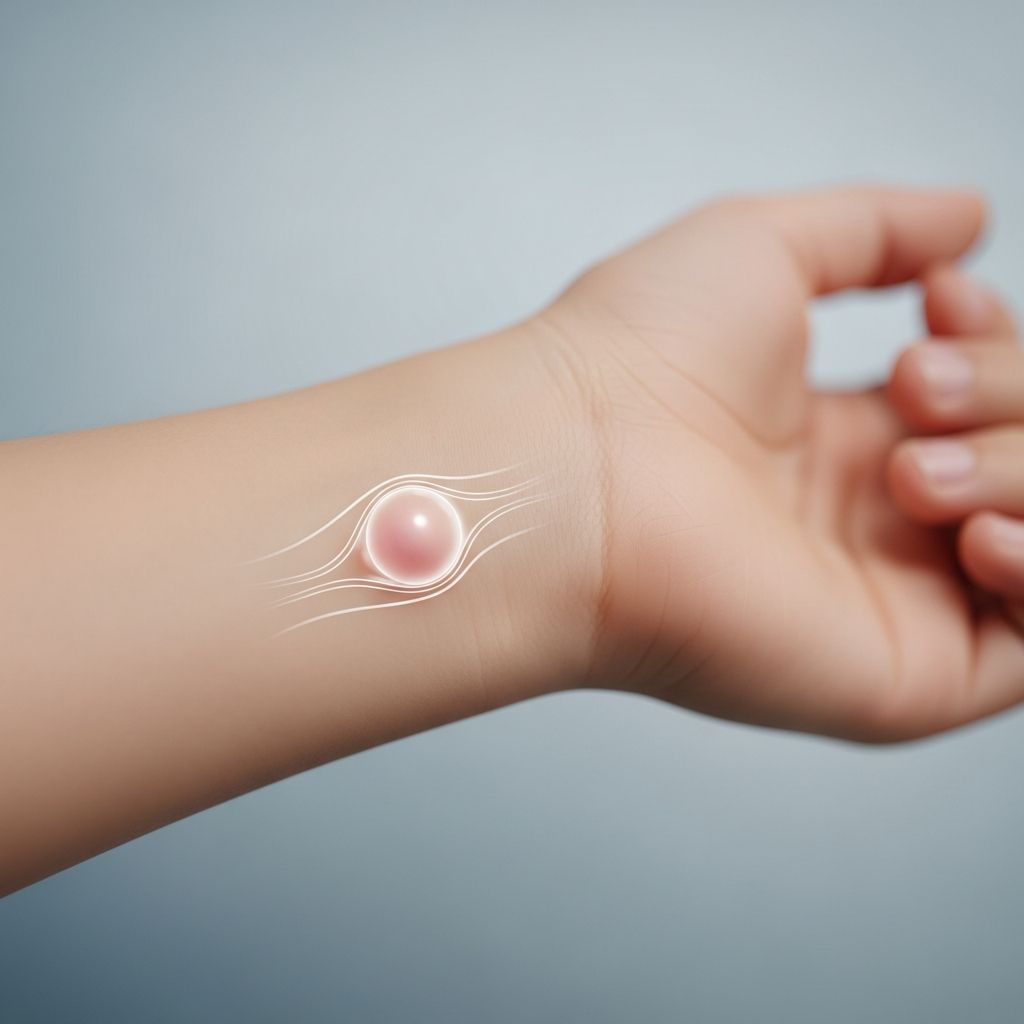
Finding a new lump on your child’s hand, wrist, foot, or ankle can be worrying. One of the most common painless lumps in these areas is a ganglion cyst – a noncancerous, fluid-filled bump that forms near a joint or tendon. This guide explains what ganglion cysts are, how they affect kids and teens, and what parents can expect from diagnosis and treatment.
What Is a Ganglion Cyst?
A ganglion cyst is a small sac filled with thick, jelly-like fluid that comes from the tissues around a joint or tendon. The fluid is similar to the normal lubricating fluid found inside joints.
- Benign: Ganglion cysts are noncancerous and do not spread to other parts of the body.
- Location: They usually appear on the back or front of the wrist, but may also develop on fingers, ankles, or feet.
- Texture: They may feel firm or slightly squishy depending on the amount of fluid and how close they are to the surface.
- Size: They can be as small as a pea or as large as a grape and may change size over time.
| Feature | Common Pattern |
|---|---|
| Nature | Benign, noncancerous soft tissue mass |
| Contents | Thick, clear, jelly-like fluid similar to joint lubricant |
| Common sites | Dorsal (back) wrist, volar (palm-side) wrist, base of fingers, ankle, foot |
| Symptoms | Often painless; may cause discomfort, tingling, or weakness if pressing on a nerve |
| Course | May grow, shrink, or disappear on their own; can recur after treatment |
How Common Are Ganglion Cysts in Kids?
Ganglion cysts are the most common soft-tissue mass found in the hand and wrist, including in children and adolescents. They are frequently seen by pediatricians and orthopedic specialists.
While they can appear at almost any age, they are especially common in:
- School-age children who are very active in sports, gymnastics, or music (such as piano or violin)
- Teens who use their hands repetitively for sports, video games, or instruments
What Causes Ganglion Cysts?
The exact cause is not fully understood, but several factors are thought to play a role.
Possible Triggers
- Joint or tendon irritation: Repeated motion or minor injury may cause the joint lining or tendon sheath to weaken, allowing fluid to bulge out and form a cyst.
- Small tears in tissue: A tiny tear in the capsule around a joint or tendon may let fluid escape into a sac under the skin.
- One-way valve effect: Some experts describe a valve-like opening that lets fluid move from the joint into the cyst but not back, allowing the cyst to enlarge.
In most children, there is no single clear event that explains why the cyst formed. Many appear gradually without a noticeable injury.
Signs and Symptoms Parents May Notice
Symptoms can range from no discomfort at all to pain or weakness, depending on the cyst’s size and location.
Common Visible Features
- A smooth, rounded lump near a joint or tendon, often on the wrist, hand, ankle, or foot
- A bump that may change in size over days or weeks, sometimes getting larger with activity and smaller with rest
- Skin over the lump that usually looks normal in color and is not warm or red
- A cyst that may feel firm but slightly springy to the touch
Possible Sensations and Functional Issues
- No pain: Many children have no discomfort at all and only notice the bump.
- Mild aching or tenderness: Some kids report an ache, especially after using the affected joint a lot (for example after gymnastics or sports practice).
- Pain with movement or pressure: Activities like pushing up from the floor, writing for long periods, or wearing tight shoes may be uncomfortable.
- Tingling, numbness, or weakness: If the cyst presses on a nearby nerve, your child may notice tingling, numb fingers or toes, or decreased grip strength.
Some ganglion cysts are so small that you cannot see or feel them easily. These “occult” cysts can still cause pain or weakness and may be found only with imaging tests.
How Are Ganglion Cysts Diagnosed?
A child’s doctor or pediatric orthopedic specialist can usually diagnose a ganglion cyst based on a physical exam and medical history.
Typical Office Evaluation
- Medical history: When the lump was first noticed, changes over time, and any pain, weakness, or injury to the area.
- Inspection and palpation: The doctor looks at the size, shape, and location of the lump and gently presses on it to see how it feels and whether it is tender or moves.
- Range of motion and strength: Your child may be asked to move the joint or squeeze the doctor’s hand to test for pain, stiffness, or weakness.
- Transillumination: Shining a light through the lump can help the doctor see if it is fluid-filled (light often passes through cysts).
Imaging Tests (When Needed)
Imaging is not always required, but may be used when the diagnosis is unclear or surgery is being considered.
- X-ray: Does not show the cyst itself, but can rule out bone problems, fractures, or arthritis.
- Ultrasound: Helps distinguish a fluid-filled cyst from a solid mass and can show its exact size and location.
- MRI: Gives detailed images of soft tissues and is useful for very small or deep cysts, or before surgery.
Do Ganglion Cysts Need Treatment?
Many ganglion cysts in children do not require any treatment. If the cyst is painless and does not interfere with normal activities, doctors often recommend a “watch and wait” approach.
Watchful Waiting (Observation)
Observation is usually the first step, especially for younger children.
- No urgent action: Because these cysts are benign and commonly go away on their own, immediate treatment is often unnecessary.
- Follow-up visits: Your child’s doctor may check the cyst periodically to monitor changes in size or symptoms.
- Activity as tolerated: Most kids can continue sports and normal play unless a specific movement is painful.
Non-Surgical Treatment Options
If the cyst causes pain, affects function, or is especially bothersome, non-surgical treatments may be considered.
Immobilization and Activity Modification
- Brace or splint: A temporary wrist or ankle brace can limit motion, which may reduce cyst size and discomfort in some children.
- Rest from triggering activities: Limiting high-impact or repetitive movements that strain the joint can decrease irritation.
Aspiration (Draining the Cyst)
For older children and teens, a doctor may recommend aspiration, in which fluid is withdrawn from the cyst using a sterile needle.
- Office-based procedure: Usually done with local anesthesia to numb the area.
- Quick recovery: Most kids can return to normal light activities shortly afterward.
- Recurrence possible: Even after successful aspiration, the cyst can refill with fluid over time, so recurrence is not unusual.
In some settings, a small amount of medication (such as a steroid) may be injected after aspiration to help reduce inflammation, though practices vary.
When Is Surgery Considered?
Surgical removal is usually reserved for cases where conservative measures are not enough.
Reasons a Specialist Might Recommend Surgery
- Persistent pain or weakness that interferes with daily life or sports
- Significant nerve compression causing numbness or tingling
- A cyst that keeps coming back after aspiration
- Rapid growth or uncertainty about the diagnosis
What Surgery Involves
- Procedure: The surgeon removes the cyst along with a small portion of the joint capsule or tendon sheath from which it arises.
- Anesthesia: Children typically receive regional or general anesthesia, depending on age and location.
- Recovery: A splint or bandage may be used for a short time. Most kids gradually return to normal activities over several weeks.
- Recurrence risk: Surgery lowers but does not completely eliminate the chance of the cyst returning.
Home Care and What Parents Should Avoid
Parents can support their child’s comfort and safety with simple measures, but certain popular “home remedies” are unsafe.
Helpful Home Measures
- Encourage your child to tell you about pain, tingling, or weakness in the area.
- Use over-the-counter pain relievers if recommended by your child’s doctor.
- Remind your child to limit movements that clearly make the cyst more painful.
- Help them use a brace or splint if one was prescribed.
Things Not to Do
- Do not hit or smash the cyst: Old-fashioned “Bible treatments” that involve striking the lump are dangerous and can damage bones, joints, or nerves.
- Do not try to pop or cut it at home: Attempting to puncture or drain the cyst yourself can cause infection and serious injury.
- Do not ignore rapidly changing lumps: If the lump grows quickly, becomes red, hot, or very painful, seek medical care.
Possible Complications and Long-Term Outlook
Most children with ganglion cysts do very well. Complications are uncommon when cysts are managed properly.
Potential Complications
- Nerve compression: Can cause numbness, tingling, or muscle weakness if the cyst presses on a nearby nerve.
- Limited joint motion: Large cysts or those near tendons may make movement uncomfortable or stiff.
- Cosmetic concerns: Some children and teens may feel self-conscious about the visible lump, even if it does not hurt.
- Recurrence: Cysts can return after aspiration or surgery, though many do not.
Prognosis
The overall outlook for children with ganglion cysts is excellent.
- Many cysts shrink or disappear over time without treatment.
- Most children can participate fully in school and sports.
- When treatment is needed, it is usually simple and safe, with low risk of serious problems.
When Should Parents Call the Doctor?
Contact your child’s healthcare provider if you notice any of the following:
- A new lump near a joint or tendon that you have not seen before
- A known ganglion cyst that:
- Becomes very painful
- Suddenly increases in size
- Is associated with numbness, tingling, or weakness in the nearby fingers or toes
- Shows signs of infection (redness, warmth, drainage, or fever)
Any lump in a child should be evaluated by a healthcare professional to confirm that it is a harmless cyst and not another condition.
Frequently Asked Questions (FAQs)
1. Are ganglion cysts cancer?
No. Ganglion cysts are benign (noncancerous) and do not turn into cancer. However, because other conditions can also cause lumps, it is important to have any new mass checked by a healthcare provider.
2. Can my child keep playing sports?
In many cases, yes. If the cyst is painless and does not interfere with movement or strength, kids can usually continue their regular activities. If a specific motion or sport makes the area hurt, the doctor may recommend a short break, bracing, or modifying activities until symptoms improve.
3. Will the cyst go away on its own?
It often can. Many ganglion cysts, especially in children, shrink or disappear without treatment over months to years. Others may stay the same size or fluctuate. If the cyst is causing problems, treatment options can be discussed with your child’s doctor.
4. Is surgery safe for children?
When performed by an experienced hand or orthopedic surgeon, ganglion cyst removal is generally a safe and routine procedure in both children and adults. As with any surgery, there are risks such as infection, stiffness, or recurrence, which your surgeon will explain in detail.
5. Can ganglion cysts come back after treatment?
Yes. Even after aspiration or surgical removal, there is a chance the cyst may recur. Recurrence risk tends to be higher after aspiration and lower after complete surgical excision, but no approach guarantees that the cyst will never return.
6. Do I need a specialist, or can our pediatrician handle this?
Many ganglion cysts can be evaluated and monitored by a pediatrician. If the diagnosis is uncertain, symptoms are significant, or surgery is being considered, your child may be referred to a pediatric orthopedic surgeon or a hand specialist for further care.
References
- Ganglion cyst – Symptoms and causes — Mayo Clinic. 2023-01-21. https://www.mayoclinic.org/diseases-conditions/ganglion-cyst/symptoms-causes/syc-20351156
- Ganglion Cyst of the Wrist and Hand — OrthoInfo, American Academy of Orthopaedic Surgeons (AAOS). 2022-09-01. https://orthoinfo.aaos.org/en/diseases–conditions/ganglion-cyst-of-the-wrist-and-hand/
- Ganglion Cyst — StatPearls, NCBI Bookshelf. 2023-07-24. https://www.ncbi.nlm.nih.gov/books/NBK470168/
- Ganglion cysts — Better Health Channel, State Government of Victoria. 2022-03-10. https://www.betterhealth.vic.gov.au/health/conditionsandtreatments/cysts-ganglion-cysts
- Ganglion cyst – causes, symptoms and treatment — Healthdirect Australia. 2022-06-30. https://www.healthdirect.gov.au/ganglion-cyst
- Ganglion Cysts: Causes, Symptoms, Diagnosis & Treatment — Cleveland Clinic. 2023-05-01. https://my.clevelandclinic.org/health/diseases/ganglion-cyst
- Ganglion Cyst — Yale Medicine Fact Sheets. 2021-11-15. https://www.yalemedicine.org/conditions/ganglion-cyst