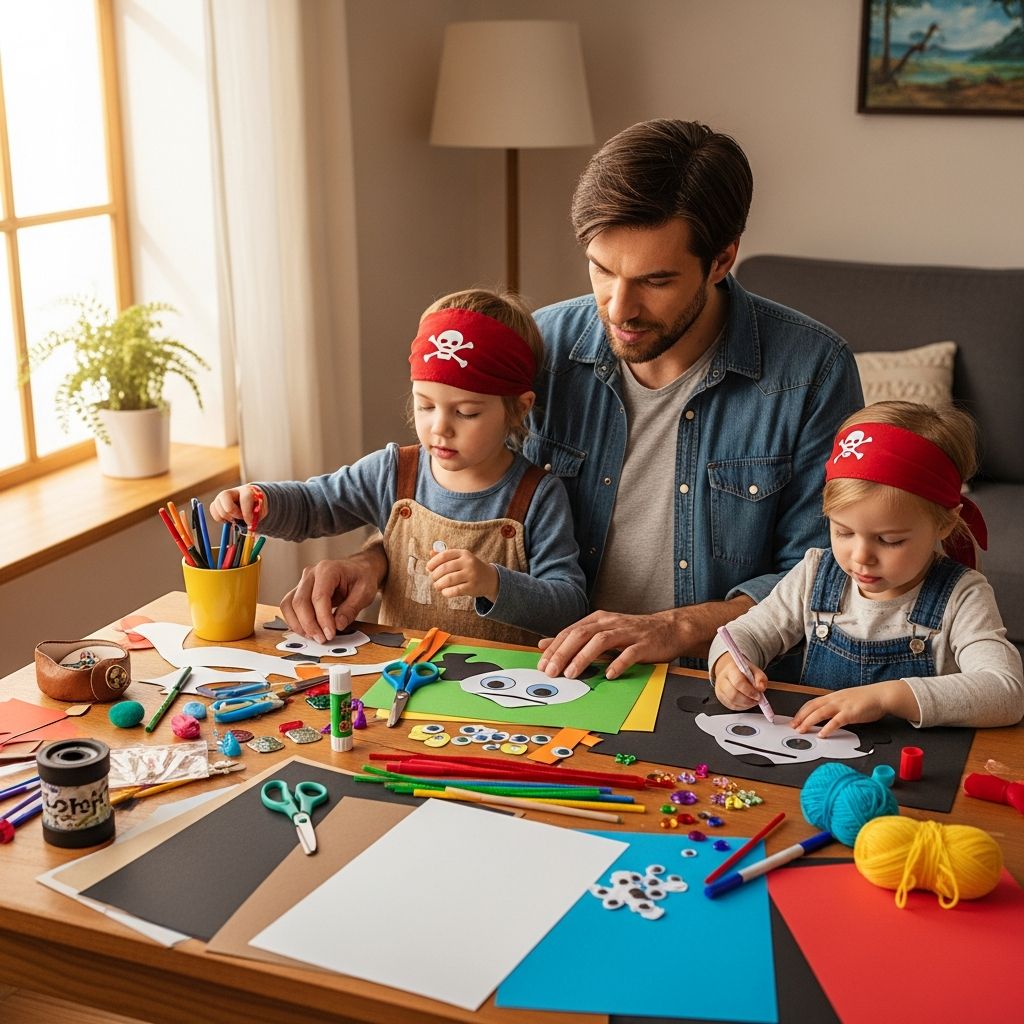
Pirates have a unique way of capturing kids’ imaginations, and a simple afternoon of crafting can turn an ordinary living room into a roaring high-seas adventure. This guide walks you through creative, low-stress pirate crafts and activities that families can enjoy together, from DIY hats and telescopes to treasure maps, games, and simple decorations.
Why Pirate Crafts Make Amazing Family Memories
Pirate crafts are more than just a way to fill a rainy afternoon—they blend storytelling, pretend play, and hands-on making in a way that appeals to a wide range of ages. Because most pirate projects are flexible and a bit imperfect by design, kids can take the lead while adults support, rather than the other way around.
- They encourage pretend play, storytelling, and cooperation among siblings and friends.
- They use simple, inexpensive supplies that many families already have at home.
- They can scale up or down in complexity depending on age and time.
Whether you are planning a full pirate party or just want to celebrate Talk Like a Pirate Day with your kids, the ideas below can be mixed and matched to fit your time, budget, and energy level.
Getting Ready: Pirate Craft Essentials
Before the adventure begins, gather a basic “craft chest” so you are not scrambling for tape while your little captain is midway through building a telescope. You do not need fancy materials—think about reusing and recycling what you already own.
Basic Supplies to Keep on Hand
- Paper goods: construction paper, printer paper, paper plates, paper bags, cardboard tubes.
- Tools: scissors (including kid-safe), glue sticks, white glue, tape, stapler, hole punch.
- Color: markers, crayons, colored pencils, washable paint, ink pads.
- Details: string or yarn, ribbon, stickers, aluminum foil, felt scraps, buttons.
- Recyclables: cardboard boxes, cereal boxes, egg cartons, bottle caps.
Place everything in a bin or basket and explain that this is the “crew’s supply chest.” Simply naming the supplies in pirate terms immediately sets a playful tone and helps children feel part of the project from the start.
Dress the Crew: Simple Wearable Pirate Crafts
Once kids look like pirates, they start acting like pirates—and that is where the real fun begins. Focus on easy, wearable crafts that can be assembled quickly and customized by each child.
DIY Pirate Hats Without Templates
Classic fold-up paper hats are simple, but you can also create more sturdy headwear from thin cardboard, allowing kids to decorate to their hearts’ content. Instead of aiming for perfect symmetry, present the hat as a canvas for personality.
- Cut a wide band of cardboard to fit around the child’s head and tape or staple the ends together.
- Cut a large, curved shape (like a cloud) from construction paper for the front “brim.”
- Attach the brim to the band and invite kids to color skulls, anchors, waves, or stars on it.
- Add ribbon “ties” or yarn for a bandana effect under the hat.
Tell older kids they are designing their pirate logo, just like sports teams have. This encourages them to think creatively and makes their hats feel special and unique.
Eye Patches, Belts, and Easy Accessories
No pirate costume feels complete without a few dramatic accessories. Keep things light, comfortable, and safe, especially around eyes and necks.
- Eye patches: Cut small felt or cardboard ovals, punch holes on the sides, and tie with soft yarn that rests above the ears instead of directly over the eyes for comfort.
- Belts and sashes: Use strips of fabric or long scarves as quick belts. Let kids tape on cardboard “buckles” they design themselves.
- Paper jewelry: Hole-punch cardboard circles and string them on yarn as “gold medallions” with child-drawn symbols.
If any accessory feels uncomfortable or distracting, treat it like a prop rather than a costume piece. The goal is imaginative play, not a perfectly screen-accurate outfit.
See the Horizon: Telescopes and Spyglasses
A homemade telescope or spyglass may be the most beloved pirate accessory, because it invites constant use during pretend play. Luckily, creating one is quick and uses items most homes already have.
Cardboard Tube Spyglass
You can make a simple, sturdy spyglass from a single long tube or by joining two together. The decorating process is as fun as the result, so give children plenty of time to personalize their creation.
- Use a clean paper towel tube or tape two shorter tubes together for extra length.
- Wrap the tube in paper or paint it in deep browns, blues, or metallic tones.
- Glue on strips of foil or paper “rings” near the ends to mimic metal fittings.
- Optional: tape colored cellophane over one end so everything looks tinted when viewed.
Encourage kids to shout out what they “spot” through their spyglass: distant islands in the backyard, enemy ships in the hallway, or storm clouds over the couch. The telescope quickly becomes a storytelling tool, not just a craft.
Hidden Riches: Home-Made Treasure Maps and Chests
Treasure is at the heart of most pirate stories, so putting kids in charge of creating the treasure and the map builds ownership of the game that follows. The process can be gentle for younger kids or more elaborate for older ones.
Creating Aged Pirate Maps
Start with plain paper and turn it into something that feels like it has survived storms and sea battles. The focus is on texture and symbols, not artistic perfection.
- Crumple and smooth the paper several times to create creases.
- Lightly rub with a dry tea bag or diluted brown paint for a worn look.
- Invite kids to draw landmarks they know: sofas as mountains, bookshelves as forests, the mailbox as a cave.
- Mark the final treasure spot with a bold “X,” then add a path in dotted lines.
For pre-writers, encourage them to use symbols and stickers rather than words. Older children can add goofy labels or secret codes to increase the challenge.
DIY Treasure Containers
A full wooden chest is not necessary to make treasure hunting exciting. Smaller, decorated containers are easy for children to handle and offer chances to practice fine motor skills.
- Use egg cartons, small cardboard boxes, or lidded food containers as the base.
- Paint or cover them with colored paper, then glue on “metal” strips made from foil.
- Fill them with buttons, plastic coins, beads, or homemade paper jewels.
Let children hide their own treasure and swap maps with siblings or friends. This interactive twist ensures everyone gets a chance to be both treasure hider and treasure hunter.
Turn the Room into a Ship: Easy Pirate Decorations
Transforming your space, even in small ways, helps kids suspend disbelief and dive deeper into the story. Instead of decorating every corner, choose a single focal area—such as the dining table or a blanket-fort “ship.”
Quick Décor Ideas for Any Room
- Flag corner: Provide black and white paper so kids can design their own pirate flags, then tape them to straws or chopsticks and place them in jars.
- Wave walls: Cut wavy strips of blue paper and tape them along the bottom of a wall or table to suggest crashing waves.
- Rope details: Use twisted yarn or string to frame doorways or the edge of a “deck” area.
Invite kids to give each area a ship-related name, such as “Captain’s Deck” for the dining table or “Crow’s Nest” for a reading chair. This sparks more imaginative action without requiring additional craft time.
Pirate Games that Use Your Crafts
Once the accessories and décor are in place, shift into games that use what your family has made. This keeps the momentum going and shows kids that their creations have a purpose.
Treasure Hunt with a Twist
Use the home-made maps to guide kids through a simple treasure hunt. Keep instructions light and playful, leaving lots of room for silliness and improvisation.
- Hide the decorated treasure containers around your home or yard.
- Give each child or team a map with clear visual cues.
- Add short “challenges” at each stop, such as hopping like a frog, walking the plank (a taped line on the floor), or shouting a pirate phrase.
For very young children, place treasures in obvious locations and focus on the joy of discovering and opening containers. You can always reuse the same containers for new hunts over time.
Walk the Plank (Safely)
“Walking the plank” can be a simple balance game using items you already have. Safety should always come first, so keep everything low to the ground and well supported.
- Use painter’s tape to make a straight line on the floor as a beginner plank.
- For older kids, place a sturdy board on the ground and add gentle obstacles like soft toys to step over.
- Challenge kids to cross while balancing a small stuffed animal on their shoulder like a parrot.
Consider adding music during this game. Stopping and freezing when the music pauses adds another layer of fun and helps kids practice control and focus.
Sample Pirate Craft Planning Table
Use the table below to mix and match projects based on your time and the ages of the children involved.
| Activity | Approx. Time | Best For Ages | Main Skills Practiced |
|---|---|---|---|
| DIY Pirate Hat | 20–30 minutes | 4–10 years | Cutting, drawing, pattern design |
| Cardboard Spyglass | 15–20 minutes | 3–9 years | Decorating, fine motor control |
| Treasure Map | 25–35 minutes | 5–12 years | Symbol use, planning, storytelling |
| Treasure Hunt Game | 20–40 minutes | All ages with adult help | Cooperation, problem solving, movement |
| Room Decorations | 15–30 minutes | 3–10 years | Creative thinking, spatial awareness |
Making Pirate Crafts Inclusive and Low-Stress
Every family is different, and not all kids enjoy cutting, gluing, or wearing costumes in the same way. A flexible approach ensures that your pirate adventure feels welcoming rather than demanding.
- Offer choices: some children might prefer drawing maps, while others enjoy building props.
- Allow quiet roles: not everyone needs to be the captain—map-makers and lookout scouts are equally important.
- Skip anything that causes frustration, and treat all crafts as optional invitations rather than assignments.
Remind kids that pirates in stories are often misfits and oddballs, which means there is no single correct way to look or act like a pirate. This message helps children feel more confident and creative.
Easy Ways to Add Learning Without Losing the Fun
While the focus is on creativity and connection, pirate crafts offer natural chances to sneak in age-appropriate learning. There is no need to turn the day into a lesson plan; simply highlight ideas as they arise.
- Map-making introduces basic geography concepts like symbols, paths, and landmarks.
- Cooperative games build communication skills as kids negotiate rules and roles.
- Measuring cardboard strips or counting steps during a treasure hunt brings in simple math.
If kids are especially curious, you might briefly discuss how real sailors used stars for navigation or how different cultures have stories about the sea. Keep things light and story-oriented rather than focusing on strict historical accuracy.
FAQs About Family Pirate Craft Days
How much time do we need for a pirate craft session?
You can pull together a mini adventure in about an hour: 20 minutes for simple accessories such as hats or spyglasses, 20 minutes for treasure maps, and 20 minutes for a short treasure hunt. If your family is enjoying the process, you can easily stretch it into an afternoon by adding decorations and extra games.
What if we have very different ages in the same group?
Give older kids leadership roles and more detailed tasks—such as drawing complex maps or designing game rules—while younger children color, glue, and collect treasure. Pairing siblings as “crews” can reduce competition and encourage cooperation, especially when everyone shares a common goal like finding the final chest.
Are there low-mess options for small spaces?
Yes. Focus on paper-only projects such as hats, flags, and hand-drawn maps using crayons or markers, and skip paint and glitter. A tape “plank” on the floor and a single hidden treasure container are enough to create a full story without requiring much cleanup.
Can we combine pirate crafts with a birthday or classroom party?
Pirate crafts transition beautifully into party settings, because they double as both activities and favors. Kids can make a hat or spyglass at the start of the party, wear or use it during games, and then take it home as a souvenir instead of receiving a separate goody bag.
Do we need to use traditional pirate phrases?
Talking in character can be hilarious, but it is optional. Some children love saying silly phrases in a pirate voice, while others may feel shy, so treat it as a game rather than a requirement. Simple prompts like “What would your pirate name be?” can invite participation without putting anyone on the spot.
Setting Sail on Your Own Pirate Story
The best pirate craft day is not about perfectly executed projects; it is about the stories, inside jokes, and shared effort that grow while you cut, color, tape, and explore together. With a few basic supplies and a willingness to be a little silly, your family can transform an ordinary afternoon into a memorable voyage filled with handmade hats, maps, telescopes, and laughter.