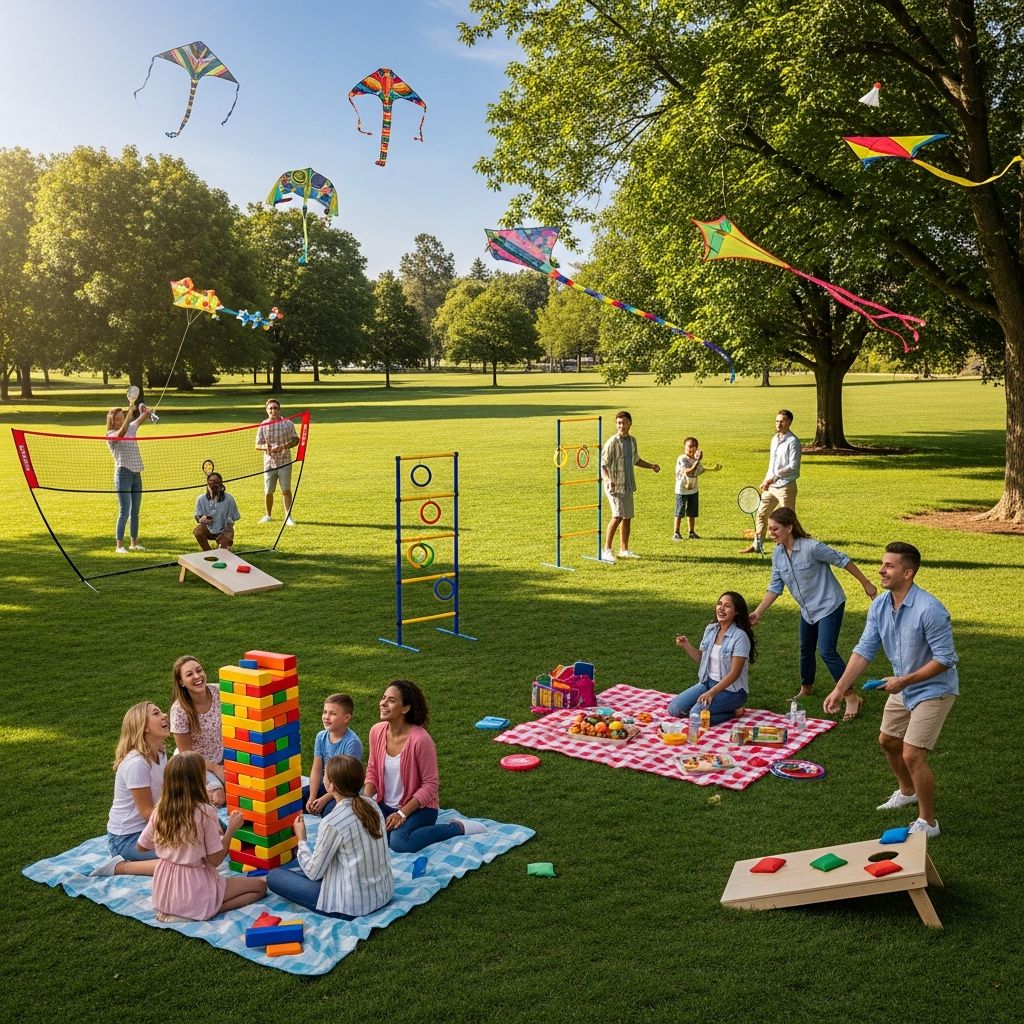
Engaging children in outdoor activities is essential for their physical development, social skills, and overall well-being. According to the Centers for Disease Control and Prevention (CDC), children aged 6-17 need at least 60 minutes of moderate-to-vigorous physical activity daily to support healthy growth and reduce obesity risks. The American Academy of Pediatrics (AAP) emphasizes that unstructured outdoor play enhances creativity, problem-solving, and emotional regulation. This article presents original ideas for outdoor games inspired by timeless favorites, adaptable for backyards, parks, or picnics, ensuring fun for all ages while meeting these health guidelines.
Why Outdoor Play Matters for Children and Families
Outdoor games offer more than entertainment; they build resilience and family ties. Research from the National Institutes of Health (NIH) shows that regular outdoor activity improves sleep quality, attention spans, and vitamin D levels, crucial for bone health. Families who play together report stronger bonds, as shared laughter and challenges create cherished memories. In an era of screen dominance, these games counteract sedentary habits, with the World Health Organization (WHO) recommending at least 150 minutes of weekly family physical activity. Start simple: gather basic items like balls, ropes, or chalk, and watch engagement soar.
Action-Packed Challenges to Build Strength and Speed
Games that involve running, jumping, and dodging ignite energy and coordination. These activities mimic natural movements, promoting gross motor skills as outlined in AAP play guidelines.
- Custom Obstacle Relay: Design a course with household items—crawl under tables, balance on logs, leap over ropes. Time each participant or team for competitive fun. Add variations like blindfolds for trust-building.
- Relay Race Madness: Divide into teams for baton passes involving wheelbarrow walks or three-legged races using scarves tied at ankles. Ideal for parks with open space.
- Freeze Dance Dash: Play music; dancers freeze on pause. Last mover out. Incorporate playsets for safe zones, enhancing agility.
These games scale for ages 4+, with supervision ensuring safety on varied terrains.
Strategy Games That Spark Teamwork and Smarts
Team-based play teaches collaboration and planning. NIH studies link such games to improved cognitive function and social competence.
- Flag Guard Challenge: Split into teams; hide fabric flags in territories. Raid enemy zones to capture while defending your own. Use natural landmarks as boundaries.
- Target Precision Toss: Set bottles or cones at distances; toss bean bags or hoops. Score points by color-coded hits. Great for all skill levels.
- Boundary Ball Battle: Mark squares with chalk; bounce balls into opponents’ zones. Advance by outlasting errors, fostering quick decisions.
| Game | Players | Space Needed | Skills Developed |
|---|---|---|---|
| Flag Guard | 6+ | Large yard/park | Strategy, stealth |
| Target Toss | 2+ | Small area | Aim, patience |
| Boundary Ball | 4+ | Medium yard | Reaction time |
Exploration Adventures for Curious Minds
Scavenger hunts tap into children’s innate curiosity, aligning with CDC recommendations for exploratory play.
- Nature Quest Hunt: List items like pinecones, red leaves, or smooth stones. First team to collect wins prizes like extra playtime.
- Color Code Chase: Hunt specific colors or shapes in nature. Photograph finds for a digital album, blending tech with outdoors.
- Alphabet Outdoors: Find objects starting with each letter. Turns walks into learning adventures.
These promote observation and environmental awareness, with WHO noting nature exposure reduces stress.
Cool-Down Classics with a Twist
Water and low-impact games prevent overheating, vital per AAP summer safety tips.
- Balloon Pass Relay: Toss water-filled balloons between partners, stepping back each catch. Last dry duo wins.
- Hoop Hurdle Course: Lay hoops; hop through without touching edges. Time trials add thrill.
- Fortress Builders: Construct bases from boxes, tarps, and sticks. Defend with soft balls in sieges.
Evening Glow Games for Extended Play
As dusk falls, light up fun. Flashlight variants extend play, supporting NIH’s activity-anytime advocacy.
- Shadow Tag Pursuit: ‘It’ tags with flashlight beams at night. Playsets as safe havens.
- Glow Stick Soccer: Attach lights to balls for nighttime kicks in goals made from cones.
Picnic-Perfect Group Activities
Ideal for gatherings, these emphasize inclusivity.
- Rope Pull Showdown: Teams tug ropes over a centerline flag. Builds unity.
- Slipper Fling Contest: Kick shoes farthest; measure distances for laughs.
- Water Chain Transfer: Pass water hand-to-hand between buckets without spilling.
Customizing Games for Every Age and Ability
Adapt for toddlers (simple tosses), school-age (teams), and teens (complex rules). Inclusive tweaks like seated versions ensure everyone joins, per AAP inclusivity guidelines. Safety first: apply sunscreen, hydrate, and check weather.
Frequently Asked Questions
What equipment do I need for these outdoor games?
Most use household items: balls, ropes, chalk, hoops. Budget sets like bocce enhance options without excess cost.
How can I make games safe for young children?
Supervise closely, use soft materials, set clear boundaries, and match intensity to ages. Follow CDC injury prevention tips.
Are these games suitable for small backyards?
Yes—scale down with mini-courses or precision tosses. Parks expand possibilities.
How often should families play outdoors?
Aim for daily 60-minute sessions per child, as recommended by WHO and CDC.
Can these games teach valuable skills?
Absolutely—teamwork, coordination, and problem-solving, backed by NIH research.
References
- Physical Activity Guidelines for Americans — Centers for Disease Control and Prevention. 2023-05-01. https://www.cdc.gov/physicalactivity/basics/children/index.htm
- The Importance of Play in Promoting Healthy Child Development — American Academy of Pediatrics. 2024-01-15. https://publications.aap.org/pediatrics/article/119/1/182/70699/The-Importance-of-Play-in-Promoting-Healthy-Child
- Outdoor Play and Child Development — National Institutes of Health. 2022-11-10. https://www.ncbi.nlm.nih.gov/pmc/articles/PMC2385784/
- WHO Guidelines on Physical Activity and Sedentary Behaviour — World Health Organization. 2020-11-26. https://www.who.int/publications/i/item/9789240015128
- Family Physical Activity Benefits — American Academy of Pediatrics. 2023-07-20. https://www.aap.org/en/patient-care/healthy-active-living-for-families/
- Play and Mental Health — National Institutes of Health. 2024-03-05. https://www.nimh.nih.gov/health/topics/child-and-adolescent-mental-health
- Global Recommendations on Physical Activity — World Health Organization. 2022-06-12. https://www.who.int/news-room/fact-sheets/detail/physical-activity