Fruit coloring pages are more than a quick way to keep kids busy; they can become a playful gateway to learning about colors, healthy foods, and the world around them. When used thoughtfully, these simple printables support early development while giving children a creative outlet.
Why Fruit Coloring Pages Are So Engaging
Children are naturally drawn to familiar objects, and fruit is something they see in lunch boxes, grocery carts, and kitchen bowls. Coloring pages featuring apples, bananas, berries, and other fruit feel friendly and approachable, making it easy for kids to dive into the activity. The bright colors and simple shapes make fruit an ideal theme for beginners and more advanced young artists alike.
Because fruit comes in many colors, sizes, and textures, it encourages kids to experiment with crayons, markers, and colored pencils. Even a basic page can turn into a creative exploration of stripes, dots, patterns, and imaginative color choices, all while building confidence with art materials.
Developmental Benefits of Fruit Coloring Activities
Coloring may look like play, but it supports important skills that children need for school readiness and everyday life. Fruit-themed pages offer the same benefits as other coloring sheets, with the added bonus of connecting directly to healthy eating and real-world objects.
- Fine motor skills: Gripping coloring tools and filling small spaces helps strengthen hand muscles used later for writing and cutting.
- Hand–eye coordination: Trying to stay within the lines trains the eyes and hands to work together smoothly.
- Concentration and patience: Completing a full page encourages kids to stick with a task from start to finish.
- Color recognition: Choosing and naming colors while working with red strawberries, yellow bananas, or green pears reinforces early color knowledge.
- Confidence and pride: Finishing a page gives children a sense of accomplishment they can share with family or display at home.
Teaching Healthy Habits Through Coloring
Fruit coloring pages naturally open the door to conversations about food choices and nutrition. As children color a bowl of fruit or a single piece like an orange or kiwi, caregivers can talk casually about taste, texture, and why fruits help bodies grow strong.
These low-pressure discussions can help picky eaters become more comfortable with unfamiliar foods. When kids spend time coloring a new fruit, they may be more curious about tasting it later, especially if they helped choose it in the store or picked it out in a picture book.
Ideas for Using Fruit Coloring Pages at Home
At home, fruit coloring pages fit seamlessly into everyday routines. You can use them during quiet time, as part of a homeschool lesson, or simply as a calm activity while dinner is cooking. A few small tweaks can turn basic coloring sheets into meaningful learning experiences.
- Snack-time connection: Offer a fruit snack that matches the picture your child is coloring, and talk about how it smells, feels, and tastes.
- Kitchen display: Hang completed pages on the fridge as a rotating art show to celebrate your child’s effort.
- Story prompts: Ask your child to invent a short story about the fruit character or scene in the picture after they finish coloring.
- Quiet corner activity: Keep a small basket with coloring pages, crayons, and a clipboard ready for calm, independent play.
Classroom Uses for Fruit Coloring Pages
In a classroom, fruit coloring pages can support lessons in science, language arts, and health. Because fruit is a universal theme, these pages work well for mixed-age groups, multilingual learners, and varied skill levels. They also make quick, low-prep centers and early-finisher tasks.
- Morning work: Place a simple fruit page on each desk as students arrive to ease the transition into the school day.
- Literacy tie-ins: Pair coloring with fruit-themed picture books, then ask students to color the fruit that appears in the story.
- Science connections: Use pages to illustrate plant parts, seed types, or the difference between tropical and temperate fruits.
- Bulletin boards: Create a classroom fruit garden display featuring students’ colored pages and labels they have written themselves.
Simple Types of Fruit Coloring Pages
There is a wide range of fruit coloring designs, from very simple outlines for toddlers to detailed scenes for older children. Choosing the right type helps keep kids engaged without causing frustration.
| Page Style | Best For | Key Features |
|---|---|---|
| Single-fruit outline | Toddlers and young preschoolers | Large shapes, thick lines, plenty of open space for broad strokes. |
| Fruit groups and bowls | Preschool and kindergarten | Multiple fruits on one page, simple overlapping shapes, opportunities for color sorting. |
| Fruit scenes | Early elementary | Fruit trees, markets, or picnic scenes with extra details like baskets and leaves. |
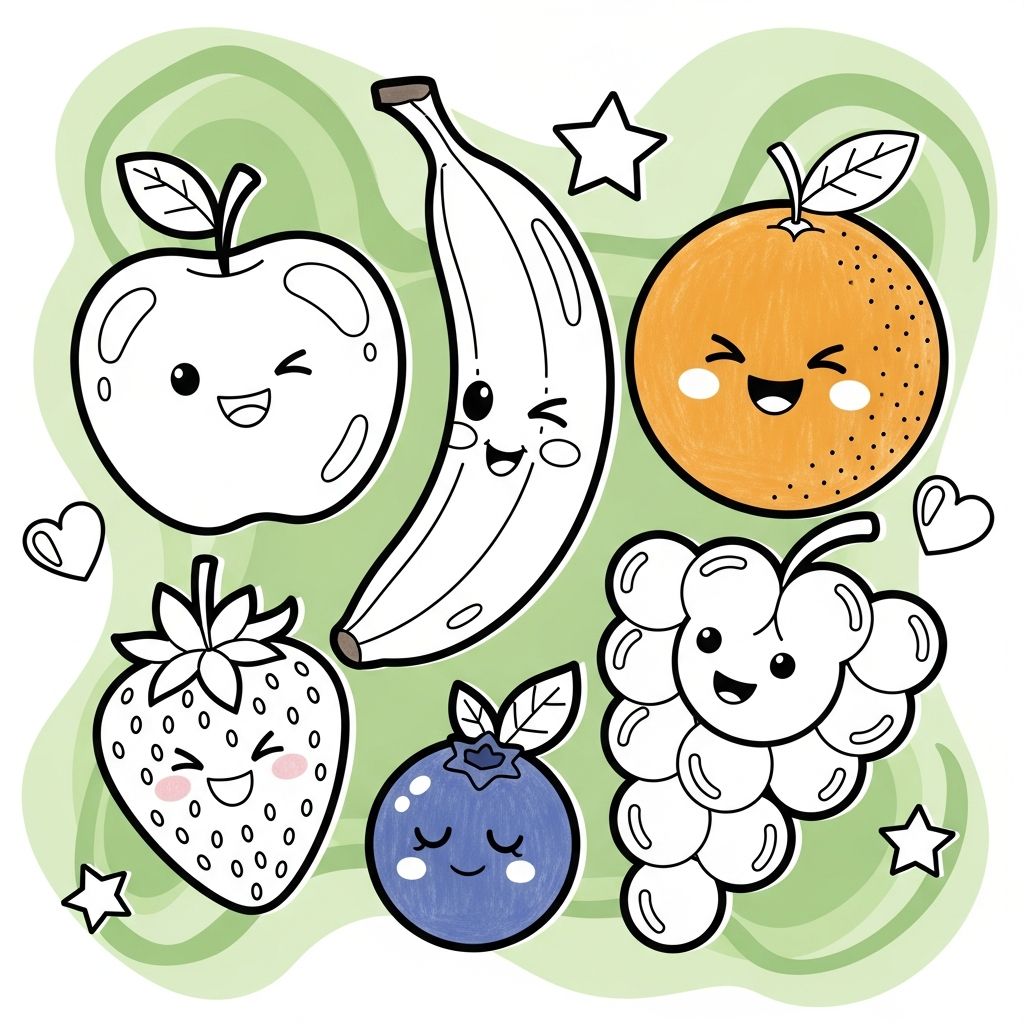
| Cartoon fruit characters | All ages | Smiling faces, accessories, and expressive poses that invite storytelling. |
| Patterned and detailed fruit | Older children | Intricate patterns, small sections, and shading opportunities for longer, focused coloring sessions. |
Linking Fruit Coloring Pages to Early Literacy
Fruit coloring sheets can double as early literacy tools when combined with letters and simple words. Adding labels, tracing lines, or short sentences introduces print in a gentle, familiar context, which can be less intimidating for new readers.
- Write the fruit name at the top or bottom of the page and invite your child to trace or copy it.
- Ask children to circle the first letter of the fruit’s name and say the sound aloud together.
- Create a mini “fruit alphabet” book by stapling pages together, one fruit for each letter you can match.
- Encourage older kids to write a descriptive sentence about the fruit, such as its taste or the way it grows.
Fun Variations and Creative Twists
To keep fruit coloring activities fresh, try small variations that add novelty and excitement. Changing art materials, mixing in simple crafts, or combining pages with movement breaks can help maintain interest over time.
- Mixed media: Add torn paper, stickers, or watercolor washes over crayon designs to create textured fruit art.
- Cut-and-paste fruit salad: Have kids color multiple fruit pages, cut out the shapes, and glue them onto a larger paper bowl.
- Color challenges: Ask children to color fruit in unexpected colors, then talk about why that would or would not happen in real life.
- Matching games: Print smaller versions of pages, color them together, and use them as cards for memory or sorting activities.
Age-by-Age Suggestions
Every age group benefits from coloring in slightly different ways, so tailoring fruit pages to your child’s stage makes activities more enjoyable. You can gradually increase the level of detail and the complexity of related tasks as your child grows.
- Toddlers: Offer thick crayons and large, simple fruit outlines. Focus on enjoying colors and big movements rather than staying in the lines.
- Preschoolers: Introduce basic discussion about fruit names, colors, and simple counting (like counting grapes or seeds on a strawberry).
- Kindergarten: Add tracing, simple word labels, and basic sorting tasks such as grouping fruits by color or size.
- Early elementary: Encourage detailed coloring, written descriptions, and small research projects about where different fruits grow.
Practical Tips for Parents and Teachers
A few practical strategies make fruit coloring time smoother and more successful for adults and kids. Having materials ready ahead of time and setting expectations reduces mess and frustration, especially in group settings.
- Prepare a small bin with sharpened pencils, crayons, and markers dedicated to coloring so kids can get started quickly.
- Print extra pages so children who finish early can continue creating without waiting.
- Offer positive feedback about effort and creativity rather than commenting on staying in the lines.
- Allow children to choose their own colors, even if they do not match real fruit, to support imagination and ownership.
Frequently Asked Questions About Fruit Coloring Pages
Do kids learn anything from coloring fruit, or is it just for fun?
Coloring fruit is definitely fun, but it also builds fine motor skills, concentration, color recognition, and early vocabulary. When adults engage in conversation during coloring, kids pick up new words and concepts almost without noticing.
What ages are fruit coloring pages best suited for?
Fruit coloring pages can work for a wide range of ages, from toddlers to early elementary students. The key is to choose designs that match your child’s abilities—larger, simpler shapes for younger children and more detailed scenes for older kids.
How can I make coloring feel less like a worksheet and more like play?
Keep the mood light by offering choices, rotating art supplies, and sitting down to color alongside your child when you can. Adding music, stories, or snack-time themes can also make the activity feel more like a game than a task.
Can fruit coloring pages help with picky eating?
Coloring alone will not change eating habits overnight, but it can gently increase a child’s comfort and curiosity around new fruits. When coloring is combined with talking, shopping together, and preparing simple recipes, children often become more open to tasting.
What supplies work best for fruit coloring pages?
Crayons are ideal for younger children because they are sturdy and easy to grip, while older kids may enjoy colored pencils or washable markers for finer details. Using a mix of tools keeps coloring interesting and allows children to experiment with different textures and shading.