Frozen baby food provides a practical solution for parents aiming to deliver nutrient-rich meals without daily preparation hassles. By capturing produce at peak freshness, freezing locks in essential vitamins and minerals, making it a reliable choice for infant nutrition.
Why Choose Frozen Baby Food for Your Infant?
Frozen baby food stands out for its ability to maintain nutritional integrity while fitting seamlessly into modern family life. When fruits and vegetables are flash-frozen shortly after harvest, they retain higher levels of vitamins like C and E compared to some fresh produce stored for days. This process halts enzymatic breakdown, preserving antioxidants and minerals such as calcium, magnesium, and iron that support growth and immunity.
Busy parents appreciate the time savings. Batch-preparing purees allows stocking the freezer with weeks’ worth of meals, reducing waste and ensuring variety without frequent shopping. Unlike shelf-stable pouches exposed to high-heat processing—which can degrade up to 50% of certain nutrients—frozen options avoid such losses, offering food as nutritious as freshly made purees when handled correctly.
- Nutrient Preservation: Flash-freezing captures peak ripeness, often surpassing out-of-season fresh items in nutrient density.
- Cost-Effectiveness: Homemade frozen batches use seasonal produce at lower prices, avoiding additives in commercial products.
- Versatility: Customize blends for allergies, textures, or stage-appropriate introductions, from single-ingredient purees to complex meals.
- Teething Relief: Frozen chunks soothe gums while delivering hydration and vitamins.
Studies confirm frozen produce matches or exceeds fresh in key nutrients, making it ideal for babies starting solids around 6 months.
Understanding the Advantages Over Other Baby Food Options
| Option | Nutrient Retention | Convenience | Cost | Safety Notes |
|---|---|---|---|---|
| Frozen Homemade | High (flash-frozen at peak) | Batch prep, grab-and-go | Low | Control ingredients; low bacteria risk if thawed properly |
| Fresh Daily | High if immediate use | Daily labor-intensive prep | Variable | Freshness-dependent |
| Pouches/Jars | Medium (heat-processed) | Very high | Medium-High | May contain sugars/additives |
| Store Frozen | High | High | Medium | Check for additives; expiration dates |
This comparison highlights frozen baby food’s balance of nutrition and ease, outperforming processed alternatives in purity and value.
Safe Preparation Techniques for Freezing Baby Food
Start with ripe, organic produce when possible to minimize pesticides, though conventional works if thoroughly washed. Wash hands, utensils, and surfaces to prevent contamination. Steam or boil vegetables and fruits until soft, then blend into smooth purees suitable for your baby’s age—thinner for beginners, thicker for older infants.
- Select fresh ingredients and cook promptly.
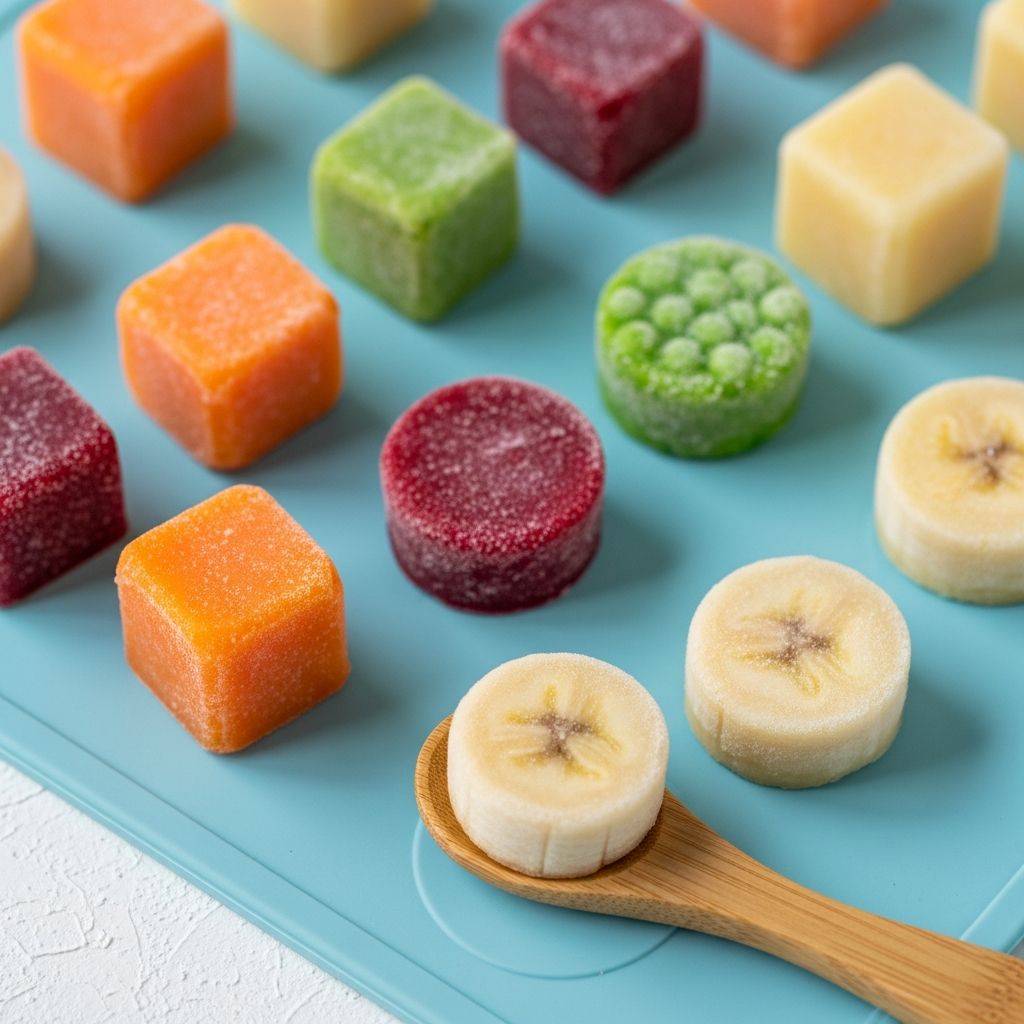
- Cool completely before portioning into freezer-safe containers or ice cube trays (1-2 oz per cube).
- Seal airtight to prevent freezer burn; label with date and contents.
- Freeze at 0°F (-18°C) or below immediately.
Avoid freezing dairy, eggs, or meats unless fully cooked, as they pose higher bacterial risks. Citrus and high-water fruits like watermelon may separate upon thawing but remain safe.
Optimal Storage Practices to Maintain Quality
Store frozen baby food at consistent 0°F; quality peaks within 1-3 months, though safe up to 6. Organize by date, using oldest first. Dedicate freezer space away from raw meats to avoid cross-contamination.
- Use silicone trays or glass jars with straight sides for easy release.
- Leave headspace for expansion.
- Avoid door storage due to temperature fluctuations.
Proper packaging prevents oxidation, keeping flavors vibrant and nutrients intact.
Recognizing and Addressing Potential Risks
While generally safe, risks include bacterial growth if mishandled. Frozen produce has low contamination rates, but pathogens like Listeria or Salmonella can persist; always cook vegetables before serving. Freezer burn—dry, grayish spots—alters taste but not safety; trim affected areas.
Signs of spoilage post-thaw: off odors, sliminess, or excessive separation. Discard immediately. Commercial frozen foods may carry additives; opt for transparent labels.
CDC advises limiting sodium-heavy frozen dinners for toddlers. Infants under 12 months should avoid honey, cow’s milk, and unpasteurized items, even frozen.
Step-by-Step Thawing and Serving Guidelines
Thaw overnight in the fridge (safest method) or under cool running water for quicker use. Never at room temperature to curb bacteria. Reheat gently on stovetop or microwave, stirring and testing temperature on your wrist—aim for 165°F internally.
- Do not refreeze thawed portions.
- Serve immediately; discard leftovers.
- For teething, offer frozen pieces in mesh feeders.
Heating eliminates most pathogens, crucial for vulnerable infants.
Comparing Homemade vs. Store-Bought Frozen Baby Food
Homemade allows full control: no sugars, salts, or allergens. Economical and customizable. Store-bought offers variety and convenience but scrutinize for pure ingredients—avoid those with thickeners or sweeteners. Organic reduces pesticide exposure slightly, though washing suffices.
| Aspect | Homemade | Store-Bought |
|---|---|---|
| Ingredients | 100% customizable, no additives | Varies; check labels |
| Cost per Serving | $0.20-0.50 | $1-2 |
| Nutrient Control | Optimal if fresh-sourced | High if flash-frozen |
| Time Investment | Initial batching | None |
Both excel when chosen wisely.
Age-Appropriate Ideas for Frozen Meals
For 6-8 months: Single purees like carrot, sweet potato, or apple. 8-10 months: Mix-ins like pea-spinach or banana-oat. 10+ months: Chunkier blends with proteins like lentil-pumpkin. Introduce one new food every 3-5 days to monitor allergies.
- Stage 1: Avocado, pear, butternut squash.
- Stage 2: Blueberry-beet, chicken-veggie.
- Stage 3: Salmon-spinach mash.
Rotate colors for broad nutrition.
Frequently Asked Questions
How long does frozen baby food last?
For best quality, use within 1-3 months; safe up to 6 months if properly stored.
Is frozen produce safe for babies?
Yes, low bacterial risk; cook veggies and check for spoilage. Rare recalls highlight heating importance.
Can I microwave frozen baby food?
Yes, but stir and test temperature to ensure even heating.
Should I choose organic for freezing?
Organic lowers pesticide risk slightly, but washed conventional is fine.
Can I freeze breast milk with baby food?
Freeze separately; mix after thawing for nutrition boost.
What if thawed food smells off?
Discard to avoid risks.
References
- Safety Concerns for Frozen Baby Foods — Retail Journey. 2023. https://retailjourney.com/safety-concerns-for-frozen-baby-foods
- Pros and Cons of Freezing Baby Food — Freezer Labels. 2023. https://www.freezerlabels.net/blog/freezing-baby-food/
- The Truth About Frozen Baby Food: Healthier, Easier, and Tastier! — Nourishing Bubs. 2023. https://www.nourishingbubs.com/blogs/news/the-truth-about-frozen-baby-food-healthier-easier-and-tastier
- Are Frozen Fruits and Vegetables Healthy for Babies? — Malina Malkani. 2023. https://www.malinamalkani.com/blog/are-frozen-fruits-and-vegetables-healthy-for-babies
- Types of Baby Food & Benefits of Frozen Baby Food — Little Bellies. 2023. https://littlebellies.com/learn-play/frozen-baby-food-benefits/
- Are Frozen Fruits and Vegetables Healthy and Safe? — Consumer Reports. 2023-10-19. https://www.consumerreports.org/health/food-safety/are-frozen-fruits-and-vegetables-healthy-and-safe-a1002196402/
- Challenges and Considerations When Balancing the Risks of … — PMC (NIH). 2018-11-15. https://pmc.ncbi.nlm.nih.gov/articles/PMC6266946/
- Foods and Drinks to Avoid or Limit | Infant and Toddler Nutrition — CDC. 2025. https://www.cdc.gov/infant-toddler-nutrition/foods-and-drinks/foods-and-drinks-to-avoid-or-limit.html