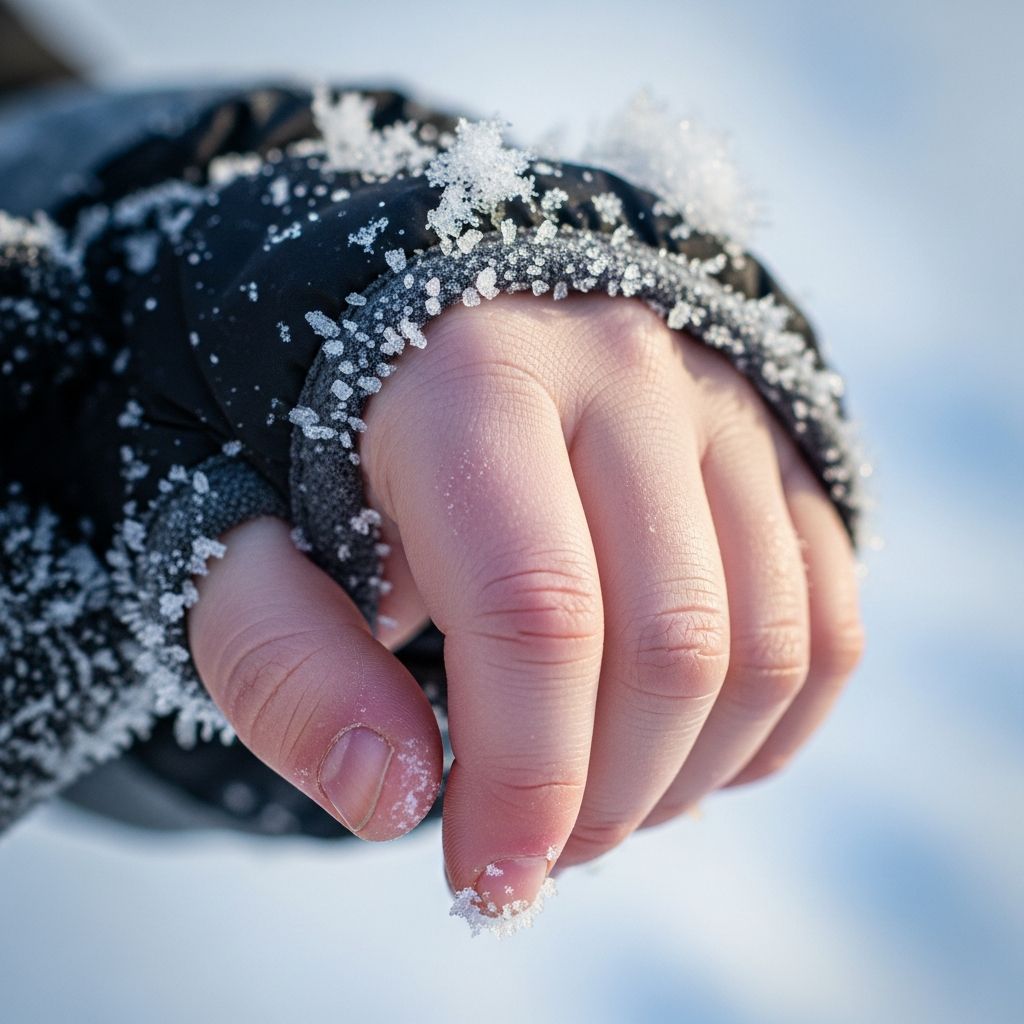
Cold weather activities bring joy to children but carry risks like frostbite, a condition where skin and tissues freeze due to extreme cold exposure. Parents play a crucial role in prevention and early response to minimize harm.
Understanding Frostbite Risks for Young Ones
Children lose heat faster than adults because of their smaller bodies and higher surface-area-to-volume ratio. Frostbite strikes when skin temperature drops below freezing, often affecting extremities like fingers, toes, ears, nose, and cheeks. Wind chill accelerates this process, making even moderately cold days dangerous during prolonged outdoor play.
Factors heightening vulnerability include wet clothing, tight footwear, dehydration, and fatigue. Kids in sports, sledding, or waiting at bus stops without proper gear face elevated threats. Awareness of local weather, especially below 0°F with wind, is key to keeping playtime safe.
Spotting the Early Signs in Kids
Frostbite progresses in stages, starting subtly. Initial frostnip, a mild form, shows as red, pale, or grayish skin with prickling, stinging, or numbness. Children might complain of itching or pain but could ignore it during fun.
As it worsens to superficial frostbite, skin feels doughy or waxy, with possible blisters. Deep frostbite impacts muscles and bones, marked by hard, wooden-feeling tissue, colorless skin, and joint immobility. Severe cases lead to blackening tissue, signaling potential amputation risk if untreated.
- Frostnip indicators: Pale skin, tingling, mild swelling.
- Superficial frostbite: Blisters, throbbing pain upon warming.
- Deep frostbite: Numbness persisting, blue or black skin patches.
Check kids frequently outdoors: lift sleeves for hands, peek under hats for ears. Act on any doubt to halt progression.
Smart Prevention Tactics for Family Winter Fun
Layering is foundational. Start with moisture-wicking synthetics against skin, add insulating fleece or wool, and top with windproof, waterproof shells. Avoid cotton, which traps moisture and chills.
| Body Part | Recommended Gear | Why It Works |
|---|---|---|
| Head & Face | Wool hat covering ears, scarf or mask | Prevents up to 40% heat loss from head; warms inhaled air |
| Hands | Mittens over liner gloves, wool-blend | Mittens retain more warmth than gloves |
| Feet | Moisture-wicking socks, insulated waterproof boots | Dry feet resist freezing; loose fit avoids constriction |
| Torso | Multiple loose layers, water-resistant jacket | Traps warm air pockets |
Schedule breaks indoors every 20-30 minutes in harsh cold. Hydrate with water or warm drinks—dehydration thickens blood, worsening circulation. Skip alcohol and caffeine, which constrict vessels. Pack spares for wet gear swaps.
Immediate Steps: First Aid Essentials
If frostbite is suspected, prioritize safety. Move to a warm environment promptly. Remove damp clothes and jewelry to boost circulation without constriction.
- Get indoors or shelter.
- Avoid walking on frostbitten feet if possible to limit damage.
- Do not rub, massage, or use snow— this shreds ice crystals in tissues.
- Warm affected areas in water at 101-104°F (test with elbow: comfortable, not painful). Maintain 20-30 minutes until pink and soft.
- If water unavailable, use body heat (e.g., armpits for hands).
- Avoid direct heat sources like radiators or dryers—numb skin burns easily.
Post-warming, loosely bandage with sterile gauze between fingers/toes. Elevate if swollen. Offer warm fluids. Pain or blisters signal professional care need.
When to Rush to Medical Help
Not all frostbite resolves at home. Seek emergency care for blisters, persistent numbness, darkening skin, fever, or infection signs like pus. Deep cases require IV fluids, pain meds, or vasodilators like iloprost to salvage tissue.
Hospitals assess via exam, imaging if needed. Long-term, watch for stiffness, sensitivity, or necrosis. Tetanus shots prevent complications. Full recovery varies: mild cases heal in days; severe may take months or lead to surgery.
Long-Term Recovery and Care Tips
After warming, skin may itch, swell, or blister—keep clean and dry. Over-the-counter pain relievers help. Physical therapy aids mobility in deep cases. Protect healed areas from cold indefinitely, as they’re prone to recurrence.
Nutrition supports healing: vitamin C-rich foods boost collagen. Avoid smoking, which impairs blood flow. Follow-up visits monitor progress.
Common Myths Busted
- Myth: Rubbing warms fastest. Fact: Causes more injury.
- Myth: Hot drinks cure it. Fact: Only lukewarm fluids; hot can harm.
- Myth: Frostbite only in Arctic. Fact: Occurs above 32°F with wind.
Frequently Asked Questions
Can frostbite happen above freezing?
Yes, wind chill can drop effective temperature below freezing, risking frostbite even at 32°F or higher.
How long before frostbite sets in?
As little as 30 minutes below 0°F, faster on exposed skin or with wind.
Is home treatment enough for kids?
For mild frostnip, yes; anything with blisters or deep numbness requires a doctor.
Do mittens really beat gloves?
Absolutely—fingers share warmth better in mittens.
What if refreezing seems likely?
Don’t thaw; protect and get to medical help dry.[10]
Seasonal Preparedness Checklist
- Monitor wind chill apps daily.
- Stock emergency kit: extra socks, hand warmers, thermometer.
- Teach kids to report numbness.
- Plan routes with warm-up spots.
- Insure winter gear fits loosely.
Empowering parents with knowledge turns winter risks into safe adventures. Vigilance ensures kids thrive in the cold.
References
- How to prevent and treat frostbite — American Academy of Dermatology. 2023. https://www.aad.org/public/everyday-care/injured-skin/burns/prevent-treat-frostbite
- Frostbite: Symptoms, Treatment and Prevention — Nationwide Children’s Hospital. 2016-02. https://www.nationwidechildrens.org/family-resources-education/700childrens/2016/02/frostbite-symptoms-treatment-and-prevention
- Preventing Frostbite — Centers for Disease Control and Prevention (CDC). 2024. https://www.cdc.gov/winter-weather/prevention/preventing-frostbite.html
- Frostbite Prevention Tips — UPMC Children’s Hospital of Pittsburgh. 2024. https://www.chp.edu/injury-prevention/safety/holiday-and-seasonal/frostbite
- Frostbite – Symptoms and causes — Mayo Clinic. 2024-10-23. https://www.mayoclinic.org/diseases-conditions/frostbite/symptoms-causes/syc-20372656
- Frostbite — NCBI Bookshelf / StatPearls. 2023-11-03. https://www.ncbi.nlm.nih.gov/books/NBK536914/
- Frostbite — NHS. 2025-06-09. https://www.nhs.uk/conditions/frostbite/