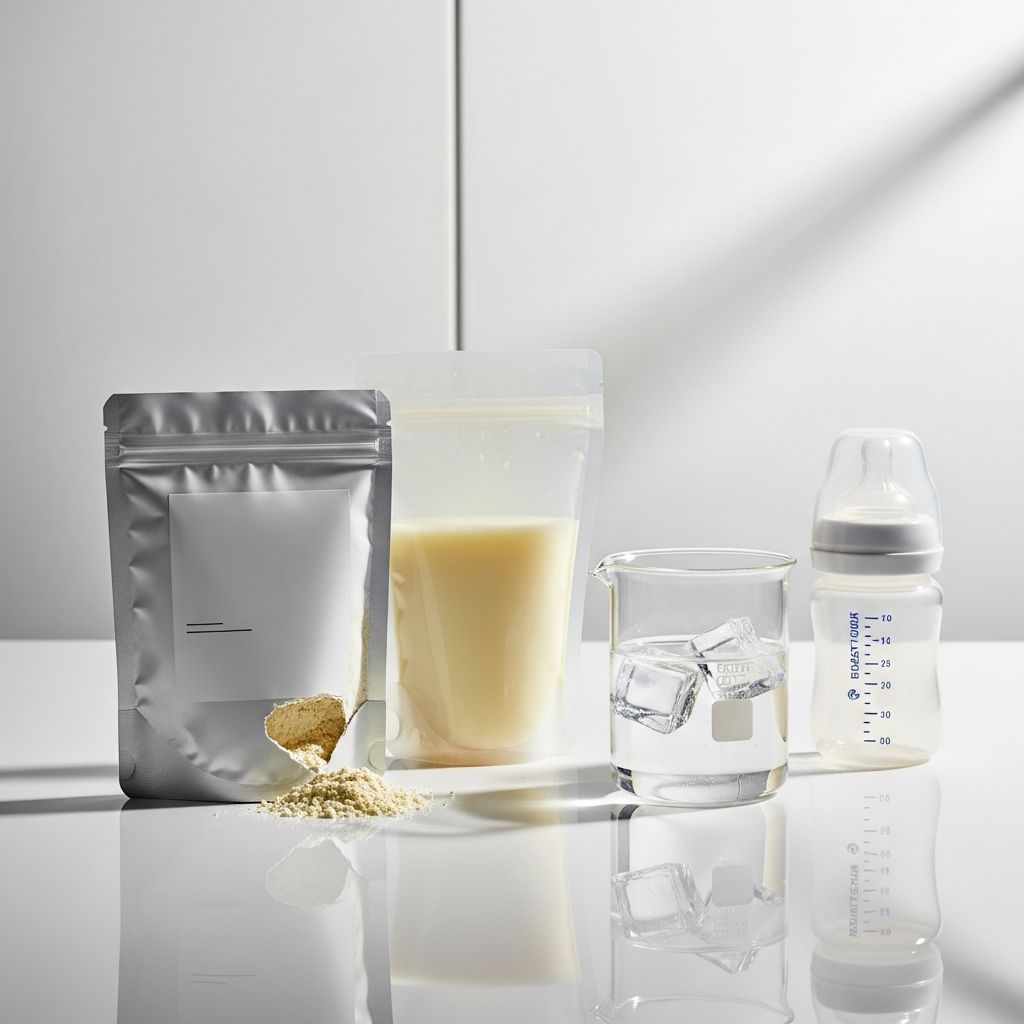
Freeze-drying breast milk transforms liquid gold into a lightweight powder, promising extended storage without refrigeration. This method removes water content through sublimation, potentially easing storage burdens for nursing parents, but safety questions persist due to limited research and processing risks.
Understanding the Freeze-Drying Process
The lyophilization process freezes breast milk, then applies a vacuum to evaporate ice directly into vapor, leaving a dry powder. This preserves structure better than heat-based drying, retaining many macronutrients like proteins, fats, and carbs. Reconstitution involves mixing with warm water to mimic fresh milk.
Commercial services handle this in controlled environments, while home kits exist but raise sterility concerns. Unlike formula powders, human milk freeze-drying aims to maintain bioactivity, though live immune factors may diminish.
Key Advantages for Modern Parents
Freeze-dried breast milk offers practical perks amid busy lifestyles:
- Space Efficiency: Powder occupies minimal freezer space compared to frozen bags, ideal for small homes or frequent moves.
- Travel-Friendly: Shelf-stable for months at room temperature, perfect for vacations without coolers or dry ice.
- Longer Shelf Life: Up to three years unrefrigerated, reducing waste from freezer failures or expired stock.
- Taste Improvement: Reduces lipase activity in high-lipase milk, preventing soapy flavors disliked by some babies.
These benefits appeal to working moms or travelers, turning a bulky necessity into portable nutrition.
Nutritional Retention: What Stays, What Changes?
Studies show freeze-drying preserves most core nutrients. Proteins and fats remain stable, with minimal degradation in vitamins like niacin or biotin. However, vitamin C drops by about 31.5%, and antioxidants like vitamin E decline, especially post-storage above 4°C.
| Nutrient Category | Retention After Freeze-Drying | Notes |
|---|---|---|
| Proteins & Fats | High (no significant loss) | Maintains caloric value |
| B Vitamins (e.g., Niacin) | Stable | No effect observed |
| Vitamin C | Reduced (~31.5% loss) | Sensitive to process |
| Antioxidants | Decreased | Worsens with heat/storage |
| Live Antibodies | Partial loss | Less ‘living’ protection |
Such changes are minor for healthy term infants but concerning for preemies needing maximal immunity.
Safety Concerns and Potential Hazards
While marketed as safe, freeze-drying lacks pasteurization in most services, failing to kill pathogens like Staphylococcus aureus or viruses. Bacterial growth risks arise during processing, handling, or improper reconstitution.
- Contamination Pathways: Non-sterile facilities introduce microbes; home drying amplifies this without lab testing.
- Reconstitution Mistakes: Wrong water ratios dilute calories or concentrate solutes, stressing kidneys.
- Vulnerable Infants: Premature or immunocompromised babies face higher infection odds from uneliminated bacteria.
Storage beyond four months at room temp alters free fatty acids and proteins, per research findings.
Expert and Official Perspectives
Public health experts urge caution. Lactation consultant Dawn Maddux warns freeze-drying doesn’t reliably eliminate pathogens, recommending against it until standardized protocols emerge. The CDC states insufficient safety studies for infants, emphasizing traditional storage.
“Freeze-drying milk at home is not safe as it can easily be contaminated.” — Dawn Maddux, MPH, BSN, RN, IBCLC
Neonatology reviews highlight bacterial risks in powdered products, mirroring formula contamination issues. No major health body endorses it for routine use.
Comparing Storage Methods
| Method | Shelf Life | Storage Needs | Safety Level | Best For |
|---|---|---|---|---|
| Fresh | 4 hours room temp | None | Highest | Daily feeding |
| Refrigerated | 4 days | Fridge | High | Short-term |
| Frozen | 6-12 months | Freezer | High | Long-term home |
| Freeze-Dried | Up to 3 years | Room temp | Moderate (research gaps) | Travel/emergency |
CDC guidelines back traditional methods with proven safety data.
Home vs. Professional Processing: A Risk Assessment
Professional outfits test for microbes and metals, but variability exists. Home kits lack controls, often failing to achieve sterile conditions or proper temperatures. Experts unanimously advise against DIY due to contamination perils.
Combined high-pressure processing with freeze-drying shows promise in labs for bioactivity preservation and germ reduction, but it’s not commercialized widely.
Practical Tips for Interested Parents
If considering despite risks:
- Choose services with third-party testing for pathogens and contaminants.
- Follow exact reconstitution ratios (e.g., 1:10 powder to water).
- Store powder in cool, dry places; use within recommended dates.
- Consult pediatricians or lactation experts first.
- Prioritize for non-vulnerable babies only.
Future Outlook and Ongoing Research
Investigations into pasteurization-plus-freeze-drying could mitigate risks, potentially standardizing safe protocols. Until then, benefits don’t outweigh uncertainties for most families. Monitor updates from bodies like WHO or AAP.
Frequently Asked Questions
Is freeze-dried breast milk nutritionally equivalent to fresh?
No, while macros hold up, vitamins like C and live cells decrease, reducing immune benefits.
Can I freeze-dry milk at home safely?
Experts strongly advise against it due to contamination risks without professional equipment.
How long does freeze-dried milk last?
Up to 3 years at room temperature per companies, but research shows changes after 4 months.
Does it kill bacteria like pasteurization?
No, freeze-drying doesn’t reliably eliminate pathogens, unlike heat methods.
Is it safe for premature babies?
Higher risks; stick to proven fresh/frozen milk for vulnerable infants.
References
- Understanding the Safety and Risks of Freeze-Dried Breast Milk — Hygeia Health. 2024. https://hygeiahealth.com/understanding-safety-and-risks-of-freeze-dried-breast-milk/
- Is Freeze-Dried Breast Milk Safe? We Asked a Public Health Expert — MissPoppins. 2023. https://misspoppins.io/articles/freeze-dried-breast-milk-safety-expert-insight
- Freeze Dried Milk: Liquid Gold to Powdered Uncertainty — Emory University School of Medicine, Pediatrics. 2025. https://med.emory.edu/departments/pediatrics/divisions/neonatology/documents/bfc/bfc-2025/freeze-dried-milk_liquid-gold-to-powdered-uncertainty.pdf
- Combination of High-Pressure Processing and Freeze-Drying as the Novel Method of Human Milk Preservation — PMC (National Library of Medicine). 2021-03-01. https://pmc.ncbi.nlm.nih.gov/articles/PMC7926441/
- Putting Evidence into Practice: Freeze-dried Human Milk — Alberta Health Services. 2023. https://www.albertahealthservices.ca/assets/info/nutrition/if-nfs-putting-evidence-into-practice-freeze-dried-human-milk.pdf