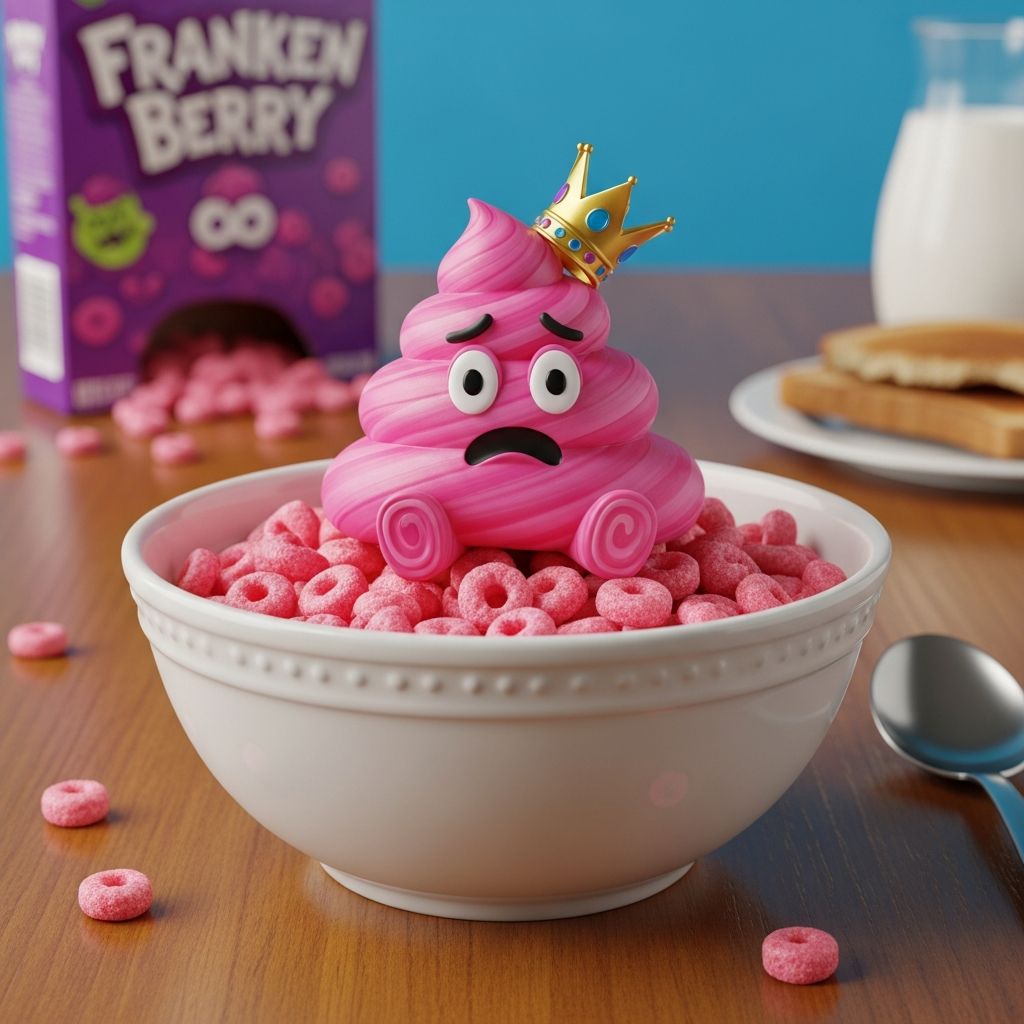
In the vibrant world of 1970s breakfast cereals, one product stood out not just for its monstrous marketing but for an unexpected side effect: turning children’s stool a vivid pink. This phenomenon, dubbed “Franken Berry Stool,” sent waves of panic through parents and challenged early food safety norms. While ultimately benign, it highlighted the power of synthetic dyes in everyday foods and spurred important regulatory changes.
The Rise of Monster Cereals and a Strange Phenomenon
The early 1970s marked a fun era for breakfast innovation. General Mills launched Franken Berry in 1971, a strawberry-flavored cereal featuring the grinning green-haired Franken Berry monster. Aimed at kids loving Halloween vibes year-round, it quickly gained popularity alongside siblings like Boo Berry and Count Chocula.
Soon after its release, reports emerged of children producing strikingly pink feces. Parents, mistaking the color for blood indicating internal bleeding, rushed hundreds of kids to emergency rooms. One typical case involved a 12-year-old boy admitted to the hospital with loose, red stools resembling strawberry ice cream in hue but normal in odor and consistency. No pain, fever, or other symptoms accompanied the discoloration, yet exhaustive tests ruled out serious issues like gastrointestinal bleeding.
Medical Investigation: From Mystery to Diagnosis
Physicians faced a puzzle. The boy’s mother mentioned he’d eaten Franken Berry cereal two and one days before symptoms. After his system cleared, doctors conducted a controlled test: they fed him four bowls over two days. Predictably, bright pink stools reappeared, confirming the cereal as the culprit.
This led to the formal naming of “Franken Berry Stool” in a 1972 Pediatrics journal case study by Dr. John V. Payne. The paper described it as “benign red pigmentation of stool resulting from food coloring in a new breakfast cereal”. It urged doctors to recognize such diet-induced changes to avoid unnecessary interventions. Similar cases flooded pediatric practices, turning a marketing gimmick into a recognized, if temporary, condition.
The Culprit: FD&C Red No. 2 and Synthetic Dyes
- Indigestible Nature: Franken Berry used FD&C Red No. 2 (amaranth), a synthetic azo dye approved for foods. Unlike natural pigments, it resisted breakdown in the human gut, passing through intact and coloring waste.
- Prevalence: This dye was ubiquitous in candies, drinks, and cereals for its stable, vibrant red-pink shade.
- Child Sensitivity: Kids’ faster metabolisms and higher cereal consumption amplified the effect compared to adults.
Other monster cereals contributed too: Boo Berry’s Blue No. 1 could tint stool green, though pink alarmed parents more due to blood associations.
Public Alarm and Media Frenzy
The “pink poop pandemic” captured headlines amid 1971’s cultural turbulence—Disney World’s opening, Led Zeppelin’s rise, and Attica riots. Media amplified fears, especially after a Russian study linked Red No. 2 to tumors in female rats. Though flawed (FDA couldn’t verify amaranth’s involvement), it fueled carcinogen scares.
Parents’ distress was understandable; vivid pink excrement looked dire. Hospitals saw spikes in admissions, straining resources for what proved harmless. General Mills faced scrutiny but emphasized no health risks beyond color.
Regulatory Response and the Fall of Red No. 2
The incident spotlighted food dye safety. The U.S. Federal Food, Drug, and Cosmetic Act of 1938 had standardized dyes with FDA certification, yet issues persisted—like 1950s orange candy illnesses from FD&C Orange No. 1.
| Dye | Cereal | Stool Color | Fate |
|---|---|---|---|
| FD&C Red No. 2 (Amaranth) | Franken Berry | Pink/Red | Banned 1976 |
| FD&C Blue No. 1 | Boo Berry | Green | Restricted in some countries |
| FD&C Red No. 40 | Modern Franken Berry | None | Current standard |
After years of debate, the FDA delisted Red No. 2 from its GRAS (Generally Recognized as Safe) list in 1976, citing insufficient safety data despite no conclusive human harm. This paved the way for safer alternatives like Red No. 40, still used today without stool discoloration issues.
Broader History of Food Dyes and Stool Surprises
Synthetic dyes date to 1856 with mauveine, exploding in the 20th century for visual appeal. Harmless color changes aren’t unique:
- Smurfberry Crunch (1982): Post’s blue cereal caused blue poop; reformulated as Magic Berries.
- Beets and Dragon Fruit: Natural foods routinely tint stool red or purple without alarm.
- Historical Poisons: 1858 Bradford sweets laced with arsenic sickened 200, unlike dye cases.
Franken Berry Stool underscored diet’s role in perceived illness, educating on benign causes.
Modern Cereals: Lessons Learned and Safe Indulgences
Today’s Franken Berry uses dyes that digest fully, eliminating pink poop risks. General Mills prioritizes safety, with FDA oversight ensuring batch-tested colors. Seasonal releases thrill without scares, letting kids enjoy sugar highs responsibly.
Nutritionists note cereals’ high sugar but affirm color safety. Parents can indulge Halloween favorites confidently.
Health Insights: When to Worry About Stool Color
Most color changes stem from diet, but red flags include:
- Bloody appearance with pain, diarrhea, or weight loss.
- Persistent changes despite dietary tweaks.
- Black, tarry stools signaling upper GI bleed.
Consult doctors for concerns; history and tests clarify.
Frequently Asked Questions
Can modern Franken Berry cereal still cause pink stool?
No, reformulated dyes like Red No. 40 are digestible, preventing discoloration.
Was Franken Berry Stool dangerous?
Entirely benign—no pain, toxicity, or complications reported.
Why did the dye pass through undigested?
FD&C Red No. 2’s chemical structure resisted gut enzymes, exiting colored.
Are artificial food dyes safe today?
FDA-approved ones undergo rigorous testing; controversies persist, but no widespread stool issues.
What other foods change stool color harmlessly?
Beets (red), green veggies (green), carrots (orange)—all natural and safe.
Key Takeaways from the Pink Poop Era
The Franken Berry saga blended whimsy with caution, pushing food safety forward. It reminds us innovation must balance fun and health, with regulations adapting to evidence. Today, it stands as a quirky footnote in pediatric and regulatory history, proving even breakfast can spark medical milestones.
References
- Franken Berry Stool Was A Real Medical Condition — Fatherly. 2023. https://www.fatherly.com/health/franken-berry-stool-medical-condition
- The Pink Poop Pandemic and the Breakfast Cereal That Caused It — Commonplace Facts. 2020-09-25. https://commonplacefacts.com/2020/09/25/the-pink-poop-franken-berry/
- Benign Red Pigmentation of Stool Resulting From Food Coloring in a New Breakfast Cereal (The Franken Berry Stool) — PubMed (Pediatrics Journal). 1972. https://pubmed.ncbi.nlm.nih.gov/5059537/
- Franken Berry, the Beloved Halloween Cereal, Was Once Medically Found to Cause Pink Poop — Smithsonian Magazine. 2016-10-27. https://www.smithsonianmag.com/arts-culture/franken-berry-the-beloved-halloween-cereal-was-once-medically-found-to-cause-pink-poop-7114570/
- The Unsettling Medical Condition Franken Berry Cereal Once Caused — Mashed. 2021. https://www.mashed.com/393790/the-unsettling-medical-condition-franken-berry-cereal-once-caused/