Understanding the Risks Associated with Independence Day Celebrations
The Fourth of July represents one of America’s most cherished holidays, celebrated with gatherings, barbecues, and fireworks displays that light up the night sky. However, this festive occasion comes with significant safety concerns that many families overlook during their excitement. According to recent data from the US Consumer Product Safety Commission, approximately 9,700 people required emergency room treatment for fireworks-related injuries in 2023, with eight fatalities recorded. These statistics reveal that roughly 66 percent of fireworks injuries occur during the weeks immediately before and after Independence Day, underscoring the concentrated risk during this holiday period.
The types of injuries sustained from fireworks are particularly severe. Burns account for 42 percent of all fireworks-related injuries, while the most frequently affected body parts include hands and fingers at 36 percent, followed by the head, face, and ears at 22 percent, and eyes at 19 percent. Understanding these risks allows families to implement appropriate preventive measures and make informed decisions about how to celebrate safely.
Selecting and Purchasing Safe Fireworks
The foundation of fireworks safety begins with selecting appropriate products from legitimate sources. When purchasing fireworks, families should exclusively buy from licensed retailers and verify that products meet legal safety standards established by regulatory agencies. Legal fireworks display clear labeling that includes the manufacturer’s name, contact information, and comprehensive usage instructions.
Consumers should be particularly cautious about unmarked or illegally packaged fireworks, which often lack safety testing and proper warnings. Fireworks packaged in brown paper represent professional-grade products designed exclusively for trained operators and should never be purchased for home use. Before making any purchase, verify the specific fireworks regulations in your state and local jurisdiction, as many states prohibit certain types of consumer fireworks entirely.
Avoid purchasing homemade, modified, or counterfeit fireworks under any circumstances. Additionally, never attempt to construct your own fireworks or alter commercial products, as these activities present extreme danger and violate federal regulations.
Age-Appropriate Supervision and Handling Guidelines
Children represent the most vulnerable population during fireworks celebrations, with adolescents and young children comprising the largest groups affected by fireworks injuries according to CPSC data. This reality necessitates strict protocols regarding who handles fireworks and under what conditions.
Small children should never be given fireworks of any kind, including sparklers, which many parents mistakenly consider harmless. Sparklers present particular dangers despite their seemingly innocent appearance, burning at temperatures reaching 1,800 to 2,000 degrees Fahrenheit—hot enough to melt certain metals and ignite clothing. Nearly half of all fireworks injuries to children under age five involve sparklers, and contact with skin can result in severe third-degree burns.
Older children who use fireworks must do so exclusively under continuous adult supervision by a responsible, sober adult. Never permit children to light fireworks independently, even briefly. Instead, designate a single responsible adult to ignite all fireworks one at a time while maintaining complete focus on the task. This structured approach ensures that an experienced individual controls each ignition event rather than allowing multiple simultaneous lighting attempts.
Establishing Safe Physical Distance and Environment Protocols
The location where fireworks are used dramatically impacts the safety of everyone present. Families should always conduct fireworks activities in clear, open spaces completely free of obstructions, vegetation, and flammable materials. Avoid areas with dry grass, dead wood, leaves, or other debris that could easily ignite from sparks or misfired projectiles.
Physical distance requirements vary significantly depending on the firework type being used. For fountain-style fireworks or any devices that emit continuous sparks, maintain a minimum distance of 35 feet from the ignition point. Aerial fireworks such as mortars and bottle rockets require substantially greater distances, with safety experts recommending 150 yards or approximately 450 feet of clearance. When attending professional fireworks displays, position yourself at least 500 feet away from the launch site to protect both personal safety and hearing health.
Never hold lighted fireworks in your hands or lean over devices after ignition. Do not light fireworks indoors or in enclosed spaces. Additionally, keep fireworks away from people, animals, vehicles, buildings, and other structures that could be damaged or endangered by errant projectiles or sparks.
Handling Misfires and Defective Fireworks Safely
Despite careful preparation, fireworks occasionally fail to ignite properly—a situation known in common terminology as a “dud.” The temptation to relight a misfired firework represents one of the most dangerous mistakes families make during Independence Day celebrations. Never attempt to relight, rekindle, or inspect a firework that failed to ignite on the first attempt.
Instead, follow these established disposal procedures: Wait a minimum of 20 minutes after the failed ignition attempt before approaching the device. Then, thoroughly douse the firework with water and allow it to sit for an additional 20 minutes. Next, completely submerge the firework in water and permit it to soak for an extended period. Once the firework is thoroughly waterlogged, it becomes safe to dispose of in regular trash.
If you discover unexploded or defective fireworks on the ground during or after celebrations, maintain distance and immediately contact your local fire department or police authorities rather than attempting to handle them yourself. Unexploded fireworks may still contain functional firing mechanisms and could detonate unexpectedly.
Essential Fire Safety Equipment and Emergency Preparedness
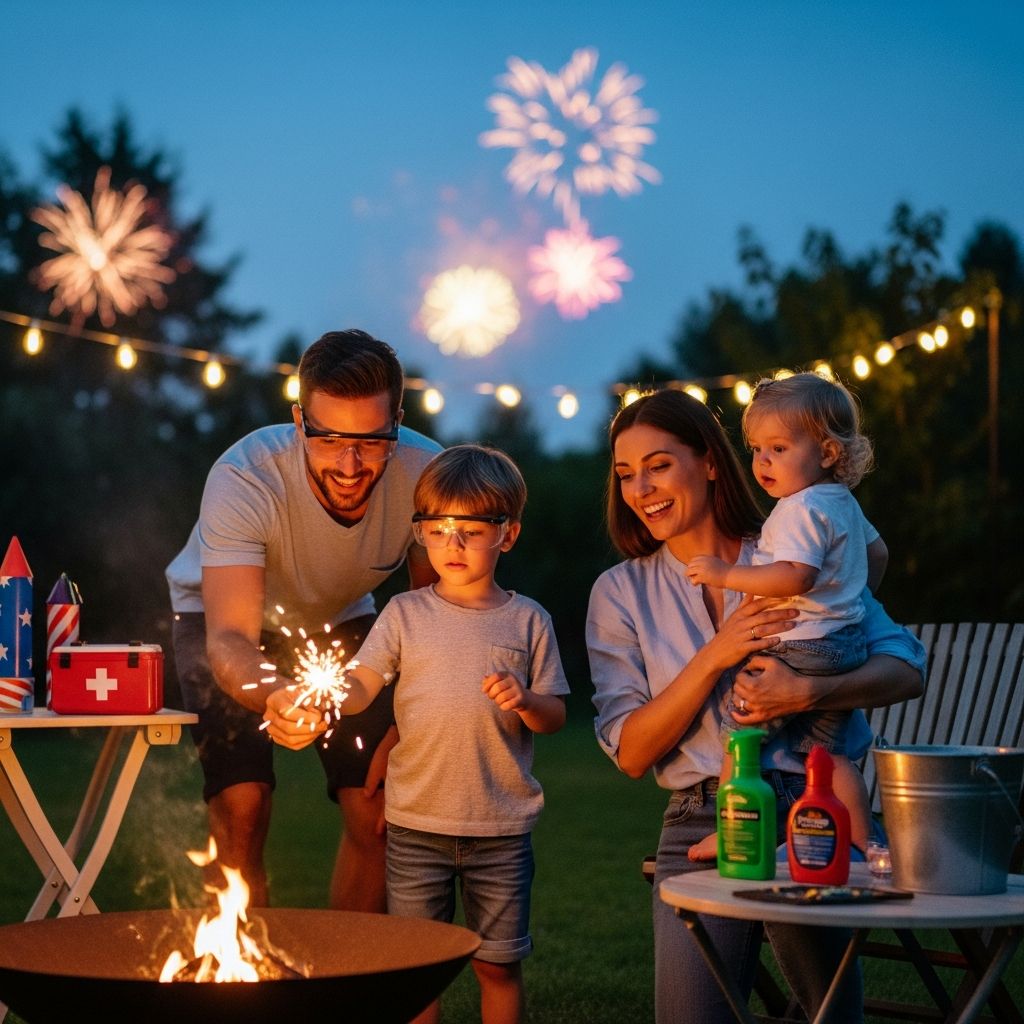
Every household conducting fireworks activities should maintain readily accessible fire suppression equipment as a critical safety measure. Keep a functional garden hose connected and ready, along with multiple buckets filled with water positioned near the fireworks display area. A portable fire extinguisher specifically rated for multiple fire types should be placed within immediate reach of the person designated to monitor fire safety.
All adults present should understand how to operate a fire extinguisher using the P.A.S.S. technique: Pull the safety pin, Aim the nozzle at the base of flames, Squeeze the trigger mechanism, and Sweep the extinguishing agent across the fire’s base. Ensure everyone knows the location of this equipment before fireworks activities begin. Have a charged fire extinguisher specifically for this purpose rather than relying on general household equipment that may be expired or depleted.
Establish a clear communication plan for contacting emergency services and ensure all adults know the location of the nearest hospital or urgent care facility. Keep a first aid kit containing supplies appropriate for treating burns, eye injuries, and other common fireworks-related injuries readily available.
Personal Protective Equipment and Sensory Protection
Anyone lighting fireworks or standing in close proximity should wear protective eyewear designed to shield against sparks and bright flashes. Regular glasses do not provide adequate protection; use safety goggles specifically designed for fireworks activities. This simple precaution significantly reduces the risk of eye injuries, which represent a substantial portion of fireworks-related emergency room visits.
Hearing protection deserves equal consideration, as fireworks produce noise levels reaching 150 decibels—nearly double the 75-80 decibel range considered safe for human hearing. Even single loud bursts at close range can cause permanent hearing damage, particularly in children whose auditory systems remain developing. Wear earplugs or earmuffs during fireworks activities, and ensure children use appropriate hearing protection as well. This proves especially important when attending professional fireworks displays.
Dress appropriately by wearing long pants and closed-toe shoes rather than sandals or bare feet. Avoid loose-fitting clothing that could catch fire from sparks or flying embers. Keep hair tied back securely to prevent accidental contact with flames or sparks.
Substances and Conditions That Increase Risk
Never use fireworks while under the influence of alcohol, drugs, or other substances that impair judgment and reaction time. The coordination, focus, and decision-making required to handle fireworks safely become compromised when individuals are intoxicated. Similarly, individuals with fatigue, illness, or emotional distress should avoid lighting fireworks, as these conditions also impair safety consciousness.
Do not attempt fireworks activities when visibility is poor due to darkness, fog, or other weather conditions that prevent clear sight lines. While evening fireworks are traditional, ensure adequate lighting to monitor the display area continuously. Do not use fireworks during windy conditions when sparks and projectiles become unpredictable.
Alternatives to Home Fireworks Displays
The safest approach to enjoying fireworks involves attending professional displays conducted by trained operators in controlled environments specifically designed for pyrotechnics. Professional displays feature spectacular effects that typically exceed home fireworks in quality and intensity while maintaining professional safety protocols and insurance coverage.
Many communities offer free or low-cost professional fireworks shows in parks and public venues where families can celebrate safely without personal responsibility for managing explosive devices. These public displays often include entertainment, food vendors, and family-friendly activities that create memorable celebrations without the injury risks associated with consumer fireworks.
Alternative celebration methods that eliminate fireworks risks entirely include using glow sticks, noise makers, and silly string to create festive atmospheres. These items provide visual appeal and celebratory elements without explosive hazards, making them particularly appropriate for households with young children, elderly members, or individuals with anxiety or hearing sensitivities.
Pet Safety During Independence Day Celebrations
Household pets face significant stress and danger during fireworks celebrations. The loud noises, bright flashes, and unfamiliar environment created by fireworks can trigger fear, anxiety, and unpredictable behavior in dogs, cats, and other animals. Rather than bringing pets to fireworks displays, keep them in familiar home environments where they feel secure. Create a quiet, comfortable space away from windows and exterior doors where pets cannot escape if frightened.
Ensure pets have current identification tags and microchip information in case they escape during celebrations. Consider consulting your veterinarian about anxiety management options if your pet experiences extreme distress during fireworks season. Never leave pets outside unsupervised during fireworks celebrations.
Post-Celebration Cleanup and Assessment
After fireworks activities conclude, thoroughly inspect the celebration area for unexploded devices, debris, and potential fire hazards. Remove all spent fireworks casings and packaging materials. Check roof surfaces, gutters, and landscaping for embers or debris that could ignite hours after initial activities.
Store unused fireworks in a cool, dry location away from children and pets, following the manufacturer’s storage instructions. Never store fireworks in living spaces, attics, or enclosed areas where temperature fluctuations could affect stability.
Frequently Asked Questions About Fourth of July Safety
Q: What should I do if someone sustains a burn from fireworks?
A: Immediately remove the person from the fireworks area to safety. Cool the burn with cool (not cold) running water for 10-15 minutes. Cover the burn with a clean, dry cloth. Seek medical attention immediately for any burn that covers a large area, affects the face or eyes, or appears deep or severe. Do not apply ice, butter, or other home remedies, as these can cause additional damage.
Q: Are sparklers safer than other fireworks for children?
A: No. Sparklers burn at extremely high temperatures (1,800-2,000 degrees Fahrenheit) and cause nearly as many childhood injuries as firecrackers. They readily ignite clothing and cause severe burns. Children should never handle sparklers.
Q: How far away should I stand from aerial fireworks?
A: Maintain a distance of at least 150 yards (approximately 450 feet) from aerial fireworks like mortars and bottle rockets. For fountain-style fireworks, 35 feet minimum distance is appropriate. For professional displays, position yourself at least 500 feet away.
Q: What protective equipment should I wear when lighting fireworks?
A: Wear safety goggles to protect eyes from sparks and bright flashes, hearing protection to prevent noise-induced hearing damage, long pants, closed-toe shoes, and avoid loose-fitting clothing that could catch fire.
Q: Are professional fireworks displays really safer than home fireworks?
A: Yes, significantly safer. Professional displays are conducted by trained operators in controlled environments with proper permits, insurance, and safety protocols. They eliminate personal responsibility for handling explosives and provide spectacular effects with minimal injury risk to spectators.
References
- 4th of July Safety Tips — First Alert. Accessed April 2, 2026. https://www.firstalert.com/blogs/safety-corner/4th-of-july-safety-tips
- 10 Fireworks Safety Tips for a Fun Fourth of July — Farm Bureau Financial Services (FBFS). Accessed April 2, 2026. https://www.fbfs.com/learning-center/9-fireworks-safety-tips-for-a-fun-fourth-of-july
- Tips to Help You Have a Safe 4th of July — American Red Cross. Accessed April 2, 2026. https://www.redcross.org/about-us/news-and-events/news/how-to-have-a-safe-4th-of-july.html
- 4th of July Safety Tips — ADT. Accessed April 2, 2026. https://www.adt.com/resources/4th-of-july-safety-tips
- Fireworks Safety Tips — National Safety Council (NSC). Accessed April 2, 2026. https://www.nsc.org/community-safety/safety-topics/seasonal-safety/summer-safety/fireworks
- 4th of July Fireworks Safety: Tips for Families — HealthyChildren.org (American Academy of Pediatrics). Accessed April 2, 2026. https://www.healthychildren.org/English/safety-prevention/at-play/Pages/stay-safe-this-4th-of-july.aspx
- 4th of July Safety Tips for Home and Workplace Celebrations — EHS Insight. Accessed April 2, 2026. https://www.ehsinsight.com/blog/4th-of-july-safety-tips-at-home-and-the-workplace