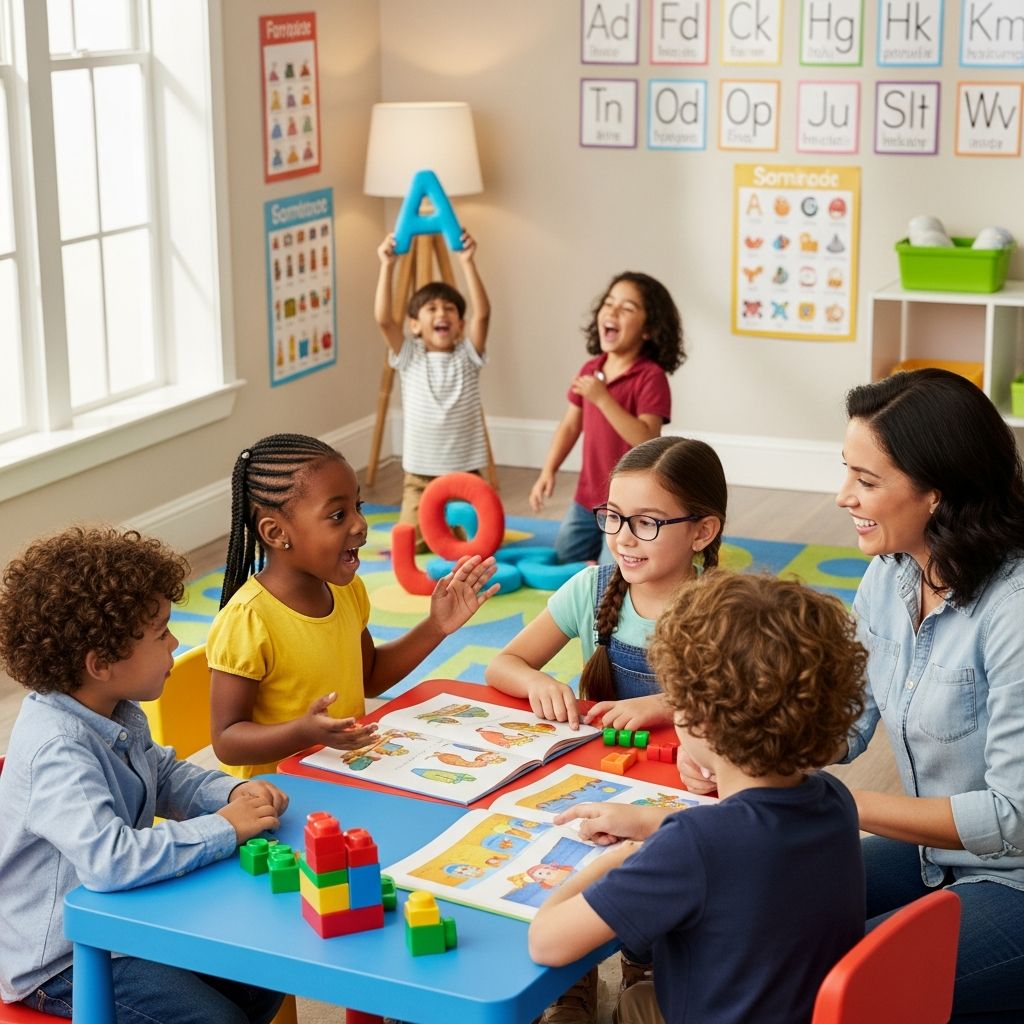
Understanding Language Development in Four-Year-Old Children
Between the ages of 40 and 48 months, children enter a pivotal phase of linguistic growth characterized by increasingly sophisticated sentence structures, expanding vocabulary, and refined communication abilities. During this developmental window, most children transition from simple two and three-word utterances to more complex multi-word sentences that reflect their growing understanding of grammar, syntax, and the nuances of how language functions in their daily lives. This period represents a critical juncture where children not only produce language but also demonstrate a deepening comprehension of abstract concepts and the ability to engage in meaningful conversations with peers and adults.
The Evolution of Sentence Formation and Expression
One of the most notable achievements during this developmental period is a child’s emerging ability to construct sentences containing four to six words or more. Where younger toddlers may have relied on two or three-word combinations to communicate basic needs and observations, children in the 40–48 month range demonstrate the capacity to link multiple words together in grammatically more accurate patterns. This advancement allows them to provide more detailed descriptions, relate experiences from their day, and engage in increasingly reciprocal conversations.
During this timeframe, children’s utterances increasingly incorporate a wider array of grammatical structures, including plurals, possessive forms, pronouns, and prepositions. For instance, a child might say “My dog is sleeping under the table” rather than simply “dog sleep.” This progression reflects the child’s developing metalinguistic awareness—an intuitive understanding of how language works without necessarily being able to articulate the rules themselves.
Word Endings and Sound Clarity
By 48 months, most children demonstrate improved pronunciation and increasingly include words with final consonants, such as “hat” or “duck,” which were previously omitted in earlier developmental stages. However, it is important to note that some developmental variability exists among children; some may still occasionally simplify longer words by deleting weak syllables, producing approximations like “efant” for “elephant”. This is an entirely normal pattern and typically resolves with continued language practice and exposure.
Parents may occasionally observe periods of dysfluency—including repetitions or hesitations such as “ma-ma-ma-mom”—during this phase. These transient disfluency periods are common occurrences when the cognitive demands for language production temporarily exceed the child’s ability to execute speech smoothly. In most cases, children naturally overcome these periods without intervention, though providing ample time for the child to speak without pressure remains beneficial.
Vocabulary Expansion and Word Knowledge
The vocabulary growth trajectory during the fourth year of life is remarkable. Children in this age range typically demonstrate command of approximately 900 words by age 4, representing a significant leap from their toddler years. Beyond sheer word count, children begin using language to articulate observations, communicate relationships between objects and concepts, and explain how things function in their environment.
This expanding vocabulary increasingly includes descriptive and comparative words—adjectives that allow children to be more precise about their world. A child might move from simply identifying “dog” to describing “big brown dog” or “soft puppy.” Additionally, children begin incorporating question words such as “when” and “how,” as well as causal connectives like “because” and “so,” enabling them to ask increasingly sophisticated questions and construct narratives with greater logical flow.
Comprehension Outpacing Expression
An important developmental principle that holds true during this period is that children’s receptive language (what they understand) typically exceeds their expressive language (what they produce). By the end of the 48-month period, most children understand between 1500 and 2000 words, a substantially larger inventory than they can reliably produce. This receptive advantage reflects the brain’s capacity to process and store linguistic information faster than the motor and cognitive systems can retrieve and articulate it.
Children at this age can follow commands containing three distinct directions and can track and process sentences containing up to six words. They also demonstrate the ability to retell simplified narratives from stories they have heard, indicating that comprehension extends beyond isolated words to include sequence and plot structure.
Listening Skills and Auditory Development
Concurrent with improvements in speech production and comprehension, children’s listening abilities become increasingly refined. By 48 months, most children can attend to and follow a narrative story for approximately 15 minutes—a marked improvement from their abilities at younger ages. This extended attention span reflects maturation in both the auditory processing centers of the brain and the child’s cognitive capacity for sustained focus.
Auditory memory also demonstrates significant development during this period. Children at 48 months can typically retain and recall up to four items presented verbally, a capacity that supports their ability to follow multi-step instructions and engage in more complex verbal games and learning activities.
Concept Understanding and Abstract Thinking
Between 40 and 48 months, children’s cognitive development increasingly supports their ability to understand abstract and relational concepts that form the foundation for more advanced learning. Children begin grasping concepts related to quality, texture, and quantity—understanding distinctions such as “rough” versus “smooth,” “empty” versus “full,” and “many” versus “few”.
Spatial and Temporal Concepts
Locational understanding expands significantly during this period. Children learn to understand and use locational prepositions such as “next to,” “under,” and “beside” to describe the spatial relationships between objects. Temporal awareness also emerges, with children beginning to understand concepts of time including “morning,” “afternoon,” “night,” and distinctions between past and present events. By age 4, children can increasingly answer questions about what is missing from a scene and understand comparative concepts such as “taller,” “bigger,” and “faster”.
Problem-Solving and Inferential Thinking
Cognitive development during this period increasingly supports inferential reasoning—the ability to draw conclusions based on information provided. Children begin making inferences about cause-and-effect relationships, understanding the consequences of their actions and those of others. They can attempt to answer problem-solving questions framed as “what if” scenarios, demonstrating emerging hypothetical thinking. Additionally, children demonstrate the ability to identify “the odd one out” in a group of objects and can sequence three-picture stories, reflecting their growing capacity for logical ordering and narrative comprehension.
Grammar, Syntax, and Morphology Development
The structure of children’s language becomes increasingly complex and rule-governed during the 40–48 month period. Children demonstrate consistent use of plural forms, pronouns (including “I,” “me,” “you,” “he,” “she,” “it,” “him,” and “her”), and possessive constructions. Additionally, children incorporate negation and modal forms such as “shouldn’t,” “won’t,” and “can’t” into their speech, allowing them to express refusal, prohibition, and inability.
The rapid expansion of grammatically correct utterances during this period reflects children’s implicit learning of language rules through exposure and practice. While children at this age cannot articulate the grammatical rules they are following, their speech demonstrates an intuitive grasp of how morphemes combine to create meaning and how word order affects interpretation.
Social Communication and Pragmatic Language
Beyond the structural and semantic aspects of language, children ages 40–48 months demonstrate growing sophistication in how they use language for social purposes. Children in this age range can tell stories about events from their day, share observations with others, and respond to comments and questions from peers and adults. They are beginning to develop awareness of how their communication affects others and demonstrate emerging understanding of non-verbal communication cues, such as recognizing that a peer with hands on hips and head shaking is communicating refusal.
However, it is worth noting that children at this developmental stage still demonstrate some difficulty with turn-taking in conversations. They may interrupt, overlap their speech with others, or monopolize conversation topics—behaviors that are developmentally appropriate at this age and gradually refine with maturation and social experience.
Supporting Language Development During Daily Activities
Parents and caregivers can facilitate continued language growth through intentional engagement during routine daily activities. Simple strategies include narrating activities as they occur, introducing new vocabulary words in meaningful contexts, providing ample time for children to respond without pressure, and responding enthusiastically to the child’s communications. Reading together, singing songs, engaging in pretend play, and having unhurried conversations about the child’s experiences all support robust language development during this critical period.
Individual Variation and Developmental Trajectories
While the milestones described above represent typical developmental patterns, it is crucial to recognize that considerable variation exists among children. Some children may reach certain milestones earlier or later than their peers, and this variation does not necessarily indicate a problem. Factors including the child’s personality, language exposure, opportunities for interaction, and individual neurological development all contribute to differences in the pace and specific manifestations of language development. Experts emphasize that the developmental guidelines provided represent general patterns rather than rigid criteria, and professional evaluation by a speech-language pathologist is advisable when significant concerns about language development arise.
Key Developmental Milestones: Quick Reference
| Developmental Domain | Typical Achievements by 48 Months |
|---|---|
| Sentence Formation | Uses sentences with 4–6+ words; employs plurals, pronouns, and prepositions |
| Vocabulary | Approximately 900 words; includes descriptive and comparative terms |
| Comprehension | Understands 1500–2000 words; follows 3-direction commands |
| Sound Production | Most consonant sounds correct; includes final consonants in words |
| Listening | Attends to stories for 15 minutes; auditory memory for 4 items |
| Narrative Ability | Relates daily experiences; tells simple stories |
| Concept Understanding | Grasps abstract concepts (colors, sizes, time, space) |
Frequently Asked Questions About Four-Year-Old Language Development
Q: My child sometimes repeats words or stutters. Is this normal?
A: Yes, transient periods of dysfluency—including repetitions and hesitations—are normal during this developmental stage. These typically occur when the demands for language production exceed the child’s immediate capability. In most cases, children naturally overcome these periods without intervention. Providing the child with ample time to speak and avoiding pressure or correction typically allows the dysfluency to resolve.
Q: My four-year-old understands much more than they can say. Why?
A: Receptive language (comprehension) typically exceeds expressive language (production) during early childhood. Children’s brains can process and store language information faster than the motor and cognitive systems can retrieve and articulate it. This is a normal developmental pattern and typically continues to balance out over time.
Q: How can I support my child’s language development?
A: Engage your child during daily routines by narrating activities, introducing new vocabulary in meaningful contexts, reading together, singing songs, and having conversations about their experiences. Provide ample time for responses without pressure, and respond enthusiastically to their attempts to communicate.
Q: My child has difficulty taking turns in conversations. Is this something I should worry about?
A: Difficulty with turn-taking is developmentally typical at this age. Children at 40–48 months are still learning social communication skills. With continued social experience and modeling by adults, this ability gradually improves during the preschool and early school years.
Q: When should I be concerned about language development?
A: While individual variation is normal, if you have significant concerns about your child’s language development, consulting with a speech-language pathologist is advisable. They can provide professional evaluation and guidance tailored to your child’s specific needs.
References
- Speech Language Development Milestones 36 – 48 months — iCommunicate Therapy. Accessed February 2026. https://www.icommunicatetherapy.com/child-speech-language/child-speech-language-development/child-speech-language-milestones-stages-of-development/speech-language-developmental-milestones-36-48-months-3-4-years/
- Your Child’s Development 36-48 Months — New Hampshire Family Voices. Accessed February 2026. https://nhfv.org/ec36-48/
- Age-Appropriate Speech and Language Milestones — Children’s Hospital of Philadelphia (CHOP). Accessed February 2026. https://www.chop.edu/health-resources/age-appropriate-speech-and-language-milestones
- 48 Months (4 years) to 60 Months (5 years) — All About Young Children. Accessed February 2026. https://allaboutyoungchildren.org/english/48-months-to-60-months/
- Learning and Development: Children 36 to 48 Months — Best Baby Brains Georgia. Accessed February 2026. https://www.bbbgeorgia.org/learning-and-development-children-36-to-48-months